Brepols Online Books Medieval Miscellanea Collection 2018 - bob2018mime

Collection Contents
3 results
-
-
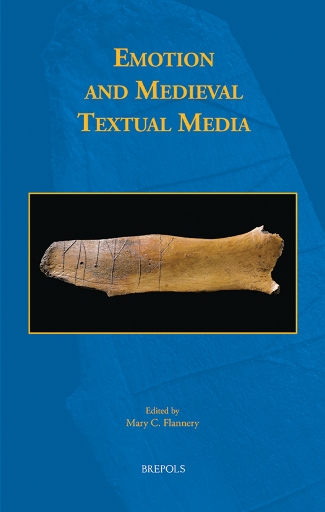
Emotion and Medieval Textual Media
show More to view fulltext, buy and share links for:Emotion and Medieval Textual Media show Less to hide fulltext, buy and share links for: Emotion and Medieval Textual MediaText is one of the most valuable and plentiful sources of information available to scholars interested in medieval emotion. The medieval world may have vanished centuries ago, and its human subjects with it, but a wealth of textual traces remains: sermons, romances, poems, plays, treatises, songs, inscriptions, graffiti, and much more. But how is emotion communicated and shaped by these different textual forms? That is the question at the heart of this collection of essays, which aims to open up our sense of what texts can contribute to the history of emotions by considering the variety of ways that texts can function as vehicles - media - for emotion.
The essays in this volume examine how literary and dramatic texts, chant, manuscript annotations, and material inscriptions mediate emotion - how they bring it about, communicate it, process it, and shape it via forms that act on various senses. Ranging between the eighth and fifteenth centuries and comprising contributions from scholars of musicology, Old English and Old Norse studies, material culture, Middle English literature, drama, and manuscript studies, the essays contained in this volume serve as a window onto the complex relationship between emotions and different textual forms.
-
-
-
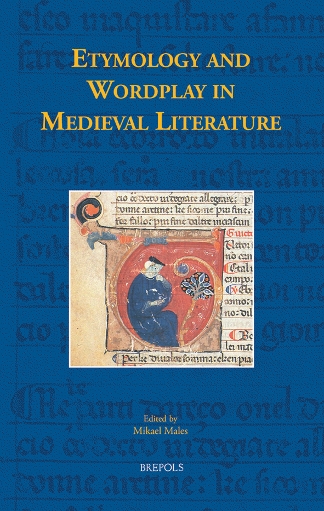
Etymology and Wordplay in Medieval Literature
show More to view fulltext, buy and share links for:Etymology and Wordplay in Medieval Literature show Less to hide fulltext, buy and share links for: Etymology and Wordplay in Medieval LiteratureIn modern scholarship, etymology and wordplay are rarely studied in tandem. In the Middle Ages, however, they were intrinsically related, and both feature prominently in medieval literature. Their functions are often at variance with the expectations of the modern reader, in particular when wordplay is used to arrive at crucial answers or to convey theological insights. The studies in this book therefore carry important implications for our understanding of the reception of medieval texts. The authors show how etymology and wordplay in the Middle Ages often served as an impetus for meditation and as a route to truth, but that they could also be put to more mundane uses, such as the bolstering of national pride. In a narrative context, the functions of etymology and wordplay could range from underlining the sexual bravado of the protagonist to being the key indicator of whether the hero would live or die.
This book presents case studies of the uses of etymology and wordplay in a number of medieval literatures (Latin, Old French, Middle High German, Italian, Old Irish, Old English, Old Norse, Slavic). By moving beyond the strictly etymological discourse into different parts of medieval literature, the functions of these devices are highlighted in various contexts. Their significance ranges from the bawdy to the sublime, from the open-ended to the specific. Classical and medieval developments of etymology and wordplay are described in a background chapter.
-