


Brepols Online Books Medieval Miscellanea Collection 2018 - bob2018mime

Collection Contents
4 results
-
-

Medieval Francophone Literary Culture Outside France
show More to view fulltext, buy and share links for:Medieval Francophone Literary Culture Outside France show Less to hide fulltext, buy and share links for: Medieval Francophone Literary Culture Outside FranceIn medieval Europe, cultural, political, and linguistic identities rarely coincided with modern national borders. As early as the end of the twelfth century, French rose to prominence as a lingua franca that could facilitate communication between people, regardless of their origin, background, or community. Between the twelfth and fifteenth centuries, literary works were written or translated into French not only in France but also across Europe, from England and the Low Countries to as far afield as Italy, Cyprus, and the Holy Land. Many of these texts had a broad European circulation and for well over three hundred years they were transmitted, read, studied, imitated, and translated.
Drawing on the results of the AHRC-funded research project Medieval Francophone Literary Culture Outside France, this volume aims to reassess medieval literary culture and explore it in a European and Mediterranean setting. The book, incorporating nineteen papers by international scholars, explores the circulation and production of francophone texts outside of France along two major axes of transmission: one stretching from England and Normandy across to Flanders and Burgundy, and the other running across the Pyrenees and Alps from the Iberian Peninsula to the Levant. In doing so, it offers new insights into how francophone literature forged a place for itself, both in medieval textual culture and, more generally, in Western cultural spheres.
-
-
-
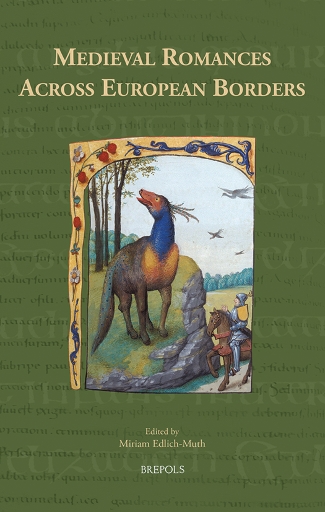
Medieval Romances Across European Borders
show More to view fulltext, buy and share links for:Medieval Romances Across European Borders show Less to hide fulltext, buy and share links for: Medieval Romances Across European BordersThey were the bestsellers of their time; in the late medieval period, a number of shorter romances and tales, such as Floire et Blancheflor, Partonopeus de Blois, Valentine and Orson, and many others, enjoyed striking popularity across different regions of Europe. In this volume, scholars from across Europe and beyond examine the processes by which medieval romances were adapted across regional and national borders. By considering how the content, form, and broader contextualisation of individual romances were altered by the transition from one region to another, the chapters variously address the role translators, narrators, editors, and compilers played in adapting the tales to different cultural and codicological settings. In this context, they discuss not only the shifting plotlines of the tales, but also the points at which the generic features of the texts shift in response to changing cultural codes. In doing so, they raise broader questions concerning the links between genre, manuscript form, cultural assimilation, and the popularity of certain romance texts in different cultural communities.
-
-
-
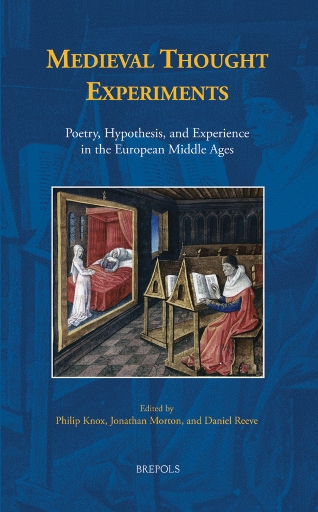
Medieval Thought Experiments
show More to view fulltext, buy and share links for:Medieval Thought Experiments show Less to hide fulltext, buy and share links for: Medieval Thought ExperimentsThroughout the Middle Ages, fictional frameworks could be used as imaginative spaces in which to test or play with ideas without asserting their truth. The aim of this volume is to consider how intellectual problems were approached - if not necessarily resolved - through the kinds of hypothetical enquiry found in poetry and in other texts that employ fictional or imaginative strategies. Scholars working across the spectrum of medieval languages and academic disciplines consider why a writer might choose a fictional or hypothetical frame to discuss theoretical questions, how a work’s truth content is affected and shaped by its fictive nature, or what kinds of affective or intellectual work its reading demands. By reading literary, philosophical, and spiritual texts from England, France, and Italy alongside each other, this collection offers a new interdisciplinary approach to the history of medieval thought.
-
-
-
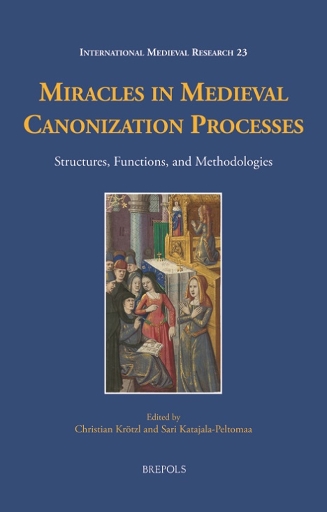
Miracles in Medieval Canonization Processes
show More to view fulltext, buy and share links for:Miracles in Medieval Canonization Processes show Less to hide fulltext, buy and share links for: Miracles in Medieval Canonization ProcessesWhen a beneficiary or an eye-witness to a miracle met a scribe at a saint’s shrine or a notary at a canonization hearing, it was necessary to establish that the experience was miraculous. Later, the same incident may have been re-told by the clergy; this time the narration needed to entertain the audience yet also to contain a didactic message of divine grace. If the case was eventually scrutinized at the papal Curia, the narration and deposition had to fulfil the requirements of both theology and canon law in order to be successful. Miracle narrations had many functions, and they intersected various levels of medieval society and culture; this affected the structure of a collection and individual narration as well as the chosen rhetoric.
This book offers a comprehensive methodological analysis of the structure and functions of medieval miracle collections and canonization processes as well as working-tools for reading these sources. By analysing typologies of miracles, stages of composition, as well as rhetorical elements of narrations and depositions, the entertaining, didactic, and judicial aspects of miracle narrations are elucidated while the communal and individual elements are also scrutinized.
-