


Brepols Online Books Medieval Miscellanea Collection 2018 - bob2018mime

Collection Contents
4 results
-
-
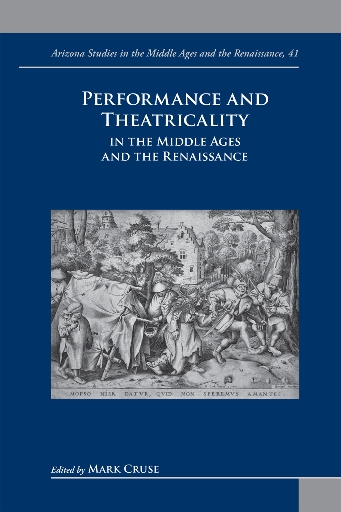
Performance and Theatricality in the Middle Ages and the Renaissance
show More to view fulltext, buy and share links for:Performance and Theatricality in the Middle Ages and the Renaissance show Less to hide fulltext, buy and share links for: Performance and Theatricality in the Middle Ages and the RenaissanceThis volume is a contribution to the cross-cultural study of theater and performance in the Middle Ages and the Renaissance. The studies gathered here examine material from Austria, England, France, Germany, Italy, the Netherlands, Russia, and Spain from the thirteenth to the eighteenth century. Underlying all of these essays is the understanding that performance shapes reality - that in all of the cultural contexts included here, performance opened a space in which patrons, rulers, writers, painters, spectators, and readers could see themselves or their societies differently, and thereby could assume different identities or construct alternative communities. Addressing confession and private devotion, urban theater and pageantry, royal legitimacy and religious debate, and a wide range of genres and media, this volume offers a panoramic mosaic of theater’s world-making role in medieval and early modern European societies.
-
-
-
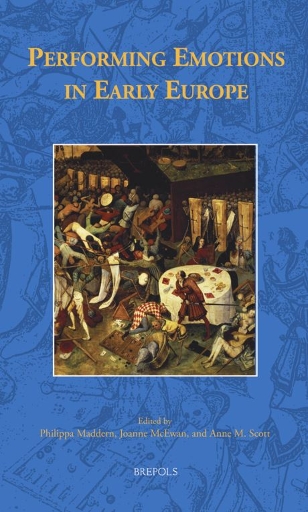
Performing Emotions in Early Europe
show More to view fulltext, buy and share links for:Performing Emotions in Early Europe show Less to hide fulltext, buy and share links for: Performing Emotions in Early EuropeDrawing on a range of interdisciplinary approaches and innovative methodologies, this collection contributes ground-breaking new scholarship in the burgeoning field of emotions studies by examining how medieval and early modern Europeans communicated and ‘performed’ their emotions. Rejecting the notion that emotions are ‘essential’ or ‘natural’, this volume seeks to pay particular attention to cultural understandings of emotion by examining how they were expressed and conveyed in a wide range of historical situations. The contributors investigate the performance and reception of pre-modern emotions in a variety of contexts — in literature, art, and music, as well as through various social and religious performances — and in a variety of time periods ranging from the twelfth to the eighteenth centuries. These studies provide both case-studies of particular emotions and emotional negotiations, and examinations of how their categorisation, interpretation, and meaning has changed over time.
The contributors provide new insights into the expression and performance of pre-modern emotions from a wide range of disciplinary fields, including historical studies, literature, art history, musicology, gender studies, religious studies, and philosophy. Collectively, they theorise the performativity of medieval and early modern emotions and outline a new approach that takes fuller account of the historical specificity and cultural meanings of emotions at particular points in time.
This volume forms a companion to Understanding Emotions in Early Europe, edited by Michael Champion and Andrew Lynch (2015); http://www.brepols.net/Pages/ShowProduct.aspx?prod_id=IS-9782503552644-1
-
-
-
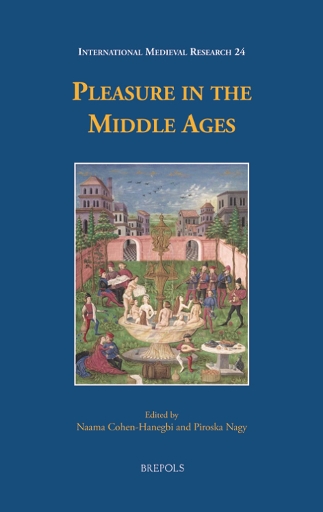
Pleasure in the Middle Ages
show More to view fulltext, buy and share links for:Pleasure in the Middle Ages show Less to hide fulltext, buy and share links for: Pleasure in the Middle AgesThis volume explores the diverse manifestations and uses of pleasure in medieval culture. Pleasure is a sensation, an affirmation, a practice, and is at the core of the medieval worldview, no less than pain.
Applying a variety of methodological perspectives, the essays collected here analyse the role of pleasure in relation to a variety of subjects such as the human body, love, relationships, education, food, friendship, morality, devotion, and mysticism. They also integrate a wide range of sources including literature (monastic to courtly), medical texts, illuminated prayer books, iconography, and theatrical plays.
Each document, each discipline, and thus each essay combine to provide a complex and diversified picture of medieval joys and delights - a picture that shows the extent to which pleasure is engrained in the period’s culture. This collection shows how pleasure in the Middle Ages is at once a coveted feeling and a constant moral concern, both the object and the outcome of a constant negotiation between earthly and divine imperatives.
-
-
-
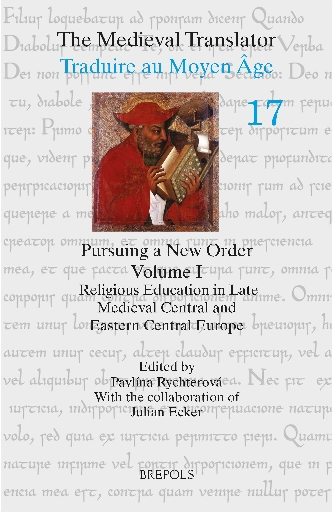
Pursuing a New Order I.
show More to view fulltext, buy and share links for:Pursuing a New Order I. show Less to hide fulltext, buy and share links for: Pursuing a New Order I.Concentrating on the period of the emergence of the vernaculars in the context of religious text production in Central and Eastern Central Europe from the fourteenth to the sixteenth centuries, the individual studies in this volume present material so far neglected by nationally defined historiographies and literary studies. The process of vernacularization created a new sociolinguistic field for the negotiation of social order through the choice of texts and topics. This volume seeks to answer the questions of whether, why and how distinctive new communicative, literary, and political cultures developed after the vernacular languages had acquired ever higher levels of literacy and education. The volume fills a gap in contemporary scholarship on the role of the vernaculars and vernacular literatures in European medieval societies and with the focus on Eastern European regions it breaks new ground in regard to questions that have so far only been explored on the basis of material from Europe’s ‘West’.
-