


Brepols Online Books Medieval Miscellanea Collection 2018 - bob2018mime

Collection Contents
2 results
-
-
Victorine Christology
show More to view fulltext, buy and share links for:Victorine Christology show Less to hide fulltext, buy and share links for: Victorine ChristologyThe Canons following the Rule of St Augustine at St Victor in Paris were some of the most influential religious writers of the Middle Ages. They combined exegesis and spiritual teaching in a theology that was deeply rooted in tradition but also attuned to current developments in the schools of Paris. The importance of Victorine Christology in this great age of theological speculation is unquestionable. The writings translated in this volume cover the foundational and maturing periods of Victorine Christology during the 1130s to the 1150s when Hugh of St Victor championed the paradigm of the “assumed man” (homo assumptus) and Robert of Melun advanced his Christology into the most comprehensive treatment in the twelfth century.
-
-
-
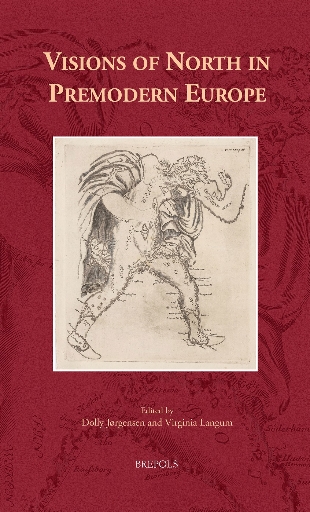
Visions of North in Premodern Europe
show More to view fulltext, buy and share links for:Visions of North in Premodern Europe show Less to hide fulltext, buy and share links for: Visions of North in Premodern EuropeThe North has long attracted attention, not simply as a circumpolar geographical location, but also as an ideological space, a place that is ‘made’ through the understanding, imagination, and interactions of both insiders and outsiders. The envisioning of the North brings it into being, and it is from this starting point that this volume explores how the North was perceived from ancient times up to the early modern period, questioning who, where, and what was defined as North over the course of two millennia.
Covering historical periods as diverse as Ancient Greece to eighteenth-century France, and drawing on a variety of disciplines including cultural history, literary studies, art history, environmental history, and the history of science, the contributions gathered here combine to shed light on one key question: how was the North constructed as a place and a people? Material such as sagas, the ethnographic work of Olaus Magnus, religious writing, maps, medical texts, and illustrations are drawn on throughout the volume, offering important insights into how these key sources continued to be used over time. Selected texts have been compiled into a useful appendix that will be of considerable value to scholars.
-