


Brepols Online Books Other Miscellanea Collection 2018 - bob2018miot

Collection Contents
20 results
-
-
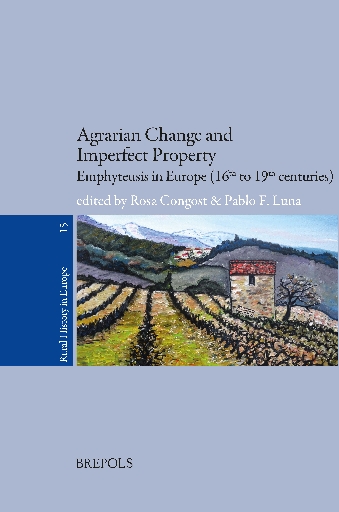
Agrarian Change and Imperfect Property
show More to view fulltext, buy and share links for:Agrarian Change and Imperfect Property show Less to hide fulltext, buy and share links for: Agrarian Change and Imperfect PropertyThis book is situated at the crossroads of two recurring themes in rural history: agrarian contracts and property rights. Emphyteusis is at the heart of agrarian history in that it brings together agricultural history and the nature of social relations in traditional societies. Despite this, many such contracts have been blithely ignored, or unjustly dismissed, either because they are hard to identify, given the many variants that existed, or because, as a form of divided property, they are generally perceived in a negative light.
Nevertheless, emphyteusis is to be found everywhere, even in regions which deny its existence, and it is far from being obsolete. Rather, it is flourishing, prospering and long-lived, particularly in urban areas. Emphyteusis has a long history and has played a central role, sometimes misleading, but always crucial, in the process of agricultural development. It has held sway as a substitute when access to property has been impossible, and as a source of conflicts has often revealed the nature of power relations between property owners on the one hand, whether seigneurial or not, and cultivators, short-term and long-term tenants on the other. The different chapters in this volume illuminate these multiple facets and forms of this type of contract and imperfect property rights. Though the focus is on Mediterranean societies, the questions raised have relevance far beyond this specific area.
-
-
-
Beyond Intolerance
show More to view fulltext, buy and share links for:Beyond Intolerance show Less to hide fulltext, buy and share links for: Beyond Intolerance313 ad is generally considered a “turning point” in religious and political Western history. The meeting of Constantine and Licinius in Milan and the subsequent “edict” not only gave Christians the right to assemble and practice their faith, but opened the way to the Christianisation of Roman imperial structures and, finally, to the declaration of Christianity as the only religion allowed in the Roman Empire.
The papers collected in this volume tackle this complex historical phase from a number of perspectives (from Church history and theology to political and juridical history), following a strongly multidisciplinary approach. The chronological schope, stretching from the decades preceding the meeting of 313 to the reign of Julian the Apostate, sheds light on the cultural, political and juridical premises of Constantine and Licinius’s decisions as well as the way those premises affected a number of aspects of everyday life within the Empire up to Julian's pagan “restoration” and afterward.
-
-
-
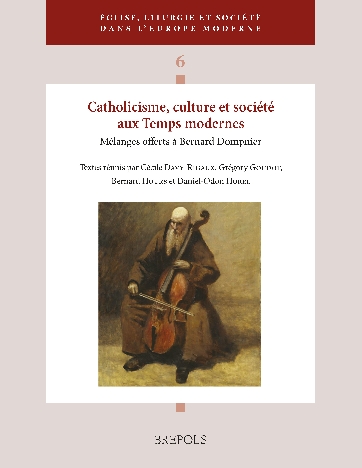
Catholicisme, culture et société aux Temps modernes
show More to view fulltext, buy and share links for:Catholicisme, culture et société aux Temps modernes show Less to hide fulltext, buy and share links for: Catholicisme, culture et société aux Temps modernesDepuis plus de quarante ans, Bernard Dompnier scrute la complexité du catholicisme moderne, ouvrant de nombreux chantiers transversaux autour des réguliers, des missions, des dévotions mais aussi de la liturgie et de la musique d’église. La vingtaine de textes qui constitue ce livre, dont les auteurs sont des collègues et amis, historiens et musicologues, rend ainsi hommage à cette diversité d’approches pour un objet principal : le catholicisme pensé et vécu au coeur de la société d’Ancien Régime.
-
-
-
Christianisme des origines
show More to view fulltext, buy and share links for:Christianisme des origines show Less to hide fulltext, buy and share links for: Christianisme des originesÀ l’occasion du départ à la retraite de Paul-Hubert Poirier de son poste de professeur en patrologie et en histoire de l’Église à la Faculté de théologie et de sciences religieuses de l’Université Laval, collègues, amis et anciens étudiants se sont réunis pour lui rendre hommage. Les vingt-sept contributions recueillies, qui s’illustrent par la variété des thèmes abordés et par leur grande qualité scientifique, témoignent de l’étendu des intérêts de Paul-Hubert Poirier pour les domaines touchant de près ou de loin le christianisme des premiers siècles, des quatre coins de la Méditerranée. Les articles rassemblés intéresseront tant les spécialistes de l’histoire et de la littérature des premiers siècles chrétiens, que ceux du christianisme syriaque, copto-égyptien et éthiopien, de la philosophie antique, du gnosticisme et du manichéisme.
-
-
-

Cosmogonies et religion
show More to view fulltext, buy and share links for:Cosmogonies et religion show Less to hide fulltext, buy and share links for: Cosmogonies et religionDans cet ouvrage sont rassemblées les contributions de spécialistes belges et français, présentées lors du colloque organisé à l’Université catholique de Louvain le 3 juin 2016 par le Centre d’Histoire des Religions Cardinal Julien Ries. La thématique de cette journée abordait des aspects particuliers des astres dans les religions de l’antiquité méditerranéenne et orientale (Iran). De tous temps, la lune, les astres et les phénomènes célestes ont fasciné l’être humain. Les religions de l’Antiquité ont interprété ces éléments de diverses manières. Les régions concernées par les articles de ce volume sont l’Iran, l’Anatolie (Hitittes), la Grêce, ainsi que la Chine (tokharien).
-
-
-
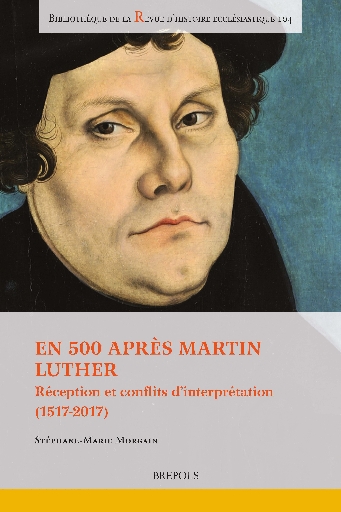
En 500 après Martin Luther
show More to view fulltext, buy and share links for:En 500 après Martin Luther show Less to hide fulltext, buy and share links for: En 500 après Martin LutherPublication issue d'un colloque réalisé en octobre 2017 par l'institut catholique de Toulouse à l’occasion du 5e centenaire de la Réforme protestante.
L’approche est résolument celle de l’histoire des idées religieuses et de l’interdisciplinarité.
Sans négliger l’approche historique, la priorité est donnée à la réception et à l’interprétation de Martin Luther en luthéranisme et dans la théologie catholique contemporaine. Ainsi, cette publication vise à mettre en lumière les conflits d’interprétation, les points de rupture, mais aussi les points d’intersections avec d’autres confessions chrétiennes, principalement le catholicisme et le calvinisme, dans une perspective œcuménique.
Considérer Martin Luther comme point de départ, c’est s’intéresser davantage aux bouleversements auxquels il a conduit et à ses prodromes, qu’à ses origines ou ses inspirations. Il s’agit aussi de comprendre son projet de réforme, ses méthodes de retour aux sources, son emploi de l’histoire, les représentations qu’il produit du monde et de l’homme, des implications sociales et politiques de sa révolution théologique.
-
-
-
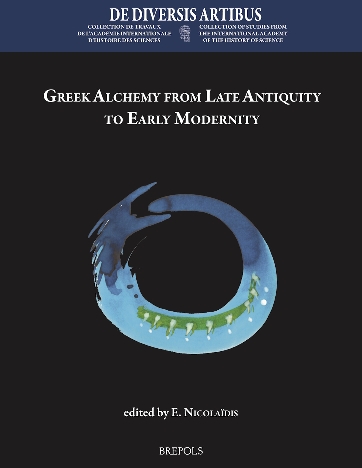
Greek Alchemy from Late Antiquity to Early Modernity
show More to view fulltext, buy and share links for:Greek Alchemy from Late Antiquity to Early Modernity show Less to hide fulltext, buy and share links for: Greek Alchemy from Late Antiquity to Early ModernityWhat do we really know about Greek alchemy throughout the ages? Certain periods, such as the Byzantine and post-Byzantine, have been somewhat overlooked. This volume engages in the the effort to shed light on certain aspects of Greek Alchemy from the 1st century CE to the 18th century, discussing and presenting relative sources, as well as the reception, transformation and use of this ‘art.’ The book also examines newly discovered manuscripts and offers a commented translation of Stephanos of Alexandria’s prayers. Furthermore, to better understand the material aspect of alchemy, it addresses the expectations and problems of laboratory replication and chemical explanation of early alchemical processes, and presents educational activities that use historical texts for the reconstruction of apparatuses in the school laboratory in secondary education.
-
-
-
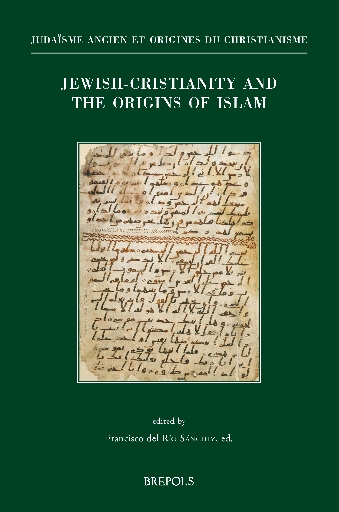
Jewish Christianity and the Origins of Islam
show More to view fulltext, buy and share links for:Jewish Christianity and the Origins of Islam show Less to hide fulltext, buy and share links for: Jewish Christianity and the Origins of IslamAmong all the different theories that currently explore the religious milieu of Late Antiquity to elucidate the origins of the Islamic religion, there is a group of scholars supporting that Jewish Christianity must have played a role in its formation, reviving the question of a potential link between Early Islam and the beliefs and practices of those followers of Jesus that maintained or adopted certain Jewish beliefs and practices, either Jews that believed in the messianism and/or the prophecy of Jesus, groups whose existence and nature is still a matter of debate. In any case, the question is still subject of passionate debate among specialists. This volume collects the papers of a two-day colloquium held in Washington DC in October 2015 about the question of Jewish Christianity and Early Islam and highlights the vitality of this field of studies. The contributions included here cover a broad range of topics, and they offer new ideas, interpretations and understandings of the question.
-
-
-
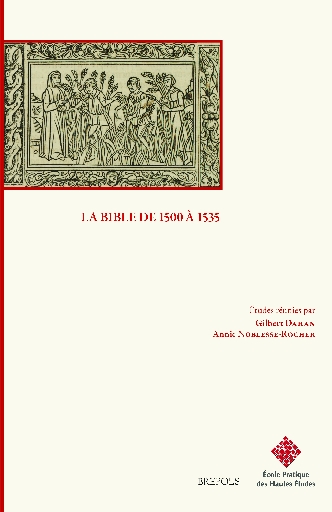
La Bible de 1500 à 1535
show More to view fulltext, buy and share links for:La Bible de 1500 à 1535 show Less to hide fulltext, buy and share links for: La Bible de 1500 à 1535La période qui s’étend de 1500 à 1535 est d’une fécondité extraordinaire dans l’histoire du texte biblique. L’imprimerie permet la mutiplication et la diffusion rapide des livres, l’humanisme favorise la connaissance des langues anciennes, particulièrement de l’hébreu et du grec, la Réforme naissante promeut une culture biblique populaire qui passe par des versions vernaculaires, dont Luther donne l’exemple. Les fruits de ces efforts concernent les savants comme les gens du peuple, le monde juif comme le monde chrétien. On voit l’éclosion d’entreprises monumentales, comme la première Bible Polyglotte (Alcala, 1514-1517) ou les deux éditions par Daniel Bomberg de la Bible Rabbinique (Venise, 1517 et 1524-1525). Les deux Psautiers polyglottes imprimés en 1516 témoignent de la même attirance pour les langues bibliques. L’étude critique des textes renouvelle les entreprises du moyen âge, avec notamment le travail d’Érasme sur le Nouveau Testament et celui de Lefèvre d’Étaples. Le texte latin de la Vulgate est constamment réimprimé mais de nouvelles traductions (latines) voient le jour, comme celle de Santi Pagnini (1528) ou celle de Sebastian Münster (1534-1535), qui accompagne une édition du texte hébreu. Si l’ancienne traduction française continue à être lue, Lefèvre d’Etaples en propose une nouvelle en 1530, tandis que, liée d’abord aux communautés vaudoises, la Bible d’Olivétan (1535) va offrir au monde réformé francophone la version qui servira de base aux traductions postérieures. Les communications réunies dans ce volume disent toute la richesse de cette période.
-
-
-
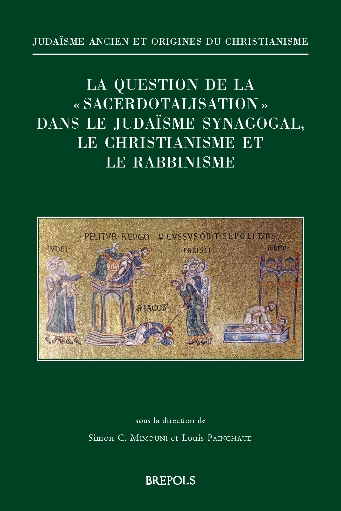
La question de la « sacerdotalisation » dans le judaïsme synagogal, le christianisme et le rabbinisme
show More to view fulltext, buy and share links for:La question de la « sacerdotalisation » dans le judaïsme synagogal, le christianisme et le rabbinisme show Less to hide fulltext, buy and share links for: La question de la « sacerdotalisation » dans le judaïsme synagogal, le christianisme et le rabbinismeContrairement à ce que l’on pense souvent, la prise de Jérusalem et l’incendie du temple en 70 n’ont pas conduit à la disparition du sacerdoce ni des sacrifices.
Ceux-ci en effet paraissent avoir été, vers la fin du Ier siècle et au IIe siècle, au centre des conflits entre Judéens chrétiens, Judéens synagogaux et Judéens rabbiniques de diverses convictions et au cœur des constructions de nouvelles identités religieuses. Comment, pourquoi et quand cette institution, alors qu’elle ne paraît plus officiellement exister, est-elle devenue un enjeu majeur dans les processus de légitimation mis en œuvre de manière plus ou moins contrastée par chacune de ces trois grandes tendances ?
Le colloque dont les Actes sont ici réunis cherche à répondre à ces questions. Il porte sur l’appropriation et la transformation contrastées, voire conflictuelles, du temple, du sacerdoce et des sacrifices entre Judéens chrétiens, Judéens synagogaux et Judéens rabbiniques et à l’intérieur même de ces groupes ou mouvances. Son approche de la question est nouvelle dans la mesure où elle ne se limite pas aux expressions littéraires du phénomène, mais cherche aussi à les articuler avec les groupes sociaux et religieux qui émergent à cette époque.
-
-
-

Luxury and the Ethics of Greed in Early Modern Italy
show More to view fulltext, buy and share links for:Luxury and the Ethics of Greed in Early Modern Italy show Less to hide fulltext, buy and share links for: Luxury and the Ethics of Greed in Early Modern ItalyThis book unravels the complex interaction of the paradigms of luxury and greed which lie at the origins of modern consumption practices. In the Western world, the phenomenon of luxury and the ethical dilemmas it raised appeared, for the first time since antiquity, in early modern Italy. Here, luxury emerged as a core idea in the conceptualization of consumption. Simultaneously, greed - which manifested in new and unrestrained consumption practices - came under close ethical scrutiny. As the buying power of new classes gained pace, these paradigms evolved as they continued both to influence, and be influenced by, other emerging global cultures through the early modern period.
After defining luxury and greed in their historical contexts, the volume’s chapters elucidate new consumptive goods, from chocolate to official robes of state; they examine how ideas about, and objects of, luxury and greed were disseminated through print, diplomacy, and gift-giving; and they reveal how even the most elite of consumers could fake their luxury objects. A group of international scholars from a range of disciplines thereby provide a new appraisal and vision of luxury and the ethics of greed in early modern Italy.
-
-
-
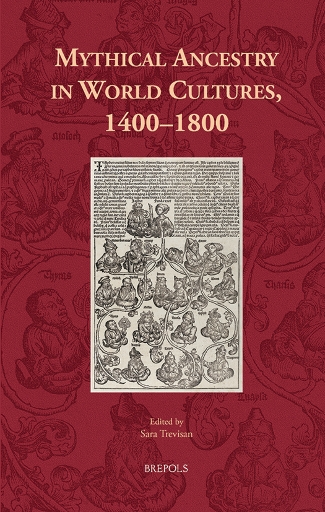
Mythical Ancestry in World Cultures, 1400-1800
show More to view fulltext, buy and share links for:Mythical Ancestry in World Cultures, 1400-1800 show Less to hide fulltext, buy and share links for: Mythical Ancestry in World Cultures, 1400-1800From Europe to the Ottoman Empire, from Mesoamerica to the Mughal dynasty, rulers and peoples in the early modern period put deities and culture heroes in their family trees. The essays in this collection investigate the issues of ancestry, descent, kinship, and kingship that are revealed by this worldwide practice. The authors explore the meaning and role of 'myth' in different global cultures, and how the social role of myth defined identity through genealogical discourse. What did people understand by 'mythical' and how did they think of themselves as related to their mythical past? How seriously were these various claims of mythical descent taken? And how did claims function within the different power relations of societies around the globe? Up to now, the predominant Eurocentric perspective in early modern studies has encouraged a focus on Renaissance Greco-Roman mythology and its role in literature and art. This volume, however, breaks new ground through its unique exploration of the way in which the genealogical use of 'myth' was shared by world cultures.
-
-
-
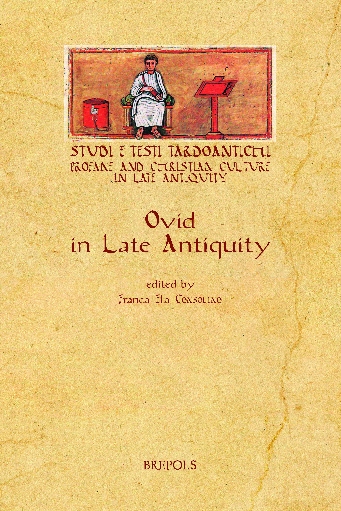
Ovid in Late Antiquity
show More to view fulltext, buy and share links for:Ovid in Late Antiquity show Less to hide fulltext, buy and share links for: Ovid in Late AntiquityThe 2000th anniversary of Ovid's death was celebrated in 2017, and Ovid in Late Antiquity aims to mark the occasion. This book embodies a specific approach to Ovid's oeuvre, which is not analysed in and of itself, but rather in its role as a wellspring of inspiration to which later authors would return time and again. Covering the work of a number of authors, who found their way back to Ovid via different methodological pathways, the research distilled in this book is geared towards exploring the ways in which the authors of late antquity interacted with the poet of the Metamorphoses and with his immense, multifaceted output. The choice of this approach arose out of an awareness that the presence and influence of Ovid in late antiquity constitute aspects of the Ovidian legacy that would benefit from more in-depth exploration. The essays in this collection are intended to help bridge this gap.
-
-
-
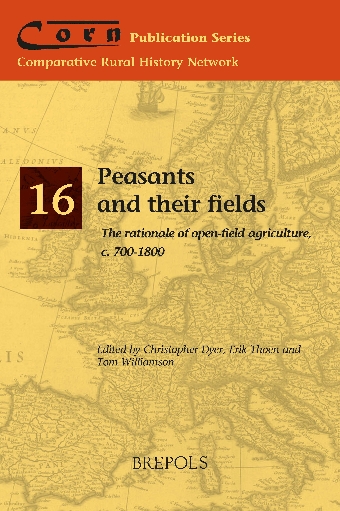
Peasants and their fields
show More to view fulltext, buy and share links for:Peasants and their fields show Less to hide fulltext, buy and share links for: Peasants and their fieldsIn the Middle Ages and the Early Modern Period open fields could be found in many if not most countries in Europe. They took a wide variety of forms, but can in essence be defined as areas of cultivated land in which the intermingled plots of different cultivators, without upstanding physical boundaries, were subject to some degree of communal management, in terms of cropping and grazing. Sometimes such fields occupied a high proportion of the land in a district, but often they formed a relatively minor element in landscapes which also contained enclosed fields, woodland or expanses of pasture. In some areas, open-field agriculture had already been abandoned before the end of the Middle Ages, but in others it continued to flourish into the nineteenth or even twentieth centuries.
Although open fields have long been studied by geographers, historians and archaeologists, much about their origins, development and rationale remains contentious. Why, across wide areas of Europe, did such fields sometimes become central to the experience of so many of our ancestors, shaping not only farming practices but also the basic structures of their everyday lives? And why, in contrast, did they fail to develop, or have a less significant role, elsewhere?
Over recent decades open fields have been investigated in new, interdisciplinary ways, and as a Europe-wide phenomenon. In this book, more than ever before, their development and operation are explained in terms of economic, social, agrarian and environmental developments which were shared, to varying degrees, by all parts of the continent. It contains ten new studies from a wide range of regions, together with important comparative research from South America and Japan. This collection of essays represents a milestone in the study of open-field agriculture, and is a major contribution to the study of the rationale of field systems more generally.
-
-
-
Poeti in Agone
show More to view fulltext, buy and share links for:Poeti in Agone show Less to hide fulltext, buy and share links for: Poeti in AgoneL’agonismo fu una componente intrinseca, pervasiva e connotante dell’attività poetica e musicale nella Grecia antica. Fu uno dei più importanti veicoli di identità, condivisione comunitaria e acculturazione interna. Questo volume, affrontando la problematica sia da un punto di vista sincronico che diacronico, cerca di lumeggiarne gli aspetti particolarmente significativi: in Atene, i concorsi tragici come performance rituale e atto politico; le multiformi relazioni genetiche, strutturali e funzionali tra le esecuzioni corali drammatiche e i generi della poesia melica; la ‘Nuova Musica’ e il clima di rinnovamento culturale che si affaccia nell’Atene di V sec. a.C. che, a partire dal ditirambo, investe tutte le forme poetiche; la centralità, la vitalità e la varietà degli agoni delfici; l’agonistica poetica e musicale come argomento di interesse, narrazione e riflessione nell’opera di scrittori tra l’epoca ellenistica e quella imperiale; l’iconografia di figure mitiche di eccellenza musicale e le riprese dell’antico.
-
-
-

Postérités européennes de Quinte-Curce
show More to view fulltext, buy and share links for:Postérités européennes de Quinte-Curce show Less to hide fulltext, buy and share links for: Postérités européennes de Quinte-CurcePendant des siècles, Quinte-Curce a été l’un des historiens d’Alexandre le Grand les plus lus en Europe. Limitée jusqu’au xiv e siècle, la diffusion de ses Historiae s’amplifie grâce à la lecture et à la plume d’humanistes italiens ; les copies manuscrites, puis les traductions et les éditions se multiplient en Europe. Le présent ouvrage se donne pour objet d’étude leurs réceptions multiples du xiv e au xviii e siècle, c’est-à-dire durant les siècles de leur plus grand succès, il étudie les modalités de leur transmission et ses acteurs, ainsi que leurs exploitations politiques, historiques, linguistiques, littéraires et esthétiques. Au-delà de ses usages scolaires, l’œuvre de Quinte-Curce a en effet suscité des jugements divers et des adaptations variées, qui interrogent le statut que les auteurs et les peintres lui ont donné, ainsi que les finalités de leurs appropriations. Alors que leur célébration comme modèle historique et stylistique domine jusqu’au xvii e siècle, philosophes et historiens les contestent ensuite pour leurs inexactitudes et leurs enjolivements romanesques, même si ce rejet des savants n’entame pas leur succès auprès des écrivains, des lecteurs, des peintres et des artistes passionnés d’Alexandre. Les réceptions ont été d’autant plus nombreuses que les Historiae ont été prises dans des réflexions et des démarches créatrices multiples, durant plusieurs siècles : la pensée politique sur le pouvoir royal et la conquête ; les débats autour de l’écriture de l’histoire ; les réflexions sur les méthodes et les enjeux de la traduction ; la question de l’illustration des langues et l’élaboration de modèles stylistiques ; les transpositions et les recréations de l’histoire et d’un texte historique dans des genres littéraires fictionnels, le théâtre et le roman, et aussi dans les arts visuels, avec les illustrations des manuscrits et plus encore les peintures d’histoire.
-
-
-
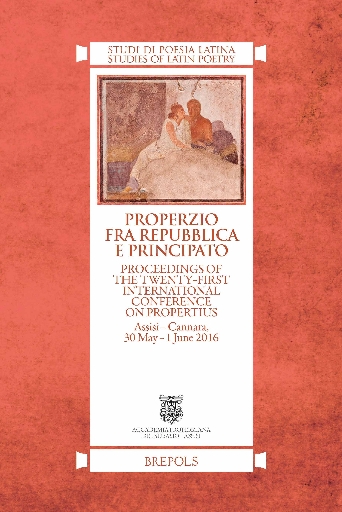
Properzio fra Repubblica e Principato
show More to view fulltext, buy and share links for:Properzio fra Repubblica e Principato show Less to hide fulltext, buy and share links for: Properzio fra Repubblica e PrincipatoThe 2016 conference’s aim was to place Propertius in context. The papers focused on the compatibility between the choice of the elegiac form and the political framework, with special emphasis on Propertius’ relationship to Tullus before his approach to Maecenas and the more direct contact with Augustus subsequent to Maecenas’ removal. While not overstepping the bounds of the genre, the poet was able to contrive a set of references to the princeps and the political reality, thus originally achieving a balanced attitude. It is impossible, however, to grasp any growing alignment with Augustan policies. Rather, the recognition of the collective perception of the turning point marked by the victory at Actium, though within the patterns typical of the elegiac genre, can be perceived.
-
-
-
Religion and Material Culture: Studying Religion and Religious Elements on the Basis of Objects, Architecture, and Space
show More to view fulltext, buy and share links for:Religion and Material Culture: Studying Religion and Religious Elements on the Basis of Objects, Architecture, and Space show Less to hide fulltext, buy and share links for: Religion and Material Culture: Studying Religion and Religious Elements on the Basis of Objects, Architecture, and SpaceThis book investigates the relationship between religion and material culture in prehistoric and historic settings.
Archaeologists, scholars of religion, theologians, and ancient historians explore the role of material culture in religion, in both the historical period and before. With points of departure in theory, method, and empirical evidence, the following questions are addressed: What types of material culture characterize “religion” as such? Is it possible to identify “religion” (in historical as well as prehistoric times) on the basis of material culture alone? How did the gradual invention of various forms of material culture - graves, images, objects, space, paraphernalia - make it possible for certain religious expressions to arise and to be constructed?
On one hand, the objective of the project is to expand the field of the history of religion beyond written texts. On the other hand, with regards to the prehistoric sources, looking to the material evidence rather than conceptual models allows us to discuss religion on the basis of the archaeological data, an important step forward.
-
-
-
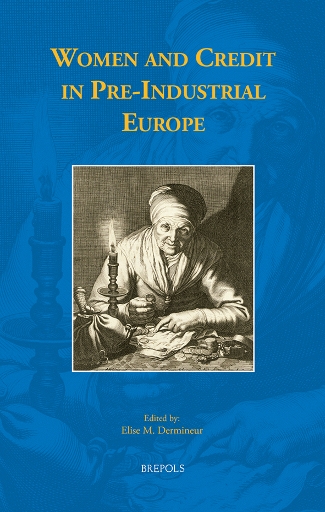
Women and Credit in Pre-Industrial Europe
show More to view fulltext, buy and share links for:Women and Credit in Pre-Industrial Europe show Less to hide fulltext, buy and share links for: Women and Credit in Pre-Industrial EuropeThis collection of essays compares and discusses women’s participation and experiences in credit markets in early modern Europe, and highlights the characteristics, common mechanisms, similarities, discrepancies, and differences across various regions in Europe in different time periods, and at all levels of society. The essays focus on the role of women as creditors and debtors (a topic largely ignored in traditional historiography), but also and above all on the development of their roles across time. Were women able to enter the credit market, and if so, how and in what proportion? What was then the meaning of their involvement in this market? What did their involvement mean for the community and for their household? Was credit a vector of female emancipation and empowerment? What were the changes that occurred for them in the transition to capitalism? These essays offer a variety of perspectives on women’s roles in the credit markets of early modern Europe in order to outline and answer these questions as well as analysing and exploring the nature of women, money, credit, and debt in a pre-industrial Europe.
-
-
-
Per i testi latini: Prime riflessioni sul fondo inedito di Robert Marichal
show More to view fulltext, buy and share links for:Per i testi latini: Prime riflessioni sul fondo inedito di Robert Marichal show Less to hide fulltext, buy and share links for: Per i testi latini: Prime riflessioni sul fondo inedito di Robert MarichalRobert Marichal (1904-1999) was one of the most famous Latin paleographers of the Twentieth Century. His broad production is precious and well-known by scholars from all over the world, but his recently discovered Archive at the École Pratique des Hautes Études (Paris) offers a further and impressive contribution to the knowledge we have of ancient Latin texts, from Latin papyri from Herculaneum, to Latin ostraka from Northen Africa, and to Latin graffiti the ancient Latium and Campania.
This volume moves from the pioneer work on this Archive by the ERC project PLATINUM. It collects eight papers from leading specialists and highlights how promising is the work on such an unpublished Archive.
-