


Brepols Online Books Medieval Monographs Collection 2018 - bob2018mome

Collection Contents
3 results
-
-
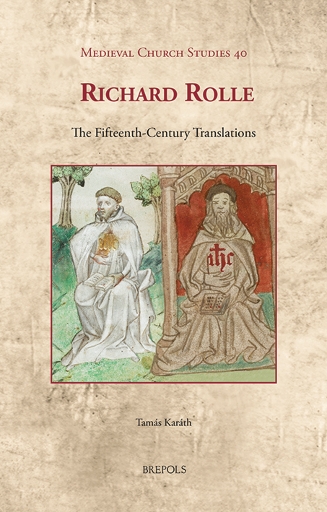
Richard Rolle
show More to view fulltext, buy and share links for:Richard Rolle show Less to hide fulltext, buy and share links for: Richard RolleThis book explores the fifteenth-century translations of Richard Rolle’s Latin and English writings into English and Latin, respectively, raising questions about the impact of translation on an author’s legacy through the editorial activity of his translators. The volume also discusses Rolle’s sensory mysticism - which was criticized by the ensuing generation of mystics - whilst looking into the ways in which translations of his work create a fifteenth-century version of Rolle. While the fifteenth-century translations did not represent the standard means of shaping Rolle’s authority, this study illustrates individual encounters with Rolle’s writings in which interpretation was much more overt than in the devotional reuse of untranslated Rollean material. The volume asks if alternative and perhaps controversial portraits of the same author arise from the translations.
Richard Rolle has received many, often conflicting, labels in scholarship: the father of English prose, the first medieval English author, the first known mystic of English literature, the runaway Oxford man, the non-conformist hermit, and the misogynist. This book is located in the context of the late medieval censorship culture which inevitably impacted the translators’ treatment of authority, revelatory writing, and theological speculations. The analysis of Rolle in translation highlights the various meanings, practices, and implications of translation in the fifteenth century.
-
-
-
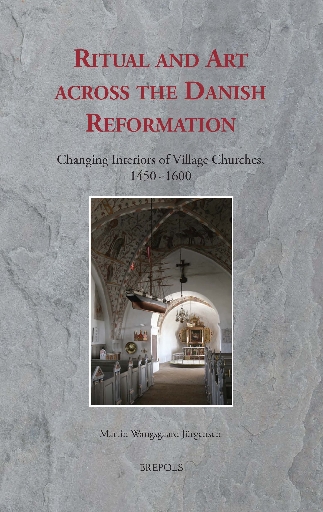
Ritual and Art across the Danish Reformation
show More to view fulltext, buy and share links for:Ritual and Art across the Danish Reformation show Less to hide fulltext, buy and share links for: Ritual and Art across the Danish ReformationThis volume presents a thorough study of the more than a thousand preserved Danish medieval rural parish churches. It traces the transformations of church interiors from c. 1450 to 1600 (thus covering both the emergence and impact of the Danish Reformation) by interpreting material changes within a broad historical perspective that highlights changes in religious practices and liturgy. The book explores the spatial and artistic implications of liturgy as well as the role of the congregation, the donor, and the clergy both in shaping and disrupting these interiors. It sets out to answer four basic questions: What did these rural churches look like by the middle of the fifteenth century? How did they change from the middle of the fifteenth century to the end of the sixteenth? How were they used and integrated into public as well as private ceremonies? And how may these churches have been perceived and experienced by the congregation and clergy?
This study seeks to establish a methodological framework that incorporates the disciplines of archaeology, art history, history, and theology, in order to facilitate an overall understanding of the architectural setting, embracing spatial, material, and artistic elements within the church through liturgy.
-
-
-
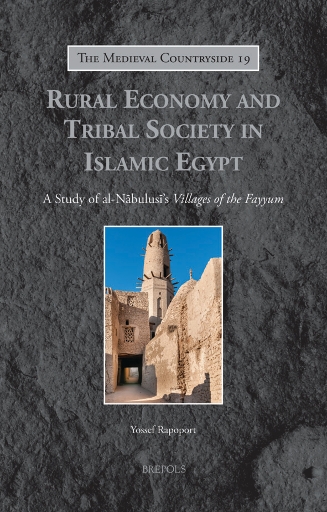
Rural Economy and Tribal Society in Islamic Egypt
show More to view fulltext, buy and share links for:Rural Economy and Tribal Society in Islamic Egypt show Less to hide fulltext, buy and share links for: Rural Economy and Tribal Society in Islamic EgyptThe Villages of the Fayyum is a unique and unparalleled thirteenth-century Arabic tax register of the province of the Fayyum in Middle Egypt. Based on this tax-register, this book utilises quantitative research methods and spatial GIS analysis to provide a rich account of the rural economy of the medieval Fayyum, the tribal organization of the village communities, and their rights and duties in relation to the military landholders. It also draws on the rich documentary evidence of the Fayyum, which stretches back to the Greco-Roman and early Islamic periods, to trace the transformation of the Fayyum into a Muslim-majority and Arab province.
This volume thus offers a radically new perspective on the social and economic history of the medieval Islamic countryside. It makes a major contribution to the history of Islamic Egypt, its rural economy, and to our understanding of taxation and administration under the Ayyubids. Most importantly, its argument for the metamorphosis of the Coptic peasantry into Muslim and tribal Arab society has profound implications for Middle Eastern history in general, and challenges our modern concept of Arab identity.
-