


Brepols Online Books Medieval Monographs Collection 2018 - bob2018mome

Collection Contents
3 results
-
-
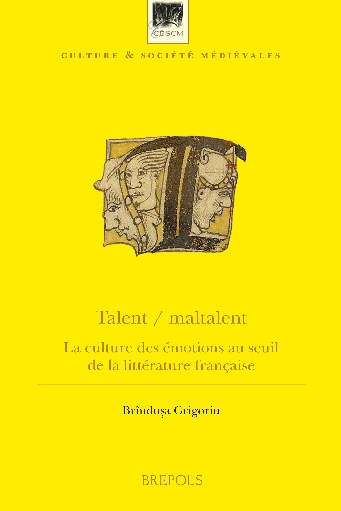
Talent / maltalent
show More to view fulltext, buy and share links for:Talent / maltalent show Less to hide fulltext, buy and share links for: Talent / maltalentS’inscrivant dans l’histoire des affects, le livre propose une relecture des premiers récits français sous le signe des polarités émotionnelles médiévales du « talent » et du « maltalent ». À l’époque de leur première réception, la Cantilène de sainte Eulalie, la Vie de saint Alexis, la Chanson de Roland et le Roman de Thèbes étaient des œuvres fermées, des textes de plaisir. Pour le lecteur du XXIe siècle, ils deviennent un beau défi jouissif. Ainsi, les détails qui débordent le cadre théologique se révèlent nombreux et savoureux : Maximien réussit son coup d’épée contre Eulalie, la « pucelle » d’Alexis parvient à consommer son mariage céleste, Charlemagne boude Gabriel, Jocaste frôle le rôle d’entremetteuse pour faire la paix par l’amour … et les mondes s’entrechoquent, ambigument possibles.
L’étude aborde les styles émotionnels, les actes émotifs, les normes affectives et les communautés responsables des « émotionologies » de ces textes liminaires de la littérature française, où les personnages font de Dieu un acte émotif de plus en plus dépouillé. Du nom à l’interjection, de la foi à l’émotion, c’est l’histoire d’une véritable émancipation qui s’écrit, en initiant, à fleur de texte, une désacralisation progressive des affects.
-
-
-
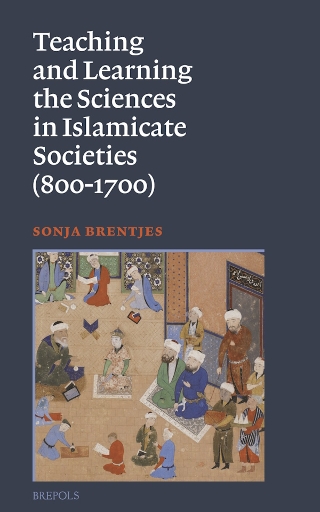
Teaching and Learning the Sciences in Islamicate Societies (800-1700)
show More to view fulltext, buy and share links for:Teaching and Learning the Sciences in Islamicate Societies (800-1700) show Less to hide fulltext, buy and share links for: Teaching and Learning the Sciences in Islamicate Societies (800-1700)This book surveys teaching and learning in the mathematical and occult sciences, medicine and natural philosophy in various Islamicate societies between 800 and 1700. It focuses in particular on Egypt and Syria between 1200 and 1600, but looks also at developments in Iran, India, Anatolia, and Iraq. It discusses institutions of teaching and learning such as house and court teachers, madrasas, hospitals, in-family teaching, and travelling in search of knowledge, as well as the content of the various sciences taught by or at them. Methods of teaching and learning, teaching bestsellers and their geographical and temporal dissemination, as well as encyclopaedias and literature on the classification of the sciences are treated in further chapters.
-
-
-
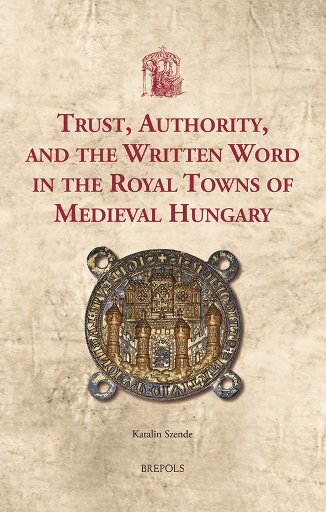
Trust, Authority, and the Written Word in the Royal Towns of Medieval Hungary
show More to view fulltext, buy and share links for:Trust, Authority, and the Written Word in the Royal Towns of Medieval Hungary show Less to hide fulltext, buy and share links for: Trust, Authority, and the Written Word in the Royal Towns of Medieval HungaryThis book is the first comprehensive overview of how written administration was established in the royal towns of medieval Hungary. Using the conceptual framework of trust and authority, the volume sheds light on the growing complexity of urban society and the impact that the various uses of writing had on managing this society, both by the king and by the local magistrates. The present survey and analysis of a broad range of surviving sources reveals that trust in administrative literacy was built up gradually, through a series of decisive and chronologically distinct steps. These included the acquisition of an authentic seal; the appointment of a clerk or notary; setting up a writing office; drawing up town books; and, finally, establishing an archive from the assemblage of collected documents.
Although the development of literacy in Hungarian towns has its own history, the questions posed by the study are not unlike those raised for other towns of medieval Europe. For instance, both the gradually increasing use of various vernaculars and the controversial role of writing in Jewish-Christian contacts can be meaningfully compared with similar processes elsewhere. The study of Central European towns can therefore be used both to broaden seemingly disparate research frameworks and to contribute to studies that take a more general approach to Europe and beyond.
-