


Brepols Online Books Medieval Monographs Collection 2018 - bob2018mome

Collection Contents
2 results
-
-
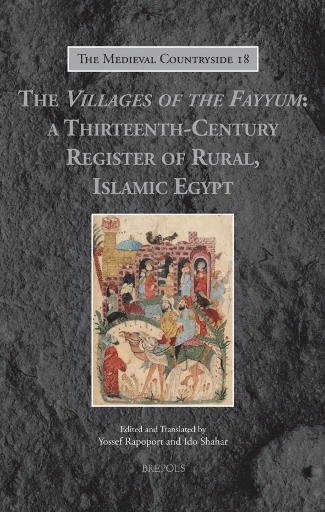
The Villages of the Fayyum, a Thirteenth-Century Register of Rural, Islamic Egypt
show More to view fulltext, buy and share links for:The Villages of the Fayyum, a Thirteenth-Century Register of Rural, Islamic Egypt show Less to hide fulltext, buy and share links for: The Villages of the Fayyum, a Thirteenth-Century Register of Rural, Islamic EgyptMedieval Islamic society was overwhelmingly a society of peasants, and the achievements of Islamic civilization depended, first and foremost, on agricultural production. Yet the history of the medieval Islamic countryside has been neglected or marginalized. Basic questions such as the social and religious identities of village communities, or the relationship of the peasant to the state, are either ignored or discussed from a normative point of view.
This volume addresses this lacuna in our understanding of medieval Islam by presenting a first-hand account of the Egyptian countryside. Dating from the middle of the thirteenth century, Abū ‘Uthmān al-Nābulusī’s Villages of the Fayyum is as close as we get to the tax registers of any rural province. Not unlike the Domesday Book of medieval England, al-Nābulusī’s work provides a wealth of detail for each village which far surpasses any other source for the rural economy of medieval Islam. It is a unique, comprehensive snap-shot of one rural society at one, significant, point in its history, and an insight into the way of life of the majority of the population in the medieval Islamic world. Richly annotated and with a detailed introduction, this volume offers the first academic edition of this work and the first translation into a European language. By opening up this key source to scholars, it will be an indispensable resource for historians of Egypt, of administration and rural life in the premodern world generally, and of the Middle East in particular.
-
-
-
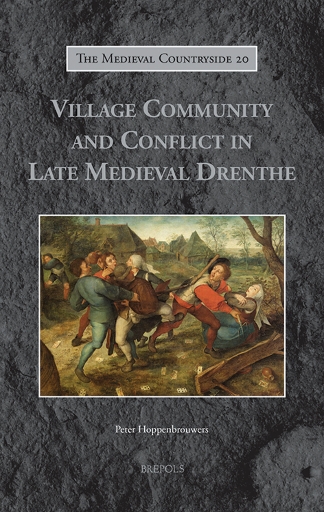
Village Community and Conflict in Late Medieval Drenthe
show More to view fulltext, buy and share links for:Village Community and Conflict in Late Medieval Drenthe show Less to hide fulltext, buy and share links for: Village Community and Conflict in Late Medieval DrentheVillage communities were the heart of the medieval countryside. But how did they operate? This book seeks to find some answers to that question by focusing on late medieval Drenthe, a region situated in a remote corner of the Holy Roman Empire and part of the prince-bishopric of Utrecht. Drenthe was an overwhelmingly localized, rural world. It had no cities, and consisted entirely of small villages. The social and economic importance of traditionally privileged sections of medieval society (clergy and nobility) was limited; free peasant landowners were the dominant social class.
Based on a careful reading of normative sources (Land charters) and thousands of short verdicts given by the so-called ‘Etstoel’ or high court of justice in Drenthe, this book focuses on three types of conflict: conflicts between villages, feud-like violence, and litigations about property. These three types coincide with three levels of involvement: that of village communities as a whole, that of kin groups, and that of households.
The resulting, comprehensive analysis provides a rigorous interrogation of generalized notions of the pre-industrial rural world, offering a snapshot of a typical peasant society in late medieval Europe.
-