


Brepols Online Books Medieval Monographs Collection 2018 - bob2018mome

Collection Contents
1 - 20 of 28 results
-
-
Daily Life on the Istrian Frontier
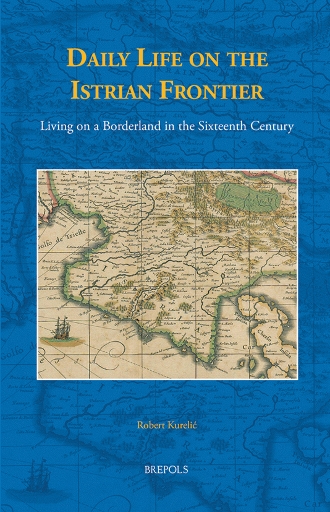
show More to view fulltext, buy and share links for:Daily Life on the Istrian Frontier show Less to hide fulltext, buy and share links for: Daily Life on the Istrian FrontierThe Istrian peninsula, located at the head of the Adriatic Sea, has long been a land of divisions. Shared today between the modern-day countries of Italy, Slovenia, and Croatia, the region during the sixteenth century was divided between an urban coastline dominated by the Republic of Venice and a rural inland that fell under the sway of the Austrian Habsburgs. The subject populations of the peninsula - predominantly Slavic Croatians and Slovenians - thus found themselves split between these rival powers, despite their shared cultural background. The result was frequent and violent clashes over boundary markers, pastures, and forests, which, added to the ravages of war, famine, and plague, led to a severe regional depopulation.
This volume also explores the arrival and subsequent social impact of a new wave of immigrants to Istria set against the backdrop of these sixteenth-century tensions. The fearsome Morlaks, Slavic speakers who had fled north from the Balkan hinterlands in the face of the Ottoman threat, were invited into Istria by both Venetians and Habsburgs as a way of replenishing the dwindling population. These new arrivals lived an opportunistic lifestyle that often bordered on banditry, creating inevitable tensions with Istria’s existing population. Even so, some were able to integrate fully into their new homeland. Through a careful analysis of the geographically small, but socially and politically dynamic Istrian frontier, this volume sheds new light on to the complexity of life in a border region, and offers a unique insight into what life was like for ordinary people struggling to live everyday lives at the very end of the Middle Ages.
-
-
-
From Topography to Text: The Image of Jerusalem in the Writings of Eucherius, Adomnán and Bede
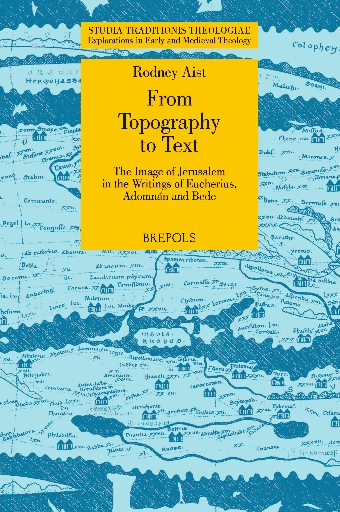
show More to view fulltext, buy and share links for:From Topography to Text: The Image of Jerusalem in the Writings of Eucherius, Adomnán and Bede show Less to hide fulltext, buy and share links for: From Topography to Text: The Image of Jerusalem in the Writings of Eucherius, Adomnán and BedeFrom Topography to Text: The Image of Jerusalem in the Writings of Eucherius, Adomnán and Bede uses topographical detail to examine the source material, religious imagination and the image of Jerusalem in three related Latin texts from the fifth, seventh and eighth centuries. The work introduces an original methodology for analyzing the Jerusalem pilgrim texts, defined by their core interest in the commemorative topography of the Christian holy places. By newly identifying the topographical material in Adomnán’s description of Jerusalem, the study exposes key distortions in the text, its exclusive intramural focus on the Holy Sepulchre and the eschatological image of New Jerusalem that emerges from its description of contemporary Jerusalem. The study verifies the post-Byzantine provenance of Adomnán’s topographical material, namely, the oral report of Arculf, thus redressing scholarly ambivalence regarding Adomnán’s contemporary source.
The new insights into Adomnán’s De locis sanctis, including its mental map of Jerusalem, provide a template with which to analyze the text’s relationship with the writings of Eucherius and Bede. While Bede’s De locis sanctis has commonly been regarded as an epitome of Adomnán’s work, when the sequence, structure and images of the texts are compared, Eucherius not Adomnán is, for Bede, the authoritative text.
From Topography to Text offers a significant discussion on the Jerusalem pilgrim texts and the Christian topography of the Holy City, while analyzing the image of Jerusalem in the writings of three remote authors who never set foot in the city.
From Topography to Text offers a significant discussion on the Jerusalem pilgrim texts and the Christian topography of the Holy City, while analyzing the image of Jerusalem in the writings of three remote authors who never set foot in the city.
-
-
-
Merovingian Letters and Letter Writers
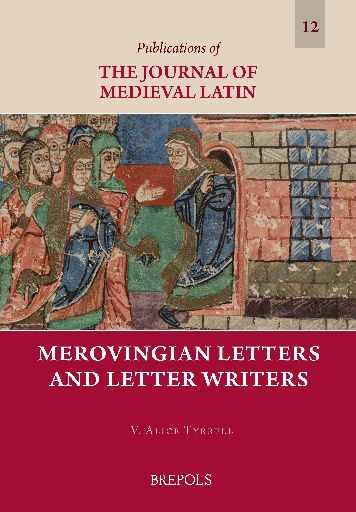
show More to view fulltext, buy and share links for:Merovingian Letters and Letter Writers show Less to hide fulltext, buy and share links for: Merovingian Letters and Letter WritersPrimary sources from the Frankish kingdom during the Merovingian era (ca. 500-750) are few and far between. This volume is a survey of more than 600 Latin letters, selected by the author, that were exchanged between persons in Gaul during that time period. Many are almost entirely unknown and have never been translated into any modern language. While most of the letters were authored by clerics and highly-placed laymen, a small but significant number was composed by women, both religious and lay.
For elite individuals, letter networks were the social media of their day. Letters were written to maintain the bonds of friendship, to seek or extend patronage and political alliance, to instruct, rebuke, defend, console, and recommend. Many have come down to us in collections; others are strays embedded in other texts or deperdita that come to light only in the replies of others.
This book is a valuable tool for scholars and students alike. In seven readable chapters, the author discusses numerous aspects of the letters and explores how they fit with, and enlarge upon, the better-known sources of the period such as the works of Gregory of Tours, Fredegar, the anonymous History of the Franks (LHF), and various saints’ vitae. An appendix containing a summary of each letter in translation renders these texts more readily accessible to the English speaker.
-
-
-
Arnoul de Lisieux (1105/1109-1184)
show More to view fulltext, buy and share links for:Arnoul de Lisieux (1105/1109-1184) show Less to hide fulltext, buy and share links for: Arnoul de Lisieux (1105/1109-1184)Si la cour d’Henri II d’Angleterre (1154-1189) a connu des évêques partisans du roi ou, comme le montre le cas de Thomas Becket, des adversaires farouches, Arnoul de Lisieux a été un homme de compromis, convaincu de la nécessaire collaboration du regnum et du sacerdotium. Voué aux gémonies par le parti de Becket, Arnoul n’a pas su gagner pour autant la sympathie indéfectible d’Henri II. Sa carrière d’évêque de cour fut pour lui jusqu’à la fin une source d’inquiétude et d’insatisfaction, comme le montrent ses lettres. Harmonieux au début du règne, les rapports avec le roi se sont rapidement refroidis, et si Arnoul comptait, entre 1164 et 1172, parmi les curiales influents, à la suite de la révolte des princes royaux (1173-1175) contre leur père, il a perdu la confiance du monarque. Sachant que le roi ne pardonnerait pas s’il avait conçu de la haine pour quelqu’un, l’évêque dut assister, impuissant et endetté, à la perte de ses revenus. Poussé vers la sortie par Henri II, il se retira, en 1181, à Saint-Victor, où il mourut (1184). Sous Henri II, vouloir être à la fois l’ami du pape et celui du roi fut une erreur lourde de conséquences pour qui avait des ambitions politiques.
-
-
-
Astrometeorología en al-Andalus y el Magrib entre los siglos VIII y XV
show More to view fulltext, buy and share links for:Astrometeorología en al-Andalus y el Magrib entre los siglos VIII y XV show Less to hide fulltext, buy and share links for: Astrometeorología en al-Andalus y el Magrib entre los siglos VIII y XVLe Kitāb al-amtār wa'l as'ār (« Livre sur les pluies et les prix ») est un traité d’astrometeorologie, écrit par al-Baqqār après 1418, qui décrit des procedés astrologiques pour predire les pluies ainsi que l’influence des périodes de pluie et secheresse sur l’évolution des prix des produits agricoles. D’autre part, ce livre acquiert une importance spéciale étant donné qu’il contient le texte arabe le plus complet connu d’un système astrologique très ancien appelé « la méthode des croix » (tarīqat alkām al-sulub). Cette méthode a, très probablement, son origine dans la basse latinité et il était employé dans la Péninsule Ibérique et dans l’Afrique du Nord romaine. Une de ses manifestations est constituée par les 39 vers d’une urjūza (poème didactique) écrite par al-Dabbī (fl. ca. 790-ca. 850), le premier astrologue andalous de nom connu, qui sont reproduits ici par al-Baqqār. La méthode des croix fut aussi exposé dans un livre non conservé, écrit après 1066, par un certain þAbd Allāh al-Tulaytulī. Ce dernier ouvrage est, probablement, la source employé par al-Baqqār et par les traducteurs de la cour d’Alphonse X de Castille (1221-1284), qui ont compilé le Libro de las Cruzes. Le Kitāb al-amtār reproduit aussi d’autres sources andalouses comme la Lāmiyya d’Ibn al-Khayyāt (ca. 977-1056) et contient des informations importantes sur les ouvrages astrologiques qui circulaient dans al-Andalus et le Maghrib au Moyen Âge.
-
-
-
Bertrand Boysset. Chronique
show More to view fulltext, buy and share links for:Bertrand Boysset. Chronique show Less to hide fulltext, buy and share links for: Bertrand Boysset. ChroniqueLa chronique de Bertran Boysset, de la moyenne bourgeoisie d’Arles (v. 1350-1415),est un texte difficile à classer. Elle comporte certains aspects du livre de raison, mais l’intérêt de l’auteur dépasse largement le cercle restreint de l’environnement familial. Proche d’Avignon à l’époque du Grand Schisme, dans une région troublée par les rivalités politiques et les exactions des gens de guerre, l’auteur note non seulement ses activités (l’exploitation de ses vignes et de ses pêcheries), les phénomènes météorologiques, les faits qui sortent de l’ordinaire, mais encore ce qui se passe à la cour papale à Avignon et à Rome, ainsi que les séjours des souverains. C’est un témoignage exceptionnel sur la vie quotidienne et sur la perception du monde d’un laïc de culture moyenne, qui veut par ses écrits se situer dans le cadre plus large d’une cité autrefois prestigieuse.
Rédigée en provençal avec quelques passages en latin, elle est transmise en trois versions, dont deux autographes. On édite ici la deuxième version (Paris, BnF, fr. 5728), accompagnée d’une traduction française et d'une introduction.
-
-
-
Confraternity, Mendicant Orders, and Salvation in the Middle Ages
show More to view fulltext, buy and share links for:Confraternity, Mendicant Orders, and Salvation in the Middle Ages show Less to hide fulltext, buy and share links for: Confraternity, Mendicant Orders, and Salvation in the Middle AgesBy the late Middle Ages, mendicant spiritual confraternities had developed a poor reputation. Their spiritual status was ill-identified: somewhere between requests for intercession, necrological commemoration, and pious associations. In the hands of the mendicants, they seemed to resemble what indulgences had supposedly become in the hands of the papacy: bait that was handed out to extort funds from the faithful while offering an apparently immediate access to Paradise. Thus, like indulgences, they seem to have been gradually emptied of their substance and denounced (even before Luther) as glaring evidence of the corruption of the Roman Church. Much recent scholarship has followed this negative portrait of spiritual confraternities — unless it has conflated them with other non-spiritual confraternities, or indeed ignored them altogether.
This volume draws on the abundant number of letters of confraternity available from Hungarian sources in order to provide a more nuanced picture of mendicant spiritual confraternities. It sheds new light on the links between the mendicants and their supports among the laity, and emphasises the broader significance of the confraternity movement in late medieval piety in Central Europe and beyond.
-
-
-
Crusade Preaching and the Ideal Crusader
show More to view fulltext, buy and share links for:Crusade Preaching and the Ideal Crusader show Less to hide fulltext, buy and share links for: Crusade Preaching and the Ideal CrusaderCrusade preachers had a number of responsibilities during the Middle Ages. Preachers were responsible for communicating crusading messages to Christian subjects. They recruited crusaders and sought supporters for the movement. They collected crusading funds and participated in campaigns. During the journeys, the preachers played a central role in creating the identity of the crusading armies, in sustaining the morale of the crusaders, and in explaining the goals of an expedition to the participants. This book explores the creation of the ideal crusader in thirteenth-century society. It presents, for the first time, a study of the crusade model sermons of the thirteenth century as a corpus in its entirety. How were the crusades promoted? How was crusading ideology disseminated throughout Christendom by experienced crusade preachers? What were the characteristics of the ideal crusader? The book considers various dimensions of crusade ideology and the values associated with crusading in thirteenth-century society - the qualities that were appreciated and valued by contemporaries, and the traits that were considered disadvantageous in a crusading context. The expectations, the aspirations, and the concerns of crusade preachers with regard to the conduct and the quality of the crusaders are also explored.
-
-
-

Female Authorship, Patronage, and Translation in Late Medieval France
show More to view fulltext, buy and share links for:Female Authorship, Patronage, and Translation in Late Medieval France show Less to hide fulltext, buy and share links for: Female Authorship, Patronage, and Translation in Late Medieval FranceUnder what conditions did women in late medieval France learn read and write? What models of female erudition and authorship were available to them in the fourteenth and fifteenth centuries? These questions, often difficult to answer in the extant historical record, are approached here via a number of perspectives, namely, the patronage and book ownership of women between the late medieval and early modern periods, and their involvement in the translation of works from Latin to French.
Through a close analysis of the female patronage and manuscript production leading up to the early modern period, this new study sheds important light on the development of female book ownership, reading practices, and patronage, and, ultimately, female authorship in the fourteenth, fifteenth, and sixteenth centuries. The monograph shows how female book owners in the fifteenth century in particular were provided visual and rhetorical models of female erudition and savoir - models which further encouraged these practices in the generations to follow. In particular, a focus on translations from Latin to French produced for and by women reveals the ways in which female patrons participated in the production of not only books they were able to read in French, but also individual manuscript exemplars that put forward new conceptual frameworks around women’s reading practices. Chapters examine adaptations and translations of Ovid’s Heroides and Boccacio’s De mulieribus claris; the libraries and patronage of Anne de Bretagne and Louise de Savoie; and works by Christine de Pizan, Anne de Graville, Marguerite de Navarre, and Louise Labé.
-
-
-
Individui universali. Il realismo di Gualtiero di Mortagne nel XII secolo
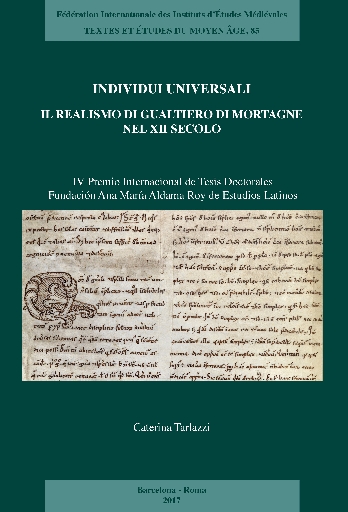
show More to view fulltext, buy and share links for:Individui universali. Il realismo di Gualtiero di Mortagne nel XII secolo show Less to hide fulltext, buy and share links for: Individui universali. Il realismo di Gualtiero di Mortagne nel XII secoloIl realismo degli universali sostenuto nei primi decenni del XII secolo nelle scuole del Nord della Francia è stato studiato principalmente attraverso la critica di Pietro Abelardo, mentre materiale inedito a favore delle teorie realiste non sempre ha ricevuto adeguata considerazione. Questo libro analizza la teoria realista sugli universali variamente nota come ‘teoria dell’indifferenza’, ‘dell’identità’, ‘degli status’, etc., per la quale si propone qui la denominazione di ‘teoria dell’individuum’. Secondo tale posizione, infatti, l’universale è l’individuo stesso in alcuni dei suoi status.
Si tratta di una forma mitigata di realismo, sviluppatasi a partire dalla critica al più tradizionale realismo dell’essenza materiale. Elementi abelardiani sembrano incorporati nella teoria dell’individuum per un fine - la difesa del realismo - del tutto opposto a quello del maestro palatino. Lo studio considera sia fonti che criticano la teoria dell’individuum (Logica ‘Ingredientibus’, Logica ‘Nostrorum petitioni sociorum’, ‘De generibus et speciebus’), sia testi che la sostengono (il trattato ‘Quoniam de generali’ e il commento P17 all’Isagoge del ms. Paris, Bibliothèque nationale de France, lat. 3237, ff. 123ra-130rb), analizzando nel dettaglio i trentasette argomenti presenti nella discussione.
Oggetto di indagine è inoltre l’attribuzione della teoria al maestro Gualtiero di Mortagne, attivo a Reims e Laon nella prima metà del millecento. A questo scopo sono presi in esame dati sulla vita, le opere e l’insegnamento di Gualtiero, considerando in particolare la testimonianza di Giovanni di Salisbury in Metalogicon II, 17.
Caterina Tarlazzi è British Academy Postdoctoral Fellow alla Facoltà di Filosofia dell’Università di Cambridge e College Research Associate al St John’s College, Cambridge. Ha studiato filosofia medievale alla Scuola Galileiana di Studi Superiori dell’Università di Padova, l’École Pratique des Hautes Études, l’Université Paris IV Sorbonne e l’Università di Cambridge. Le sue ricerche vertono sul pensiero del XII secolo e sui manoscritti che trasmettono le opere e l’insegnamento dei maestri di quell’epoca.
-
-
-
La noblesse au service du prince
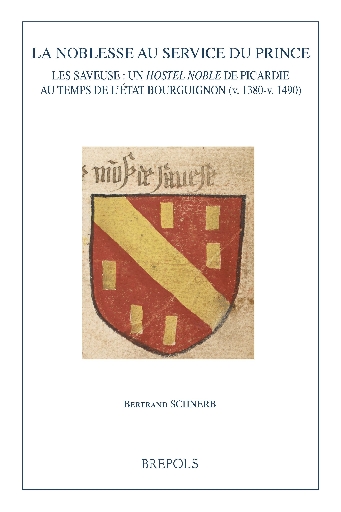
show More to view fulltext, buy and share links for:La noblesse au service du prince show Less to hide fulltext, buy and share links for: La noblesse au service du princeL’encadrement de l’État bourguignon était fortement aristocratique. Les ducs de Bourgogne de la Maison de Valois ont largement recruté leurs conseillers, leurs capitaines et l’élite de leur entourage et de leur hôtel au sein de la noblesse des pays sur lesquels ils exerçaient leur autorité ou leur influence. Ce fut en particulier le cas en Picardie, région stratégique centrée autour de la ville d’Amiens. Dans ce secteur, toutefois, l’influence bourguignonne était loin d’être exclusive : l’autorité royale s’y exerça directement jusqu’en 1435 puis entre 1463 et 1465 et enfin à partir du début des années 1470 ; par ailleurs, les rivalités princières s’y firent puissamment sentir dans la période comprise entre 1400 et 1435. Cette situation eut un fort impact sur les destinées de la noblesse picarde. L’exemple des Saveuse, famille de vieille noblesse de l’Amiénois possessionnée en Picardie et en Artois, illustre bien ce phénomène. Les représentants de cet hostel noble, très impliqués dans le conflit franco-anglais, furent contraints d’opérer des choix dans un contexte marqué par la guerre civile d’abord, par l’hostilité entre le roi de France et le duc de Bourgogne ensuite. Il leur fallut concilier des fidélités contraires, maintenir et consolider leur position politique, sauvegarder leurs intérêts sociaux et économiques. L’étude de ce groupe familial qu’il est possible de suivre sur cinq générations, entre les années 1350 et les années 1490, est conçue comme une contribution à l’histoire des relations de la noblesse avec la Maison de Bourgogne.
-
-
-

Le Dit des trois morts et des trois vifs
show More to view fulltext, buy and share links for:Le Dit des trois morts et des trois vifs show Less to hide fulltext, buy and share links for: Le Dit des trois morts et des trois vifsLe présent ouvrage a pour ambition d’aborder tous les aspects théoriques et pratiques de la traduction intralinguale et interlinguale d’un texte poétique et d’un motif théologique qui a eu une circulation et une productivité, aussi bien textuelle qu’iconographique, extraordinaires au Moyen Âge : Le Dit des trois morts et des trois vifs.
Le choix de ce texte, qui présente, par-delà ses variantes et ses typologies, une structure narrative et une fonction d’exemplarité religieuse constantes et facilement reconnaissables par le lecteur médiéval, a ainsi constitué le point d’équilibre du présent travail. L’ouvrage, original dans sa méthode et ses visées, propose aussi bien une étude littéraire et historique du motif des trois morts et des trois vifs, qu’un accès aux différentes versions médiévales du texte, une réflexion traductologique tout autant qu’une tentative de restitution poétique.
-
-
-
L’énigme d’une dynastie sainte et usurpatrice dans le royaume chrétien d’Éhiopie, xi e au xiii e siècle
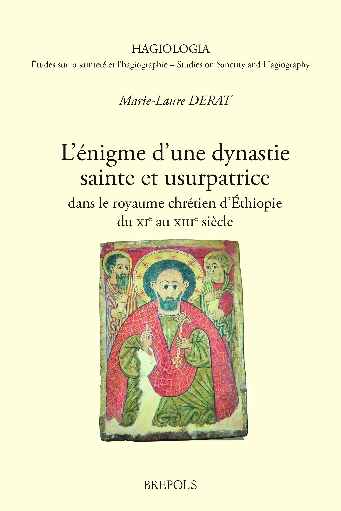
show More to view fulltext, buy and share links for:L’énigme d’une dynastie sainte et usurpatrice dans le royaume chrétien d’Éhiopie, xi e au xiii e siècle show Less to hide fulltext, buy and share links for: L’énigme d’une dynastie sainte et usurpatrice dans le royaume chrétien d’Éhiopie, xi e au xiii e siècleLa période qui voit le règne de la dynastie Zāgwē dans le royaume d’Éthiopie est mal connue. Si l’on sait quand s’achève leur gouvernement (en 1270), on ignore quand il a commencé. On ne sait pas non plus très bien qui étaient ces souverains. Dès le xiv e siècle, l’historiographie éthiopienne déclasse la dynastie en son entier, présentant ses membres comme des usurpateurs, illégitimes à exercer le pouvoir car n’appartenant pas à la maison d’Israël. Bien qu’usurpateurs, les Zāgwē sont considérés comme des saints. Parmi eux, saint Lālibalā est sans doute le plus célèbre de la dynastie. Des hagiographies ont été rédigées, exaltant les figures de ces saints-rois. Ces textes sont tous postérieurs au xiv e siècle et ont longtemps été les seuls documents que l’on pouvait employer pour retracer l’histoire de leur règne.
Cette enquête propose de croiser textes, inscriptions, vestiges archéologiques pour approcher les souverains Zāgwē. Elle expose le dossier des sources contemporaines, puis tente de planter le décor dans lequel une nouvelle lignée royale émerge. En faisant entrer en scène la documentation tardive, l’enquête se clôt sur les constructions historiographiques, en particulier hagiographiques, qui ont permis de faire des rois Zāgwē à la fois des saints et des usurpateurs.
-
-
-

Moïse b. Sabbataï, lecteur juif du Livre des causes et adversaire de la kabbale, en Italie, vers 1340
show More to view fulltext, buy and share links for:Moïse b. Sabbataï, lecteur juif du Livre des causes et adversaire de la kabbale, en Italie, vers 1340 show Less to hide fulltext, buy and share links for: Moïse b. Sabbataï, lecteur juif du Livre des causes et adversaire de la kabbale, en Italie, vers 1340This previously unknown Hebrew writer is a unique witness of the blend of Aristotelianism and Neoplatonism as well as of Jewish and Christian sources in Jewish philosophy in Italy (first half of the 14th century).
-
-
-
Richard Rolle
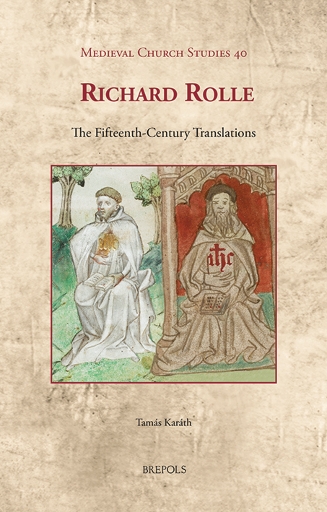
show More to view fulltext, buy and share links for:Richard Rolle show Less to hide fulltext, buy and share links for: Richard RolleThis book explores the fifteenth-century translations of Richard Rolle’s Latin and English writings into English and Latin, respectively, raising questions about the impact of translation on an author’s legacy through the editorial activity of his translators. The volume also discusses Rolle’s sensory mysticism - which was criticized by the ensuing generation of mystics - whilst looking into the ways in which translations of his work create a fifteenth-century version of Rolle. While the fifteenth-century translations did not represent the standard means of shaping Rolle’s authority, this study illustrates individual encounters with Rolle’s writings in which interpretation was much more overt than in the devotional reuse of untranslated Rollean material. The volume asks if alternative and perhaps controversial portraits of the same author arise from the translations.
Richard Rolle has received many, often conflicting, labels in scholarship: the father of English prose, the first medieval English author, the first known mystic of English literature, the runaway Oxford man, the non-conformist hermit, and the misogynist. This book is located in the context of the late medieval censorship culture which inevitably impacted the translators’ treatment of authority, revelatory writing, and theological speculations. The analysis of Rolle in translation highlights the various meanings, practices, and implications of translation in the fifteenth century.
-
-
-
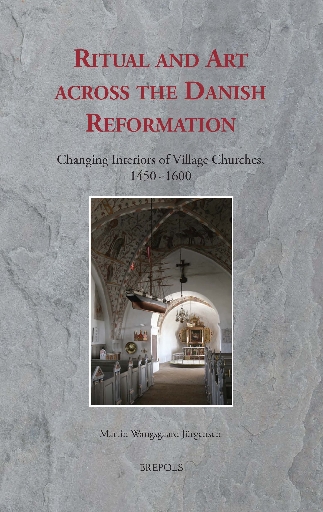
Ritual and Art across the Danish Reformation
show More to view fulltext, buy and share links for:Ritual and Art across the Danish Reformation show Less to hide fulltext, buy and share links for: Ritual and Art across the Danish ReformationThis volume presents a thorough study of the more than a thousand preserved Danish medieval rural parish churches. It traces the transformations of church interiors from c. 1450 to 1600 (thus covering both the emergence and impact of the Danish Reformation) by interpreting material changes within a broad historical perspective that highlights changes in religious practices and liturgy. The book explores the spatial and artistic implications of liturgy as well as the role of the congregation, the donor, and the clergy both in shaping and disrupting these interiors. It sets out to answer four basic questions: What did these rural churches look like by the middle of the fifteenth century? How did they change from the middle of the fifteenth century to the end of the sixteenth? How were they used and integrated into public as well as private ceremonies? And how may these churches have been perceived and experienced by the congregation and clergy?
This study seeks to establish a methodological framework that incorporates the disciplines of archaeology, art history, history, and theology, in order to facilitate an overall understanding of the architectural setting, embracing spatial, material, and artistic elements within the church through liturgy.
-
-
-
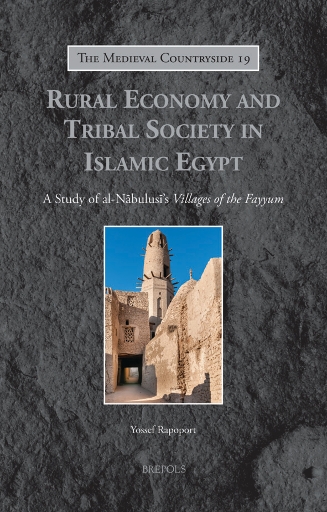
Rural Economy and Tribal Society in Islamic Egypt
show More to view fulltext, buy and share links for:Rural Economy and Tribal Society in Islamic Egypt show Less to hide fulltext, buy and share links for: Rural Economy and Tribal Society in Islamic EgyptThe Villages of the Fayyum is a unique and unparalleled thirteenth-century Arabic tax register of the province of the Fayyum in Middle Egypt. Based on this tax-register, this book utilises quantitative research methods and spatial GIS analysis to provide a rich account of the rural economy of the medieval Fayyum, the tribal organization of the village communities, and their rights and duties in relation to the military landholders. It also draws on the rich documentary evidence of the Fayyum, which stretches back to the Greco-Roman and early Islamic periods, to trace the transformation of the Fayyum into a Muslim-majority and Arab province.
This volume thus offers a radically new perspective on the social and economic history of the medieval Islamic countryside. It makes a major contribution to the history of Islamic Egypt, its rural economy, and to our understanding of taxation and administration under the Ayyubids. Most importantly, its argument for the metamorphosis of the Coptic peasantry into Muslim and tribal Arab society has profound implications for Middle Eastern history in general, and challenges our modern concept of Arab identity.
-
-
-
Sermons for the Liturgical Year
show More to view fulltext, buy and share links for:Sermons for the Liturgical Year show Less to hide fulltext, buy and share links for: Sermons for the Liturgical YearThe Canons Regular who followed the Rule of St Augustine at St Victor of Paris in the twelfth century bequeathed to subsequent generations a legacy of over 200 carefully crafted sermons for the major feasts of their liturgical year. The sermons that Maurice de Sully, bishop of Paris (1160-1196) prepared in Latin and Old French for parish priests drew on the expertise of Richard of St Victor. In this volume are sermons by Hugh, Achard, Richard, Walter, and Godfrey of St Victor, Maurice de Sully, and Absalom of Springiersbach, arranged in liturgical order. Most of these sermon appear in English for the first time.
-
-
-
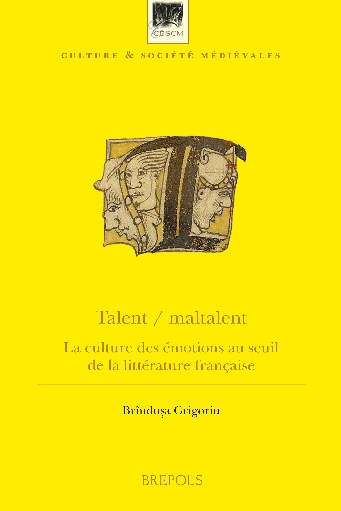
Talent / maltalent
show More to view fulltext, buy and share links for:Talent / maltalent show Less to hide fulltext, buy and share links for: Talent / maltalentS’inscrivant dans l’histoire des affects, le livre propose une relecture des premiers récits français sous le signe des polarités émotionnelles médiévales du « talent » et du « maltalent ». À l’époque de leur première réception, la Cantilène de sainte Eulalie, la Vie de saint Alexis, la Chanson de Roland et le Roman de Thèbes étaient des œuvres fermées, des textes de plaisir. Pour le lecteur du XXIe siècle, ils deviennent un beau défi jouissif. Ainsi, les détails qui débordent le cadre théologique se révèlent nombreux et savoureux : Maximien réussit son coup d’épée contre Eulalie, la « pucelle » d’Alexis parvient à consommer son mariage céleste, Charlemagne boude Gabriel, Jocaste frôle le rôle d’entremetteuse pour faire la paix par l’amour … et les mondes s’entrechoquent, ambigument possibles.
L’étude aborde les styles émotionnels, les actes émotifs, les normes affectives et les communautés responsables des « émotionologies » de ces textes liminaires de la littérature française, où les personnages font de Dieu un acte émotif de plus en plus dépouillé. Du nom à l’interjection, de la foi à l’émotion, c’est l’histoire d’une véritable émancipation qui s’écrit, en initiant, à fleur de texte, une désacralisation progressive des affects.
-
-
-
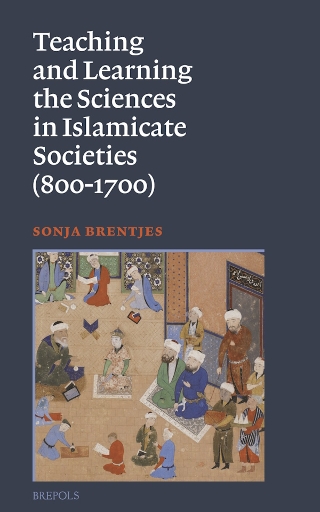
Teaching and Learning the Sciences in Islamicate Societies (800-1700)
show More to view fulltext, buy and share links for:Teaching and Learning the Sciences in Islamicate Societies (800-1700) show Less to hide fulltext, buy and share links for: Teaching and Learning the Sciences in Islamicate Societies (800-1700)This book surveys teaching and learning in the mathematical and occult sciences, medicine and natural philosophy in various Islamicate societies between 800 and 1700. It focuses in particular on Egypt and Syria between 1200 and 1600, but looks also at developments in Iran, India, Anatolia, and Iraq. It discusses institutions of teaching and learning such as house and court teachers, madrasas, hospitals, in-family teaching, and travelling in search of knowledge, as well as the content of the various sciences taught by or at them. Methods of teaching and learning, teaching bestsellers and their geographical and temporal dissemination, as well as encyclopaedias and literature on the classification of the sciences are treated in further chapters.
-