


Brepols Online Books Medieval Monographs Collection 2018 - bob2018mome

Collection Contents
21 - 28 of 28 results
-
-
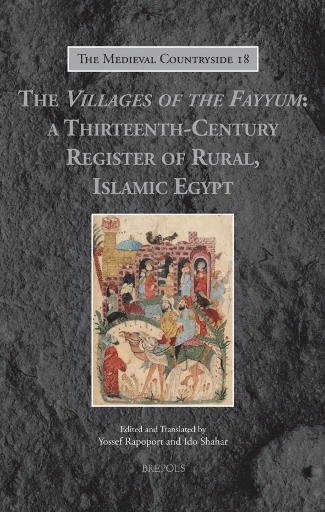
The Villages of the Fayyum, a Thirteenth-Century Register of Rural, Islamic Egypt
show More to view fulltext, buy and share links for:The Villages of the Fayyum, a Thirteenth-Century Register of Rural, Islamic Egypt show Less to hide fulltext, buy and share links for: The Villages of the Fayyum, a Thirteenth-Century Register of Rural, Islamic EgyptMedieval Islamic society was overwhelmingly a society of peasants, and the achievements of Islamic civilization depended, first and foremost, on agricultural production. Yet the history of the medieval Islamic countryside has been neglected or marginalized. Basic questions such as the social and religious identities of village communities, or the relationship of the peasant to the state, are either ignored or discussed from a normative point of view.
This volume addresses this lacuna in our understanding of medieval Islam by presenting a first-hand account of the Egyptian countryside. Dating from the middle of the thirteenth century, Abū ‘Uthmān al-Nābulusī’s Villages of the Fayyum is as close as we get to the tax registers of any rural province. Not unlike the Domesday Book of medieval England, al-Nābulusī’s work provides a wealth of detail for each village which far surpasses any other source for the rural economy of medieval Islam. It is a unique, comprehensive snap-shot of one rural society at one, significant, point in its history, and an insight into the way of life of the majority of the population in the medieval Islamic world. Richly annotated and with a detailed introduction, this volume offers the first academic edition of this work and the first translation into a European language. By opening up this key source to scholars, it will be an indispensable resource for historians of Egypt, of administration and rural life in the premodern world generally, and of the Middle East in particular.
-
-
-
The Ever-New Tongue – In Tenga Bithnúa
show More to view fulltext, buy and share links for:The Ever-New Tongue – In Tenga Bithnúa show Less to hide fulltext, buy and share links for: The Ever-New Tongue – In Tenga BithnúaThe Ever-New Tongue (In Tenga Bithnúa) is a medieval Irish account of the mysteries of the universe, remarkable for its exotic background and for the fiery exuberance of its style. This translation, based on the definitive edition of the text, renders this extraordinary work available to a wider readership.
Composed in Ireland in the ninth or tenth century, The Ever-New Tongue purports to reveal the mysteries of the creation, of the cosmos, and of the end of the world, as related by the soul of the apostle Philip speaking in the language of the angels. Drawing on a multitude of sources, both mainstream and heterodox, it reflects the richness of early Irish learning as well as the vitality of its author’s imagination. Two apocryphal texts appear to have inspired its original composition: a lost Egyptian apocalyptic discourse, and one of the segments of the Acts of Philip (a work otherwise unknown in Latin Christendom).
Based on the critical edition of The Ever-New Tongue in the Corpus Christianorum, Series Apocryphorum, this book presents an English translation of the oldest (and most conservative) version of the text, preserved in the Book of Lismore, together with a fully updated introduction.
-
-
-
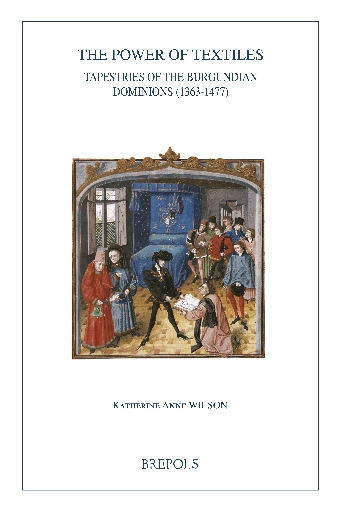
The Power of Textiles
show More to view fulltext, buy and share links for:The Power of Textiles show Less to hide fulltext, buy and share links for: The Power of TextilesTextiles were used as markers of distinction throughout the Middle Ages and their production was of great economic importance to emerging and established polities. This book explores tapestry in one of the greatest textile producing regions, the Burgundian Dominions, c. 1363-1477. It uses documentary evidence to reconstruct and analyse the production, manufacture, and use of tapestry. It begins by identifying the suppliers of tapestry to the dukes of Burgundy and their ability to spin webs between city and court. It proceeds by considering the forms of tapestry and their functions for urban and courtly consumers. It then observes the ways in which tapestry constructed social relations as part of gift-giving strategies. It concludes by exploring what the re-use, repair, and remaking of tapestry reveals about its value to urban and courtly consumers. By taking an object-centred approach through documentary sources, this book emphasises that the particular characteristics of tapestry shaped the strategies of those who supplied it and the ways it performed and constructed social relations. Thus, the book offers a contribution to the historical understanding of textiles as objects that contributed to the projection of social status and the cultural construction of political authority in the Burgundian polity.
-
-
-
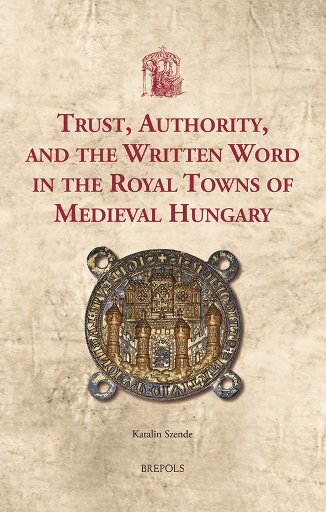
Trust, Authority, and the Written Word in the Royal Towns of Medieval Hungary
show More to view fulltext, buy and share links for:Trust, Authority, and the Written Word in the Royal Towns of Medieval Hungary show Less to hide fulltext, buy and share links for: Trust, Authority, and the Written Word in the Royal Towns of Medieval HungaryThis book is the first comprehensive overview of how written administration was established in the royal towns of medieval Hungary. Using the conceptual framework of trust and authority, the volume sheds light on the growing complexity of urban society and the impact that the various uses of writing had on managing this society, both by the king and by the local magistrates. The present survey and analysis of a broad range of surviving sources reveals that trust in administrative literacy was built up gradually, through a series of decisive and chronologically distinct steps. These included the acquisition of an authentic seal; the appointment of a clerk or notary; setting up a writing office; drawing up town books; and, finally, establishing an archive from the assemblage of collected documents.
Although the development of literacy in Hungarian towns has its own history, the questions posed by the study are not unlike those raised for other towns of medieval Europe. For instance, both the gradually increasing use of various vernaculars and the controversial role of writing in Jewish-Christian contacts can be meaningfully compared with similar processes elsewhere. The study of Central European towns can therefore be used both to broaden seemingly disparate research frameworks and to contribute to studies that take a more general approach to Europe and beyond.
-
-
-
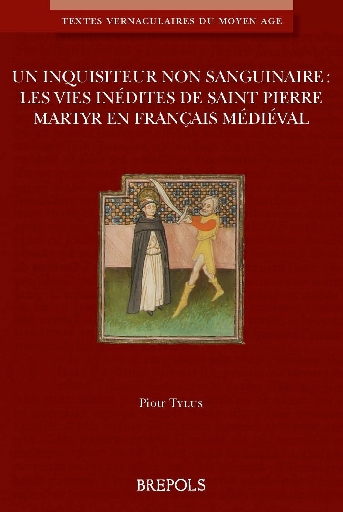
Un inquisiteur non sanguinaire : les vies inédites de saint Pierre Martyr en français médiéval
show More to view fulltext, buy and share links for:Un inquisiteur non sanguinaire : les vies inédites de saint Pierre Martyr en français médiéval show Less to hide fulltext, buy and share links for: Un inquisiteur non sanguinaire : les vies inédites de saint Pierre Martyr en français médiévalPierre naît à Vérone, au tournant du XIIe et du XIIIe siècle, d’une famille cathare. Il est dit « de Vérone » ou « Martyr ». Il étudie à Bologne, où il rencontre les frères prêcheurs et entre dans l’ordre, en recevant l’habit probablement des mains de saint Dominique lui-même, vers 1220 ou 1221. Son activité essentielle est celle de prédicateur itinérant. Il prêche à Rome, à Florence, dans la Romagne et la Marche d’Ancône, à Venise et en Toscane, et peut-être même à Paris. En juin 1251, Innocent IV le charge d’une mission contre les hérétiques de Crémone. Quelques mois plus tard, en septembre 1251, il devient inquisiteur pontifical à Milan, à Côme et dans leurs districts. Il assume cette tâche pendant les derniers mois de sa vie. Le 6 avril 1252, il est tué sur le chemin de Côme à Milan par un tueur à gages, loué par les hérétiques. Pierre est canonisé le 9 mars 1253.
Le présent livre contient neuf versions de sa légende, rédigées en français ancien (XIIIe-XVe siècles) par des auteurs anonymes. Les textes, qui procèdent du chapitre 61 de la Légenda aurea de Jacques de Voragine, n’ont jusqu’à présent jamais été édités. Dans la majorité des cas, on a affaire à des adaptations libres, parfois très libres, de la vita contenue dans la Legenda aurea, pour lesquelles celle-ci n’est qu’un point de départ. Il s’agit de textes autonomes : chacun des auteurs a exploité sa source à sa propre façon ; ce sont des jeux de la variante, tellement caractéristiques de la littérature médiévale.
-
-
-
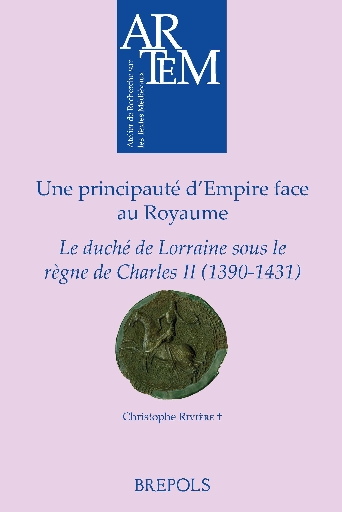
Une principauté d’Empire face au Royaume : le duché de Lorraine sous le règne de Charles II (1390-1431)
show More to view fulltext, buy and share links for:Une principauté d’Empire face au Royaume : le duché de Lorraine sous le règne de Charles II (1390-1431) show Less to hide fulltext, buy and share links for: Une principauté d’Empire face au Royaume : le duché de Lorraine sous le règne de Charles II (1390-1431)Précédant de peu Jeanne d’Arc et le duc René II, figures emblématiques d’un Moyen Âge lorrain flamboyant, Charles II apparaît comme un prince de second rang. Son règne (1390-1431) est associé, non sans raison, aux temps les plus sombres de l’histoire de la Lorraine, devenue l’épicentre douloureux d’une Europe qu’embrasait par le jeu des alliances le conflit franco-anglais de la Guerre de Cent Ans. Pourtant, s’en tenir là serait oublier que Charles II fut l’instigateur de la réunion des duchés de Lorraine et de Bar et qu’il posa les bases de l’État princier en Lorraine.
Rassemblant patiemment une documentation dispersée au gré des aléas de l’histoire, délaissant les impasses d’une historiographie longtemps préoccupée par la question de l’État-nation et prisonnière de l’antagonisme exacerbé entre la France et l’Allemagne, Christophe Rivière réévalue ici un règne trop longtemps méconnu et trop facilement renvoyé à ses archaïsmes. Son enquête prosopographique livre les contours d’une société politique originale ; il analyse le dialogue qu’elle entretient avec le prince dans un espace politiquement morcelé, au sein duquel se rencontrent et s’affrontent les influences venues du royaume de France et de l’Empire ; empruntant aux ethnologues les concepts d’ « acculturation » et de « métissage », il éclaire les valeurs qui cimentent cette société nobiliaire, valeurs par lesquelles elle se rapproche ou se distingue tour à tour des principautés voisines pour faire progressivement place à l’affirmation de la souveraineté ducale.
-
-
-
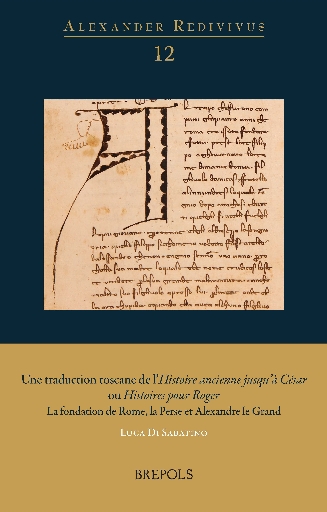
Une traduction toscane de l’Histoire ancienne jusqu’à César ou Histoires pour Roger
show More to view fulltext, buy and share links for:Une traduction toscane de l’Histoire ancienne jusqu’à César ou Histoires pour Roger show Less to hide fulltext, buy and share links for: Une traduction toscane de l’Histoire ancienne jusqu’à César ou Histoires pour RogerL’Histoire ancienne jusqu’à César, première histoire universelle écrite en prose française au début du XIIIe siècle, a joui d’une grande fortune en Italie, comme le montrent les manuscrits copiés dans les ateliers transalpins, les traductions, les citations et les réemplois jusqu’à la première moitié du XIVe siècle. Les traductions italiennes, ou volgarizzamenti, se divisent en deux groupes : les versions toscanes et les vénitiennes. Parmi les traductions toscanes, nous trouvons celle contenue dans trois manuscrits du Trecento, rédigée probablement entre la fin du XIIIe siècle et le début du XIVe. Le plus récent de ces codices, le manuscrit II I 146 de la Biblioteca Nazionale Centrale de Florence, est le seul témoin de l’Histoire ancienne en italien qui présente la section alexandrine ; il est utilisé comme base pour l’édition proposée ici, qui offre le récit sur Rome (depuis la fondation jusqu’aux guerres contre les Samnites), la Perse, Philippe II de Macédoine, Alexandre le Grand et les guerres des diadoques. Cette traduction toscane représente probablement l’une des plus anciennes versions italiennes de l’histoire d’Alexandre.
-
-
-
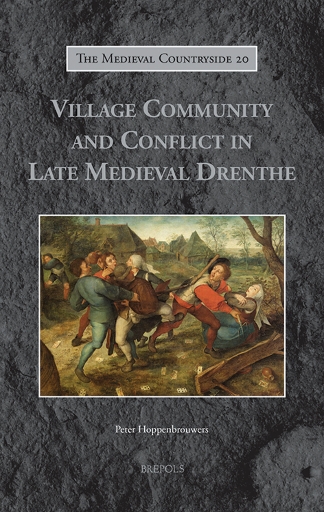
Village Community and Conflict in Late Medieval Drenthe
show More to view fulltext, buy and share links for:Village Community and Conflict in Late Medieval Drenthe show Less to hide fulltext, buy and share links for: Village Community and Conflict in Late Medieval DrentheVillage communities were the heart of the medieval countryside. But how did they operate? This book seeks to find some answers to that question by focusing on late medieval Drenthe, a region situated in a remote corner of the Holy Roman Empire and part of the prince-bishopric of Utrecht. Drenthe was an overwhelmingly localized, rural world. It had no cities, and consisted entirely of small villages. The social and economic importance of traditionally privileged sections of medieval society (clergy and nobility) was limited; free peasant landowners were the dominant social class.
Based on a careful reading of normative sources (Land charters) and thousands of short verdicts given by the so-called ‘Etstoel’ or high court of justice in Drenthe, this book focuses on three types of conflict: conflicts between villages, feud-like violence, and litigations about property. These three types coincide with three levels of involvement: that of village communities as a whole, that of kin groups, and that of households.
The resulting, comprehensive analysis provides a rigorous interrogation of generalized notions of the pre-industrial rural world, offering a snapshot of a typical peasant society in late medieval Europe.
-