


Brepols Online Books Medieval Miscellanea Collection 2019 - bob2019mime

Collection Contents
2 results
-
-
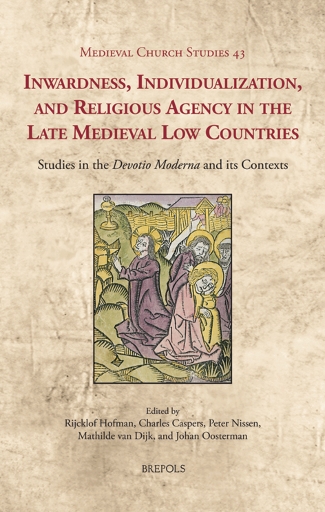
Inwardness, Individualization, and Religious Agency in the Late Medieval Low Countries
show More to view fulltext, buy and share links for:Inwardness, Individualization, and Religious Agency in the Late Medieval Low Countries show Less to hide fulltext, buy and share links for: Inwardness, Individualization, and Religious Agency in the Late Medieval Low CountriesRecent scholarship on the Middle Ages has highlighted the importance of individualistic tendencies in devotion in both the lay world and religious communities. This interaction between individualization and religious agency has been scrutinized in numerous studies, focusing on the beginnings during the so-called ‘Twelfth- Century Renaissance’, and further development in the later medieval and early modern periods.
However, there has hitherto been relatively little scholarship on the phenomenon in the Devotio Moderna: the flourishing of more personalized forms of devotion in north-western Europe during the later Middle Ages. The essays in this volume redress this gap by exploring the processes of inwardness and the emergent individualization of religious practices in the late medieval Low Countries. The essays explore issues including the early impact of the printing press on devotion; meditational aids such as identification with Christ, prayer cycles, practices of remembrance, and devout songs; and the tension between inner devotion and the ideal of communal piety in male and female religious communities. They also discuss some leading individuals of the Devotio movement.
-
-
-
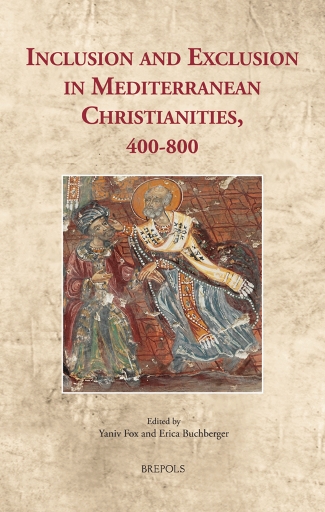
Inclusion and Exclusion in Mediterranean Christianities, 400–800
show More to view fulltext, buy and share links for:Inclusion and Exclusion in Mediterranean Christianities, 400–800 show Less to hide fulltext, buy and share links for: Inclusion and Exclusion in Mediterranean Christianities, 400–800The fifth to the ninth centuries were a formative period around the Mediterranean, in which new forces were redefining traditional social divisions. This volume will look at these centuries through the lens of inclusion and exclusion as social forces at work on the self, the community, and society as a whole. For late antique and early medieval societies, inclusion and exclusion were the means of redrawing the boundaries of cultural and political discourse, and ultimately, of deciding how resources - material, spiritual, and intellectual - were allocated.
This is the first of two volumes to explore inclusion and exclusion as processes affecting Mediterranean communities. Contributions to the present volume look at how distinctions were fostered through both space and text, along ethnic and religious lines, and at the level of both ecumenical councils and individual friendships. By examining a wide range of social and cultural phenomena, from historiography and political partisanship to private religious worship and the performance of the feast, the chapters of this volume illustrate the exceptional range of ways that late antique and early medieval people negotiated their place in a changing world, and brought a new one into being.
-