


Brepols Online Books Medieval Miscellanea Collection 2019 - bob2019mime

Collection Contents
5 results
-
-
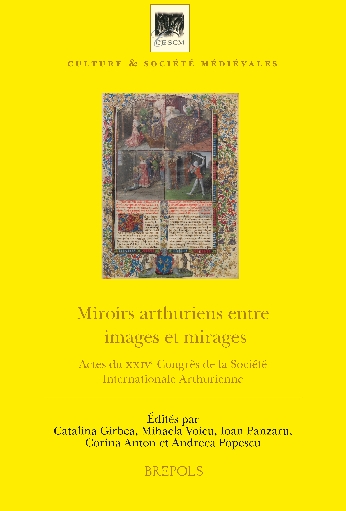
Miroirs Arthuriens entre images et mirages
show More to view fulltext, buy and share links for:Miroirs Arthuriens entre images et mirages show Less to hide fulltext, buy and share links for: Miroirs Arthuriens entre images et miragesCe volume, issu des travaux du XXIVe Congrès de la Société Internationale Arthurienne, réunit les derniers acquis de la recherche sur les romans arthuriens et leur réception au fil du temps. Organisées en fonction des axes thématiques du Congrès, les contributions apportent du nouveau au sujet des manuscrits arthuriens et de leurs impressionnants programmes iconographiques, suivant un mélange fascinant de philologie et histoire de l’art. Les interférences des motifs arthuriens, qui font en grande partie la richesse de ces textes, occupent aussi une place importante de même qu’elles préoccupent les médiévistes depuis quelques années. L’anthropologie culturelle n’est pas négligée non plus : des interventions sur les identités arthuriennes ainsi que sur les enjeux politiques de ces romans tellement de fois récupérés par les royautés européennes en guise de modèles rappellent l’universalité de l’arthurianisme qui fascine des milliers de lecteurs et auditeurs à travers le temps. Ceci explique également la riche réception des textes médiévaux, adaptés aussi bien à la modernité qu’à la période contemporaine. En somme, traitant des périodes variées ainsi que des espaces géopolitiques des plus divers, les articles réunis dans ce volume forment un beau bouquet arthurien mélangeant des réflexions les plus savantes aux contes de fées et aux couleurs d’antan.
-
-
-
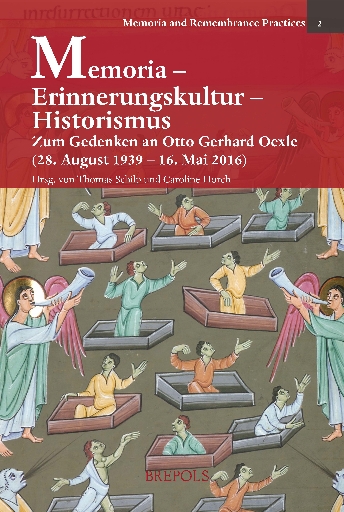
Memoria – Erinnerungskultur – Historismus
show More to view fulltext, buy and share links for:Memoria – Erinnerungskultur – Historismus show Less to hide fulltext, buy and share links for: Memoria – Erinnerungskultur – HistorismusZum Gedenken an Person und Wirken von Otto Gerhard Oexle (28. August 1939 - 16. Mai 2016).
Die Erforschung der Erinnerungskultur der vormodernen Gesellschaften Europas ist untrennbar mit Otto Gerhard Oexle, Direktor des Max-Planck-Instituts für Geschichte in Göttingen von 1987 bis 2004, verknüpft: Er hatte das Totengedenken des Ancien Régime als ‘totales soziales Phänomen’ und ‘Memoria’ als Exempel der transdisziplinären Historischen Kulturwissenschaften erkannt und erforscht. Dieser Band vereint Beiträge von Kollegen, Freunden und Schülern, die Themen, Thesen und Anregungen von Otto Gerhard Oexle aufgreifen - erweiternd, vertiefend und fortführend. Der Band führt einen Nachruf mit Beiträgen zusammen: eine ‘Schülerbiographie’ in Auseinandersetzung mit Otto Gerhard Oexle, zu Stiftung und Memoria in universalhistorischer Perspektive, über Memoria in textilen Schenkungen des Früh- und Hochmittelalters, zu Deutungsschemata der ‘mittelalterlichen Gesellschaft’ in Weltgerichtsbildern, über Stadtbau und Memoria im Italien des 15. und 16. Jahrhunderts, zu Ernst Robert Curtius und den Mittelalterbildern des 20. Jahrhunderts, zum Historismus, über das Gesetz vom Sinai in literarischen Verarbeitungen, bis hin zur Kultur der Erinnerung an die verfolgten und ermordeten Juden in den Niederlanden unter dem NS-Regime.
-
-
-
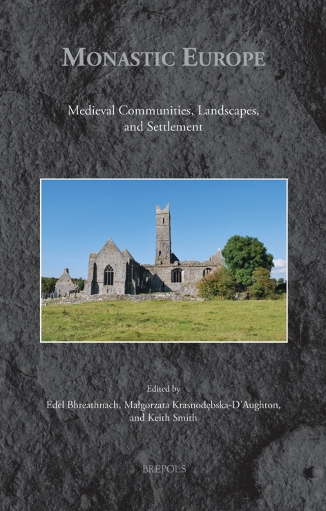
Monastic Europe
show More to view fulltext, buy and share links for:Monastic Europe show Less to hide fulltext, buy and share links for: Monastic EuropeMonasticism became part of European culture from the early period of Christianity and developed into a powerful institution that had a profound effect on the greater Church, on wider society, and on the landscape. Monastic communities were as diverse as the societies in which they lived, following a variety of rules, building monasteries influenced by common ideals and yet diverse in their regionalism, while also contributing to the economic and spiritual well-being inside and outside their precincts.
This interdisciplinary volume presents the diversity of medieval European monasticism with a particular emphasis on its impact on the immediate environs. Geographically it extends from the far west in Ireland, Scotland, and Wales, to the east in Romania and the Balkans, through the north of Scandinavia to the south of the Iberian Peninsula. Drawing on archaeological, art and architectural, textual and topographical evidence, the contributors explore how monastic communities were formed, how they created a landscape of monasticism, how they wove their identities with those around them, and how they interacted with all levels of society to leave a lasting imprint on European towns and rural landscapes.
-
-
-
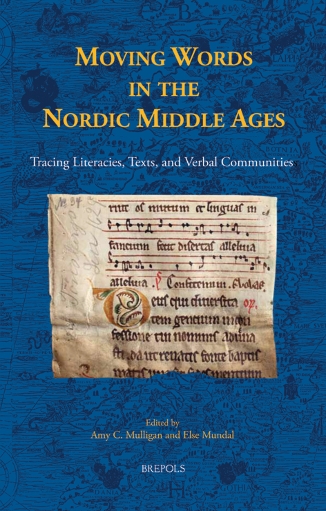
Moving Words in the Nordic Middle Ages.
show More to view fulltext, buy and share links for:Moving Words in the Nordic Middle Ages. show Less to hide fulltext, buy and share links for: Moving Words in the Nordic Middle Ages.The culmination of over a decade’s research on verbal culture in the pre- and post-Conversion medieval North at Bergen’s Centre for Medieval Studies, this volume traces the movement of words and texts temporally, geographically, and intellectually across different media and genres. The contributions gathered here begin with a reassessment of how the unique verbal cultures of Scandinavia and Iceland can be understood in a broader European context, and then move on to explore foundational Nordic Latin histories and vernacular sagas. Key case studies are put forward to highlight the importance of institutional and individual writing communities, epistolary and list-making cultures, and the production of manuscripts as well as runic inscriptions. Finally, the oral-written continuum is examined, with a focus on important works such as Íslendingabók and Landnámabók, Old-Norse Icelandic translated romances, and the development of prosimetra. Together, these essays form a state-of-the-art volume that offers new and vital insights into the role of literacy in the Norse-speaking world.
-
-
-
Middle and Late Byzantine Poetry: Texts and Contexts
show More to view fulltext, buy and share links for:Middle and Late Byzantine Poetry: Texts and Contexts show Less to hide fulltext, buy and share links for: Middle and Late Byzantine Poetry: Texts and ContextsIt is only in recent years that Byzantine poetry - a long-neglected aspect of Byzantine literature - has attracted the attention of philologists, literary and cultural historians. This holds true especially for the poetry written in middle and late Byzantium.Though many collections of poems are available in modern critical editions, a considerable amount of texts still remains completely unedited or accessible only in outdated and unreliable editions. Moreover, many works of this period have never been studied thoroughly with regard to their cultural impact on society. Issues of authorship and patronage, function, literary motives, generic qualities, and manuscripts still await further study.
This volume aims to take a step to fill this gap. Although it includes studies on poetry from the early tenth to the fifteenth centuries, the main focus is placed on the Komnenian and Palaeologan times. It presents editions of completely unknown texts, such as a twelfth-century cycle of epigrams on John Klimax. It includes studies on various types of poetry, including didactic, occasional, and even poetry written for liturgical purposes. By analysing these works and placing them within their literary and socio-cultural context, we can draw conclusions about the cultural tastes of the Byzantines and acquire a more nuanced picture of middle and late Byzantine poetry.
-