


Brepols Online Books Medieval Miscellanea Collection 2019 - bob2019mime

Collection Contents
6 results
-
-
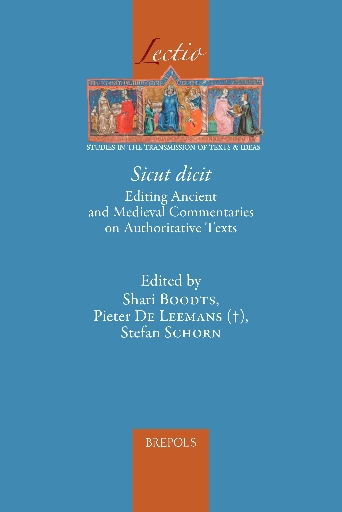
Sicut dicit: Editing Ancient and Medieval Commentaries on Authoritative Texts
show More to view fulltext, buy and share links for:Sicut dicit: Editing Ancient and Medieval Commentaries on Authoritative Texts show Less to hide fulltext, buy and share links for: Sicut dicit: Editing Ancient and Medieval Commentaries on Authoritative TextsCommentaries on authoritative texts from Antiquity and the Middle Ages are increasingly being recognized as witnesses to a rich tradition of cultural reception and intellectual engagement. This renewed interest goes hand-in-hand with an increased demand for critical editions of the texts in question. However, the genre of the commentary presents a number of specific challenges to the editor, challenges related to the textual dynamic, the presentation on the page, and the intertwined transmission history of the commentary and the authoritative text that forms its subject. This volume brings together twelve case studies on texts written in Greek and Latin, which range from Antiquity to the Late Middle Ages. Touching upon a variety of fields, including literature, theology, philosophy, medicine, and law, these case studies offer an interdisciplinary perspective on commentaries on authoritative texts and the editors’ challenging work to accurately reconstruct and present them.
-
-
-
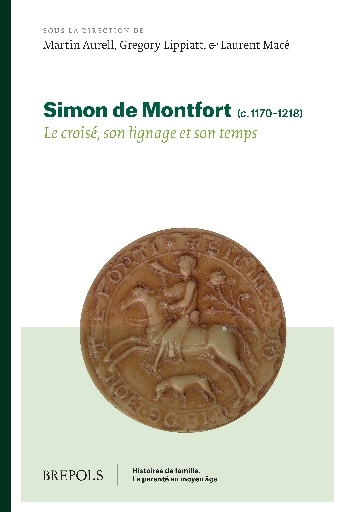
Simon de Montfort (c. 1170-1218)
show More to view fulltext, buy and share links for:Simon de Montfort (c. 1170-1218) show Less to hide fulltext, buy and share links for: Simon de Montfort (c. 1170-1218)La carrière de Simon de Montfort - seigneur français, earl anglais, croisé en Terre sainte et dans le Midi de la France - n’a pas cessé de marquer ses contemporains et sa postérité. Bien de ses compagnons d’armes ont vu en lui le plus pieux et le plus courageux des héros, le modèle du chevalier du Christ (miles Christi). Cette image prestigieuse a cours de son vivant et après son prétendu martyre au service du combat contre la dépravation hérétique. Cependant, dans les contrées occitanophones et dans la péninsule Ibérique, sa réputation devient aussi celle d’un brigand, d’un barbare, d’un intrus étranger, cupide et sans scrupules. Les actes du colloque tenu à Poitiers en 2018 reviennent sur sa vie et sur son lignage afin de comprendre l’homme dans toutes ses contradictions : le croisé incorruptible en Terre sainte, mutilant toute une garnison en Languedoc, le vainqueur du roi d’Aragon, soumettant toutes ses conquêtes au roi de France, le spoliateur des seigneurs légitimes du Midi, protégeant les veuves et le clergé local, le membre d’un puissant lignage franco-normand dont son héritage se perpétue dans toute l’Europe. Simon est à la fois le produit de son temps et l’agent de son devenir, un conquérant et un perdant. Caractère sombre et puissant, il semble être à l’image de son emblème héraldique: un lion à la queue fourchée.
-
-
-
Social Inequality in Early Medieval Europe: Local Societies and Beyond
show More to view fulltext, buy and share links for:Social Inequality in Early Medieval Europe: Local Societies and Beyond show Less to hide fulltext, buy and share links for: Social Inequality in Early Medieval Europe: Local Societies and BeyondThe goal of this book is to discuss the theoretical challenges posed by the study of social and political inequality of local societies in Western Europe during the Early Middle Ages. Traditional approaches have defi ned rural communities as passive bodies, poor and unstable in the framework of a self-suffi cient economy. In the last few decades, social approaches both in medieval history and archaeology have neglected the opportunity to re-evaluate the role of peasantry and other subaltern groups, even where new written and material evidence has challenged traditional assumptions. Conversely, scholars focussing on elites and aristocracies have promoted powerful research agenda.
As a consequence of the 2007-2008 recession, the social sciences began to be interested in social and economic inequality, opening up new avenues for a reassessment of social history. The early medieval period has been identifi ed by numerous scholars as a key arena for the analysis of political complexity and social inequality in long-term perspective.
The study of local societies has become one of the most fruitful areas for innovative research in medieval archaeology and history, using approaches related to micro-history. This book, dedicated to Chris Wickham, is formed of fourteen papers centred on early medieval local communities drawing on both written and material records, which identify complex frameworks of social inequality at the lo
-
-
-
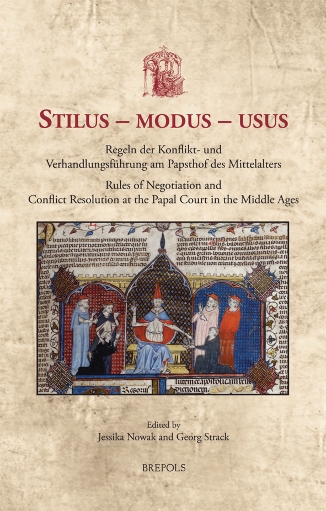
Stilus - modus - usus
show More to view fulltext, buy and share links for:Stilus - modus - usus show Less to hide fulltext, buy and share links for: Stilus - modus - ususBy exploring communication and social practices employed during negotiations at the papal court, this volume sheds light on a wide range of sources for studying the high and late medieval papacy. Analyzing the terminology and practice of the ‘stilus curiae’ in documents from all parts of Europe, this volume puts forward a new understanding of negotiation and conflict resolution at the papal court in the Middle Ages. ‘Stilus curiae’ usually refers to the language and style of curial documents, and it is often used to describe the customary application of legal procedure in court practice. The authors of this volume, however, argue for a broader understanding of ‘stilus curiae’ as an umbrella term that encompasses all forms of communication and social practices used during negotiations at the papal court. This volume (the first of two) publishes the results of a research network funded by the German Research Foundation (DFG). Through analysis of the concept(s) of the ‘stilus curiae’, the chapters throw new light on a wide range of sources from the High and Late Middle Ages, including chronicles, biographic and polemic texts, as well as administrative sources, such as letters of petitioners and proctors, speeches, and financial records of ambassadors. Thus, the volume offers a new approach towards the papacy between 1100 and 1500.
-
-
-
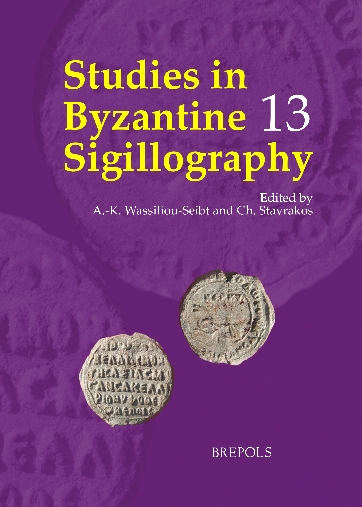
Studies in Byzantine Sigillography
show More to view fulltext, buy and share links for:Studies in Byzantine Sigillography show Less to hide fulltext, buy and share links for: Studies in Byzantine SigillographyThis volume contains primarily papers of the 11th International Symposium held in Istanbul (May 2014) and of the last Congres of Byzantine Studies in Belgrade (August 2016). There are papers about the seals as historical source and archaeological finding presenting their role in the Byzantine Prosopography, Byzantine Administration, Historical Geography and Byzantine Art History.
-
-
-
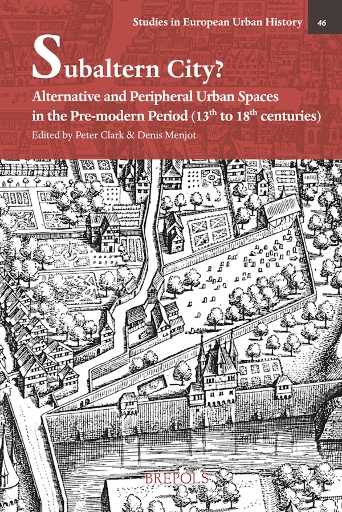
Subaltern City?
show More to view fulltext, buy and share links for:Subaltern City? show Less to hide fulltext, buy and share links for: Subaltern City?The purpose of this volume is to question traditional notions of city space in pre-modern Europe (with its stress on space being incorporated, regulated and integrated, dominated by its merchants and crafts), and to investigate how far it was in fact economically and politically pluralistic with a great variety of functions and juridictions. The volume examines comparatively the range of different urban spaces in and outside the medieval and early modern city from gardens, farmland and wasteland to industrial sites, poor and rich suburbs, shooting grounds, green space, grey space and military zones. Case studies cover cities in France, Germany, Italy, the Low Countries, England, Portugal and the Middle East. We ask: how far was the pre-modern city a compact city? Or was it in fact a ‘subaltern city’, as geographers have recently proposed, where many urban spaces were contested and the municipality has to be seen as only one key spatial actor?
-