


Brepols Online Books Medieval Miscellanea Collection 2019 - bob2019mime

Collection Contents
21 - 40 of 42 results
-
-

Historiography and Identity I: Ancient and Early Christian Narratives of Community
show More to view fulltext, buy and share links for:Historiography and Identity I: Ancient and Early Christian Narratives of Community show Less to hide fulltext, buy and share links for: Historiography and Identity I: Ancient and Early Christian Narratives of CommunityThe six-volume sub-series Historiography and Identity unites a wide variety of case studies from Antiquity to the Late Middle Ages, from the Latin West to the emerging polities in Northern and Eastern Europe, and also incorporates a Eurasian perspective which includes the Islamic World and China. The series aims to develop a critical methodology that harnesses the potential of identity studies to enhance our understanding of the construction and impact of historiography.
This first volume in the Historiography and Identity sub-series examines the many ways in which historiographical works shaped identities in ancient and medieval societies by focusing on the historians of ancient Greece and the late Roman Empire. It presents in-depth studies about how history writing could create a sense of community, thereby shedding light on the links between authorial strategies, processes of identification, and cultural memory. The contributions explore the importance of regional, ethnic, cultural, and imperial identities to the process of history writing, embedding the works in the changing political landscape.
-
-
-
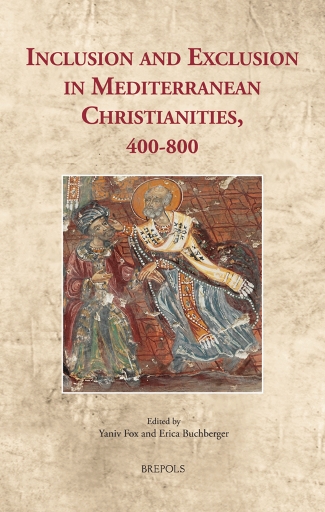
Inclusion and Exclusion in Mediterranean Christianities, 400–800
show More to view fulltext, buy and share links for:Inclusion and Exclusion in Mediterranean Christianities, 400–800 show Less to hide fulltext, buy and share links for: Inclusion and Exclusion in Mediterranean Christianities, 400–800The fifth to the ninth centuries were a formative period around the Mediterranean, in which new forces were redefining traditional social divisions. This volume will look at these centuries through the lens of inclusion and exclusion as social forces at work on the self, the community, and society as a whole. For late antique and early medieval societies, inclusion and exclusion were the means of redrawing the boundaries of cultural and political discourse, and ultimately, of deciding how resources - material, spiritual, and intellectual - were allocated.
This is the first of two volumes to explore inclusion and exclusion as processes affecting Mediterranean communities. Contributions to the present volume look at how distinctions were fostered through both space and text, along ethnic and religious lines, and at the level of both ecumenical councils and individual friendships. By examining a wide range of social and cultural phenomena, from historiography and political partisanship to private religious worship and the performance of the feast, the chapters of this volume illustrate the exceptional range of ways that late antique and early medieval people negotiated their place in a changing world, and brought a new one into being.
-
-
-

Jews and Muslims under the Fourth Lateran Council
show More to view fulltext, buy and share links for:Jews and Muslims under the Fourth Lateran Council show Less to hide fulltext, buy and share links for: Jews and Muslims under the Fourth Lateran CouncilThe Fourth Lateran Council (1215) was groundbreaking for having introduced to medieval Europe a series of canons that sought to regulate encounters between Christians and Jews and Muslims. Its canon 68 demanded that Jews and Muslims wear distinguishing dress, in order to prevent Christians from entering into illicit sexual relations with them, restricted the movement of Jews in public spaces during Holy Week, and exhorted secular authorities to punish Jews who in any way “insult” or blaspheme against Christ himself. Other canons sought to exercise greater control over moneylending, to provide relief to Christian borrowers, to extract tithes from Jews who held Christian properties as pledges, and prohibited Jews from exercising power as public officials over Christians. The canons condemned converts who preserved elements from their former religion, promoted a fifth Crusade to the East, exempted Crusaders from taxes and from interest payments to Jewish moneylenders, restricted trade with Muslims or Saracens, and condemned Christians who provided arms or assistance to Saracens. The Council’s canons affected the missionary efforts of the late medieval Church and its attempts to convert Jewish and Muslim minorities, and established essential guidance on minority relations not to be surpassed until Vatican II in the 1960s.
-
-
-
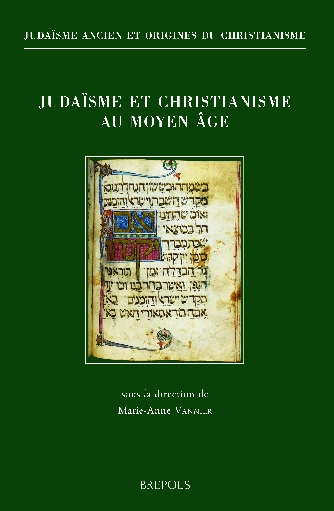
Judaïsme et christianisme au Moyen Âge
show More to view fulltext, buy and share links for:Judaïsme et christianisme au Moyen Âge show Less to hide fulltext, buy and share links for: Judaïsme et christianisme au Moyen ÂgeLes rapports entre Judaïsme au Moyen Âge ont été souvent présentés comme conflictuels. Or, il n’en a pas toujours été ainsi. Aussi cet ouvrage s’attache-t-il à mettre en évidence la synergie entre Judaïsme et christianisme à cette époque. Des auteurs comme Maïmonide et Eckhart ont, sur ce plan, un rôle décisif.
-
-
-
La construction sociale du sujet exclu (IVe-XIe siècle)
show More to view fulltext, buy and share links for:La construction sociale du sujet exclu (IVe-XIe siècle) show Less to hide fulltext, buy and share links for: La construction sociale du sujet exclu (IVe-XIe siècle)Préoccupation intense de l’époque contemporaine, l’exclusion sociale apparaît comme un sujet plus dramatique encore dans les sociétés anciennes, que l’on se représente plus volontiers fondées sur la communauté et la solidarité. L’existence du sujet exclu pourrait même y paraître impossible, tant les liens à la communauté semblent essentiels. Les sociétés de l’Antiquité tardive et du haut Moyen Âge se caractérisent en effet par l’existence de multiples communautés, plus ou moins fortement intégratives, qui s’enchevêtrent, se superposent, s’opposent.
Si la notion d’individu peut sembler contestable pour ces périodes, la personne ou le sujet s’y expriment sans conteste. L’exclusion, état extrême qui permet de mettre à nu le sujet dans sa tension avec la communauté, est un observatoire privilégié pour saisir comment se (re)construisent le statut et l'intériorité de la personne. Les quatorze contributions rassemblées dans ce volume, issues d'un colloque tenu à l'Université de Padoue, interrogent les traces, les lieux et les conséquences de l’exclusion aussi bien dans les sources textuelles qu'archéologiques, du IVe au XIe siècle. Elles montrent en particulier comment discours et pratiques de la justice ou des institutions chétiennes peuvent marquer le statut ou le corps du sujet, et comment celui-ci réagit face à l’exclusion, quitte à faire de celle-ci un élément revendiqué de son identité.
-
-
-

Le scribe d’archives dans l’Occident médiéval
show More to view fulltext, buy and share links for:Le scribe d’archives dans l’Occident médiéval show Less to hide fulltext, buy and share links for: Le scribe d’archives dans l’Occident médiévalContrairement aux scribes « de bibliothèque », les scribes « d'archives » - l'étiquette désigne ici de façon ouverte tous les acteurs de la pratique scripturaire dans le champ foisonnant des sources documentaires - sont très souvent les auteurs intellectuels des textes qu'ils tracent sur le parchemin ou le papier. Pour beaucoup d'entre eux, l'acte quotidien d'écrire n'est donc pas une fin en soi, ni même forcément un aspect prédominant du labeur ; ils exercent une ou plusieurs fonction(s) qui dépasse(nt) parfois très largement le cadre de cette activité technique. La palette de leurs profils socioprofessionnels présente une infinie variété, marquée par d'énormes écarts de statut et de prestige que le seul maniement commun de l'écriture ne saurait gommer. Qui étaient-ils vraiment ? Même si les médiévistes à l'œuvre dans les archives les côtoient intimement à travers leurs productions écrites, bien peu de recherches leur ont été dédiées : l'historiographie se contente trop souvent d'images d'Épinal qui masquent la complexité et la diversité des situations de terrain. Certes, la plupart des scribes se dérobent à l'historien, frappés d'anonymat. D'autres, cependant, se laissent saisir à la faveur d'une carrière saillante ou d'un dossier loquace : en reconstituant leurs parcours, ce volume collectif vise à jeter les fondements d'une histoire sociale des « scribes d'archives » dans l'Occident latin du second Moyen Âge.
-
-
-
Lyon dans l’Europe carolingienne
show More to view fulltext, buy and share links for:Lyon dans l’Europe carolingienne show Less to hide fulltext, buy and share links for: Lyon dans l’Europe carolingienneLyon, capitale des Burgondes (Ve-VIe siècles), avait été marginalisée au temps des royaumes mérovingiens de l’Entre-Seine-et-Rhin, et ses élites décimées par les pouvoirs francs (VIIe-VIIIIe siècles). La création d’un empire par Pépin le Bref puis Charlemagne a changé la donne. Dans une construction politique qui veut unir la Germanie à l’Italie, la Saxe à la Catalogne, Lyon retrouve une place centrale : porte de l’Espagne chrétienne, voie d’accès privilégiée à l’Italie lombarde dont Charlemagne a fait son premier objectif militaire, la ville devient la tête de pont de la présence franque dans le sud de l’Europe.
Le pouvoir carolingien cependant ne s’impose pas à Lyon seulement par la force, mais en y relevant le gouvernement épiscopal. Des évêques choisis par les empereurs pour leurs compétences intellectuelles sont placés à la tête de la cité. Leidrade et Agobard, Amalaire puis Amolon assurent le rayonnement durable de Lyon par l’excellence des écoles qu’ils fondent et qui attirent des clercs de l’Europe entière, ainsi que par la profusion des manuscrits qu’ils réunissent dans la bibliothèque cathédrale. L’intense activité culturelle lyonnaise du IXe siècle n’est pas corsetée par le soutien politique initial des Carolingiens. Au contraire, les clercs proposent des politiques alternatives au gouvernement des princes francs ; ils appellent à la création d’une Europe unifiée par le respect d’une loi unique et la renaissance d’un empire chrétien universel… Des propositions qui tiennent de l’idéalisme et du fondamentalisme biblique, et qui ne seront jamais suivies d’effet.
Le présent volume réunit des contributions rédigées à l’occasion du douzième centenaire de l’élection épiscopale d’Agobard à Lyon (816-840).
-
-
-
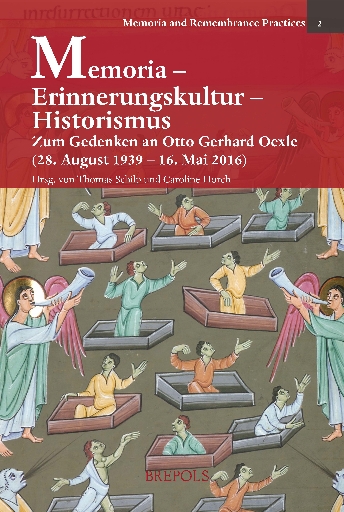
Memoria – Erinnerungskultur – Historismus
show More to view fulltext, buy and share links for:Memoria – Erinnerungskultur – Historismus show Less to hide fulltext, buy and share links for: Memoria – Erinnerungskultur – HistorismusZum Gedenken an Person und Wirken von Otto Gerhard Oexle (28. August 1939 - 16. Mai 2016).
Die Erforschung der Erinnerungskultur der vormodernen Gesellschaften Europas ist untrennbar mit Otto Gerhard Oexle, Direktor des Max-Planck-Instituts für Geschichte in Göttingen von 1987 bis 2004, verknüpft: Er hatte das Totengedenken des Ancien Régime als ‘totales soziales Phänomen’ und ‘Memoria’ als Exempel der transdisziplinären Historischen Kulturwissenschaften erkannt und erforscht. Dieser Band vereint Beiträge von Kollegen, Freunden und Schülern, die Themen, Thesen und Anregungen von Otto Gerhard Oexle aufgreifen - erweiternd, vertiefend und fortführend. Der Band führt einen Nachruf mit Beiträgen zusammen: eine ‘Schülerbiographie’ in Auseinandersetzung mit Otto Gerhard Oexle, zu Stiftung und Memoria in universalhistorischer Perspektive, über Memoria in textilen Schenkungen des Früh- und Hochmittelalters, zu Deutungsschemata der ‘mittelalterlichen Gesellschaft’ in Weltgerichtsbildern, über Stadtbau und Memoria im Italien des 15. und 16. Jahrhunderts, zu Ernst Robert Curtius und den Mittelalterbildern des 20. Jahrhunderts, zum Historismus, über das Gesetz vom Sinai in literarischen Verarbeitungen, bis hin zur Kultur der Erinnerung an die verfolgten und ermordeten Juden in den Niederlanden unter dem NS-Regime.
-
-
-
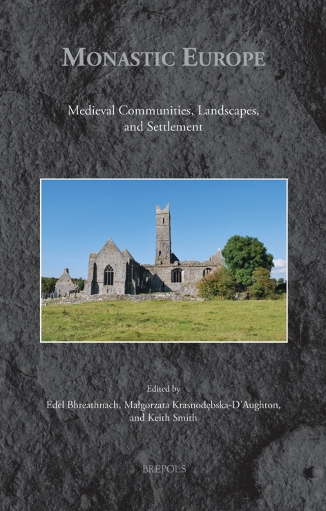
Monastic Europe
show More to view fulltext, buy and share links for:Monastic Europe show Less to hide fulltext, buy and share links for: Monastic EuropeMonasticism became part of European culture from the early period of Christianity and developed into a powerful institution that had a profound effect on the greater Church, on wider society, and on the landscape. Monastic communities were as diverse as the societies in which they lived, following a variety of rules, building monasteries influenced by common ideals and yet diverse in their regionalism, while also contributing to the economic and spiritual well-being inside and outside their precincts.
This interdisciplinary volume presents the diversity of medieval European monasticism with a particular emphasis on its impact on the immediate environs. Geographically it extends from the far west in Ireland, Scotland, and Wales, to the east in Romania and the Balkans, through the north of Scandinavia to the south of the Iberian Peninsula. Drawing on archaeological, art and architectural, textual and topographical evidence, the contributors explore how monastic communities were formed, how they created a landscape of monasticism, how they wove their identities with those around them, and how they interacted with all levels of society to leave a lasting imprint on European towns and rural landscapes.
-
-
-
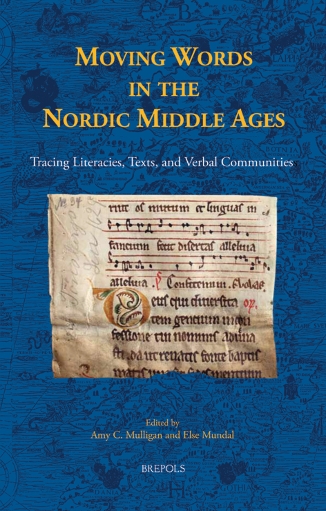
Moving Words in the Nordic Middle Ages.
show More to view fulltext, buy and share links for:Moving Words in the Nordic Middle Ages. show Less to hide fulltext, buy and share links for: Moving Words in the Nordic Middle Ages.The culmination of over a decade’s research on verbal culture in the pre- and post-Conversion medieval North at Bergen’s Centre for Medieval Studies, this volume traces the movement of words and texts temporally, geographically, and intellectually across different media and genres. The contributions gathered here begin with a reassessment of how the unique verbal cultures of Scandinavia and Iceland can be understood in a broader European context, and then move on to explore foundational Nordic Latin histories and vernacular sagas. Key case studies are put forward to highlight the importance of institutional and individual writing communities, epistolary and list-making cultures, and the production of manuscripts as well as runic inscriptions. Finally, the oral-written continuum is examined, with a focus on important works such as Íslendingabók and Landnámabók, Old-Norse Icelandic translated romances, and the development of prosimetra. Together, these essays form a state-of-the-art volume that offers new and vital insights into the role of literacy in the Norse-speaking world.
-
-
-
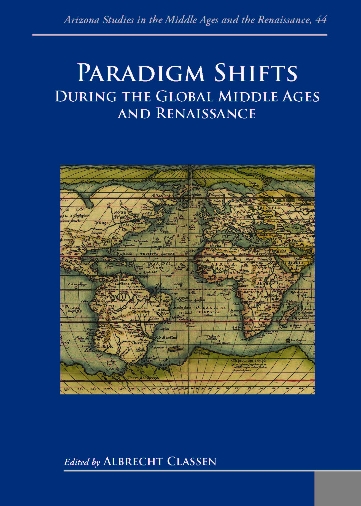
Paradigm Shifts During the Global Middle Ages and Renaissance
show More to view fulltext, buy and share links for:Paradigm Shifts During the Global Middle Ages and Renaissance show Less to hide fulltext, buy and share links for: Paradigm Shifts During the Global Middle Ages and RenaissanceFor a long time we have naively talked about the Middle Ages, the Renaissance, and other periods, but at closer analysis all those terms prove to be constructed models to help us understand in rough terms profound changes that affected human conditions throughout time. As the contributions to the present volume indicate, paradigm shifts have occurred regularly and constituted some of the critical developments in human existence. The notion of paradigm shift as first developed by Thomas Kuhn is here considerably expanded to address also literary, religious, scientific, and cultural-historical phenomena, to deal with contrasting conceptions of various parts of the world (China versus Europe), conflicts between genders, economic changes pertaining to women's roles, social and political criticism, models of how to explain our existence, ideological positions, and epistemological approaches. The study of paradigm shifts makes it possible to grasp fundamental movements both horizontally (the present world in global terms) and vertically (from the past to the present), exposing thereby central forces leading to shifts in power structures and in the mental-historical world-views. Focusing on paradigm-shifts allows us to gain deep insight into conflicting discourses throughout time and to illuminate the struggle between dominant and competing models explaining or determining reality.
-
-
-
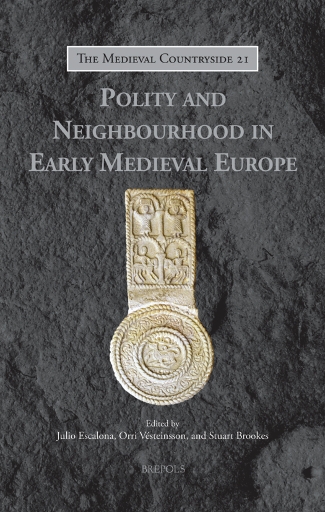
Polity and Neighbourhood in Early Medieval Europe
show More to view fulltext, buy and share links for:Polity and Neighbourhood in Early Medieval Europe show Less to hide fulltext, buy and share links for: Polity and Neighbourhood in Early Medieval EuropeHow were early medieval people connected to each other and to the wider world? In this collection, archaeologists and historians working in very different areas of early medieval Europe explore diverse evidence - from landscape and burial archaeology to charters and chronicles - to discuss the relationships that constituted neighbourhoods and the roles these played in the processes of state formation that can be observed in the peripheries of the Frankish world. What these case-studies teach us, the contributors argue, is that polities are formed not through the exclusive operation of either top-down or bottom-up agencies, but from the interplay between them. By exploring the ways in which local knowledge, social ties, and understandings of landscape interacted with higher-level authorities and institutions, we can gain real insights into the nature of early medieval power and people’s experiences of it.
Marking the culmination of a collective effort that has spanned over a decade and three funded projects, this volume brings together case-studies from Spain, Italy, England, northern Frankia, Norway, and Iceland to offer a comparative view of polities and neighbourhoods in early medieval Europe. Drawing on new research, and offering new perspectives driven by an interdisciplinary approach, this volume is of relevance to a range of disciplines including archaeology, history, onomastics, geography, and anthropology.
-
-
-
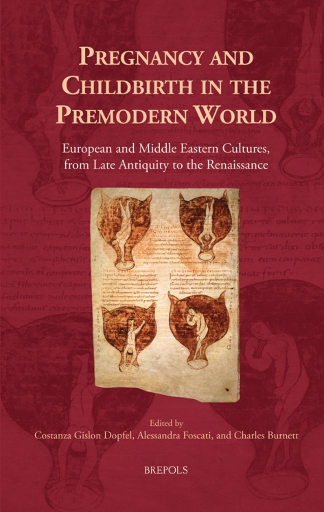
Pregnancy and Childbirth in the Premodern World
show More to view fulltext, buy and share links for:Pregnancy and Childbirth in the Premodern World show Less to hide fulltext, buy and share links for: Pregnancy and Childbirth in the Premodern WorldThis volume of contributions from international scholars offers a cross-cultural and multi-period analysis of pregnancy and childbirth traditions in Western and Middle Eastern cultures. The studies focus on the ideas, practices, and visual representations surrounding pregnancy and birth-giving from Late Antiquity to the Renaissance and offer the reader the possibility of observing the perception, representation, and theoretic paradigm of these events in a wide range of cultural contexts. The collection fits within multiple traditions of specialized scholarship, yet its scope suggests a geographically global approach and a new, multicultural methodology that encompasses a wide range of practices, historical periods, and topics. On one hand, it participates in the well-established medical, historical, and iconographic discourse on childbirth and family that has enticed much interest over the last two decades; on the other, its unique thematic structure includes cultures and periods previously ignored in similar collections of essays. The articles span from Northern Europe to the Mediterranean, the Middle East, and India, and connect the experience of childbirth to the exchanges of knowledge, religious beliefs, and social practices. With its variety of topics and specializations, the volume encourages a global comparative approach to the cultural narrative surrounding the activities and attitudes connected to conception and birth, paying particular attention to material culture, religion, history, and iconography, as well as to the exchange and dispersion of medical knowledge.
-
-
-
Pursuing a New Order II.
show More to view fulltext, buy and share links for:Pursuing a New Order II. show Less to hide fulltext, buy and share links for: Pursuing a New Order II.In the first two decades of the fifteenth century, the Hussite religious reform movement emerged in Bohemia; it used one of the realm's vernacular languages, Czech, both to disseminate its reform ideas, and to establish strong foundations for the reform. The vernacular became a significant strategy for identification, capable of binding together disconnected religious, ethnic, political and regional identities and generating a very potent aggregate of identifications. This volume considers material from the second half of the fourteenth century to the first half of the sixteenth, beginning with the so-called Hussite ‘forerunners’ and ending with the early German reformation. Individual essays discuss the various functions of the vernaculars in different text types, social situations and religious and political contexts. Together, they correct former assumptions about the topic and provide a basis for further study of Hussite vernacular theology and contribute to the transformation of scholarly narratives about the Hussite movement by including works of vernacular religious education among the most important source material. It offers a basis for the comparative research on the role of the vernaculars in late medieval European religious reform movements.
-
-
-

Quand les auteurs étaient des nains
show More to view fulltext, buy and share links for:Quand les auteurs étaient des nains show Less to hide fulltext, buy and share links for: Quand les auteurs étaient des nainsDepuis quelques dizaines d’années, l’avènement de l’individualité de l’auteur médiéval à la fin du Moyen Âge et l’émergence de stratégies auctoriales destinées à construire et à afficher une figure d’auteur dans l’espace du texte et du manuscrit ont (re)fait l’objet d’une attention soutenue de la critique. Étonnamment, alors que ce processus coïncide avec l’essor des traductions savantes d’autorités latines, la critique n’a guère considéré à sa juste valeur les stratégies auctoriales des traducteurs français des XIVe et XVe siècles, jugés comme un « corps » et corpus à la frontière du champ littéraire et de ses enjeux. Pourtant, les études sur les traductions modernes et pré-modernes ont depuis longtemps entrepris un travail historiographique destiné à revaloriser la figure du traducteur comme une figure auctoriale au sens plein et à part entière du champ littéraire. Dans cette démarche de revalorisation, le corpus médiéval a été négligé. Les contributions réunies ici visent à étudier la figure d’auteur des traducteurs français des XIVe et XVe siècles et sa mise en œuvre textuelle et matérielle afin de déterminer les continuités et les ruptures entre leurs stratégies auctoriales et celles des autres auteurs du même champ littéraire.
-
-
-
Stilus - modus - usus
show More to view fulltext, buy and share links for:Stilus - modus - usus show Less to hide fulltext, buy and share links for: Stilus - modus - ususBy exploring communication and social practices employed during negotiations at the papal court, this volume sheds light on a wide range of sources for studying the high and late medieval papacy. Analyzing the terminology and practice of the ‘stilus curiae’ in documents from all parts of Europe, this volume puts forward a new understanding of negotiation and conflict resolution at the papal court in the Middle Ages. ‘Stilus curiae’ usually refers to the language and style of curial documents, and it is often used to describe the customary application of legal procedure in court practice. The authors of this volume, however, argue for a broader understanding of ‘stilus curiae’ as an umbrella term that encompasses all forms of communication and social practices used during negotiations at the papal court. This volume (the first of two) publishes the results of a research network funded by the German Research Foundation (DFG). Through analysis of the concept(s) of the ‘stilus curiae’, the chapters throw new light on a wide range of sources from the High and Late Middle Ages, including chronicles, biographic and polemic texts, as well as administrative sources, such as letters of petitioners and proctors, speeches, and financial records of ambassadors. Thus, the volume offers a new approach towards the papacy between 1100 and 1500.
-
-
-
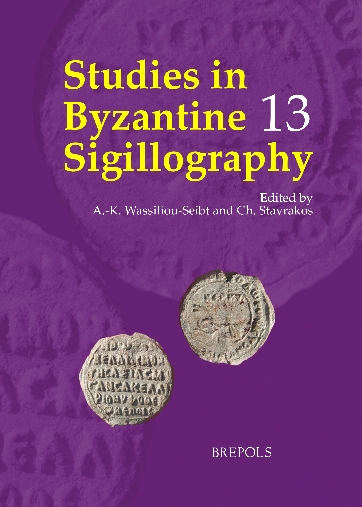
Studies in Byzantine Sigillography
show More to view fulltext, buy and share links for:Studies in Byzantine Sigillography show Less to hide fulltext, buy and share links for: Studies in Byzantine SigillographyThis volume contains primarily papers of the 11th International Symposium held in Istanbul (May 2014) and of the last Congres of Byzantine Studies in Belgrade (August 2016). There are papers about the seals as historical source and archaeological finding presenting their role in the Byzantine Prosopography, Byzantine Administration, Historical Geography and Byzantine Art History.
-
-
-
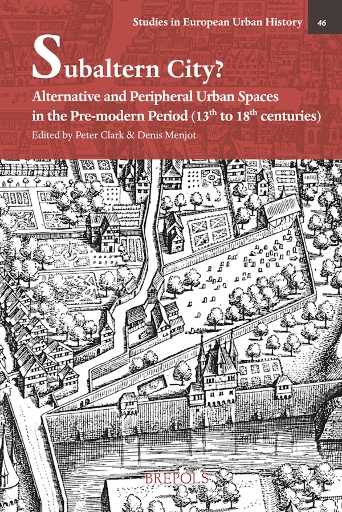
Subaltern City?
show More to view fulltext, buy and share links for:Subaltern City? show Less to hide fulltext, buy and share links for: Subaltern City?The purpose of this volume is to question traditional notions of city space in pre-modern Europe (with its stress on space being incorporated, regulated and integrated, dominated by its merchants and crafts), and to investigate how far it was in fact economically and politically pluralistic with a great variety of functions and juridictions. The volume examines comparatively the range of different urban spaces in and outside the medieval and early modern city from gardens, farmland and wasteland to industrial sites, poor and rich suburbs, shooting grounds, green space, grey space and military zones. Case studies cover cities in France, Germany, Italy, the Low Countries, England, Portugal and the Middle East. We ask: how far was the pre-modern city a compact city? Or was it in fact a ‘subaltern city’, as geographers have recently proposed, where many urban spaces were contested and the municipality has to be seen as only one key spatial actor?
-
-
-
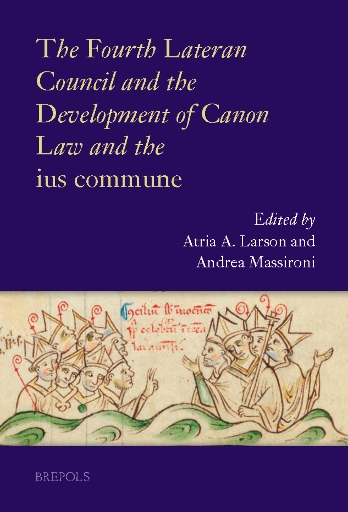
The Fourth Lateran Council and the Development of Canon Law and the ius commune
show More to view fulltext, buy and share links for:The Fourth Lateran Council and the Development of Canon Law and the ius commune show Less to hide fulltext, buy and share links for: The Fourth Lateran Council and the Development of Canon Law and the ius communeThis volume collects essays from an international group of scholars who treat various aspects of the Fourth Lateran Council's placement within the development of the ius commune. Topics include the canon law about armsbearing clergy, episcopal elections, heresy, degrees of affinity within marriage, the oversight of relic veneration; two essays highlight the council's reaction to the Fourth Crusade's sack of Constantinople in trying to incorporate the eastern church into the ecclesiastical structure and liturgical norms of the Roman Church; several essays concentrate on the usage of Roman or civil law in some of Lateran IV's constitutions and emphasize issues of private and procedural law. Collectively, and headed by an essay by Anne J. Duggan on the relationship of Pope Alexander III's pontificate to the Lateran IV constitutions, the essays create a fuller picture of Innocent III and his curia's reliance on developments within the jurisprudence of the preceding half century, but they also reveal the ways in which they forged new paths and made significant contributions to guide canon law in the years following the council.
-
-
-
The Literary Legacy of Byzantium
show More to view fulltext, buy and share links for:The Literary Legacy of Byzantium show Less to hide fulltext, buy and share links for: The Literary Legacy of ByzantiumNineteen scholars join forces to pay tribute to one of the leading scholars in Byzantine studies, Father Joseph A. Munitiz. As one of the founders of the Series Graeca of the Corpus Christianorum and because of his own exemplary work, Joe Munitiz had and has a lasting impact on the development of Byzantine studies. There is no better way to honour him and his work than to offer him a Festschrift with contributions that mimic his quality, passion, and curiosity.
The Festschrift contains several "firsts": the first English translation of Eustathius' Letter concerning the Two Natures against Severus, and the first critical editions (and studies) of an anonymous iambic canon on St John Chrysostom, of letter Z of the Etymologicum Symeonis, of some additions to letter A in the Florilegium Coislinianum, of a possible credo of Metrophanes of Smyrna, of a letter by Nicolas Pepagomenos to Gregory Palamas, and of Maximus Confessor's Tomos to Stephen of Dor against the Ekthesis.
The innovative studies in this volume deal with the Slavonic and Greek catenae on the Song of Songs, with Athanasius Letter to Marcelinus, with an ascetic miscellany in a thirteenth-century Atheniensis, with the so-called 'First Chapter Titles' in the second recension of the Florilegium Coislinianum, with the date of composition of the Maximia Corpus, with Raimundus Lullus' knowledge of Byzantium, with the reception of the Catalogue of Inventors in Gregory of Nazianzus' fourth oratio, and with Titus of Bostra's polemic against the Manicheans.
-