


Brepols Online Books Other Miscellanea Collection 2019 - bob2019miot

Collection Contents
2 results
-
-
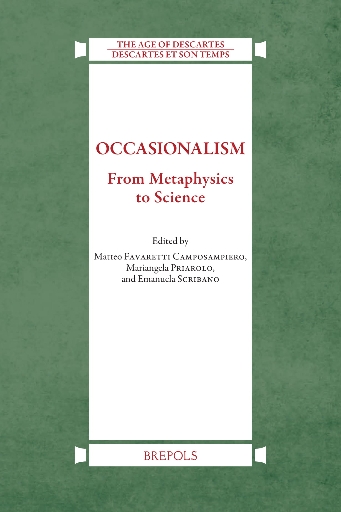
Occasionalism
show More to view fulltext, buy and share links for:Occasionalism show Less to hide fulltext, buy and share links for: OccasionalismTraditionally interpreted as an outcome of Cartesian dualism, in recent years occasionalism has undergone serious reassessment. Scholars have shifted their focus from the post-Cartesian debates on the mindbody problem to earlier discussions of bodybody issues or even to the problem of causation as such. Occasionalism appears less and less a cheap solution to the mind-problem and more and more a family of theories on causation, which share the fundamental claim that all genuine causal powers belong to God. So why did the most spectacular emergence of occasionalism take place precisely in the post-Cartesian era? How did the scientific revolution and the need to fight back against the early modern resurgence of naturalism contribute to the success of occasionalist doctrines?
This book provides a historical and theoretical map of occasionalism in all its various forms, with a special focus on its seventeenth-century supporters, adversaries, and polemical targets. These include not only canonical authors such as Cordemoy, La Forge, Malebranche, Spinoza, and Leibniz, but also less explored figures such as Clauberg, Clerselier, Fnelon, Fernel, Rgis, and Regius. Furthermore, the book covers the earlier Arabic and Scholastic sources of occasionalism and its later developments in Berkeley, Wolff, and Hume.
-
-
-
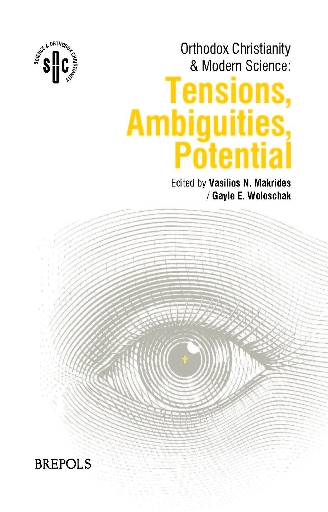
Orthodox Christianity and Modern Science
show More to view fulltext, buy and share links for:Orthodox Christianity and Modern Science show Less to hide fulltext, buy and share links for: Orthodox Christianity and Modern ScienceThe first volume of the new series “Science and the Orthodox Christianity” focuses on the nature of the relationship between modern science and Orthodox Christianity with its centuries-old tradition. Orthodoxy today shares a variety of - sometimes ambiguous - attitudes towards modern science shaped by the texts of the Church Fathers, medieval and modern theologians and scholars, as well as contemporary social realities. On the other hand, modern science, which sprung from the quest by West European scholars for a better knowledge of the world, is faced with crucial and uneasy questions about the meaning of life and the position of humankind within the natural world.
The main goal of this volume is to define the patterns of the science-religion relationship in the Orthodox world, especially in the light of the most recent trends in both science and theology. Is this a relationship of dialogue or conflict? Of integration or independence? What is the impact of the revival of patristic studies and new theological currents on the relationship? But also, what is the relevant impact of new scientific discoveries on the image of the human and the universe? Has the modern science-religion dialogue in the West influenced Orthodox Christianity in its effort to create new perspectives and concepts in response to new challenges? These questions are crucial for understanding and mapping the current science-religion dialogue in the Orthodox world, and apart from recording given views and opinions.
-