


Brepols Online Books Other Miscellanea Collection 2019 - bob2019miot

Collection Contents
3 results
-
-
A Primordio urbis
show More to view fulltext, buy and share links for:A Primordio urbis show Less to hide fulltext, buy and share links for: A Primordio urbisDa duemila anni gli Ab Urbe condita libri di Tito Livio (Padova 59 a.C. - 17 d.C.) non cessano di porre a lettori e studiosi di tutto il mondo enormi e affascinanti interrogativi. L'ambizioso progetto dello storico, narrare tutta la storia di Roma dalla sua fondazione all'età contemporanea, ha dato origine a un'opera immensa per estensione e complessità. Le Storie di Livio si fondano su un potente intreccio di istanze letterarie, storiografiche e ideologiche, che ne fa una delle opere più influenti della latinità. I contributi raccolti nel volume, provenienti da svariati ambiti del sapere umanistico, si confrontano con l'opera di Livio in una prospettiva multidisciplinare, integrando competenze, suggestioni e punti di vista. A studi di carattere filologico-letterario si affiancano così approfondimenti storici, giuridici, archeologici e storico-artistici, con particolare attenzione alla fortuna dell'opera liviana in età medievale e moderna.
-
-
-
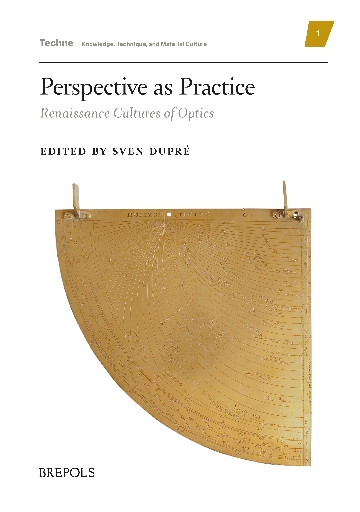
Perspective as Practice
show More to view fulltext, buy and share links for:Perspective as Practice show Less to hide fulltext, buy and share links for: Perspective as PracticeThis book is about the development of optics and perspective between the fifteenth and seventeenth centuries. The point of departure of this book is the recognition of the polysemy of perspective, that is, the plurality of meanings of perspective. To bring forward the polysemy of perspective, this book explores the history of perspectiva in terms of practices, a conglomerate of material, social, literary and reproductive practices, through which knowledge claims in perspective were produced, promoted, legitimated and circulated in and through a variety of sites and institutions. The ways optical knowledge was used by different groups in different places (such as the university classroom, the anatomist's dissection table, the goldsmith's workshop, and the astronomer's observatory) defined the meanings of Renaissance perspective. As this period was characterized by widespread 'optical literacy', perspective was defined in different ways in different places and sites by various groups of practitioners. Most interestingly, sites such as the theatre, the instrument maker's workshop and the courtly garden were home to practices of perspective which have remained on the margin, or even completely invisible, in the historiographies of optics and perspective. The book also brings out the differences between codifications of perspectiva and practice. There were a variety of non-Albertian constructions to create the illusion of space, and other types of optical knowledge were as important to artists as the geometry of perspective.
-
-
-
Pragmatique du commentaire
show More to view fulltext, buy and share links for:Pragmatique du commentaire show Less to hide fulltext, buy and share links for: Pragmatique du commentaireCe volume s'inscrit dans la tradition de l'étude du commentaire, de la tradition et de l'autorité, qu'il explore dans une perspective comparatiste sur une longue durée, du monde antique jusqu'à l'époque contemporaine, et dans un espace aussi vaste que possible. En cherchant à approcher les pratiques des commentateurs dans leur diversité, et à faire voler en éclats la notion unificatrice même de commentaire, les auteurs n'ont pas voulu participer à la constitution d'une synthèse ou d'une somme, mais se sont délibérément positionnés à la croisée de plusieurs chemins, philologie, littérature, anthropologie, histoire de l'écrit et de l'érudition, pour multiplier questionnements et points de vue. Le résultat est un dialogue polyphonique, entre une parole et son commentaire, entre une autorité et son commentateur, mais aussi entre commentateurs, érudits de tous ordres, maîtres et disciples, auteurs et lecteurs. Les pratiques de commentaire y voisinent et conversent avec d'autres, l'Antiquité entre en débat avec le Moyen Âge ou la période moderne, la Grèce ou Rome avec le monde des rabbins ou le Japon.
Ce volume est aussi le résultat d'un travail collectif mené au sein du séminaire "Antiquité au présent" en 2011-2013, autour du thème "Commenter, expliquer, paraphraser". Il reflète, dans sa diversité et son foisonnement, la polyphonie des collègues relevant de plusieurs institutions, qui ont trouvé dans le séminaire un espace de dialogue et de discussion.
-