


Brepols Online Books Other Miscellanea Collection 2019 - bob2019miot

Collection Contents
18 results
-
-
A Primordio urbis
show More to view fulltext, buy and share links for:A Primordio urbis show Less to hide fulltext, buy and share links for: A Primordio urbisDa duemila anni gli Ab Urbe condita libri di Tito Livio (Padova 59 a.C. - 17 d.C.) non cessano di porre a lettori e studiosi di tutto il mondo enormi e affascinanti interrogativi. L'ambizioso progetto dello storico, narrare tutta la storia di Roma dalla sua fondazione all'età contemporanea, ha dato origine a un'opera immensa per estensione e complessità. Le Storie di Livio si fondano su un potente intreccio di istanze letterarie, storiografiche e ideologiche, che ne fa una delle opere più influenti della latinità. I contributi raccolti nel volume, provenienti da svariati ambiti del sapere umanistico, si confrontano con l'opera di Livio in una prospettiva multidisciplinare, integrando competenze, suggestioni e punti di vista. A studi di carattere filologico-letterario si affiancano così approfondimenti storici, giuridici, archeologici e storico-artistici, con particolare attenzione alla fortuna dell'opera liviana in età medievale e moderna.
-
-
-
Cinq parcours de recherche en sciences religieuses
show More to view fulltext, buy and share links for:Cinq parcours de recherche en sciences religieuses show Less to hide fulltext, buy and share links for: Cinq parcours de recherche en sciences religieusesÀl'heure de leur départ à la retraite, cinq directeurs d'études de la section des Sciences religieuses de l'EPHE ont choisi de rendre hommage à l'École : Odile Journet-Diallo, ethnologue africaniste, Christiane Zivie-Coche, égyptologue, Jean-Daniel Dubois, historien des gnostiques et des manichéens, Cristina Scherrer-Schaub, indianiste, et Jean-Paul Willaime, sociologue du protestantisme.
Chacun à sa manière retrace son parcours et ses préoccupations en soulignant, à l'occasion du 150e anniversaire de la création de l'EPHE, combien cette institution universitaire est originale et riche d'enseignements.
-
-
-
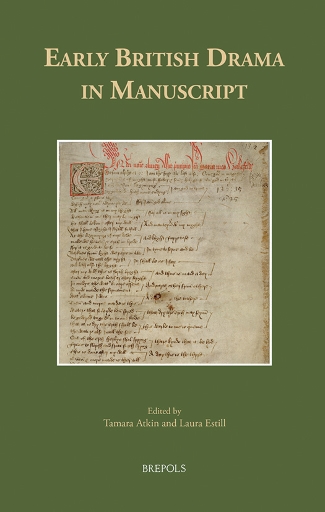
Early British Drama in Manuscript
show More to view fulltext, buy and share links for:Early British Drama in Manuscript show Less to hide fulltext, buy and share links for: Early British Drama in ManuscriptThis collection of essays examines medieval and early modern drama in the context of a rich and varied manuscript culture. Focusing on the production, performance, and reception of dramatic documents made in Britain between 1400 and 1700, the essays in this book shed new light on the role of dramatic manuscripts in a range of different social and literary spheres. From extant manuscripts of England’s mystery cycles to miscellanies kept by seventeenth-century readers, the documents discussed in this volume reflect a culture of producing and using drama in ways that have been overlooked by the recent critical focus on drama and print by theatre historians and literary critics. By showing the various continuities, exchanges, lendings, and borrowings between medieval and early modern scribal practices, as well as between manuscript and print practices, this volume interrogates accepted critical narratives about the way that drama has been historicized.
-
-
-
Figures mythiques et discours religieux dans l’Empire gréco-romain
show More to view fulltext, buy and share links for:Figures mythiques et discours religieux dans l’Empire gréco-romain show Less to hide fulltext, buy and share links for: Figures mythiques et discours religieux dans l’Empire gréco-romainBoth in discourse about religions and in the religious discourse of the Greco-Roman Empire, the great figures of mythology and history functioned either as models or as foils, following their use in poetical, philosophical, historiographical, panegyrical or apologetical contexts. The approach’s interest lies in the parallel consideration of different sorts of texts, generally examined independently otherwise : Augustan poetry, polytheistic rhetoric and historiography and Christian literature. Indeed, Pagans and Christians had many common concerns, expressed through the conceptual tools they borrowed from each other. Specific case studies reveal underlying connections in the elaboration of the exemplary figures and thus in the beliefs of the Greco-Roman Empire. The contributions show notably how exemplary figures are constructed by the communities depending upon them, the mediating role they play between men and gods, their networking signification, each one being defined by the interactions with the others, their role as rhetorical and polemical devices due to their adaptability, and, in the change of paradigm brought about by Christianity, how pagan figures persist and become a fundamental substratum for new figures, elaborated from these mythical exempla.
-
-
-
Gaspar van Weerbeke
show More to view fulltext, buy and share links for:Gaspar van Weerbeke show Less to hide fulltext, buy and share links for: Gaspar van WeerbekeGaspar van Weerbeke was one of the most successful Franco-Flemish musicians of the second half of the fifteenth century, holding prestigious positions in the Sforza court in Milan, the Burgundian court chapel, and the papal chapel in Rome. His compositions were widely transmitted in manuscript and print sources throughout Europe, and he was one of the best represented composers in the early Italian music prints of Ottaviano Petrucci. Despite the high esteem of his contemporaries, Gaspar has up to now played only a peripheral role in Renaissance music historiography. This book is the first collection of research articles dedicated exclusively to the life and works of Gaspar. While the basic facts of Gaspar's life have long been known, the book fleshes out the details, presenting a more differentiated and complex picture of his biography. Analysis of a wide range of Gaspar's compositional output leads to new interpretations of his approach to different genres: masses, motets, and motet cycles. His relatively small quantity of songs is revisited in light of the confusion—both then and now—over the meaning and validity of their attributions. This book seeks to promote further research on this composer and place him in his appropriate place in music history.
-
-
-
Les silences de l'historien
show More to view fulltext, buy and share links for:Les silences de l'historien show Less to hide fulltext, buy and share links for: Les silences de l'historienDans l’écriture de l’histoire, les mots ne sont pas seuls porteurs de sens, les silences aussi peuvent être signifiants : personnages oubliés, événements occultés, informations tronquées ou censurées - telles sont les zones aveugles, les non-dits sur lesquels se sont interrogés les auteurs des douze articles composant ce recueil consacré à l’historiographie antique et médiévale, en langues grecque et latine, du Ve siècle av. J.-C. à l’époque des Croisades. L’objectif de cette enquête collective est de mettre en évidence les raisons politiques ou religieuses, éthiques ou esthétiques qui peuvent expliquer ces blancs, dont la détection et l’interprétation sont riches d’intérêt, puisqu’ils contribuent à la construction de l’objet historiographique et participent à l’élaboration du sens - qu’il s’agisse de lacunes imputables au simple désintérêt, à l’ignorance, ou au contraire d’omissions très concertées, obéissant à une stratégie délibérée d’occultation. Le présent volume entend ainsi apporter sa contribution à l’établissement d’une cartographie des savoirs dans les mondes antiques et médiévaux, et offrir une réflexion sur le travail de mémoire et de (re)construction du passé propre à toute entreprise historiographique.
-
-
-
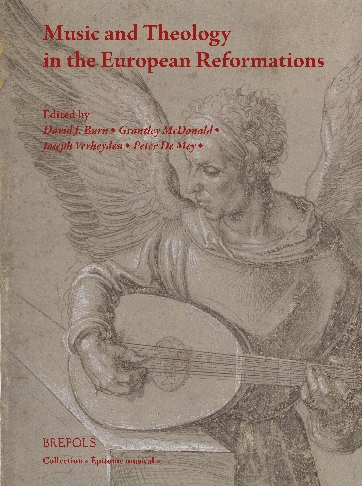
Music and Theology in the European Reformations
show More to view fulltext, buy and share links for:Music and Theology in the European Reformations show Less to hide fulltext, buy and share links for: Music and Theology in the European ReformationsThroughout the history of the Church, music has regularly been placed under the critical microscope. Nonetheless, the intensity of thought concerning music’s role in the liturgy and in spiritual life in general reached a peak during the period of the European Reformations. This multidisciplinary collection examines the debates and controversies around music and theology during that time from both Catholic and various Protestant perspectives. It includes twenty essays from musicologists, theologians, Biblical scholars, and Church historians that attempt to answer the following questions: What difference did the theological and ecclesiological developments of the sixteenth century make to musical forms and practices? What continuities of practice existed with former times? How was the desire to restore the church to an imagined pristine state manifest in music and liturgy? How did developments in exegesis arising from the massively increased knowledge and access to the Bible in Hebrew and Greek affect the way composers wrote and congregations heard? Why did some reformers embrace music, while others rejected it?
-
-
-
Occasionalism
show More to view fulltext, buy and share links for:Occasionalism show Less to hide fulltext, buy and share links for: OccasionalismTraditionally interpreted as an outcome of Cartesian dualism, in recent years occasionalism has undergone serious reassessment. Scholars have shifted their focus from the post-Cartesian debates on the mindbody problem to earlier discussions of bodybody issues or even to the problem of causation as such. Occasionalism appears less and less a cheap solution to the mind-problem and more and more a family of theories on causation, which share the fundamental claim that all genuine causal powers belong to God. So why did the most spectacular emergence of occasionalism take place precisely in the post-Cartesian era? How did the scientific revolution and the need to fight back against the early modern resurgence of naturalism contribute to the success of occasionalist doctrines?
This book provides a historical and theoretical map of occasionalism in all its various forms, with a special focus on its seventeenth-century supporters, adversaries, and polemical targets. These include not only canonical authors such as Cordemoy, La Forge, Malebranche, Spinoza, and Leibniz, but also less explored figures such as Clauberg, Clerselier, Fnelon, Fernel, Rgis, and Regius. Furthermore, the book covers the earlier Arabic and Scholastic sources of occasionalism and its later developments in Berkeley, Wolff, and Hume.
-
-
-
Orthodox Christianity and Modern Science
show More to view fulltext, buy and share links for:Orthodox Christianity and Modern Science show Less to hide fulltext, buy and share links for: Orthodox Christianity and Modern ScienceThe first volume of the new series “Science and the Orthodox Christianity” focuses on the nature of the relationship between modern science and Orthodox Christianity with its centuries-old tradition. Orthodoxy today shares a variety of - sometimes ambiguous - attitudes towards modern science shaped by the texts of the Church Fathers, medieval and modern theologians and scholars, as well as contemporary social realities. On the other hand, modern science, which sprung from the quest by West European scholars for a better knowledge of the world, is faced with crucial and uneasy questions about the meaning of life and the position of humankind within the natural world.
The main goal of this volume is to define the patterns of the science-religion relationship in the Orthodox world, especially in the light of the most recent trends in both science and theology. Is this a relationship of dialogue or conflict? Of integration or independence? What is the impact of the revival of patristic studies and new theological currents on the relationship? But also, what is the relevant impact of new scientific discoveries on the image of the human and the universe? Has the modern science-religion dialogue in the West influenced Orthodox Christianity in its effort to create new perspectives and concepts in response to new challenges? These questions are crucial for understanding and mapping the current science-religion dialogue in the Orthodox world, and apart from recording given views and opinions.
-
-
-
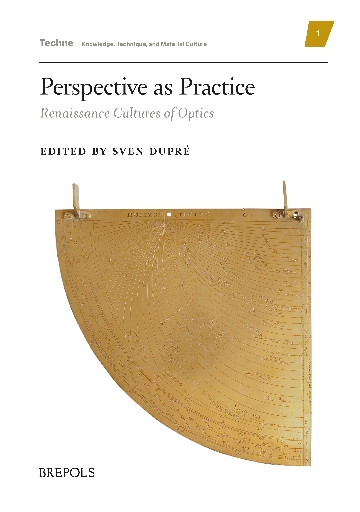
Perspective as Practice
show More to view fulltext, buy and share links for:Perspective as Practice show Less to hide fulltext, buy and share links for: Perspective as PracticeThis book is about the development of optics and perspective between the fifteenth and seventeenth centuries. The point of departure of this book is the recognition of the polysemy of perspective, that is, the plurality of meanings of perspective. To bring forward the polysemy of perspective, this book explores the history of perspectiva in terms of practices, a conglomerate of material, social, literary and reproductive practices, through which knowledge claims in perspective were produced, promoted, legitimated and circulated in and through a variety of sites and institutions. The ways optical knowledge was used by different groups in different places (such as the university classroom, the anatomist's dissection table, the goldsmith's workshop, and the astronomer's observatory) defined the meanings of Renaissance perspective. As this period was characterized by widespread 'optical literacy', perspective was defined in different ways in different places and sites by various groups of practitioners. Most interestingly, sites such as the theatre, the instrument maker's workshop and the courtly garden were home to practices of perspective which have remained on the margin, or even completely invisible, in the historiographies of optics and perspective. The book also brings out the differences between codifications of perspectiva and practice. There were a variety of non-Albertian constructions to create the illusion of space, and other types of optical knowledge were as important to artists as the geometry of perspective.
-
-
-
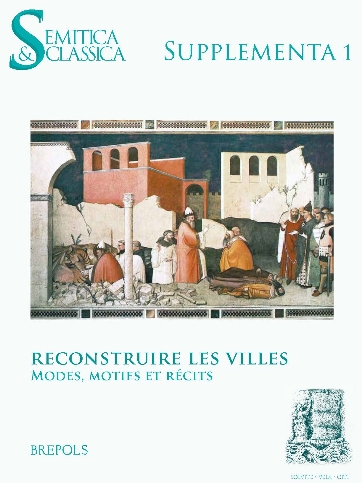
Reconstruire les villes
show More to view fulltext, buy and share links for:Reconstruire les villes show Less to hide fulltext, buy and share links for: Reconstruire les villesLe dixième anniversaire de la revue Semitica & classica a donné lieu, à Paris, les 18 et 19 octobre 2017, à un colloque international sur le thème de la reconstruction des villes en Méditerranée du troisième millénaire avant notre ère au Moyen Âge.
Archéologues, philologues, historiens, historiens de l'art et épigraphistes y ont traité de la reconstruction des villes, tantôt d'un point de vue général, tantôt à partir d'études de cas, dont Mari, Ougarit, Sélinonte, Athènes, Milet, Rome, Jérusalem, Antioche, Hermopolis, Byzance, Gaza ou Alep.
Issu de ce colloque, le présent volume, s'appuyant sur les sources antiques, textes ou vestiges archéologiques, étudie les rapports entre destruction et reconstruction, qu'elles soient le fait des habitants eux-mêmes ou de l'envahisseur, que la destruction soit un fait de guerre, une catastrophe naturelle ou qu'il s'agisse, dans un cas comme dans l'autre, d'une volonté de rénovation partielle ou totale.
Les modes de destruction d'une ville, tout ou partie, et les modalités de reconstruction, remplois architecturaux, formes de restauration et de rénovation sont appréhendés à l'aide des données archéologiques et des récits antiques, comme autant de souvenirs de ces illustres cités, témoignages de ce qu'elles furent réellement, mais aussi parfois récits littéraires et reconstructions fictives du passé.
-
-
-
Stocks, seasons and sales
show More to view fulltext, buy and share links for:Stocks, seasons and sales show Less to hide fulltext, buy and share links for: Stocks, seasons and salesThis book presents ten case-studies by eminent scholars dealing with food supply, storage and markets from c. 1600 to c. 2000. Together they present a long-term history of the tools to regulate the rhythms and seasonal patterns of the food production and distribution process. How were the vast flows of staple food needed for metropolitan areas organised? What practical difficulties had to be overcome to preserve this food safely? Did people respond to price patterns in search for profit? Were governments successful in imposing regulation? In dealing with these issues, the contributing authors adopt different approaches and investigate cases from England, Belgium, Germany, Austria, Italy, France and Mexico. The focus on the stocks and flows of grains and other foodstuffs raises new questions combining economic, social, political, and environmental issues in the study of agricultural markets and food policies.
-
-
-
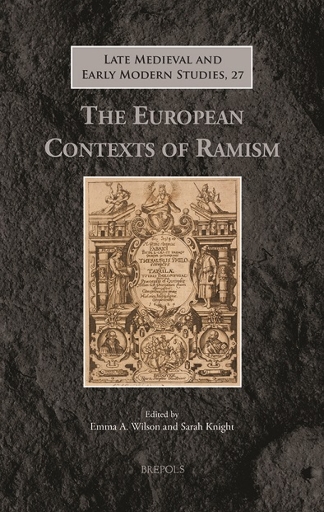
The European Contexts of Ramism
show More to view fulltext, buy and share links for:The European Contexts of Ramism show Less to hide fulltext, buy and share links for: The European Contexts of RamismPierre de la Ramée or Petrus Ramus (1515-1572) has long been a controversial figure in educational reform and innovation, from the moment of his first public academic statements in the 1530s, to his reception among scholars in the twentieth and twenty-first centuries. What is beyond dispute, however, is the vast reach of his influence throughout Europe. Ramus’s ideas were disseminated through copious editions and translations of his own textbooks, and in wave after wave of adaptations and re-imaginings of his ideas that swept across the continent.
This volume embarks on a European tour of Ramism, using a wide range of previously unpublished or untranslated archival evidence from throughout the continent to examine the dissemination of Ramus’s works and his intellectual influence in geographic and in disciplinary terms. The ten chapters explore the spread of Ramism from his home country of France to Protestant strongholds in Germany, Holland, and Britain, and in the Catholic context of the Iberian peninsula. The book also examines Ramism in the less familiar territories (to most Anglophone readers) of Scandinavia and Hungary, and considers the preceding and contemporary Dutch and German educational reform movements from which Ramus borrowed to forge his own distinctive intellectual method.
-
-
-
The Territories of Philosophy in Modern Historiography
show More to view fulltext, buy and share links for:The Territories of Philosophy in Modern Historiography show Less to hide fulltext, buy and share links for: The Territories of Philosophy in Modern HistoriographyIn the recent past, critical discussions concerning notions such as ‘cultural area’ and ‘area studies’ - as well as their relativization by means of conceptions that avoid splitting clearly identified areas (inter alia, ‘third space’, ‘hybridity’, ‘diaspora’, or ‘cosmopolitanism’) - have drawn attention to the long history of cultural territorialization. This book attempts to open the history of philosophy to reflexive and globalizing tendencies elaborated in the field of ‘world history’. From the seventeenth century onward, in both modern Europe and North America, historical sciences - notably philosophical historiography and cultural history - colonized both the past (or national pasts) and the ‘rest’ of the world. The contributions gathered in this volume address both phenomena to the extent that they have been linked with modern historicization of philosophy, sciences, and culture.
-
-
-
Transmission of Knowledge in the Late Middle Ages and the Renaissance
show More to view fulltext, buy and share links for:Transmission of Knowledge in the Late Middle Ages and the Renaissance show Less to hide fulltext, buy and share links for: Transmission of Knowledge in the Late Middle Ages and the RenaissanceThe nineteenth century saw the rapid development of textual criticism for establishing the “best” and “most authentic” forms of both Ancient and Mediaeval texts thanks to the method perfected by Karl Lachmann, who based himself on the insights gained during the eighteenth century. Lachmann’s method has been further refined by later philologists, with, most interestingly, the use of computers in establishing the mutual relations of manuscript witnesses since the last decades of the twentieth century. However, the interest in what form the texts, both Ancient and Mediaeval, were actually circulating in the Late Middle Ages and in the Renaissance, has been slow to emerge as an area of scholarly interest. In other words: what did the readers actually get in front of their eyes, and acted upon as, say, doctors, historians, theologians between the thirteenth and sixteenth centuries?
This volume explores the Late Medieval and Renaissance transmission of texts of different genres, languages and periods from the book historical point of view, taking into consideration not only the textual but also the material aspect of the traditions.
The authors include eminent specialists as well as mid- and early career scholars.
-
-
-
Émotions de Dieu
show More to view fulltext, buy and share links for:Émotions de Dieu show Less to hide fulltext, buy and share links for: Émotions de DieuParler de Dieu suppose de lui attribuer des qualités qui montrent combien sa nature diverge de celle de l'homme. De sa perfection découlent notamment l'impassibilité et l'immutabilité. Dès lors, comment parler d'émotions de Dieu, puisque les mouvements, le dérèglement et l'altération qu'elles présument renvoient, dès l'Antiquité, à la faiblesse et à la passivité humaines ? Ces émotions divines traversent pourtant bien l'Ancien Testament, qui présente un Dieu tour à tour affligé, offensé, en colère, aimant et prenant pitié de ses créatures. Ces anthropomorphismes doivent-ils être lus de manière allégorique, comme la preuve d'une inadéquation sémantique et d'une intention pédagogique ? Est-ce parce que ce sujet résiste que le vaste courant d'histoire des émotions l'a délaissé ? L'implication affective du Fils a pourtant été décisive pour appréhender la spécificité chrétienne et l'empathie divine comme source de consolation suprême.
Notre volume se situe à l'intersection de ce double angle mort thématique de l'histoire des émotions, et chronologique de l'histoire de la théologie de la souffrance de Dieu qui néglige l'époque moderne. Il propose d'élargir l'enquête aux gestes sociaux dans lesquels les émotions de Dieu sont impliquées. En quel sens peut-on parler d'émotions divines ? Par qui, dans quels cadres et à quelles intentions sont-elles mobilisées ? À quels titres sont-elles révélatrices de la difficulté à penser la divinité ? Les embarras narratifs, ontologiques, exégétiques et confessionnels auxquels donnent lieu ces émotions divines se déploient ici dans des cadres théologiques, homilétiques, littéraires, et plus largement oratoires, théâtraux et guerriers.
-
-
-
Homère rhétorique
show More to view fulltext, buy and share links for:Homère rhétorique show Less to hide fulltext, buy and share links for: Homère rhétoriqueHomer’s poems stand at the beginning of Greek literature and such a place has given the Poet, since Antiquity, the status of a « master of all sciences ». Since Homer is also present at every level of education, his authority rises above poetry and the Poet becomes paradoxically a model in the art of eloquence. Teachersand scholars, in Greece as in Rome, read and commented on Homeric epics using rhetorical categories. This book aims to study rhetorical reception of Homer in Antiquity, shifting from creative mimesis of the Homeric text to critical interpretation. The readings of Homer provided by scholia, rhetorical treatises and critical monographies on the Poet and his epics are at the core of the studies gathered in this volume. This rhetorical exegesis of Homer, which lasted during all Antiquity and was revived in the Renaissance, contributes to the birth and the development of an Ancient literary criticism.
-
-
-
Pragmatique du commentaire
show More to view fulltext, buy and share links for:Pragmatique du commentaire show Less to hide fulltext, buy and share links for: Pragmatique du commentaireCe volume s'inscrit dans la tradition de l'étude du commentaire, de la tradition et de l'autorité, qu'il explore dans une perspective comparatiste sur une longue durée, du monde antique jusqu'à l'époque contemporaine, et dans un espace aussi vaste que possible. En cherchant à approcher les pratiques des commentateurs dans leur diversité, et à faire voler en éclats la notion unificatrice même de commentaire, les auteurs n'ont pas voulu participer à la constitution d'une synthèse ou d'une somme, mais se sont délibérément positionnés à la croisée de plusieurs chemins, philologie, littérature, anthropologie, histoire de l'écrit et de l'érudition, pour multiplier questionnements et points de vue. Le résultat est un dialogue polyphonique, entre une parole et son commentaire, entre une autorité et son commentateur, mais aussi entre commentateurs, érudits de tous ordres, maîtres et disciples, auteurs et lecteurs. Les pratiques de commentaire y voisinent et conversent avec d'autres, l'Antiquité entre en débat avec le Moyen Âge ou la période moderne, la Grèce ou Rome avec le monde des rabbins ou le Japon.
Ce volume est aussi le résultat d'un travail collectif mené au sein du séminaire "Antiquité au présent" en 2011-2013, autour du thème "Commenter, expliquer, paraphraser". Il reflète, dans sa diversité et son foisonnement, la polyphonie des collègues relevant de plusieurs institutions, qui ont trouvé dans le séminaire un espace de dialogue et de discussion.
-