


Brepols Online Books Medieval Monographs Collection 2019 - bob2019mome

Collection Contents
21 - 24 of 24 results
-
-
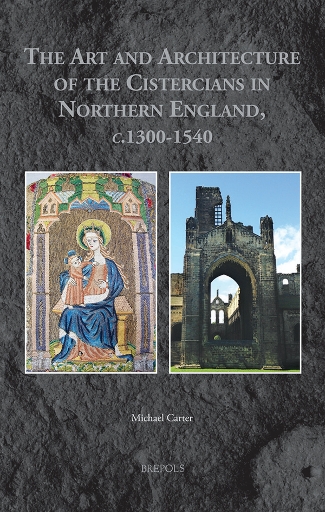
The Art and Architecture of the Cistercians in Northern England, c. 1300–1540
show More to view fulltext, buy and share links for:The Art and Architecture of the Cistercians in Northern England, c. 1300–1540 show Less to hide fulltext, buy and share links for: The Art and Architecture of the Cistercians in Northern England, c. 1300–1540The Cistercian abbeys of northern England provide some of the finest monastic remains in all of Europe, and much has been written on their twelfth- and thirteenth-century architecture. The present study is the first in-depth analysis of the art and architecture of these northern houses and nunneries in the late Middle Ages, and questions many long-held opinions about the Order’s perceived decline during the period c.1300-1540. Extensive building works were conducted between the fourteenth and sixteenth centuries at well-known abbeys such as Byland, Fountains, Kirkstall, and Rievaulx, and also at lesser-known houses including Calder and Holm Cultram, and at many convents of Cistercian nuns. This study examines the motives of Cistercian patrons and the extent to which the Order continued to enjoy the benefaction of lay society.
Featuring over a hundred illustrations and eight colour plates, this book demonstrates that the Cistercians remained at the forefront of late medieval artistic developments, and also shows how the Order expressed its identity in its visual and material cultures until the end of the Middle Ages.
-
-
-
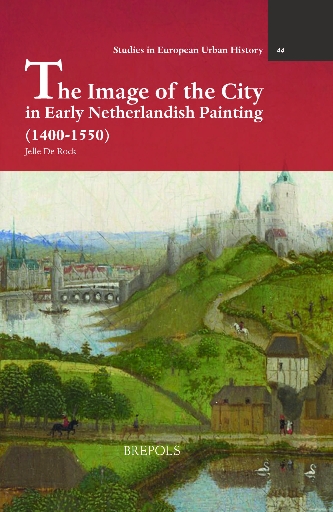
The Image of the City in Early Netherlandish Painting (1400-1550)
show More to view fulltext, buy and share links for:The Image of the City in Early Netherlandish Painting (1400-1550) show Less to hide fulltext, buy and share links for: The Image of the City in Early Netherlandish Painting (1400-1550)Painted cityscapes have always captivated the viewers of medieval works of art. To this day scholars are mesmerised by their capacity to mirror the urban context from which they sprang, combined with their ability to symbolize a more abstract world view, religious idea or social ideal. Especially oil painting, which thrived in the fifteenth-century Low Countries among a heterogeneous elite and the well-off urban middling groups, succeeded as no other medium in capturing the urban landscape in its finest details. In order to gain an insight into how late medieval citizens, clerics and noblemen conceived of urban society and space, this book combines a serial analysis of a large corpus of painted city views with a critical discussion of some well-documented and revealing works of art. Throughout the book a variety of questions are addressed, ranging from the religious conception of the city, the theatrical dimension of urban space, the extent to which Early Netherlandish painting depicted the city as an economic space, how images of city and countryside functioned as identity markers of the donor, and how technical advances in the field of cartography impacted the portrayal of towns in the sixteenth century. In doing so, this study explores the duality of some of the major interpretive schemes that have determined the last few decades of historiography on late medieval Netherlandish culture, oscillating between bourgeois and courtly, realistic and symbolic, profane and religious, and innovative versus traditional.
-
-
-
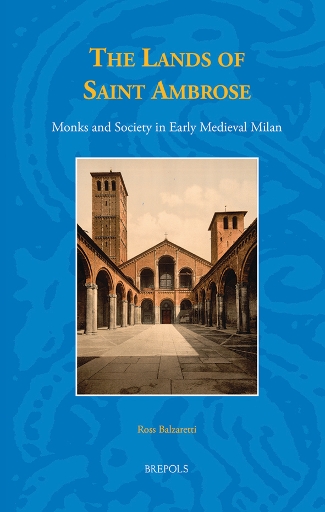
The Lands of Saint Ambrose
show More to view fulltext, buy and share links for:The Lands of Saint Ambrose show Less to hide fulltext, buy and share links for: The Lands of Saint AmbroseThis book is a history of Milan in the early medieval period. It investigates the political, social, and economic aspects of the transformation of the Roman world in one of its major centres. Its main theme is the role of monastic communities in this transformation. In the case of Milan a single monastery can be studied in great detail: the Benedictine community founded by Charlemagne, c. 789, next to the basilica in which St Ambrose himself was buried. Surprisingly, the impact which this important Carolingian foundation had upon the existing society of Milan has been underestimated by historians, partly because the history of the monastery has been studied apart from the history of the city.
The book shows how successive generations of monks helped to change the social organisation of the city and much of its hinterland, largely through their substantial dealings in property as recorded in one of the most important surviving collections of early medieval charters. This thesis challenges the views of earlier generations of scholars who downplayed the role of the monastery in the mechanisms of social change, in favour of a ‘new’ mercantile class.
-
-
-
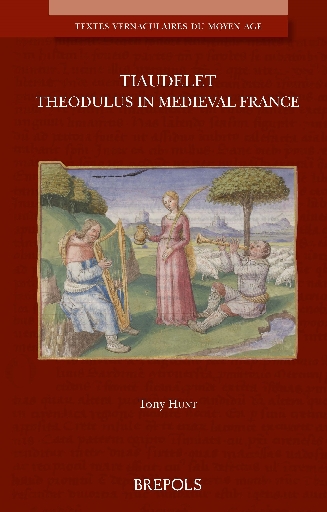
Tiaudelet
show More to view fulltext, buy and share links for:Tiaudelet show Less to hide fulltext, buy and share links for: TiaudeletThe Medieval French text (9400 lines) known as Tiaudelet is here edited for the first time. It is a lively debate poem which translates Theodulus’s Ecloga and adds a lengthy commentary to each stanza. It was last investigated in 1915 when A. Parducci published five modest extracts. It is found in a manuscript which represents a sort of vernacular ‘Liber Catonianus’, offering classical texts which formed the basis of the educational curriculum in the arts in French translation. It debates the value of two traditions: the classical and biblical, with the educational aim of increasing knowledge of classical and Scriptural narratives. As an appendix to the edition is provided the text of the only other French translation of Theodulus, by Jean Le Fèvre, as represented by the unique copy in the National Library of Scotland, of the early print by Jan Brulelou of Bruges.
-