


Brepols Online Books Other Monographs Collection 2019 - bob2019moot

Collection Contents
16 results
-
-
A Cosmic Liturgy: Qumran's 364-Day Calendar
show More to view fulltext, buy and share links for:A Cosmic Liturgy: Qumran's 364-Day Calendar show Less to hide fulltext, buy and share links for: A Cosmic Liturgy: Qumran's 364-Day CalendarThis work shows how the importance of Sunday, Wednesday, and Friday in the 364-day Qumran calendar is based on the Priestly creation narrative in Genesis and the myth of a cosmic covenant established between God and the angels on the first day. The myth of the apostasy of the angels guiding the seven planets was used to explain the discrepancy between the 364-day calendar and observation. The Epistle of Jude makes it possible to situate this work in relation to both Jubilees and the Book of the Watchers and confirms the use of the 364-day calendar in the earliest years of the nascent Church.
-
-
-
Constructions of Gender in Late Antique Manichaean Cosmological Narrative
show More to view fulltext, buy and share links for:Constructions of Gender in Late Antique Manichaean Cosmological Narrative show Less to hide fulltext, buy and share links for: Constructions of Gender in Late Antique Manichaean Cosmological NarrativeManichaeism emerged from Sasanian Persia in the third century CE and flourished in Persia, the Roman Empire, Central Asia and beyond until succumbing to persecution from rival faiths in the eighth to ninth century. Its founder, Mani, claimed to be the final embodiment of a series of prophets sent over time to expound divine wisdom.
This monograph explores the constructions of gender embedded in Mani’s colourful dualist cosmological narrative, in which a series of gendered divinities are in conflict with the demonic beings of the Kingdom of Darkness. The Jewish and Gnostic roots of Mani’s literary constructions of gender are examined in parallel with Sasanian societal expectations. Reconstructions of gender in subsequent Manichaean literature reflect the changing circumstances of the Manichaean community.
As the first major study of gender in Manichaean literature, this monograph draws upon established approaches to the study of gender in late antique religious literature, to present a portrait of a historically maligned and persecuted religious community.
-
-
-
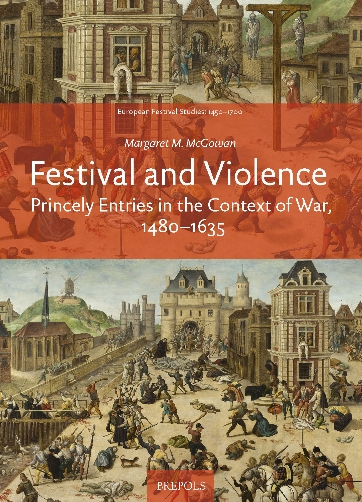
Festival and Violence
show More to view fulltext, buy and share links for:Festival and Violence show Less to hide fulltext, buy and share links for: Festival and ViolenceEuropean Renaissance Festivals are noted for their extravagance, for their inherited classical culture, and as evidence of how court and civic spectacles could express political, religious, social, and economic aspirations. In this new monograph, the accent is firmly on the violent context of Magnificence: it examines how war affected the minds and practice of both artists and princes, and shows how victims and their suffering were as prominent in festival as were conquerors and their projections of victory. What emerges here is the dark side represented in princely entries where imperial ambitions are built upon civic devastation and where myths elaborate and expose their ambiguous nature and message. Artists and poets collaborated in bringing victory and violence together: Mantegna and Dürer in triumphal processions; Frans Floris and Rubens on the canvases they created for triumphal arches, where mythology was put to work to arouse excitement for deeds of heroism and death, while engravers depicted scenes of war and destruction to accommodate contemporary taste.
-
-
-
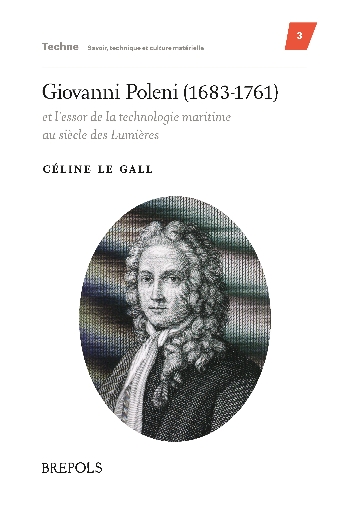
Giovanni Poleni (1683-1761) et l’essor de la technologie maritime au siècle des Lumières
show More to view fulltext, buy and share links for:Giovanni Poleni (1683-1761) et l’essor de la technologie maritime au siècle des Lumières show Less to hide fulltext, buy and share links for: Giovanni Poleni (1683-1761) et l’essor de la technologie maritime au siècle des LumièresCet ouvrage présente les traductions des trois traités de navigation écrits en latin (et restés à ce jour inédits) par Giovanni Poleni, professeur de mathématiques, physique, astronomie, philosophie mécanique expérimentale, navigation et construction navale à l'université de Padoue : La meilleure manière de mesurer sur mer le chemin d'un vaisseau, indépendamment des observations astronomiques (1733), Dissertations latines sur les ancres portant sur la figure optimale selon laquelle les ancres peuvent être formées, la technique la plus performante pour forger les ancres, la manière d'éprouver la force des ancres, soit leur résistance (1737), le troisième traité concerne l'amélioration de l'usage du cabestan : De Ergatae Navalis praestabiliore, facilioreque Usu, Dissertatio (1741). Ces trois traités furent primés par l'Académie Royale des Sciences de Paris (prix Rouillé de Meslay). Un corpus traduit de la correspondance latine de Poleni avec les savants européens, la traduction des programmes latins de ses cours de navigation ainsi qu'une enquête in situ à Venise, Vérone ou à Padoue furent nécessaires pour contextualiser les traités. La reconstitution grandeur nature de deux machines de navigation de Poleni : le cabestan et la machine pour mesurer la force du vent, réalisée par des étudiants de BTS Développement Réalisation Bois et des élèves de CAP Serrurerie Métallerie furent testées en mer. Cet ouvrage propose une biographie de Giovanni Poleni, les « appels à projets » de l'Académie Royale des Sciences de Paris (1733-1741), les traductions commentées des trois traités de Poleni ainsi que la reconstitution de ses machines.
-
-
-
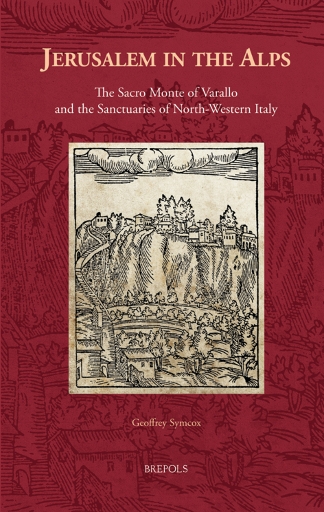
Jerusalem in the Alps
show More to view fulltext, buy and share links for:Jerusalem in the Alps show Less to hide fulltext, buy and share links for: Jerusalem in the AlpsThe Sacro Monte (Holy Mountain) at Varallo is a sanctuary in the Italian Alps west of Milan. It was founded in the late fifteenth century by a Franciscan friar, with the support of the town’s leading families. He designed it as a schematic replica of Jerusalem, to enable the faithful to make a virtual pilgrimage to the Holy City if they could not undertake the perilous journey to visit it physically. The Sacro Monte consists of a sequence of chapels containing tableaux of life-size painted terra-cotta figures with fresco backgrounds recounting the life and Passion of Christ. A century later, in the era of the Counter-Reformation, a ‘second wave’ of Sacri Monti was constructed in the north-western Alps, modelled on Varallo, but dedicated to other devotional themes, like the Rosary or the life of St Francis. All these sanctuaries, like Varallo, were the result of local initiatives, initiated by the clergy and the leaders of the communities where they were situated. Like Varallo, they were the work of artists and craftsmen from the alpine valleys, or from nearby Lombardy. Long dismissed as folk art unworthy of serious critical attention, the Sacri Monti are now recognised as monuments of unique artistic significance. In 2003 UNESCO listed nine of them in its register of World Heritage Sites. This book studies their development as the products of the religious sensibilities and the social, economic, and political conditions of the mountain communities that created them.
-
-
-
La fortuna umanistica di Elio Aristide
show More to view fulltext, buy and share links for:La fortuna umanistica di Elio Aristide show Less to hide fulltext, buy and share links for: La fortuna umanistica di Elio AristideL'ouvrage a pour but d'analyser la fortune du rhéteur Aelius Aristide (117 - vers 180 ap. J.-C.) à l'époque humaniste et de comprendre les raisons qui sont à la base de la réception de son œuvre, depuis la redécouverte de la langue grecque en Occident jusqu'à la Reforme. Le devenir des discours aristidiens est examiné sous plusieurs points de vue, tout d'abord linguistiques, mais aussi historiques, sociaux et politiques, afin de brosser le tableau le plus complet possible de la diffusion d'Aristide dans l'Europe savante. Quatre traductions inédites sont présentées pour la prèmiere fois ici, dont trois réalisées par des humanistes italiens du xv e siècle (Cencio de' Rustici, Niccolò Perotti, Carlo Valgulio) et une par un humaniste allemand de la première moitié du xvi e siècle (Joachim Camerarius). Elles montrent l'incidence d'Aristide sur la culture occidentale ainsi que son importance pour la construction d'une identité moderne, fondée sur une connaissance renouvelée de la rhétorique grecque.
-
-
-
La restauration du monastère Saint-Martin de Tournai
show More to view fulltext, buy and share links for:La restauration du monastère Saint-Martin de Tournai show Less to hide fulltext, buy and share links for: La restauration du monastère Saint-Martin de TournaiLe Liber de Restauratione monasterii Sancti Martini Tornacensis (La Restauration du monastère Saint-Martin de Tournai) est avant tout un témoignage concret sur l’époque et la société dans laquelle l’auteur a vécu : Hériman d’Osmont dit de Tournai nous narre les événements qu’ont connus la ville de Tournai, le comté de Flandre, le royaume de France et la chrétienté au XIIe siècle. C’est aussi son histoire et celle de sa famille.
Le succès quasi millénaire du livre de La Restauration - les nombreuses copies manuscrites, les éditions imprimées, les études qui lui sont consacrées avèrent un intérêt constant, à travers les siècles, pour l’œuvre d’Hériman - est dû au contenu historique mais aussi au style narratif de l’auteur.
Le texte latin, dont on trouvera ici la traduction, a été édité par R. B. C. Huygens dans Herimannus abbas, De restauratione abbatiae Sancti Martini Tornacensis (CC CM 236). La présente traduction s'est efforcée de serrer au plus près le texte original. Des renvois aux pages correspondantes de l'édition sont fournis dans les marges de cette publication.
-
-
-
La vie chromatique des objets
show More to view fulltext, buy and share links for:La vie chromatique des objets show Less to hide fulltext, buy and share links for: La vie chromatique des objetsQuelles relations observe-t-on entre les techniques de production des couleurs et les pratiques artistiques modernes ? Entretiennent-elles des rapports de configuration réciproque ? Doit-on considérer la dimension matérielle de la couleur pour illuminer son caractère proprement social ? Voici quelques questions qui sont débattues dans ce livre qui a pour ambition d’offrir un voyage au cœur de la production des couleurs du monde occidental contemporain à travers l’exemple de la fabrication d’objets de l’art contemporain. Dans ce travail, Arnaud Dubois déploie une nouvelle proposition analytique pour l’étude de la couleur en recourant à la notion « d’actes de couleur » - avec celles de « processus d’agglutination » et « d’actions sur la matière chromatique » - comme un nouvel outil théorique et méthodologique pour étudier les procédés de coloration. Penser la couleur comme un acte consiste à s’intéresser aux pratiques de colorisation et à décrire les situations de travail dans lesquelles sont effectués ces actes de couleur. Analyser les actes de couleur c’est donc en premier lieu s’intéresser aux moyens d’actions mis en œuvre par des acteurs multiples dans la coloration d’artefacts et repérer s’il existe des logiques d’actions chromatiques. Les 17 objets de couleurs qui sont étudiés dans cet ouvrage et les acteurs multiples liés de façon hétérogène à ces artefacts déploient alors un spectre large de pratiques et d’usages de la couleur fort utile pour comprendre, à partir d’un travail historique et ethnographique, la construction sociale de la couleur en Europe.
-
-
-
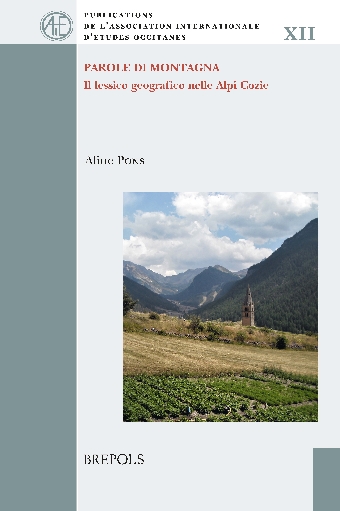
Parole di montagna
show More to view fulltext, buy and share links for:Parole di montagna show Less to hide fulltext, buy and share links for: Parole di montagnaLe "parole di montagna" sono state studiate soprattutto perché le loro radici etimologiche risalgono spesso a epoche precedenti alla romanizzazione delle Alpi: in questo lungo periodo, il lessico geografico è rimasto vivo nelle parlate occitane, subendo delle modifiche anche importanti non solo dal punto di vista fonetico, ma anche dal punto di vista del significato. Questo volume da un lato rappresenta in sincronia la variazione diatopica del significato delle “parole di montagna”, attraverso un apparato di carte semasiologiche opportunamente commentate, dall’altro restituisce la speciale “visione del mondo” soggiacente alla strutturazione del lessico geografico in un determinato numero di località, attraverso una trattazione articolata per campi semantici e un Lessico specifico. La ricerca da cui nasce questo libro ha coinvolto dieci località di parlata occitana distribuite sui due versanti della Alpi Cozie, a più di mille metri di quota, ed è stata svolta dall’autrice per la redazione della sua tesi di dottorato (che ha vinto il premio Peter T. Ricketts promosso dall’AIEO).
-
-
-
Physiology of the Soul
show More to view fulltext, buy and share links for:Physiology of the Soul show Less to hide fulltext, buy and share links for: Physiology of the SoulThis study looks at the ways in which physicians and philosophers developed Galen's philosophical legacy at the end of the Renaissance, and shows how their reading of classical medical texts moved beyond accepted patterns and conventions.
By challenging a traditional historiographical account that described Renaissance Galenism in terms of decline and fall, this study argues for a new assessment of Galen's legacy, also read through the lens of those who opposed or reacted critically to it and thus contributed to the shaping of important aspects of the early modern debate on anthropology, ethics, psychology and even quantified experimentation. Among these many innovations and transformations, the notion of 'ingenuity' (ingenium) deserves particular attention. Hidden within this corporeal, inherent and heritable inclination, two major themes that side disquietingly with the development of modern subjectivity can be identified: the 'corporeality of the body', and the common destiny of humans and animals.
More generally, this study offers a contribution to the ongoing debate on the role and value of medical history, arguing in favour of the concept of 'historical translatability' in balancing the longue durée of traditions with the chaotic interactions of individual thinkers.
-
-
-
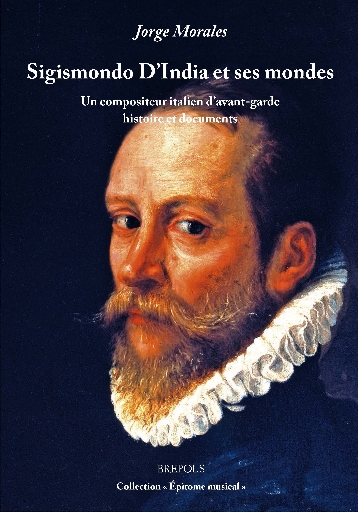
Sigismondo D’India et ses mondes
show More to view fulltext, buy and share links for:Sigismondo D’India et ses mondes show Less to hide fulltext, buy and share links for: Sigismondo D’India et ses mondesCet ouvrage analyse le parcours artistique et présente une traduction analytique de toutes les traces écrites connues portant sur l’œuvre et la carrière musicale d’un compositeur majeur de l’époque de Monteverdi, Sigismondo D’India (c.1582-c.1629), depuis l’Italie méridionale de ses origines jusqu’à son séjour à Rome et à Modène, où le musicien acheva son existence. En étudiant les villes, les cours, les princes protecteurs, les dédicataires et les lieux destinés à la musique, chacun des chapitres suit une étape de la carrière de D’India et redonne vie aux mondes de ce compositeur italien d’avant-garde. Apparaissent alors les thématiques du voyage, de l’identité nobiliaire et du croisement, lesquelles permettent de penser l’histoire de la musique comme une histoire à la fois des pratiques culturelles et de l’expérience musicale.
-
-
-
The Disputatio Chori et Praetextati. The Roman Calendar for Beginners
show More to view fulltext, buy and share links for:The Disputatio Chori et Praetextati. The Roman Calendar for Beginners show Less to hide fulltext, buy and share links for: The Disputatio Chori et Praetextati. The Roman Calendar for BeginnersThe first book of Macrobius' Saturnalia, written probably in the 430s AD, includes a historical exposition of the Roman calendar with a dramatic date some fifty years earlier, set in the mouth of the learned senator Vettius Agorius Praetextatus, followed by more technical detail at the request of an Egyptian named Horus, who as a foreigner is allowed to seek elementary information for which no one brought up in Roman culture would need to ask.
This text was excerpted in early medieval Ireland, with some but by no means all its pagan matter excised, to provide an introduction for those who at best understood the rules of this recent import but not the rationale for them; it is quoted by Bede as Disputatio Chori et Praetextati, Chorus being a corrupted form of Horus.
The excerpt took on a textual life of its own, which the present edition, the first devoted to the Disputatio rather than Macrobius, seeks to clarify; it examines the manuscripts and the relations between them, presents a critical edition with apparatus criticus and translation, and attaches a full-scale commentary concerned above all with the information provided in the text.
-
-
-
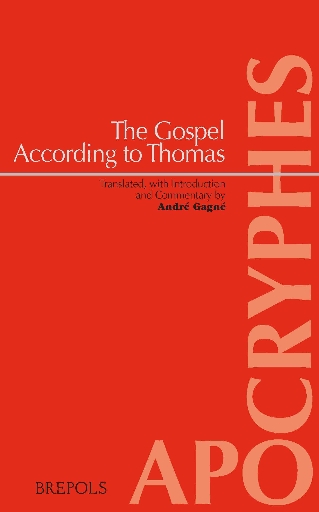
The Gospel According to Thomas
show More to view fulltext, buy and share links for:The Gospel According to Thomas show Less to hide fulltext, buy and share links for: The Gospel According to ThomasThe Gospel According to Thomas is a collection of 114 sayings of Jesus attributed to a certain Didymus Judas Thomas. For scholars, the text has much to offer for the study of early Christian literature, history, and theology. This enigmatic collection of sayings is part of a series of tractates in the Nag Hammadi Codices, which were found in Egypt in 1945. Since the discovery of the Gospel According to Thomas, scholars have endeavoured to uncover the place of writing and the sources of these sayings, which in some cases are similar to those found in the synoptic gospels and other New Testament writings, as well as in several early Christian texts. Without neglecting nor negating this important historical research on the Gospel According to Thomas, this new translation accompanied by a commentary focuses on another aspect that has been given less attention in scholarship, namely that of a synchronic reading and interpretation of the text. The main question this book attempts to answer is: What does the Gospel According to Thomas actually mean?
-
-
-
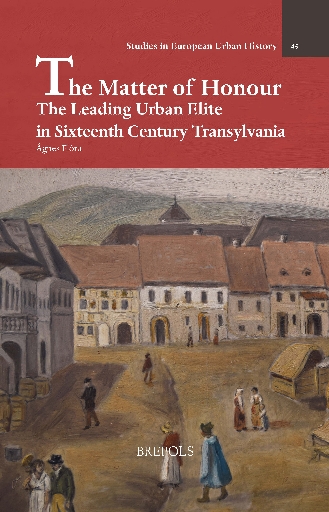
The Matter of Honour
show More to view fulltext, buy and share links for:The Matter of Honour show Less to hide fulltext, buy and share links for: The Matter of HonourThis monograph entails a comparative study of two early modern urban centers in Transylvania: Cluj (Kolozsvár, Klausenburg) and Sibiu (Nagyszeben, Hermannstadt). It develops a new perspective on urban history in Transylvania, by filling the recent historiographical lacuna on early modern urban elites. This book attempts to combine traditional and modern research methods, by analyzing and comparing a large volume of unpublished data along three research lines. First, the historical background within which of the town elites in Cluj and Sibiu monopolized power are analyzed, including the development of town autonomy and governmental systems, the legal background of urban leadership, its continuity and the conditions under which the political urban elite acted in each town. Secondly, a thorough archontological and prosopographical research, with a special focus on marriage strategies and professional competence leads to a socio-political characterisation of the elites of Cluj and Sibiu. Finally, an attempt is made to provide insight into the representation and self-fashioning of these elites.
-
-
-
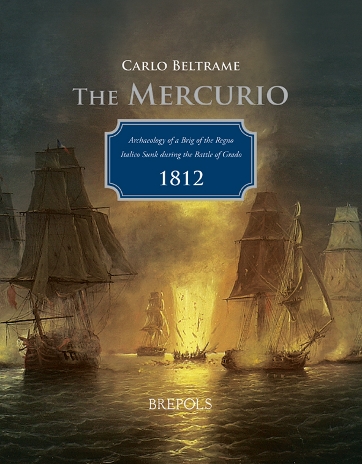
The Mercurio
show More to view fulltext, buy and share links for:The Mercurio show Less to hide fulltext, buy and share links for: The MercurioThe Italian brig Mercurio was escorting the French 80-gun vessel Rivoli from Venice on its very first expedition, in 1812, when it was sunk by an English ship during the Battle of Grado. Since the wreck was identified, the Mercurio has been the site of several underwater excavations, beginning in 2001 and continuing from 2004 to 2011 by a team from the Università Ca’ Foscari of Venice, together with the local Soprintendenza. Their work revealed a number of extraordinary finds and provided a unique insight into life - and death - on a brig during the period of the Napoleonic wars.
This volume offers a discussion and catalogue of the finds yielded by the Mercurio, including photogrammetry-plans of the bow and stern, together with an analysis of ship-building technique, detail of the equipment and arms used, and, uniquely, close detail of finds connected to the crew themselves. This is one of the few sites from the Mediterranean where human remains have been preserved, and through the work of anthropologists, it has even been possible to try and identify one of the men named on the crew list. Discovery of buttons, footwear, precious items, and even foodstuffs also serve to shed light on the daily life of the crew. This volume thus draws together a wealth of archaeological and historical information to tell the hitherto untold story of the Mercurio.
-
-
-
The Roman Senate as arbiter during the Second Century bc
show More to view fulltext, buy and share links for:The Roman Senate as arbiter during the Second Century bc show Less to hide fulltext, buy and share links for: The Roman Senate as arbiter during the Second Century bcIn the wider context of the border conflicts that involve Rome as a third authority super partes, for which there is evidence already in the second century BC, two epigraphic documents stand out for the peculiarities distinguishing them from all others: the so-called Polcevera Tablet (concerning a dispute between Genuates and Viturii Langenses) and the Cippus Abellanus (related to a border dispute between Nolani and Abellani and written in Oscan). They make us aware of the political and municipal dynamics underlying the complex principle of Roman arbitration, often required to resolve territorial disputes, which were gradually evolving as Rome opened up to the East. What role did the Roman Senate play in such disputes? What exactly was the function of the referees sent by the City to settle the disputes with a super partes judgment? What was the importance of the agrarian reform of the Gracchi and the realisation of road axes in the acuity of such antagonisms? These are the questions to which this study tries to provide an answer.
-