


Brepols Online Books Medieval Miscellanea Collection 2020 - bob2020mime

Collection Contents
3 results
-
-
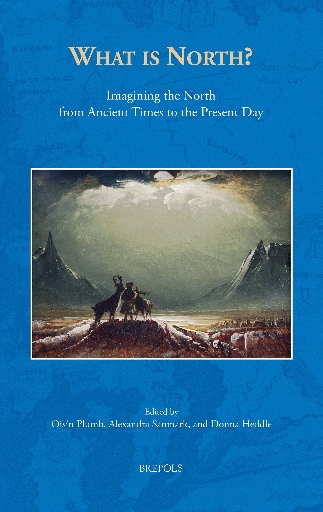
What is North?
show More to view fulltext, buy and share links for:What is North? show Less to hide fulltext, buy and share links for: What is North?The British Isles, Scandinavia, Iceland, Greenland, and Eastern Canada, alongside many small islands, form a broken bridge across the northern extremities of the Atlantic Ocean. This ‘North Atlantic World’ is a heterogeneous but culturally intertwined area, ideally suited to the fostering of an interest in all things northern by its people. For the storytellers and writers of the past, each more northerly land was far enough away that it could seem fabulous and even otherworldly, while still being just close enough for myths and travellers’ tales to accrue. This book charts attitudes to the North in the North Atlantic World from the time of the earliest extant sources until the present day. The varied papers within consider a number of key questions which have arisen repeatedly over the centuries: ‘where is the North located?’, ‘what are its characteristics?’, and ‘who, or what lives there?’. They do so from many angles, considering numerous locations and an immense span of time. All are united by their engagement with the North Atlantic World’s relationship with the North.
-
-
-
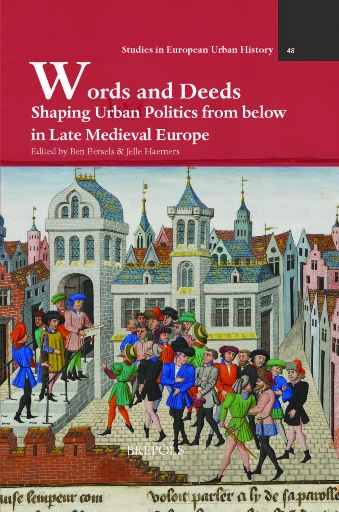
Words and Deeds
show More to view fulltext, buy and share links for:Words and Deeds show Less to hide fulltext, buy and share links for: Words and DeedsThis book focuses on the city and urban politics, because historically towns have been an interesting laboratory for the creation and development of political ideas and practices, as they are also today. The contributions in this volume shed light on why, how and when citizens participated in the urban political process in late medieval Europe (c. 1300-1500). In other words, this book reconsiders the involvement of urban commoners in political matters by studying their claims and wishes, their methods of expression and their discursive and ideological strategies. It shows that, in order to garner support for and establish the parameters of the most important urban policies, medieval urban governments engaged regularly in dialogue with their citizens. While the degree of citizens’ active involvement differed from region to region and even from one town to the next, political participation never remained restricted to voting for representatives at set times. This book therefore demonstrates that the making of politics was not the sole prerogative of the government; it was always, to some extent, a bottom-up process as well.
-
-
-
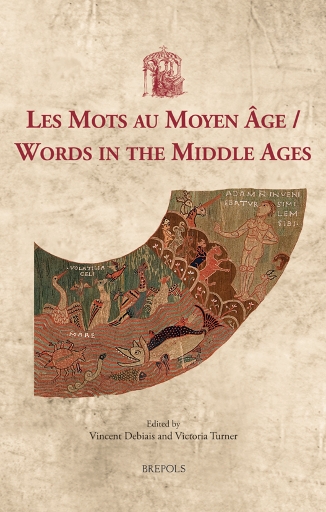
Words in the Middle Ages / Les Mots au Moyen Âge
show More to view fulltext, buy and share links for:Words in the Middle Ages / Les Mots au Moyen Âge show Less to hide fulltext, buy and share links for: Words in the Middle Ages / Les Mots au Moyen ÂgeThis collection of essays is a return to words of the Middle Ages in and of themselves, uniting philologists, historians, epigraphers, palaeographers, and art historians. It probes the intellectual, technical, and aesthetic principles that underpin their use and social function in medieval graphical practices, from epigraphy and inscriptions, to poetics, ‘mots’, and ‘paroles’. By analysing the material and symbolic properties of a particular medium, the conditions in which texts become signs, and scribal expertise, the contributors address questions that initially seem simple yet which define the very foundations of medieval written culture. What is a word? What are its components? How does it appear in a given medium? What is the relationship between word and text, word and letter, word and medium, word and reader? In a Middle Ages forever torn between economic and extravagant language, this volume traces the status of the medieval word from ontology to usage, encompassing its visual, acoustic, linguistic, and extralinguistic forms.
-