


BOB2020MOME

Collection Contents
21 - 28 of 28 results
-
-
The Anthropology of St Gregory Palamas
show More to view fulltext, buy and share links for:The Anthropology of St Gregory Palamas show Less to hide fulltext, buy and share links for: The Anthropology of St Gregory PalamasHow are we to regard our body? As a prison, an enemy, or, maybe, an ally? Is it something bad that needs to be humiliated and extinguished, or should one see it as a huge blessing, that deserves attention and care? Is the body an impediment to human experience of God? Or, rather, does the body have a crucial role in this very experience? Alexandros Chouliaras’ book The Anthropology of St Gregory Palamas: the Image of God, the Spiritual Senses, and the Human Body argues that the fourteenth-century monk, theologian, and bishop Gregory Palamas has interesting and persuasive answers to offer to all these questions, and that his anthropology has a great deal to offer to Christian life and theology today.
Amongst this book’s contributions are these: for Palamas, the human is superior to the angels concerning the image of God for specific reasons, all linked to his corporeality. Secondly, the spiritual senses refer not only to the soul, but also to the body. However, in Paradise the body will be absorbed by the spirit, and acquire a totally spiritual aspect. But this does not at all entail a devaluing of the body. On the contrary, St Gregory ascribes a high value to the human body. Finally, central to Palamas’ theology is a strong emphasis on the human potentiality for union with God, theosis: that is, the passage from image to likeness. And herein lies, perhaps, his most important gift to the anthropological concerns of our epoch.
-
-
-

The Crown and the Cross
show More to view fulltext, buy and share links for:The Crown and the Cross show Less to hide fulltext, buy and share links for: The Crown and the CrossThe Crown and the Cross examines the heretofore-unstudied role of the French province of Burgundy in the ‘traditional’ era of the crusades, from 1095-c.1220. Covering the First, Second, Third, Fourth, and Albigensian Crusades in detail, it focuses primarily on the Capetian dukes, a cadet branch of the French royal family, but uncovers substantial lay participation and some crusading traditions among Burgundian noble families as well. The book additionally uses the crusading institution to explore the development of the medieval French monarchy, and makes accessible a corpus of scholarship and documents that until now have mostly existed in French or Latin. It concludes that while piety and religion did play a central role in the experience of many everyday Burgundian crusaders, the greater political ramifications of the crusading project functioned in subtle and long-lasting ways, and had consequences for the entire institution, not just Burgundy or France. Of interest to scholars of the crusades, French history, and the formation of medieval Europe, The Crown and the Cross nuances, challenges, and expands our understanding of the intellectual genealogy of the crusades and their real-world consequences, fills a critical gap in the historiography, and poses a set of important conclusions and questions for continued study.
-
-
-
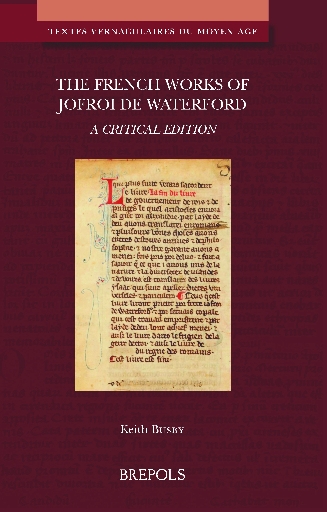
The French Works of Jofroi de Waterford
show More to view fulltext, buy and share links for:The French Works of Jofroi de Waterford show Less to hide fulltext, buy and share links for: The French Works of Jofroi de WaterfordAt the beginning of the fourteenth century, Jofroi, a brother of the Dominican house of St Saviour’s in Waterford, Ireland, translated into French and adapted from the Latin three texts: the De excidio Troiae of the so-called ‘Dares Phrygius’, the Breviarium historiae romanae of Eutropius, and Pseudo-Aristotelian Secretum secretorum. While the first two, La gerre de Troi and Le regne des Romains are generally close translations, Le secré de secrés is much modified by omissions and interpolations of exempla and scientific material. In his enterprise, Jofroi was aided and abetted by his scribe, the Walloon merchant and custos, Servais Copale. This book is the first critical edition of Jofroi’s œuvre. The texts are accompanied by a general introduction, individual introductions to each of the three texts, extensive notes, a substantial glossary, and an index of proper names. Jofroi and Servais collaborated in Waterford, not Paris, as has long been assumed, and these texts are therefore witness to the importance of French as a literary language in southeastern Ireland.
-
-
-
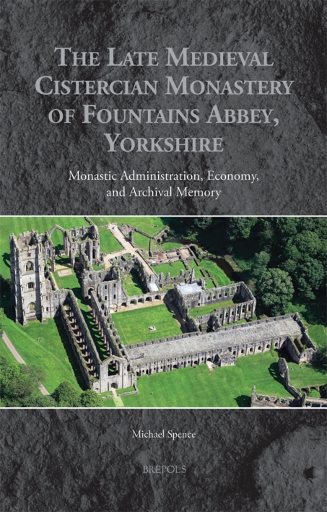
The Late Medieval Cistercian Monastery of Fountains Abbey, Yorkshire
show More to view fulltext, buy and share links for:The Late Medieval Cistercian Monastery of Fountains Abbey, Yorkshire show Less to hide fulltext, buy and share links for: The Late Medieval Cistercian Monastery of Fountains Abbey, YorkshireFounded in 1132, Fountains Abbey became the wealthiest English Cistercian monastery - yet relatively little analysis has been made of its surviving records to investigate how its wealth was controlled and sustained. This book deals with this secular aspect of the religious community at Fountains, investigating in particular the way in which prosaic business records were compiled and redacted. It traces the transmission of data from original charters through successive versions of cartularies, and in the process establishes the existence of a previously unknown manuscript. It also reveals how abbots in the fifteenth century interacted with and adapted the records in their care.
In this process, two quite different aspects of monastic life are uncovered. First, it sheds new light on the history of Fountains Abbey through the fourteenth and fifteenth centuries, amongst other things how it responded to the turmoil of the Black Death, and discloses for the first time the allegiance of one abbot to the Lancastrian cause during the Wars of the Roses. Second, it reveals the worldly skills shown by the community of Fountains that were successfully applied to exploit the monastery’s large landholdings across Yorkshire, mainly through wool and agricultural production, but also through fisheries, tanning, mining, and metalworking. The economic success of these activities enabled the abbey to become a prosperous institution which rivalled the wealth of the aristocracy.
-
-
-
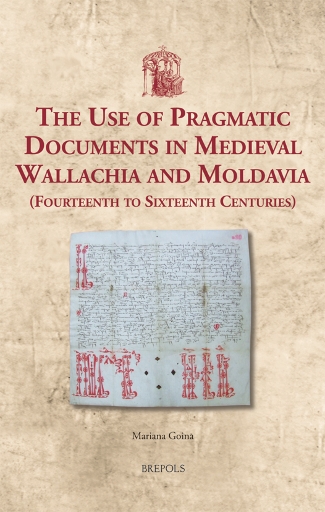
The Use of Pragmatic Documents in Medieval Wallachia and Moldavia (Fourteenth to Sixteenth Centuries)
show More to view fulltext, buy and share links for:The Use of Pragmatic Documents in Medieval Wallachia and Moldavia (Fourteenth to Sixteenth Centuries) show Less to hide fulltext, buy and share links for: The Use of Pragmatic Documents in Medieval Wallachia and Moldavia (Fourteenth to Sixteenth Centuries)In the region that was to become Moldavia and Wallachia, there are almost no traces of the use of writing for the millennium after the Roman Empire withdrew from Dacia. Written culture surfaces only by the second half of the fourteenth century, after the foundation of state institutions. This book surveys the earliest extant documents, their issuers, and the motives that triggered the development of documentary culture in Moldavia and Wallachia. By the fifteenth century, Moldavians were already accustomed to the use of charters. In Wallachia, noblemen also appealed to written records, but at that stage mainly in extraordinary circumstances. Women could not inherit land, and noblemen requested princely charters confirming a legal fiction that turned their daughters into sons. After the mid-sixteenth century, Wallachia experiences a steep growth in the number of charters issued. In this period of economic and social upheaval, charters proved an extraordinary means for the protection of landed property. Yet neither principality held secular archives - the storage of documents for later use in private hands suggests an early stage in the development of documentary culture.
By covering the ‘birth’ and spread of pragmatic literacy in medieval Moldavia and Wallachia, this book thus fills an important lacuna in what is known about the development of literacy in the later Middle Ages.
-
-
-
Tre pellegrinaggi in Terrasanta
show More to view fulltext, buy and share links for:Tre pellegrinaggi in Terrasanta show Less to hide fulltext, buy and share links for: Tre pellegrinaggi in TerrasantaLe tre descrizioni della Terrasanta crociata riunite in questo volume furono prodotte tra l’inizio del XII secolo - qualche anno dopo la presa europea della Palestina - e il 1170 circa - poco prima della riconquista musulmana di Gerusalemme. La prima, quella dell’inglese Saewulf, è un vero e proprio resoconto di pellegrinaggio dalla forte impronta personale, che con un linguaggio letterariamente spoglio ricorda le vicissitudini sperimentate dall’autore nel suo viaggio per mare e per terra, dalla Puglia a Gerusalemme e fin quasi a Constantinopoli. Quelle di Giovanni di Würzburg e di Teodorico sono invece due guide della città santa e di buona parte della Palestina, parzialmente sovrapponibili in quanto in gran parte derivate dal celebre trattatello di topografia sacra composto qualche decennio prima dal chierico nazareno Rorgo Fretello. Entrambi gli autori, e soprattutto il più raffinato Teodorico, si impegnano tuttavia in un processo di rielaborazione e amplificazione del loro modello, che viene ad arricchirsi di informazioni originali accumulate nel corso di una reale esperienza di pellegrinaggio, testimone dei rinnovati fasti architettonici e urbanistici del regno latino di Gerusalemme.
La versione latina originale dei testi qui tradotti è pubblicata nella collana Corpus Christianorum Continuatio Mediaeualis con il titolo Peregrinationes tres. Saewulf, John of Würzburg, Theodericus (CC CM, 139), a cura di R.B.C. Huygens (1994). I rimandi alle pagine corrispondenti dell’edizione sono forniti a margine di questa traduzione.
-
-
-
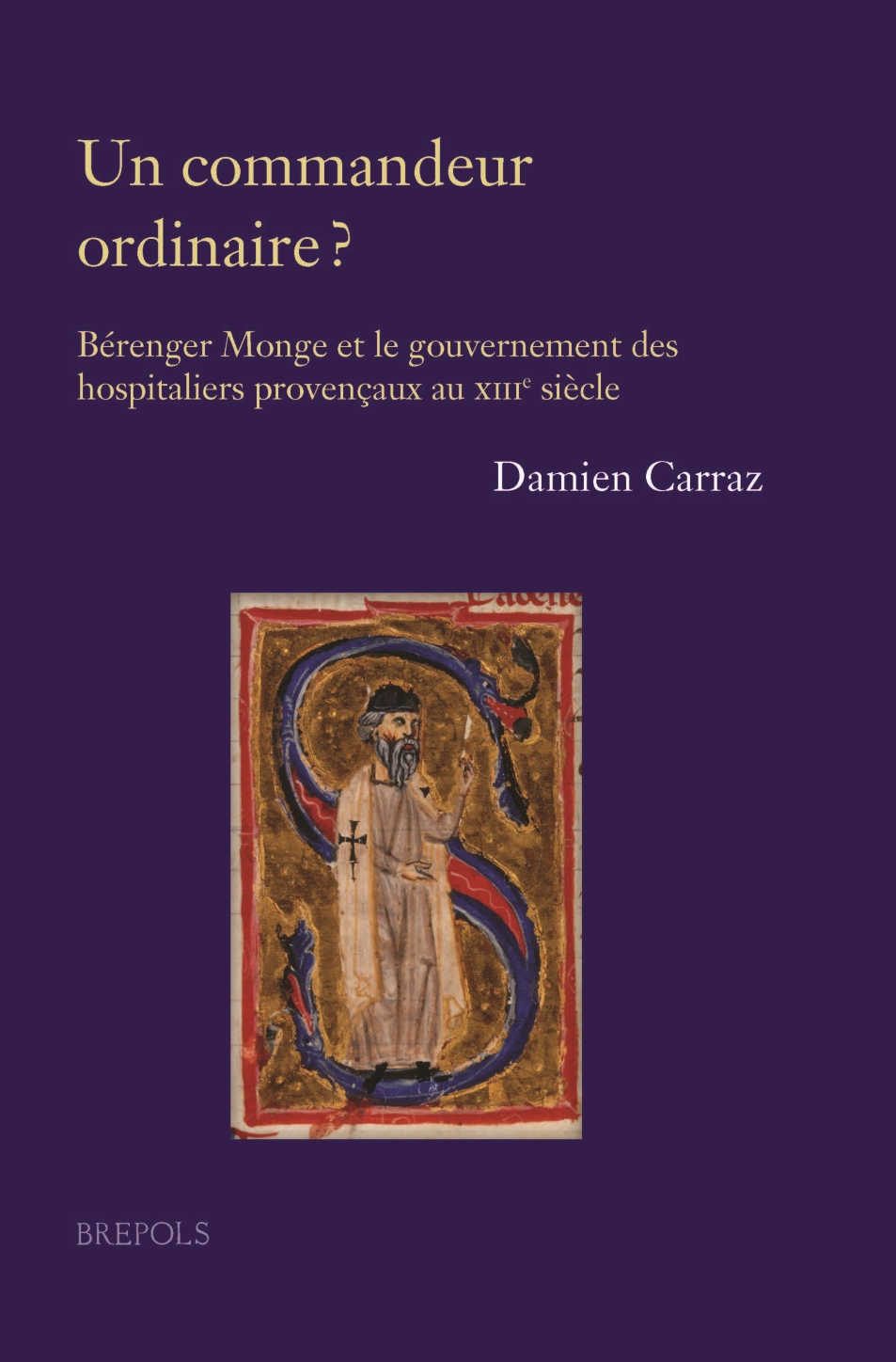
Un commandeur ordinaire ?
show More to view fulltext, buy and share links for:Un commandeur ordinaire ? show Less to hide fulltext, buy and share links for: Un commandeur ordinaire ?Bérenger Monge fut commandeur des maisons de l’Hôpital d’Aix et de Manosque pendant toute la seconde moitié du XIIIe siècle. Chef respecté de ces deux importantes communautés régulières élargies à la familia, seigneur de l’une des principales villes de Haute-Provence, maître d’ouvrage de deux constructions majeures, lieutenant du prieur de Saint-Gilles, ce dignitaire bénéficia d’un rayonnement dont témoigne le corpus documentaire rassemblé autour de sa personne. Exceptionnel par sa personnalité comme par sa longévité, ce commandeur n’en fut-il pas moins ordinaire dans sa fonction statutaire ? Se pose, en effet, la question de la représentativité, non seulement de cet acteur principal mais encore de toute une galerie de personnages et de statuts auxquels celui-ci s’est trouvé lié : prieurs de Saint-Gilles, bayles de Manosque, experts en droit et en écritures, entourages princiers… De fait, loin de s’enfermer dans un récit de vie linéaire, l’approche par le singulier est susceptible de dévoiler des techniques de gouvernement, des configurations sociales, des stratégies de carrière ou encore des affinités personnelles ou spirituelles. En définitive, la mise en intrigue autour de Bérenger Monge et des différents cercles de son entourage - du lignage à l’institution en passant par les autorités politiques du temps - offre un éclairage inédit sur « une vie de commanderie », c’est-à-dire la cellule de base d’un ordre militaire envisagée comme une institution totale. L’échelle de la vie humaine permet finalement d’articuler le cycle intermédiaire de la génération à des temporalités propres aux différentes mémoires sociales - dont la mémoire des archives appréhendées dans leur dimension processuelle.
-
-
-
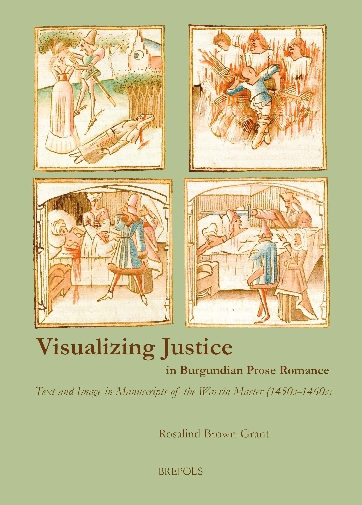
Visualizing Justice in Burgundian Prose Romance
show More to view fulltext, buy and share links for:Visualizing Justice in Burgundian Prose Romance show Less to hide fulltext, buy and share links for: Visualizing Justice in Burgundian Prose RomanceThis is the first monograph devoted to manuscripts illuminated by the mid-fifteenth-century artist known as the Wavrin Master, so-called after his chief patron, Jean de Wavrin, chronicler and councillor at the court of Philip the Good of Burgundy. Specializing in the production of pseudo-historical prose romances featuring the putative ancestors of actual Burgundian families, the artist was an attentive interpreter of these texts which were designed to commemorate the chivalric feats of past heroes and to foster their emulation by noble readers of the day. Integral to these heroes’ deeds is the notion of justice, their worth being measured by their ability to remedy criminal acts such as adultery, murder, rape, and usurpation. In a corpus of 10 paper manuscripts containing the texts of 15 romances and over 650 watercolour miniatures, the stylized, expressive images of the Wavrin Master bring out with particular clarity the lessons in justice which these works offered their contemporary audience, many of whom, from the Burgundian dukes downwards, would have been responsible for upholding the law in their territories. Chapters are devoted to issues such as the nature of just war and how it is linked to good rulership; what forms of legal redress the heroines of these tales are able to obtain with or without the help of a male champion; and what responses are available in law to a spouse betrayed by an adulterous partner. The book will be of interest to scholars of medieval art, literature, legal and cultural history, and gender studies.
-