


Brepols Online Books Medieval Miscellanea Collection 2021 - bob2021mime

Collection Contents
2 results
-
-
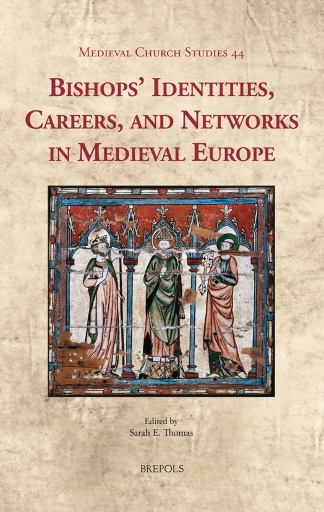
Bishops’ Identities, Careers, and Networks in Medieval Europe
show More to view fulltext, buy and share links for:Bishops’ Identities, Careers, and Networks in Medieval Europe show Less to hide fulltext, buy and share links for: Bishops’ Identities, Careers, and Networks in Medieval EuropeBishops were powerful individuals who had considerable spiritual, economic, and political power. They were not just religious leaders; they were important men who served kings and lords as advisers and even diplomats. They also controlled large territories and had significant incomes and people at their command. The nature of the international Church also meant that they travelled and had connections well beyond their home countries, were players on an increasingly international stage, and were key conduits for the transfer of ideas.
This volume examines the identities and networks of bishops in medieval Europe. The fifteen papers explore how senior clerics attained their bishoprics through their familial, social, and educational networks, their career paths, relationships with secular lords, and the papacy. It brings together research on bishops in central, southern, and northern Europe, by early career and established scholars. The first part features five case-studies of individual bishops’ identities, careers, and networks. Then we turn to examine contact with the papacy and its role in three regions: northern Italy, the archbishopric of Split, and Sweden. Part III focuses on five main issues: royal patronage, reforming bishops, nepotism, social mobility, and public assemblies. Finally Part IV explores how episcopal networks in Poland, Sigüenza, and the Nidaros church province helped candidates achieve promotion. These contributions will thus enhance of our understanding of how bishops fit into the religious, political, social, and cultural fabrics of medieval Europe.
-
-
-
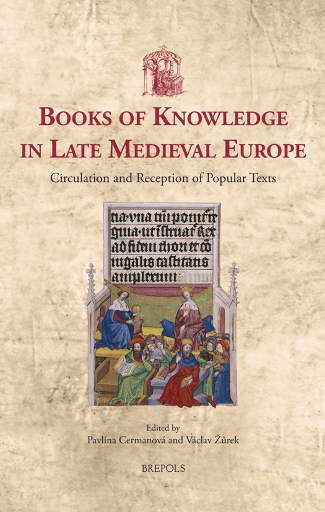
Books of Knowledge in Late Medieval Europe
show More to view fulltext, buy and share links for:Books of Knowledge in Late Medieval Europe show Less to hide fulltext, buy and share links for: Books of Knowledge in Late Medieval EuropeThis book provides a series of studies concerning unique medieval texts that can be defined as ‘books of knowledge’, such as medieval chronicles, bestiaries, or catechetic handbooks. Thus far, scholarship of intellectual history has focused on concepts of knowledge to describe a specific community, or to delimit intellectuals in society. However, the specific textual tool for the transmission of knowledge has been missing. Besides oral tradition, books and other written texts were the only sources of knowledge, and they were thus invaluable in efforts to receive or transfer knowledge. That is one reason why texts that proclaim to introduce a specific field of expertise or promise to present a summary of wisdom were so popular. These texts discussed cosmology, theology, philosophy, the natural sciences, history, and other fields. They often did so in an accessible way to maintain the potential to also attract a non-specialised public. The basic form was usually a narrative, chronologically or thematically structured, and clearly ordered to appeal to readers. Books of this kind could be disseminated in dozens or even hundreds of copies, and were often available (by translation or adaptation) in various languages, including the vernacular.
In exploring these widely-disseminated and highly popular texts that offered a precise segment of knowledge that could be accessed by readers outside the intellectual and social elite, this volume intends to introduce books of knowledge as a new category within the study of medieval literacy.
-