


Brepols Online Books Medieval Miscellanea Collection 2021 - bob2021mime

Collection Contents
2 results
-
-
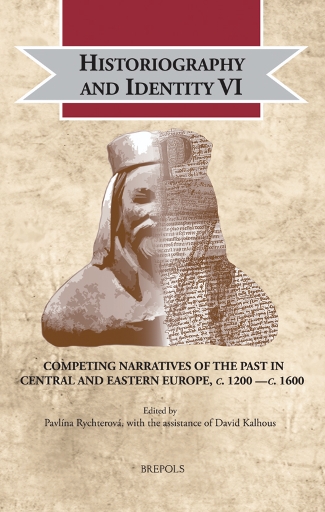
Historiography and Identity VI: Competing Narratives of the Past in Central and Eastern Europe, c. 1200 —c. 1600
show More to view fulltext, buy and share links for:Historiography and Identity VI: Competing Narratives of the Past in Central and Eastern Europe, c. 1200 —c. 1600 show Less to hide fulltext, buy and share links for: Historiography and Identity VI: Competing Narratives of the Past in Central and Eastern Europe, c. 1200 —c. 1600The volume discusses Central European and Eastern Central European historiographies of the High and Late Middle Ages. It deals with histories written in a time which brought about a profound differentiation of medieval societies in these regions. As new social classes achieved economic and political power, the demand for reassuring identifications grew more pressing. Narratives of the past were tailored specifically for distinct social groups, often using vernacular languages instead of the universal language of elite education, Latin.
The volume pays attention to the interplay between languages and focuses on the strategies that individual works developed in order to balance the many alternative modes of identification. Filling a significant scholarly gap, the volume offers important insights into narratives of identification written in Latin and in the various vernaculars emerging as the new political languages of the period.
-
-
-

Historiography and Identity IV
show More to view fulltext, buy and share links for:Historiography and Identity IV show Less to hide fulltext, buy and share links for: Historiography and Identity IVHistorical writing has shaped identities in various ways and to different extents. This volume explores this multiplicity by looking at case studies from Europe, Byzantium, the Islamic World, and China around the turn of the first millennium. The chapters in this volume address official histories and polemical critique, traditional genres and experimental forms, ancient traditions and emerging territories, empires and barbarians. The authors do not take the identities highlighted in the texts for granted, but examine the complex strategies of identification that they employ. This volume thus explores how historiographical works in diverse contexts construct and shape identities, as well as legitimate political claims and communicate ‘visions of community’.
-