


Brepols Online Books Medieval Miscellanea Collection 2021 - bob2021mime

Collection Contents
5 results
-
-
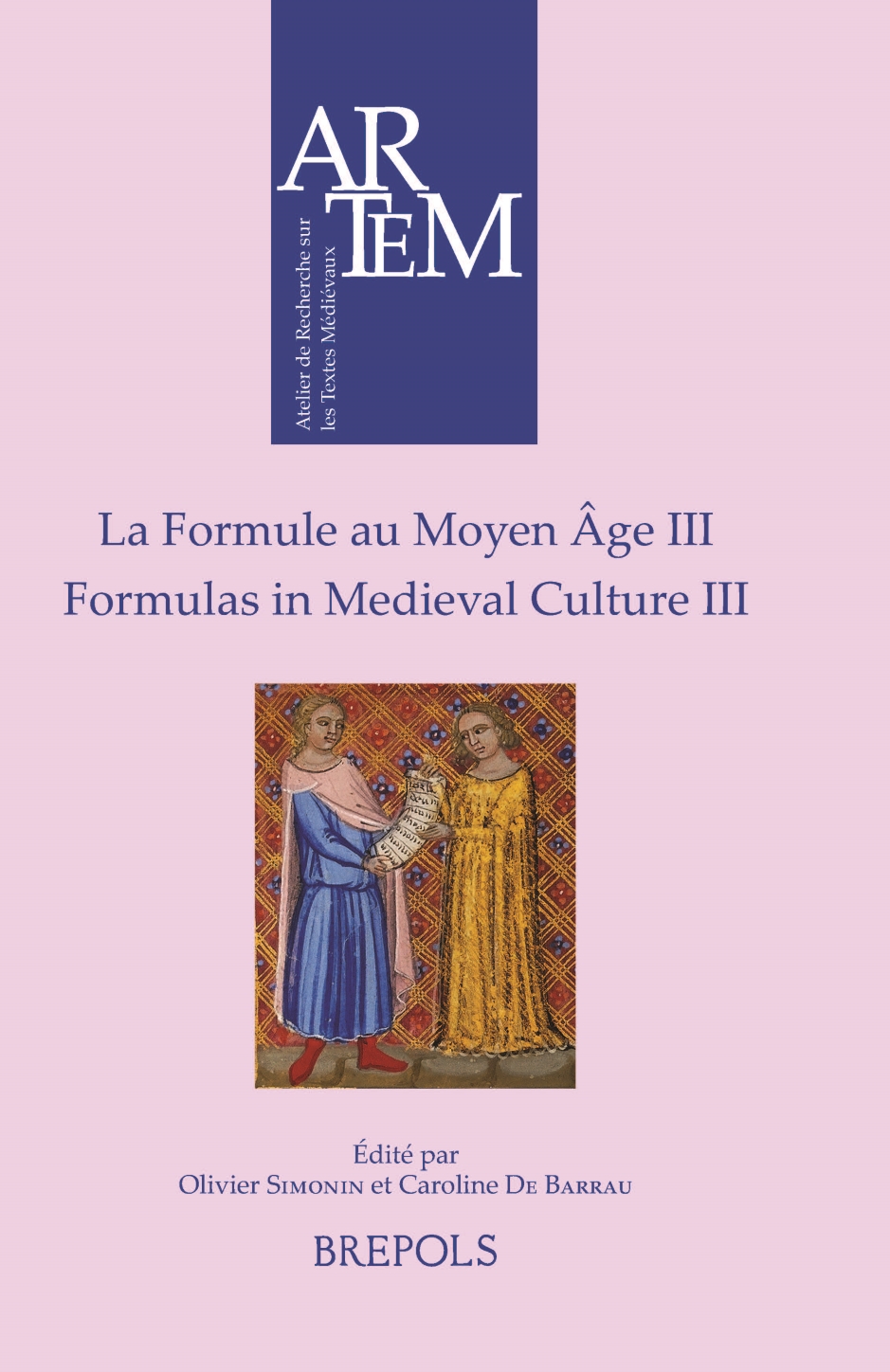
La Formule au Moyen Âge
show More to view fulltext, buy and share links for:La Formule au Moyen Âge show Less to hide fulltext, buy and share links for: La Formule au Moyen ÂgeLes modes de pensée et de représentation médiévaux sont profondément marqués par l'usage de reprises et de régularités attendus et reconnaissables, qui sont sources de tensions productives entre expression individuelle et normes collectives, changement et continuité, création et convention. De façon très générale, toute formule se caractérise par un figement ou une régularité plus ou moins marquée laissant la place, en creux, à l'innovation. La définition de la formule se décline différemment en fonction de la discipline considérée, et cet ouvrage propose une réflexion interdisciplinaire sur ses différentes acceptions et sur les recoupements que l’on peut observer entre elles. En outre, un échange entre plusieurs intervenants, poursuivant une discussion sous forme de table ronde à l’occasion du colloque international organisé à Perpignan en 2014, vient clore le volume et propose un premier aperçu synthétique de l’emploi de la notion pour les différentes disciplines concernées : codicologie, diplomatique, épigraphie, histoire, histoire de l’art, littérature, linguistique, musicologie.
Ce travail sera prolongé par de futures publications dans la même collection, dans l’espoir que l’effort de clarification voulu permettra à d’autres d’explorer encore plus avant la notion de formule et de continuer à attester de sa fécondité pour les études médiévales.
-
-
-
Latin Anonymous Sermons from Late Antiquity and the Early Middle Ages (ad 300-800)
show More to view fulltext, buy and share links for:Latin Anonymous Sermons from Late Antiquity and the Early Middle Ages (ad 300-800) show Less to hide fulltext, buy and share links for: Latin Anonymous Sermons from Late Antiquity and the Early Middle Ages (ad 300-800)This volume contains the proceedings of the international conference on anonymous sermons, funded by the F.R.S.-FNRS and held on 16 May 2019 at the Université de Namur (Belgium), within the Faculty of Philosophy and Letters and the research centre Pratiques Médiévales de l’Écrit (PraME). It brings together scholars working on late antique and early medieval Latin preaching, and follows on previous volumes on Augustine and African sermons published in the Ministerium Sermonis subseries. The focus here is on Christian Latin preached texts, thought to date from the period c. 300-800 ad, which are not currently attributed to a known author. Long neglected because of their uncertain attribution, these sermons offer new material for the study of late antique and early medieval Christianity. The contributions assembled here provide an essential entry point to the study of these little-known sermons: after an introduction which sets the aims of the book, discusses the state of the art and describes main avenues for research, individual papers present future tools to classify sermons and explore their medieval transmission in manuscripts, offer new critical editions of previously unknown sermons, and develop methods and reliable criteria to shed new light on their historical context of composition. Both engaging with current issues and challenges and offering innovative case studies, this book opens up new ground for future research on late antique and early medieval Latin Christian preaching in general.
-
-
-
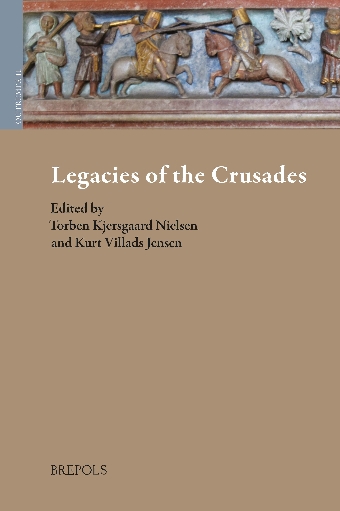
Legacies of the Crusades
show More to view fulltext, buy and share links for:Legacies of the Crusades show Less to hide fulltext, buy and share links for: Legacies of the CrusadesWhen war ended, the hard work began. Crusader warfare was only the beginning, for after peace came huge and often fundamental changes for individuals and societies. First it was necessary to establish firm and secure agreements between enemies, and take care of prisoners of war and refugees. Soon followed new legal systems, and new social groups emerged as old and new families intermarried, or entire segments of the population became subordinates under new rulers. And in a longer time perspective, the entire physical landscape was changed to conform to and express the beliefs and values of the conquerors.
The military expeditions of the medieval crusades are well studied, at different times and in many diverse areas, but the consequences for individuals and societies much less. This book opens up a new research area, and contributes with 11 studies covering the Middle Eastern crusader states, the Mediterranean, and the Baltic Sea.
-
-
-
Les Communautés menacées au Haut Moyen Âge (vi e-xi e siècles)
show More to view fulltext, buy and share links for:Les Communautés menacées au Haut Moyen Âge (vi e-xi e siècles) show Less to hide fulltext, buy and share links for: Les Communautés menacées au Haut Moyen Âge (vi e-xi e siècles)Ce volume découle d’une double interrogation: sur la manière dont on peut appréhender les communautés du haut Moyen Âge, qu’elles soient religieuses ou politiques, rurales ou urbaines, textuelles ou émotionnelles, et sur le rôle que jouent les menaces de tous ordres (politique, économique, environnemental) dans la constitution, le fonctionnement et l’évolution de ces communautés. Car la menace structure l’action collective: elle est déstabilisante, mais aussi créatrice d’ordre. Elle impose de renégocier les rapports entre intérieur et extérieur, entre normalité et anormalité, entre individu et groupe. Ce sont ces rapports de création et de destruction entre menace, ordre et communauté qui forment le principal objet de ces études menées par des historiens et éclairées par l’apport des sciences sociales.
-
-
-
Litterarum dulces fructus
show More to view fulltext, buy and share links for:Litterarum dulces fructus show Less to hide fulltext, buy and share links for: Litterarum dulces fructusDrawing inspiration from the scholarship of Professor Michael Herren, founding editor of The Journal of Medieval Latin, this florilegium of studies advances our understanding of the dynamics of Latin and vernacular literature and learning in the early medieval world. Taken together, the papers gathered in this volume cast light on authors, poets, glossators, and compilers at work as they grappled with linguistic and literary ambitions and challenges, while negotiating their use of ancient authorities to address contemporary concerns.
-