


Brepols Online Books Medieval Miscellanea Collection 2021 - bob2021mime

Collection Contents
9 results
-
-
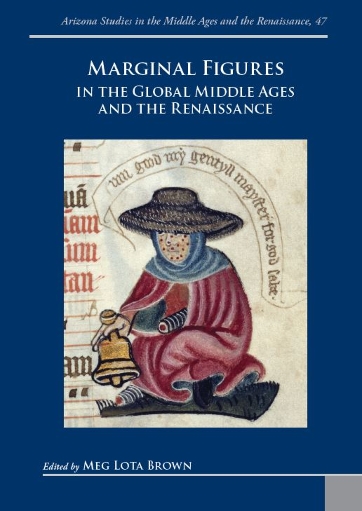
Marginal Figures in the Global Middle Ages and the Renaissance
show More to view fulltext, buy and share links for:Marginal Figures in the Global Middle Ages and the Renaissance show Less to hide fulltext, buy and share links for: Marginal Figures in the Global Middle Ages and the RenaissanceThe essays in this collection explore the motives and methods of marginalization throughout pre-modern Europe, Japan, the Ottoman Empire, and areas that are now Mexico, Iran, Peru, Syria, and Costa Rica. The authors offer a rich variety of perspectives on precarity and privilege, resistance and hybridity, they unpack the intersections of power, tradition, and difference, and they examine the relationship of marginality to both violence and creativity not only in the global Middle Ages and Renaissance but also in our present moment. While deepening readers’ understanding of our antecedents, the collection illuminates the contemporary urgency of being 'ethically awake to the needs, sufferings, sorrows, and dignity of others around the globe'.
-
-
-
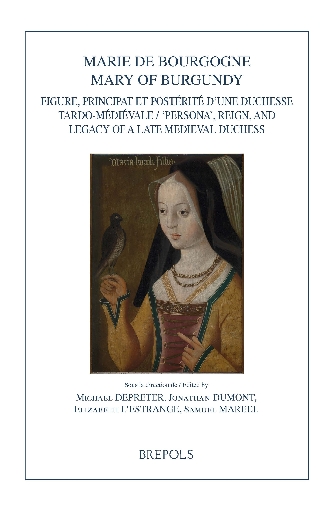
Marie de Bourgogne/Mary of Burgundy
show More to view fulltext, buy and share links for:Marie de Bourgogne/Mary of Burgundy show Less to hide fulltext, buy and share links for: Marie de Bourgogne/Mary of BurgundyMary of Burgundy (r. 1477-1482) occupies an important place in the history of late medieval and Early Modern Europe, yet her life and principate have received relatively little scholarly attention. They are, however, key to the history both of the Low Countries and of Europe, since her marriage to Maximilian of Austria united the Habsburgs with the Valois-Burgundy dynasty, giving them vast territories on the borders of France. In this book, some of the best specialists in the field contribute to a better understanding of Mary’s principate, its features, and its long-term perception. In the first part, the authors address the issue of Mary’s contested legitimacy as a late-medieval female ruler: law, literature, visual art and theatrical representations are examined as means of communication, strengthening or weakening her authority. In the second part, the authors examine some of Mary’s governmental tools and the agents behind them. Finally, the last part questions the ways in which Mary’s power and her principate have been represented and reinterpreted in subsequent eras, often with political or social intent, beginning with Maximilian’s long regency and reign immediately after her death, right up to modern-day Belgium.
-
-
-
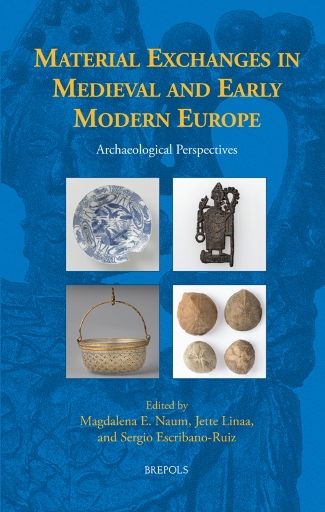
Material Exchanges in Medieval and Early Modern Europe
show More to view fulltext, buy and share links for:Material Exchanges in Medieval and Early Modern Europe show Less to hide fulltext, buy and share links for: Material Exchanges in Medieval and Early Modern EuropeThe study of the movement of ‘things’ - the exchange of objects as gifts or through trade, the itineraries that they followed when on the move, and their changing importance from location to location - can offer unique insights into our understanding of past societies; and archaeology plays a vital role in allowing such movements to be traced. Nonetheless the circulation of objects across time, and between peoples and places, has long been neglected as a field of research in its own right. This volume aims to address this gap in scholarship by drawing on recent archaeological research to provide a detailed study of the moment of objects across Europe in the late medieval and early modern period. The contributions gathered here trace the interactions between peoples, ideas, and objects in order to explore the impact of movement both on the material things themselves, and on the people who manufactured, exchanged, or used such goods. The volume draws on a wide range of archaeological evidence to explore subjects as varied as production and transport, modes of trade, the connections between trade and religion, and the emotional connections between things and people. Together, they offer a pioneering approach to our understanding of objects and their movement in the past.
-
-
-
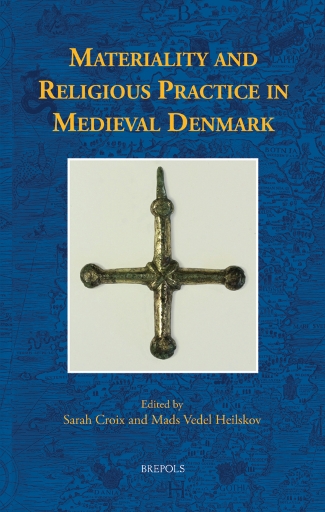
Materiality and Religious Practice in Medieval Denmark
show More to view fulltext, buy and share links for:Materiality and Religious Practice in Medieval Denmark show Less to hide fulltext, buy and share links for: Materiality and Religious Practice in Medieval DenmarkFrom bread and wine to holy water, and from oils and incense to the relics of saints, the material objects of religion stood at the heart of medieval Christian practice, bridging the gap between the profane and the divine. While theoretical debates around the importance of physicality and materiality have animated scholarship in recent years, however, little attention has been paid to finding solid, empirical evidence upon which to base such discussions.
Taking medieval Denmark as its case study, this volume draws on a wide range of different fields to explore and investigate material objects, spaces, and bodies that were employed to make the sacred tangible in the religious experience and practice of medieval people. The contributions gathered here explore subjects as diverse as saints’ relics, sculptures, liturgical vessels and implements, items used for personal devotion, gospel books, and the materiality of Christian burials to explore the significance of objects that moved the souls, bodies, hearts, and minds of the faithful. In doing so, they also open new insights into religion and belief in medieval Denmark.
-
-
-
Meanings of Water in Early Medieval England
show More to view fulltext, buy and share links for:Meanings of Water in Early Medieval England show Less to hide fulltext, buy and share links for: Meanings of Water in Early Medieval EnglandWater is both a practical and symbolic element. Whether a drop blessed by saintly relics or a river flowing to the sea, water formed part of the natural landscapes, religious lives, cultural expressions, and physical needs of medieval women and men.
This volume adopts an interdisciplinary perspective to enlarge our understanding of the overlapping qualities of water in early England (c. 400 – c. 1100). Scholars from the fields of archaeology, history, literature, religion, and art history come together to approach water and its diverse cultural manifestations in the early Middle Ages. Individual essays include investigations of the agency of water and its inhabitants in Old English and Latin literature, divine and demonic waters, littoral landscapes of church archaeology and ritual, visual and aural properties of water, and human passage through water. As a whole, the volume addresses how water in the environment functioned on multiple levels, allowing us to examine the early medieval intersections between the earthly and heavenly, the physical and conceptual, and the material and textual within a single element.
-
-
-
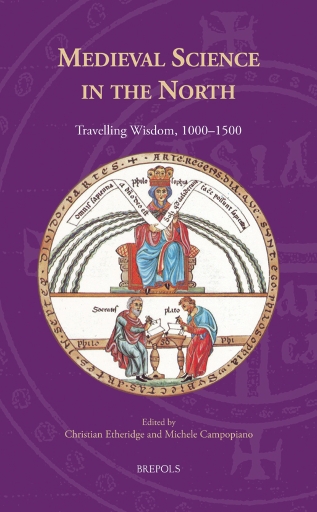
Medieval Science in the North
show More to view fulltext, buy and share links for:Medieval Science in the North show Less to hide fulltext, buy and share links for: Medieval Science in the NorthMedieval science has become an increasingly popular area of academic interest over the past couple of decades, but much of this work has up to now concentrated on France and the Mediterranean, while relatively little attention has been paid to the north of Europe. This has led to the assumption that Northern Europe stood aside from the mainstream of scientific knowledge in the Middle Ages, when in fact the region was a vital part of the medieval network of scientific scholarship. This important volume aims to redress the balance in scholarship by bringing together for the first time a collection of studies on medieval scientific knowledge that focuses on both Scandinavia and England.
The essays gathered here examine topics as wide-ranging as the intellectual network between Denmark and Paris; the role of Dominican friars in spreading scientific knowledge in Scandinavia; the practical application of technology by English armourers; fragments of scientific manuscripts found in early modern Swedish documents; the use of scientific volumes and descriptions of university life in medieval Icelandic literature; and fresh insights into the careers of the English scientists Roger of Hereford, Roger Bacon, and Robert Grosseteste. Together, these papers show the dynamism and depth of science in the medieval North, and offer new insights into how scientific wisdom travelled through, across, and between the peoples of this region.
-
-
-

Medieval Stories and Storytelling
show More to view fulltext, buy and share links for:Medieval Stories and Storytelling show Less to hide fulltext, buy and share links for: Medieval Stories and StorytellingThe shaping and sharing of narrative has always been key to the negotiation and recreation of reality for individuals and cultural groups. Some stories, indeed, seem to possess a life of their own: claiming a peculiar agency and taking on distinct voices which speak across time and space. How, for example, do objects, manuscripts, and other artefacts communicate alternative or complementary narratives that transcend textual and linguistic boundaries? How are stories created, reshaped, and re-experienced, and how do these shifting contexts and media change meaning?
This volume of essays explores these questions about meaning and identity in a range of ways. As a collection, it demonstrates the importance of interdisciplinary and context-focused enquiry when approaching key issues of activity and identity in the medieval period. Ultimately, the process of making meaning through shaping narrative is shown to be as vital and varied in the medieval world as it is today.
With a wide range of different disciplinary approaches from leading scholars in their respective fields, chapters include considerations of art, architecture, metalwork, linguistics, and literature. Alongside examinations of medieval cultural productions are explorations of the representation and adaptation of medieval storytelling in graphic novels, classroom teaching, and computer gaming. This volume thus offers an interdisciplinary exploration of how stories from across the medieval world were shaped, transformed, and transmitted.
-
-
-
Metaphrasis in Byzantine Literature
show More to view fulltext, buy and share links for:Metaphrasis in Byzantine Literature show Less to hide fulltext, buy and share links for: Metaphrasis in Byzantine LiteratureThroughout the centuries Byzantium's ambitious authors were conscious of the significance of literary registers for the reception of their texts. They deliberately made use of stylistic elements or refrained from using certain features in order to reach their target audience. There are certain groups of texts dating from various periods where these stylistic elements can be tracked precisely by comparison of two or even more versions with their model text. Such examples of rewriting can be found particularly within genres with a broader audience appeal, namely hagiography and historiography. It is in both genres that we encounter metaphrastic processes, in terms of stylistic elaboration and in terms of stylistic simplification.
As well as stylistic reshaping, metaphrasis may also encompass the addition or removal of literary and/or thematic aspects. All these processes signify intent as well as authorial interpretation. Frequently, the ideological orientation of a text is refurbished through rewriting. Teasing out these strands for exploration helps to supply a potential wealth of information on the author (if known), cultural (social, religious, historical) context, and creative ability, as well as levels of education and literacy.
-
-
-
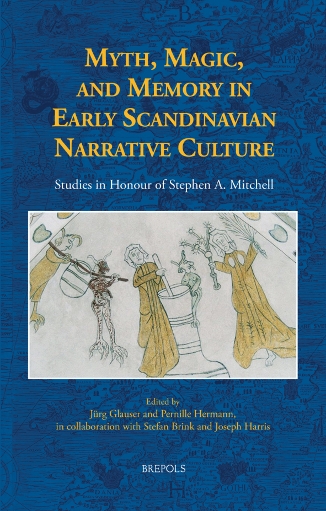
Myth, Magic, and Memory in Early Scandinavian Narrative Culture
show More to view fulltext, buy and share links for:Myth, Magic, and Memory in Early Scandinavian Narrative Culture show Less to hide fulltext, buy and share links for: Myth, Magic, and Memory in Early Scandinavian Narrative CultureMyth, magic, and memory have together formed important, and often intertwined, elements to recent studies in the narrative culture of Viking-Age and Medieval Scandinavica. Analytical approaches to myth (prominent in the fields of history of religion, archaeology, language, and literature, and central to studies of visual cultures up to modern times), magic (drawing on a wealth of Norse folkloric and supernatural material that derives from pre-modern times and continues to impact on recent practices of performance and ritual), and memory (the concept of how we remember and actively construe the past) together combine to shed light on how people perceived the world around them.
Taking the intersection between these diverse fields as its starting point, this volume draws together contributions from across a variety of disciplines to offer new insights into the importance of myth, magic, and memory in pre-modern Scandinavia. Covering a range of related topics, from supernatural beings to the importance of mythology in later national historiographies, the chapters gathered here are written to honour the work of Stephen A. Mitchell, professor of Scandinavian Studies and Folklore at Harvard University, whose research has heavily influenced this multi-faceted field.
-