


Brepols Online Books Medieval Miscellanea Collection 2021 - bob2021mime

Collection Contents
4 results
-
-
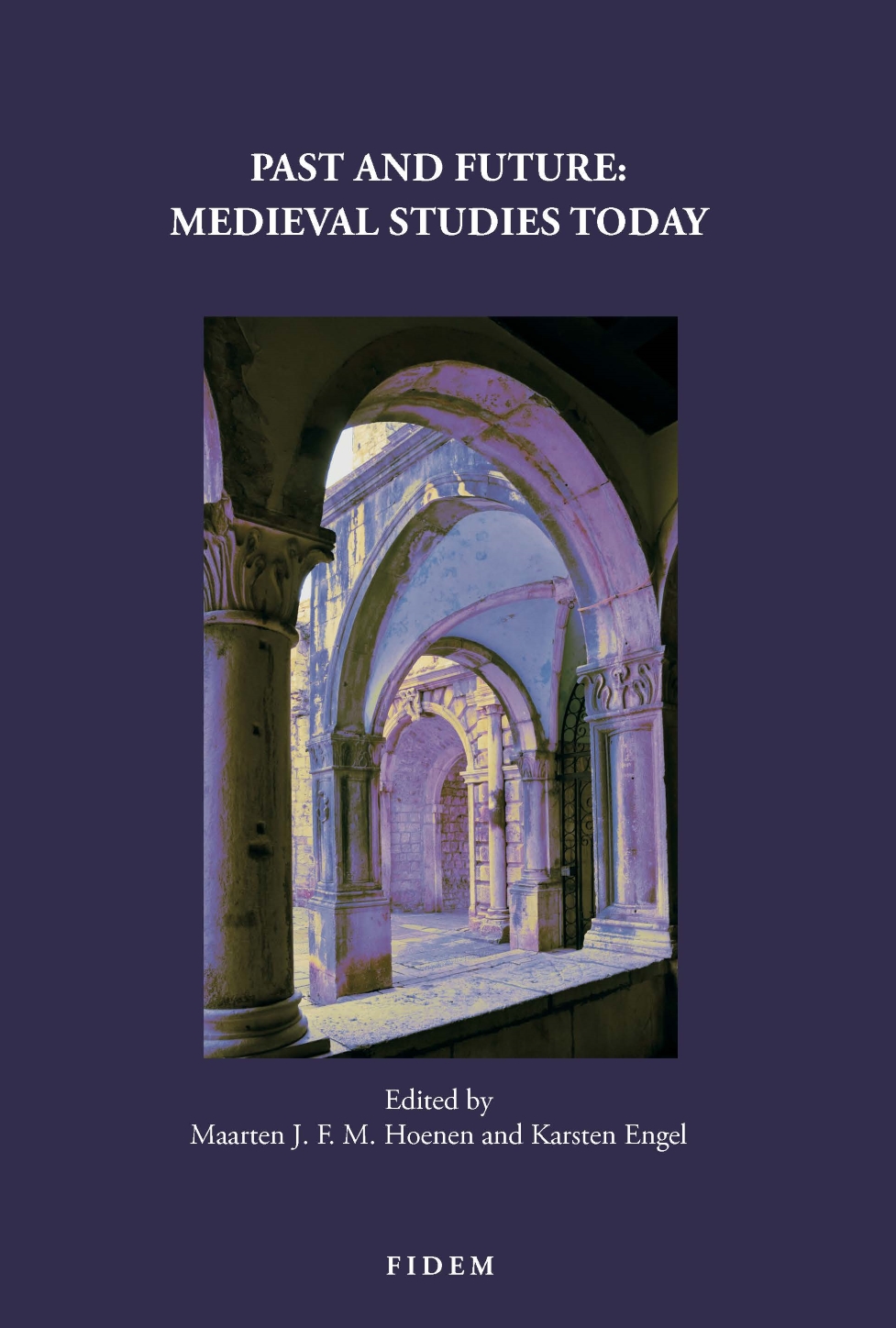
Past and Future
show More to view fulltext, buy and share links for:Past and Future show Less to hide fulltext, buy and share links for: Past and FutureThere was a time, not so long ago, when Medieval Studies constituted a major pillar for the understanding of the history of human civilization. Today, things are different. While the medieval contribution to the project of humanity remains beyond doubt, the challenges facing those interested in history have changed definitively. Currently, different responses to the new situation are under discussion, each with its own potential and challenges: e.g., global medievalism, digital humanities, comparative history, rethinking the cultural narrative. In this volume, specialists from the fields of Digital Humanities, History, Literary Studies, Philosophy, and Theology share with the readers their views about the possible futures of Medieval Studies. They evince the vitality and multi-perspectivism characteristic of the field today, showing that Medieval Studies looks to a future that, while different from the past, promises to be at least as rich and creative.
The papers collected here were first presented and discussed at the 6th European Congress of Medieval Studies of the Fédération Internationale des Instituts d’Etudes Médiévales (FIDEM), which was held at the University of Basel, Switzerland, 2-5 September 2018.
-
-
-
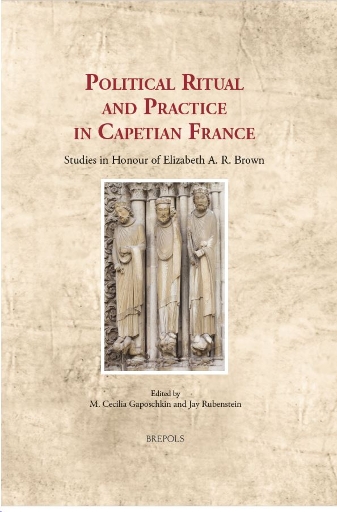
Political Ritual and Practice in Capetian France
show More to view fulltext, buy and share links for:Political Ritual and Practice in Capetian France show Less to hide fulltext, buy and share links for: Political Ritual and Practice in Capetian FranceIn this volume, thirteen of the world’s leading scholars of medieval France explore some of the most important ideas, events, personalities, and artistic creations of the Capetian world (987-1328). From some of the earliest medieval attempts to make narrative treatments of French history, through the invention of the schools, the creation of Gothic architecture, the practices of chivalry, the practice of statecraft, and the promulgation of law codes, the volume offers a panoramic view of the kingdom and the era that has come to define the medieval world in both the scholarly and popular imaginations.
The scholars brought together in this volume share as well a common sense of gratitude and an intellectual debt to Elizabeth A. R. Brown, whose own rigour and brilliance has inspired their work and shaped their sense of the past. Political Ritual and Practice in Capetian France is both a tribute to a scholar of real accomplishment and a collection of original scholarship raised upon on the foundations that Elizabeth A. R. Brown herself set down.
-
-
-

Premodern Translation
show More to view fulltext, buy and share links for:Premodern Translation show Less to hide fulltext, buy and share links for: Premodern TranslationThis edited collection offers six essays on translations and their producers and users in premodern societies, which explore possibilities for contextualizing and questioning the well-established narratives of translations and translating in history of science and philosophy. To enable such explorations, the editors decided to go beyond a conventional focus on Latin and Arabic medieval cultures. Thus a discussion of translation in East Asia that asks questions about the technologies of translation invites readers familiar with Western contexts to reflect on shared cross-cultural practices. Other authors ask new questions concerning mathematical, medical, or philosophical translations, such as the character and the role of ‘submerged’ translations that never made it into any of the traditional histories of translation in medieval societies. A third group of authors offer perspectives on early modern professionals, which open up the traditional research on translations to other fields of study, and allow us to reflect on changed practices and purposes of translation.
Featuring studies on Old Uyghur translations of Buddhist texts, on the fortune of a Latin translation of Arabic mathematics from al-Andalus, on Arabic philosophy and the division of the sciences in thirteenth-century Paris and Naples, on Albert the Great’s concept of interpretatio as an epistemic practice that combines translation and explanation, on translation between classical Arabic and Humanist traditions in early modern Spain, and on astronomy in early modern German scholarship, this volume offers a unique survey of premodern translations across a variety of languages and disciplines, exploring both their technical commonalities and cultural specificities, while also addressing the reception of the ideas they transmit.
-
-
-
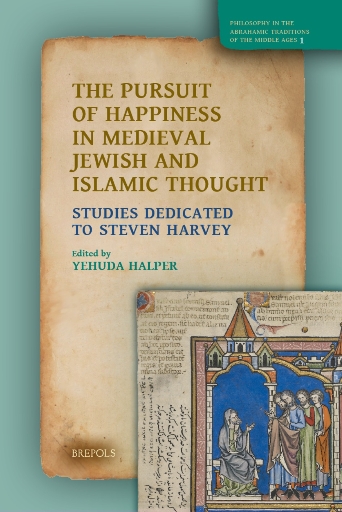
The Pursuit of Happiness in Medieval Jewish and Islamic Thought
show More to view fulltext, buy and share links for:The Pursuit of Happiness in Medieval Jewish and Islamic Thought show Less to hide fulltext, buy and share links for: The Pursuit of Happiness in Medieval Jewish and Islamic ThoughtThe articles in this volume explore the teachings on happiness by a range of thinkers from antiquity through Spinoza, most of whom held human happiness to comprise intellectual knowledge of that which is Good in itself, namely God. These thinkers were from Greek pagan, Muslim, Jewish, and Christian backgrounds and wrote their works in Greek, Arabic, Hebrew, and Latin. Still, they shared similar philosophical views of what constitutes the Highest Good, and of the intellectual activities to be undertaken in pursuit of that Good. Yet, they differed, often greatly, in the role they assigned to deeds and practical activities in the pursuit of this happiness. These differences were, at times, not only along religious lines, but also along political and ethical lines. Other differences treated the relationship between the body and intellectual happiness and the various ways in which bodily health and well-being can contribute to intellectual health and true happiness.
-