


Brepols Online Books Medieval Miscellanea Collection 2021 - bob2021mime

Collection Contents
2 results
-
-
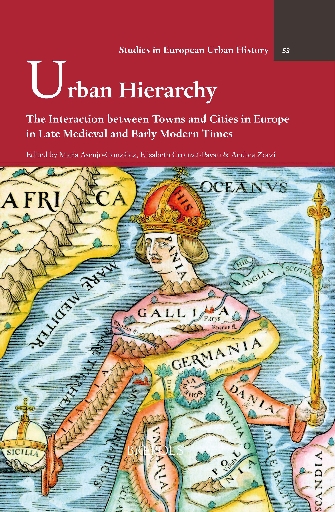
Urban Hierarchy
show More to view fulltext, buy and share links for:Urban Hierarchy show Less to hide fulltext, buy and share links for: Urban HierarchyUrban hierarchy means a new study approach that focuses on the reciprocal concurrence of relationships between urban centers, their complementarity, opposition, support and ongoing collaboration. The goal is to go beyond the single analysis of a city and focus on the interaction between towns and cities and to distinguish their dynamics and the degree of specialization within a political framework. The final objective is to provide a comprehensive historical analysis as urban history requires, open to the advantages of interdisciplinarity and the contributions of the international researchers that will take part in the session. The processes of urban hierarchization are not only vital for observing the dynamics of cities, but also for studying in depth the response capabilities of the urban systems in the face of new challenges and stimuli. These aspects of the historical analysis of cities are still quite unexplored and, therefore, they will receive a great deal of attention in the book. The initial regional frameworks will not exclude small towns and rural centers since, even though they may look less potentially relevant, they might display greater specific development. Thanks to a renewed methodology and special attention to the empirical basis, it is possible to improve our knowledge of the urban systems of European regions at the end of the Middle Ages and the beginning of the Early Modern Era, shedding light on some aspects of the medieval past that will also influence other scientific areas of humanities.
-
-
-
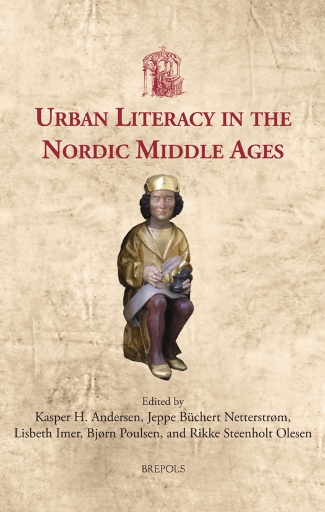
Urban Literacy in the Nordic Middle Ages
show More to view fulltext, buy and share links for:Urban Literacy in the Nordic Middle Ages show Less to hide fulltext, buy and share links for: Urban Literacy in the Nordic Middle AgesThis volume is about literacy in the medieval towns of Denmark, Norway, Sweden, and Finland, and aims to understand to what extent these medieval urban societies constituted a driving force in the development of literacy in Nordic societies generally.
As in other parts of Europe, two languages - Latin and the vernacular - were in use. However, the Nordic area is also characterised by its use of the runic alphabet, and thus two writing systems were also in use. Another characteristic of the North is its comparatively weak urbanization, especially in Finland, Sweden, and Norway.
Literacy and the uses of writing in medieval towns of the North is approached from various angles of research, including history, archaeology, philology, and runology. The contributions cover topics related to urban literacy that include both case studies and general surveys of the dissemination of writing, all from a Northern perspective. The thematic chapters all present new sources and approaches that offer a new dimension both to the study of medieval urban literacy and also to Scandinavian studies.
-