


Brepols Online Books Medieval Miscellanea Collection 2021 - bob2021mime

Collection Contents
21 - 40 of 47 results
-
-
Meanings of Water in Early Medieval England
show More to view fulltext, buy and share links for:Meanings of Water in Early Medieval England show Less to hide fulltext, buy and share links for: Meanings of Water in Early Medieval EnglandWater is both a practical and symbolic element. Whether a drop blessed by saintly relics or a river flowing to the sea, water formed part of the natural landscapes, religious lives, cultural expressions, and physical needs of medieval women and men.
This volume adopts an interdisciplinary perspective to enlarge our understanding of the overlapping qualities of water in early England (c. 400 – c. 1100). Scholars from the fields of archaeology, history, literature, religion, and art history come together to approach water and its diverse cultural manifestations in the early Middle Ages. Individual essays include investigations of the agency of water and its inhabitants in Old English and Latin literature, divine and demonic waters, littoral landscapes of church archaeology and ritual, visual and aural properties of water, and human passage through water. As a whole, the volume addresses how water in the environment functioned on multiple levels, allowing us to examine the early medieval intersections between the earthly and heavenly, the physical and conceptual, and the material and textual within a single element.
-
-
-
Medieval Science in the North
show More to view fulltext, buy and share links for:Medieval Science in the North show Less to hide fulltext, buy and share links for: Medieval Science in the NorthMedieval science has become an increasingly popular area of academic interest over the past couple of decades, but much of this work has up to now concentrated on France and the Mediterranean, while relatively little attention has been paid to the north of Europe. This has led to the assumption that Northern Europe stood aside from the mainstream of scientific knowledge in the Middle Ages, when in fact the region was a vital part of the medieval network of scientific scholarship. This important volume aims to redress the balance in scholarship by bringing together for the first time a collection of studies on medieval scientific knowledge that focuses on both Scandinavia and England.
The essays gathered here examine topics as wide-ranging as the intellectual network between Denmark and Paris; the role of Dominican friars in spreading scientific knowledge in Scandinavia; the practical application of technology by English armourers; fragments of scientific manuscripts found in early modern Swedish documents; the use of scientific volumes and descriptions of university life in medieval Icelandic literature; and fresh insights into the careers of the English scientists Roger of Hereford, Roger Bacon, and Robert Grosseteste. Together, these papers show the dynamism and depth of science in the medieval North, and offer new insights into how scientific wisdom travelled through, across, and between the peoples of this region.
-
-
-

Medieval Stories and Storytelling
show More to view fulltext, buy and share links for:Medieval Stories and Storytelling show Less to hide fulltext, buy and share links for: Medieval Stories and StorytellingThe shaping and sharing of narrative has always been key to the negotiation and recreation of reality for individuals and cultural groups. Some stories, indeed, seem to possess a life of their own: claiming a peculiar agency and taking on distinct voices which speak across time and space. How, for example, do objects, manuscripts, and other artefacts communicate alternative or complementary narratives that transcend textual and linguistic boundaries? How are stories created, reshaped, and re-experienced, and how do these shifting contexts and media change meaning?
This volume of essays explores these questions about meaning and identity in a range of ways. As a collection, it demonstrates the importance of interdisciplinary and context-focused enquiry when approaching key issues of activity and identity in the medieval period. Ultimately, the process of making meaning through shaping narrative is shown to be as vital and varied in the medieval world as it is today.
With a wide range of different disciplinary approaches from leading scholars in their respective fields, chapters include considerations of art, architecture, metalwork, linguistics, and literature. Alongside examinations of medieval cultural productions are explorations of the representation and adaptation of medieval storytelling in graphic novels, classroom teaching, and computer gaming. This volume thus offers an interdisciplinary exploration of how stories from across the medieval world were shaped, transformed, and transmitted.
-
-
-
Metaphrasis in Byzantine Literature
show More to view fulltext, buy and share links for:Metaphrasis in Byzantine Literature show Less to hide fulltext, buy and share links for: Metaphrasis in Byzantine LiteratureThroughout the centuries Byzantium's ambitious authors were conscious of the significance of literary registers for the reception of their texts. They deliberately made use of stylistic elements or refrained from using certain features in order to reach their target audience. There are certain groups of texts dating from various periods where these stylistic elements can be tracked precisely by comparison of two or even more versions with their model text. Such examples of rewriting can be found particularly within genres with a broader audience appeal, namely hagiography and historiography. It is in both genres that we encounter metaphrastic processes, in terms of stylistic elaboration and in terms of stylistic simplification.
As well as stylistic reshaping, metaphrasis may also encompass the addition or removal of literary and/or thematic aspects. All these processes signify intent as well as authorial interpretation. Frequently, the ideological orientation of a text is refurbished through rewriting. Teasing out these strands for exploration helps to supply a potential wealth of information on the author (if known), cultural (social, religious, historical) context, and creative ability, as well as levels of education and literacy.
-
-
-
Myth, Magic, and Memory in Early Scandinavian Narrative Culture
show More to view fulltext, buy and share links for:Myth, Magic, and Memory in Early Scandinavian Narrative Culture show Less to hide fulltext, buy and share links for: Myth, Magic, and Memory in Early Scandinavian Narrative CultureMyth, magic, and memory have together formed important, and often intertwined, elements to recent studies in the narrative culture of Viking-Age and Medieval Scandinavica. Analytical approaches to myth (prominent in the fields of history of religion, archaeology, language, and literature, and central to studies of visual cultures up to modern times), magic (drawing on a wealth of Norse folkloric and supernatural material that derives from pre-modern times and continues to impact on recent practices of performance and ritual), and memory (the concept of how we remember and actively construe the past) together combine to shed light on how people perceived the world around them.
Taking the intersection between these diverse fields as its starting point, this volume draws together contributions from across a variety of disciplines to offer new insights into the importance of myth, magic, and memory in pre-modern Scandinavia. Covering a range of related topics, from supernatural beings to the importance of mythology in later national historiographies, the chapters gathered here are written to honour the work of Stephen A. Mitchell, professor of Scandinavian Studies and Folklore at Harvard University, whose research has heavily influenced this multi-faceted field.
-
-
-
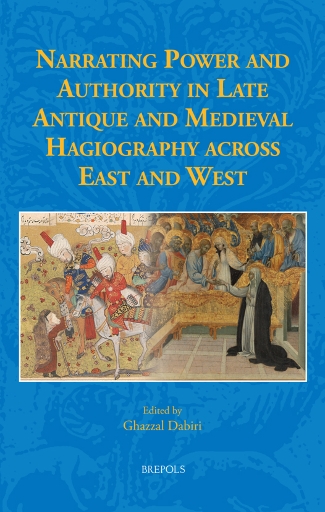
Narrating Power and Authority in Late Antique and Medieval Hagiography from East to West
show More to view fulltext, buy and share links for:Narrating Power and Authority in Late Antique and Medieval Hagiography from East to West show Less to hide fulltext, buy and share links for: Narrating Power and Authority in Late Antique and Medieval Hagiography from East to WestThis collection of essays explores the multifaceted representation of power and authority in a variety of late antique and medieval hagiographical narratives (Lives, Martyr Acts, oneiric and miraculous accounts). The narratives under analysis, written in some of the major languages of the Islamicate world and the Christian East and Christian West - Arabic, Armenian, Georgian, Greek, Latin, Middle Persian, Ottoman Turkish, and Persian - prominently feature a diverse range of historical and fictional figures from a wide cross-section of society - from female lay saints in Italy and Zoroastrians in Sasanian and Islamic Iran to apostles and bishops and emperors and caliphs. Each chapter investigates how power and authority were narrated from above (courts/ saints) and below (saints/laity) and, by extension, navigated in various communities. As each chapter delves into the specific literary and social scene of a particular time, place, or hagiographer, the volume as a whole offers a broad view; it brings to the fore important shared literary and social historical aspects such as the possible itineraries of popular narratives and motifs across Eurasia and commonly held notions in the religio-political thought worlds of hagiographers and their communities. Through close readings and varied analyses, this collection contributes to the burgeoning interest in reading hagiography as literature while it offers new perspectives on the social and religious history of late antique and medieval communities.
-
-
-
Past and Future
show More to view fulltext, buy and share links for:Past and Future show Less to hide fulltext, buy and share links for: Past and FutureThere was a time, not so long ago, when Medieval Studies constituted a major pillar for the understanding of the history of human civilization. Today, things are different. While the medieval contribution to the project of humanity remains beyond doubt, the challenges facing those interested in history have changed definitively. Currently, different responses to the new situation are under discussion, each with its own potential and challenges: e.g., global medievalism, digital humanities, comparative history, rethinking the cultural narrative. In this volume, specialists from the fields of Digital Humanities, History, Literary Studies, Philosophy, and Theology share with the readers their views about the possible futures of Medieval Studies. They evince the vitality and multi-perspectivism characteristic of the field today, showing that Medieval Studies looks to a future that, while different from the past, promises to be at least as rich and creative.
The papers collected here were first presented and discussed at the 6th European Congress of Medieval Studies of the Fédération Internationale des Instituts d’Etudes Médiévales (FIDEM), which was held at the University of Basel, Switzerland, 2-5 September 2018.
-
-
-
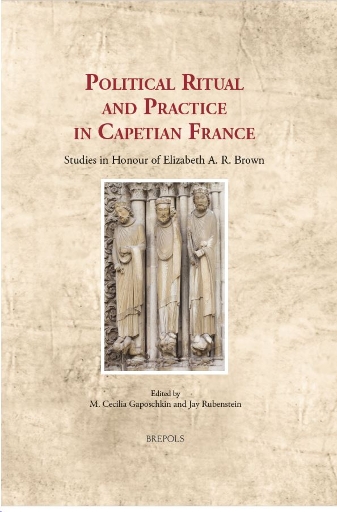
Political Ritual and Practice in Capetian France
show More to view fulltext, buy and share links for:Political Ritual and Practice in Capetian France show Less to hide fulltext, buy and share links for: Political Ritual and Practice in Capetian FranceIn this volume, thirteen of the world’s leading scholars of medieval France explore some of the most important ideas, events, personalities, and artistic creations of the Capetian world (987-1328). From some of the earliest medieval attempts to make narrative treatments of French history, through the invention of the schools, the creation of Gothic architecture, the practices of chivalry, the practice of statecraft, and the promulgation of law codes, the volume offers a panoramic view of the kingdom and the era that has come to define the medieval world in both the scholarly and popular imaginations.
The scholars brought together in this volume share as well a common sense of gratitude and an intellectual debt to Elizabeth A. R. Brown, whose own rigour and brilliance has inspired their work and shaped their sense of the past. Political Ritual and Practice in Capetian France is both a tribute to a scholar of real accomplishment and a collection of original scholarship raised upon on the foundations that Elizabeth A. R. Brown herself set down.
-
-
-

Premodern Translation
show More to view fulltext, buy and share links for:Premodern Translation show Less to hide fulltext, buy and share links for: Premodern TranslationThis edited collection offers six essays on translations and their producers and users in premodern societies, which explore possibilities for contextualizing and questioning the well-established narratives of translations and translating in history of science and philosophy. To enable such explorations, the editors decided to go beyond a conventional focus on Latin and Arabic medieval cultures. Thus a discussion of translation in East Asia that asks questions about the technologies of translation invites readers familiar with Western contexts to reflect on shared cross-cultural practices. Other authors ask new questions concerning mathematical, medical, or philosophical translations, such as the character and the role of ‘submerged’ translations that never made it into any of the traditional histories of translation in medieval societies. A third group of authors offer perspectives on early modern professionals, which open up the traditional research on translations to other fields of study, and allow us to reflect on changed practices and purposes of translation.
Featuring studies on Old Uyghur translations of Buddhist texts, on the fortune of a Latin translation of Arabic mathematics from al-Andalus, on Arabic philosophy and the division of the sciences in thirteenth-century Paris and Naples, on Albert the Great’s concept of interpretatio as an epistemic practice that combines translation and explanation, on translation between classical Arabic and Humanist traditions in early modern Spain, and on astronomy in early modern German scholarship, this volume offers a unique survey of premodern translations across a variety of languages and disciplines, exploring both their technical commonalities and cultural specificities, while also addressing the reception of the ideas they transmit.
-
-
-
Questioning the World
show More to view fulltext, buy and share links for:Questioning the World show Less to hide fulltext, buy and share links for: Questioning the WorldThis volume discusses cosmological issues in Greek Patristic and Byzantine question-and-answer literature. By adopting this focus, it yields novel insights into both the (theological / philosophical) content and the (literary) form of the texts under scrutiny. How did Greek Patristic and Byzantine authors understand the cosmos of which they were a part and the world in which they lived? And what literary forms did they use to express their questions and answers on these issues? This collection of studies shows that, in order to bring out the important intellectual contribution of the authors under discussion, both ‘cosmology’ and ‘question-and-answer literature’ should be defined more broadly than expected. Several papers deal with the crucial corpora by Pseudo-Justin and Maximus the Confessor. Other authors under discussion include Philoponus, Pseudo-Caesarius, Michael Psellus, Severian of Gabala, and Nilus Doxopatres. Attention also goes to the critical edition of question-and-answer literature, as well as to the Greek Patristic and Byzantine reception of cosmological questions and answers from Antiquity (i.c. Aristotle, Philo of Alexandria, Plutarch, and Iamblichus).
-
-
-
Reading the Church Fathers with St. Thomas Aquinas
show More to view fulltext, buy and share links for:Reading the Church Fathers with St. Thomas Aquinas show Less to hide fulltext, buy and share links for: Reading the Church Fathers with St. Thomas AquinasIn his richly documented and still valuable study of Aquinas and the Church Fathers, published in 1946, Gottfried Geenen, o.p. noted that the study of this aspect of Thomas Aquinas’s thought was just beginning to take place. More than seventy years later considerable progress has been made, both historically and doctrinally, not at least due to the technological advances in the area of the study of Aquinas’s writings. It has been argued both that Aquinas had a remarkable knowledge of a wide range of the Church Fathers and that he was actively engaged in acquiring new material from hitherto unknown Fathers. Due to Thomas’s profound commitment to both Latin and Greek patristic sources he was not only able to draw on the rich tradition of the past but also to explore new possibilities and solutions. This commitment and interaction between tradition and speculative reason has led some to claim tentatively that one might characterize Thomas Aquinas’s theology as being ad mentem patrum.
The goal of this volume is to explore ways to corroborate this claim. In order to do so, the contributions investigate the presence and use of the Church Fathers in Aquinas’s thought both historically and systematically.
-
-
-

Religious Connectivity in Urban Communities (1400–1550)
show More to view fulltext, buy and share links for:Religious Connectivity in Urban Communities (1400–1550) show Less to hide fulltext, buy and share links for: Religious Connectivity in Urban Communities (1400–1550)The boundaries between sacred and secular in the late Middle Ages, traditionally perceived as separate domains, are nowadays perceived as porous or non-existent. This collection on religious connectivity explores a new approach to religious culture in the late Middle Ages. In assessing the porosity of the domains of sacred and secular, and of religious and lay, the contributors to this collection investigate processes of transfer of religious knowledge, literature, and artefacts, and the people involved.
Religious connectivity describes people in networks. This concept emphasises dynamics and processes rather than stability, and focuses on all persons involved in transfer and appropriation, not just the producers. It is therefore a fruitful concept by which to explore medieval society and the continuum of sacred and secular. By using the lens of religious connectivity, the authors of this collection shed new light on religious activities and religious culture in late medieval urban communities.
-
-
-
Rome on the Borders. Visual Cultures During the Carolingian Transition
show More to view fulltext, buy and share links for:Rome on the Borders. Visual Cultures During the Carolingian Transition show Less to hide fulltext, buy and share links for: Rome on the Borders. Visual Cultures During the Carolingian TransitionBased upon the conference Rome in a Global World: Visual Cultures During the Carolingian Transition (Brno, 14th-15th October 2019), this Supplementum volume of Convivium collects eleven articles that look at Rome’s artistic production in the Carolingian era across historiographical, disciplinary, methodological and geopolitical borders.
-
-
-
Spoliation as Translation
show More to view fulltext, buy and share links for:Spoliation as Translation show Less to hide fulltext, buy and share links for: Spoliation as TranslationThe articles gathered in this special issue of Convivium offer a variety of perspectives - history of medieval art, architecture, literary studies - that explore the relations between spoliation and translation, with a particular focus on the interconnections and similarities between material/artistic and textual/literary cultures. Building on current research in spolia and translation studies, these contributions respond to the increasing interest in and popularity of these two topics in recent scholarship. A conceptual point of departure is that reuse and translation represent two crucial processes facilitating cultural dialogues and exchanges across time and space. Material and textual spolia fascinate us, because they provide various means and levels of engagement with the past with a tangible form, sometimes of an ambivalent nature. Objects, artefacts, buildings, and texts have been subject to constant reworkings, through which they have been interpreted and translated: old stories gain new significance in new contexts, just as old objects gain new meanings in new settings. The aim of this collection is to foster a better understanding of such processes and, at the same time, of the history of the medieval worlds of the Eastern Mediterranean, which is marked by constant cross-cultural encounters and interactions.
-
-
-
Studying the Arts in Late Medieval Bohemia
show More to view fulltext, buy and share links for:Studying the Arts in Late Medieval Bohemia show Less to hide fulltext, buy and share links for: Studying the Arts in Late Medieval BohemiaFrom its foundation in 1348, the University of Prague attracted students as well as scholars from all over Europe to its Faculty of Arts, where they studied and taught the subjects of the curriculum in all their variety. Nevertheless, our knowledge about these Prague scholars and their thought is still rather limited. In an effort to fill this gap, this volume is the first devoted entirely to the production, reception, and transmission of knowledge in the Arts Faculty of the medieval University of Prague, covering topics in astronomy, linguistics, logic, metaphysics, meteorology, and optics. It also links Prague's Faculty of Arts to several others at universities across Europe and it examines the study of the arts in Bohemia outside the university, including the Jewish milieu. The book contributes to advancing the status quaestionis in various ways, mainly through the analysis of less well-known and even unpublished texts, critical editions of some of which are printed here for the first time.
-
-
-

The Crusades: History and Memory
show More to view fulltext, buy and share links for:The Crusades: History and Memory show Less to hide fulltext, buy and share links for: The Crusades: History and MemoryThe crusades have been remembered and commemorated in many ways, from the late eleventh century until today. Soon after the conquest of Jerusalem in 1099, the fate of the First Crusade inspired literary, historiographical and artistic traditions. Participants in the subsequent crusades would look to the first Crusade for inspiration and spiritual guidance, while playing out their own ideas of crusading. Since then the crusades have been put to use in very divers ways and for different purposes. This volume explores how the crusades have been remembered, revered and ridiculed by those who participated in them and by those who in later periods made use of the crusades as an historical phenomenon. The volume thus traces the memory and legacy of the crusades by putting together essays that focus on the specific ways in which the crusades have been memorized, evoked and exploited from the eleventh century until today.
-
-
-
The Dionysian Traditions
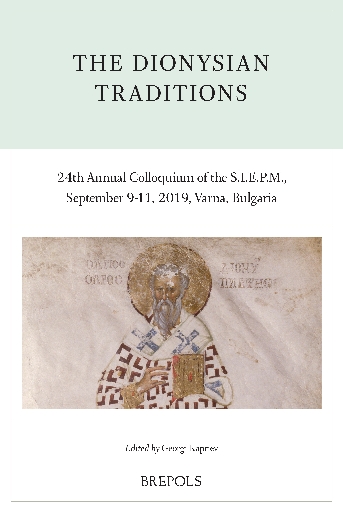
show More to view fulltext, buy and share links for:The Dionysian Traditions show Less to hide fulltext, buy and share links for: The Dionysian TraditionsThe volume contains the contributions of the 24th Annual Colloquium of S.I.E.P.M. "The Dionysian Traditions", which took place in Varna, Bulgaria from September 9 to 11, 2019. The theme of the colloquium is not coincidentally related to the topic of the 9th Annual Colloquium "The Dionysius Reception" (1999 in Sofia, Bulgaria). The aim was to consider the continuity of research and to ensure its new dimensions. The colloquium demonstrated the multifaceted, advanced development of Dionysius research over the past twenty years. The Corpus Dionysiacum exerted an enormous influence on the Christian cultures of the European Middle Ages, which also had and still has an impact on modern times. Focal points of the medieval - Latin and Byzantine - Dionysius traditions are discussed in detail, previously undiscussed topics and perspectives are presented. A large part of the analyses develop a new approach to post-medieval culture and a clearly defined commitment to the current problems of thought and social life. The profoundly analyzed questions and topics convincingly open new horizons for today's science.
-
-
-
The Normans in the Mediterranean
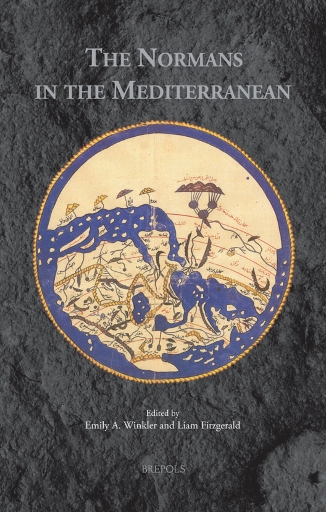
show More to view fulltext, buy and share links for:The Normans in the Mediterranean show Less to hide fulltext, buy and share links for: The Normans in the MediterraneanIn both popular memory and in their own histories, the Normans remain almost synonymous with conquest. In their relatively brief history, some of these Normans left a small duchy in northern France to fight with Empires, conquer kingdoms, and form new ruling dynasties. This book examines the explosive Norman encounters with the medieval Mediterranean, c. 1000-1250. It evaluates new evidence for conquest and communities, and offers new perspectives on the Normans’ many meetings and adventures in history and memory.
The contributions gathered here ask questions of politics, culture, society, and historical writing. How should we characterize the Normans’ many personal, local, and interregional interactions in the Mediterranean? How were they remembered in writing in the years and centuries that followed their incursions? The book questions the idea of conquest as replacement, examining instead how human interactions created new nodes and networks that transformed the medieval Mediterranean. Through studies of the Normans and the communities who encountered them - across Iberia, the eastern Roman Empire, Lombard Italy, Islamic Sicily, and the Great Sea - the book explores macro- and micro-histories of conquest, its strategies and technologies, and how medieval people revised, rewrote, and remembered conquest.
-
-
-
The Pursuit of Happiness in Medieval Jewish and Islamic Thought
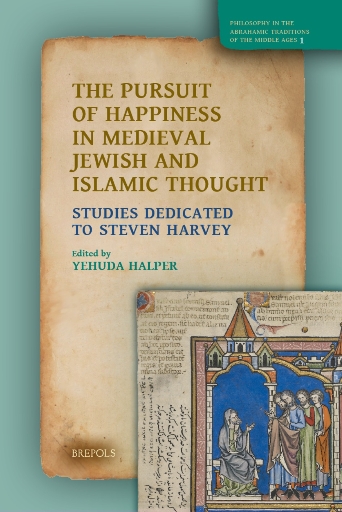
show More to view fulltext, buy and share links for:The Pursuit of Happiness in Medieval Jewish and Islamic Thought show Less to hide fulltext, buy and share links for: The Pursuit of Happiness in Medieval Jewish and Islamic ThoughtThe articles in this volume explore the teachings on happiness by a range of thinkers from antiquity through Spinoza, most of whom held human happiness to comprise intellectual knowledge of that which is Good in itself, namely God. These thinkers were from Greek pagan, Muslim, Jewish, and Christian backgrounds and wrote their works in Greek, Arabic, Hebrew, and Latin. Still, they shared similar philosophical views of what constitutes the Highest Good, and of the intellectual activities to be undertaken in pursuit of that Good. Yet, they differed, often greatly, in the role they assigned to deeds and practical activities in the pursuit of this happiness. These differences were, at times, not only along religious lines, but also along political and ethical lines. Other differences treated the relationship between the body and intellectual happiness and the various ways in which bodily health and well-being can contribute to intellectual health and true happiness.
-
-
-
The Roles of Medieval Chanceries
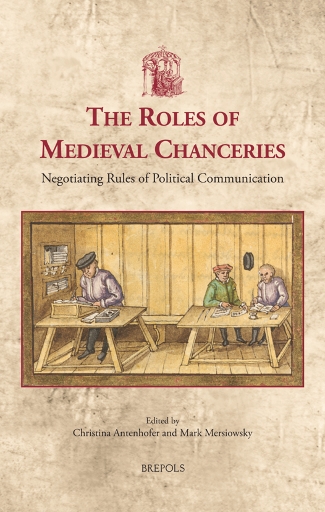
show More to view fulltext, buy and share links for:The Roles of Medieval Chanceries show Less to hide fulltext, buy and share links for: The Roles of Medieval ChanceriesMedieval communication followed rules that were defined, negotiated, and altered in processes of exchange. Conflicts resulting from different communication practices, as well as forms of innovation, revolve around rules that are not self-evident. Political actors such as princes and cities, chanceries, secretaries, ambassadors, and councillors formed rules of political participation, which became visible in written documentation. These rules were both formed and negotiated via processes of communication. Medieval chanceries can thus be understood as a vast field of experimentation where different solutions were tested, passed on, or discarded.
This book explores communication practices in German, French, Italian, Tyrolian, and Gorizian chanceries, as well as at diets from the tenth to the sixteenth century. Its chapters examine royal, monastic, princely, and communal chanceries. For the early and high Middle Ages, a close analysis of documents will reconstruct negotiation and communication from within the documents themselves. For the later Middle Ages, focus will turn to the chancery, with the appearance of chancery orders and chancery annotations that provide explicit insight in communication between the chancellors, secretaries, and political authorities. The growing amount and variety of documents issued in the late Middle Ages allows us to retrace conflicts resulting from differing chancery practices as well as attempts to reorganise the chancery into a political instrument for the prince. The processes of political communication will be followed in three parts. Part I focuses on the rules within documents. Part II looks at administrative processes within specific chanceries, while Part III explores forms of exchange between the chancery and other political actors.
-