


Brepols Online Books Medieval Miscellanea Collection 2021 - bob2021mime

Collection Contents
41 - 47 of 47 results
-
-

Transcultural Approaches to the Bible
show More to view fulltext, buy and share links for:Transcultural Approaches to the Bible show Less to hide fulltext, buy and share links for: Transcultural Approaches to the BibleThis volume, the first in the new series Transcultural Medieval Studies, draws together scholars from around the world to offer new insights into the importance and role of the Bible across the varied cultures of medieval Europe. The papers gathered here take a comparative and multidisciplinary approach to the subject, focusing on the biblical background of perceptions of the religious and cultural ‘Self ’ and ‘Other’ in the Mediterranean, in Latin Europe, and in the Baltic. In doing so, the contributions identify commonalities and differences of the ‘uses of the Bible’ in these various worlds, combining and contrasting studies on Bible manuscripts, their exegesis, and their use for historical writing.
-
-
-
Transformed by Emigration. Welcoming Russian Intellectuals, Scientists and Artists (1917–1945)
show More to view fulltext, buy and share links for:Transformed by Emigration. Welcoming Russian Intellectuals, Scientists and Artists (1917–1945) show Less to hide fulltext, buy and share links for: Transformed by Emigration. Welcoming Russian Intellectuals, Scientists and Artists (1917–1945)The thematic framework of this special issue is an examination of the impact Russian émigrés had on the humanities and art. From art history to philosophy, artistic creation to ecumenical dialogue, the volume is dedicated to figures who, through their emigration from Russia, transformed their places of arrival and relevant fields. The articles in the volume assess these topics from an interdisciplinary point of view, extending the usual horizons of Convivium to other fields as well. The volume was published as the proceedings of the conference Transformed by Emigration. Welcoming Russian Intellectuals, Scientists, and Artists 1917-1945 held at the Hans Belting Library in February 2019.
-
-
-
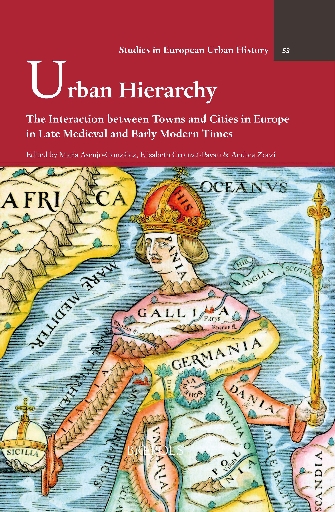
Urban Hierarchy
show More to view fulltext, buy and share links for:Urban Hierarchy show Less to hide fulltext, buy and share links for: Urban HierarchyUrban hierarchy means a new study approach that focuses on the reciprocal concurrence of relationships between urban centers, their complementarity, opposition, support and ongoing collaboration. The goal is to go beyond the single analysis of a city and focus on the interaction between towns and cities and to distinguish their dynamics and the degree of specialization within a political framework. The final objective is to provide a comprehensive historical analysis as urban history requires, open to the advantages of interdisciplinarity and the contributions of the international researchers that will take part in the session. The processes of urban hierarchization are not only vital for observing the dynamics of cities, but also for studying in depth the response capabilities of the urban systems in the face of new challenges and stimuli. These aspects of the historical analysis of cities are still quite unexplored and, therefore, they will receive a great deal of attention in the book. The initial regional frameworks will not exclude small towns and rural centers since, even though they may look less potentially relevant, they might display greater specific development. Thanks to a renewed methodology and special attention to the empirical basis, it is possible to improve our knowledge of the urban systems of European regions at the end of the Middle Ages and the beginning of the Early Modern Era, shedding light on some aspects of the medieval past that will also influence other scientific areas of humanities.
-
-
-
Urban Literacy in the Nordic Middle Ages
show More to view fulltext, buy and share links for:Urban Literacy in the Nordic Middle Ages show Less to hide fulltext, buy and share links for: Urban Literacy in the Nordic Middle AgesThis volume is about literacy in the medieval towns of Denmark, Norway, Sweden, and Finland, and aims to understand to what extent these medieval urban societies constituted a driving force in the development of literacy in Nordic societies generally.
As in other parts of Europe, two languages - Latin and the vernacular - were in use. However, the Nordic area is also characterised by its use of the runic alphabet, and thus two writing systems were also in use. Another characteristic of the North is its comparatively weak urbanization, especially in Finland, Sweden, and Norway.
Literacy and the uses of writing in medieval towns of the North is approached from various angles of research, including history, archaeology, philology, and runology. The contributions cover topics related to urban literacy that include both case studies and general surveys of the dissemination of writing, all from a Northern perspective. The thematic chapters all present new sources and approaches that offer a new dimension both to the study of medieval urban literacy and also to Scandinavian studies.
-
-
-
Victorine Restoration
show More to view fulltext, buy and share links for:Victorine Restoration show Less to hide fulltext, buy and share links for: Victorine RestorationThe Victorines were scholars and teachers of philosophy, liberal arts, sacred scripture, music, and contemplation at the Abbey of Saint-Victor in Paris. This collection focuses on the three greatest Victorines: Hugh (d. 1141), who established the direction of the school; Richard (d. 1173), who developed Victorine contemplation; and Thomas Gallus (d. 1246), who culminated Victorine contemplative thought and transmitted it to other schools, especially the Franciscans. They offer an innovative revival of the Christian spiritual and intellectual tradition for their reforming pastoral mission in their urban setting and for the Church.
Their contemporaries saw the Victorines as beacons of spiritual love and intellectual richness. Later reformers and thinkers held their writings as touchstones of contemplative love, including, for example, Bonaventure, Thomas Aquinas, Jean Gerson, Thomas à Kempis, the Devotio Moderna, and many others. The writings of the Victorines found broad appeal among later medieval readers, as well as praise among early modern reformers, Protestant and Catholic alike. In recent decades, the Victorines have returned to scholarly attention and renewed appreciation. Scholarly studies, critical editions, and translation projects reveal the treasures of Victorine thought and spirituality.
This volume showcases the findings of recent research and scholarly advances in Victorine studies, offering new readers a status quaestionis of the field. It also features new research by eminent experts in Victorine thought that points out promising directions for future research, thus offering important new findings for established specialists.
-
-
-
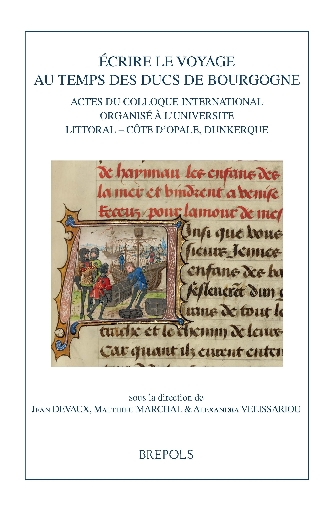
Écrire le voyage au temps des ducs de Bourgogne
show More to view fulltext, buy and share links for:Écrire le voyage au temps des ducs de Bourgogne show Less to hide fulltext, buy and share links for: Écrire le voyage au temps des ducs de BourgogneIssu des rencontres internationales qui se sont tenues à l’Université Littoral - Côte d’Opale (Dunkerque) les 19 et 20 octobre 2017, le présent ouvrage vise à mieux appréhender le rôle prépondérant joué par les États bourguignons dans l’essor de l’écriture du voyage. Il s’attache en particulier au genre du récit de voyage qui, dans les villes des Pays-Bas comme à la cour des ducs, gagna bien vite la faveur des élites bourguignonnes : pèlerins, diplomates, soldats ou marchands, les voyageurs écrivains apportent pour beaucoup une contribution originale à ce mode spécifique de narration. Ce recueil d’études a par ailleurs pour objectif de mettre en lumière les liens subtils que ce genre littéraire entretient tout à la fois avec la littérature romanesque et la production historiographique qui s’épanouissent alors en terre bourguignonne et réservent une place non négligeable à l’écriture du voyage, imaginaire ou réel.
-
-
-
Franks and Crusades in Medieval Eastern Christian Historiography
show More to view fulltext, buy and share links for:Franks and Crusades in Medieval Eastern Christian Historiography show Less to hide fulltext, buy and share links for: Franks and Crusades in Medieval Eastern Christian HistoriographyThis volume is an introduction to eleven of the main medieval Eastern Christian historians used by modern scholars to reconstruct the events and personalities of the crusading period in the Levant. Each of the chapters examines one historian and their work(s), and first contains an introductory examination of their life, background and influences. This is then followed by a study of their work(s) relevant to the Crusades, including the reasons for writing, themes, and methodology. Such an approach will allow modern researchers to better understand the background and contexts to these texts, and thus to reconstruct the past in a more nuanced and detailed way. Written by eleven eminent scholars in their fields, and examining chronicles written in Armenian, Greek, Syriac, and Arabic, this book will be essential reading for anybody engaged in research on the Crusades, as well as Eastern Christian and Islamic history, and medieval historiography.
-