


BOB2021MIOT

Collection Contents
3 results
-
-
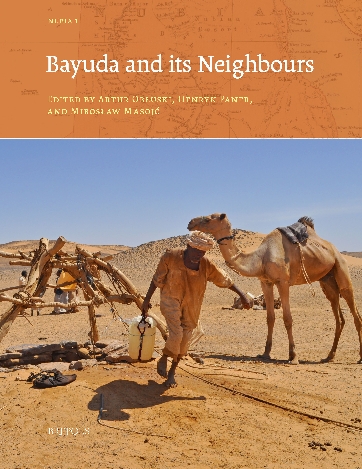
Bayuda and its Neighbours
show More to view fulltext, buy and share links for:Bayuda and its Neighbours show Less to hide fulltext, buy and share links for: Bayuda and its NeighboursThe Bayuda, although an arid desert located in modern-day Sudan, has nonetheless been inhabited, farmed, worshipped in, and fought over by humans from the Palaeolithic onwards. Yet despite the longevity of its human occupation, the region has only in recent years become the focus of more intensive scholarly research. This volume, the first in a series dedicated to exploring the archaeology and history of Northeast Africa, aims to build on this trend by drawing together the very latest archaeological research and data, and shedding light on how the Bayuda Desert and its environs were transformed into a cultural landscape. The contributions gathered here introduce, examine, and (re)assess a number of important issues, many of which are new in the archaeology of Nubia, as well as considering them against a broader comparative background. From climate change over the past millennia - and its far-reaching consequences in the present - through to an examination of the cultural influences of the Kingdom of Kerma, and from analysis of funeral rites through to interpretations of rock art, forgotten trade routes, and the commerce in cattle and slaves, this insightful volume offers a wealth of new information into the history of ancient Nubia.
-
-
-
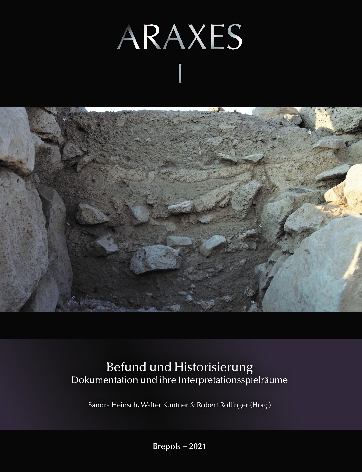
Befund und Historisierung
show More to view fulltext, buy and share links for:Befund und Historisierung show Less to hide fulltext, buy and share links for: Befund und HistorisierungArchaeological periodization schemes of material culture development in Northern Mesopotamia from 7th to 5th centuries bce traditionally refer to the sequence of dynasties. In particular, they highlight historical events related to distinguished members of the royal houses of the Sargonids, Urartians, Medes, Teispids, and Achaemenids. However, whereas the repercussions these Iron Age empires had on the history of the Near East are undeniable, the impact they had on the material culture and its development is not always equally tangible in the archaeological findings. The latter are not infrequently characterized by continuity rather than by incisive changes, as recent studies and re-evaluations of key sites in Syria, Iraq, Iran and Armenia show. This publication uses case studies to address problems that arises when the archaeological (relative concept) and historical (absolute concept) methodology use different intrinsic values of time to reconstruct history and to understand cultural material development.
-
-
-

Benedict XV: A Pope in the World of the 'Useless Slaughter' (1914-1918)
show More to view fulltext, buy and share links for:Benedict XV: A Pope in the World of the 'Useless Slaughter' (1914-1918) show Less to hide fulltext, buy and share links for: Benedict XV: A Pope in the World of the 'Useless Slaughter' (1914-1918)On August 1, 1917 - three years after the outbreak of World War 1 - pope Benedict XV signed his famous peace note, urging the governments of the belligerent Powers to seek a diplomatic solution to their disputes and stop the "useless slaughter". In order to commemorate the event and to define the place of this "forgotten pope" in twentieth-century history, on November 3-5, 2016, the Fondazione per le Scienze Religiose Giovanni XXIII (Fscire) hosted an international conference, entitled "Benedict XV in the world of the useless slaughter", in which more than a hundred historians from all over the world participated. The aim of the initiative, supported by the Historical and Scientific Committee for Italy’s National Anniversaries, is to shed light on the key issues of this pontificate, from Giacomo Della Chiesa’s education in the theological seminary in Genua to his heritage and memory all along the twentieth century. The volume resulting from this conference provides a comprehensive and systematic reference work about a key figure in Church history that has all too often been neglected.
-