


BOB2021MIOT

Collection Contents
3 results
-
-
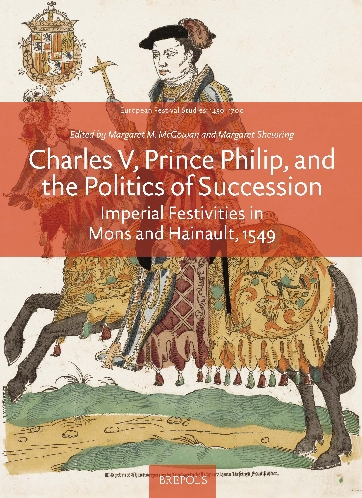
Charles V, Prince Philip, and the Politics of Succession
show More to view fulltext, buy and share links for:Charles V, Prince Philip, and the Politics of Succession show Less to hide fulltext, buy and share links for: Charles V, Prince Philip, and the Politics of SuccessionThis book is based on an international conference held in the capital of Hainault to celebrate the city of Mons as European Capital of Culture (2015). For the first time, through a range of interdisciplinary studies, the magnificent festivals created to honour Prince Philip of Spain as he journeyed across Europe to receive his sovereignty of the Low Countries are brought to life. The splendour of entries in the cities of Northern Italy (such as Genoa and Milan) was challenged by the civic allegories of triumph displayed throughout the Low Countries in Ghent, Antwerp, and Amsterdam. Outpacing all that magnificence were the entertainments prepared by Mary of Hungary at Binche: triumphal arches, martial feats of arms, balls, masquerades, and castle-stormings entertained Emperor Charles V and his son Prince Philip.The essays in this volume reconstitute the political and social context of these extraordinary celebrations and focus on the purpose and role of festival in the changing political strategies of Charles V. They are illustrated with a total of 36 b&w and 36 colour images.Contributors: Sydney Anglo, Francesca Bortoletti, Stijn Bussels, Tobias Capwell, José Eloy Hortal Muñoz, Félix Labrador Arroyo, Margaret M. McGowan, R. L. M. Morris, Jessie Park, Yves Pauwels, M. J. Rodríguez-Salgado, Margaret Shewring, Hugo Soly, Lisa Wiersma.
-
-
-
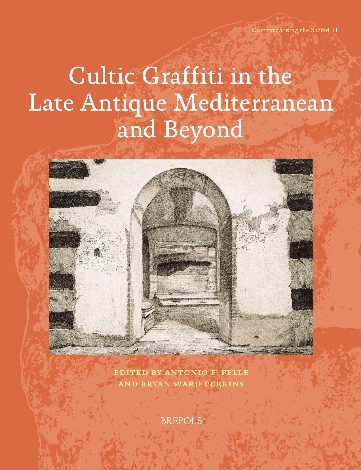
Cultic Graffiti in the Late Antique Mediterranean and Beyond
show More to view fulltext, buy and share links for:Cultic Graffiti in the Late Antique Mediterranean and Beyond show Less to hide fulltext, buy and share links for: Cultic Graffiti in the Late Antique Mediterranean and BeyondGraffiti, scratched or drawn on the walls of religious shrines, provide unique unmediated evidence of how ordinary men and women, many of them pilgrims, invoked and sought the help of God and the saints in Late Antiquity. The papers in this volume document and discuss cultic graffiti across the entire late antique Mediterranean, and into Nubia and Arabia. The principal focus is the Christian world, but there are also papers that look back to pre-Christian practice, and into the world of early Islam. Presenting evidence that is often unfamiliar, this is an important volume for anyone interested in the History and Archaeology of Late Antiquity. In examining cultic practice, we are almost always compelled to view the actions of devotees through texts written by the ecclesiastical elite, often with a clear hagiographical agenda in mind - cultic graffiti are evidence produced by the protagonists themsleves.
-
-
-
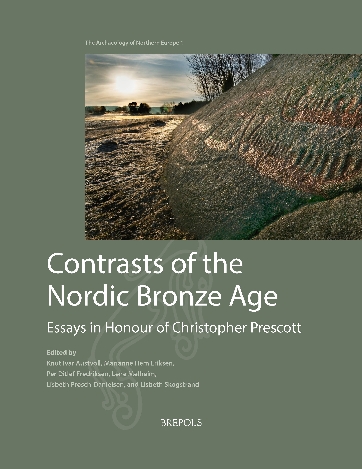
Contrasts of the Nordic Bronze Age
show More to view fulltext, buy and share links for:Contrasts of the Nordic Bronze Age show Less to hide fulltext, buy and share links for: Contrasts of the Nordic Bronze AgeThe Bronze Age in Northern Europe was a place of diversity and contrast, an era that saw movements and changes not just of peoples, but of cultures, beliefs, and socio-political systems, and that led to the forging of ontological ideas materialized in landscapes, bodies, and technologies. Drawing on a range of materials and places, the innovative contributions gathered here in this volume explore the disparate facets of Bronze Age society across the Nordic region through the key themes of time and trajectory, rituals and everyday life, and encounters and identities. The contributions explore how and why society evolved over time, from the changing nature of sea travel to new technologies in house building, and from advances in lithic production to evolving burial practices and beliefs in the afterlife. This edited collection honours the ground-breaking research of Professor Christopher Prescott, an outstanding figure in the study of the Bronze Age north, and it takes as its inspiration the diversity, interdisciplinarity, and vitality of his own research in order to make a major new contribution to the field, and to shed new light on a Bronze Age full of contrasts and connections.
-