


BOB2021MIOT

Collection Contents
2 results
-
-
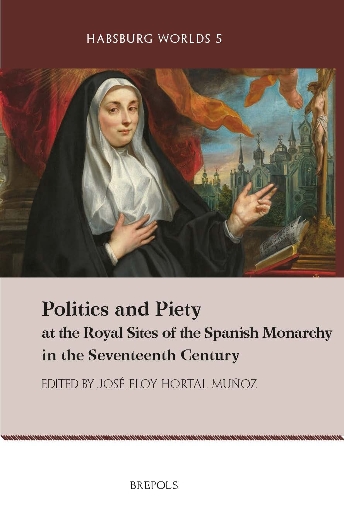
Politics and Piety at the Royal Sites of the Spanish Monarchy in the Seventeenth Century
show More to view fulltext, buy and share links for:Politics and Piety at the Royal Sites of the Spanish Monarchy in the Seventeenth Century show Less to hide fulltext, buy and share links for: Politics and Piety at the Royal Sites of the Spanish Monarchy in the Seventeenth CenturyInstitutions under royal control included not only the king’s royal residences and the royal chapels attached to them, but also magnificent convent-palaces and individual monasteries belonging to specific religious orders with close affiliations to the Spanish Crown. These Spanish Royal Sites, a diverse global network that helped to shape the Spanish Monarchy politically and socially in the seventeenth century, extended across the different kingdoms of the Iberian Peninsula and beyond to other territories in Europe, America and Asia under Spanish rule. The religious practices that occurred there were an essential aspect of studying the justification of power, the pre-eminence of (ecclesiastical and temporal) institutions and, in the case of the Spanish Monarchy, its relations with the Holy See.
This volume brings together scholars from various humanities disciplines, opening up novel avenues of research for studying the organization of royal institutions in the different kingdoms of the Habsburg Spanish Monarchy, especially in questions related to religion and royal piety. Particular attention is paid to the under-researched area of Royal Sites in Catalonia, Valencia, Portugal, Sardinia and the Viceroyalty of Peru.
-
-
-
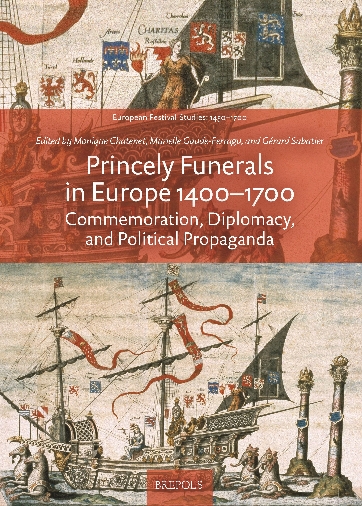
Princely Funerals in Europe 1400–1700
show More to view fulltext, buy and share links for:Princely Funerals in Europe 1400–1700 show Less to hide fulltext, buy and share links for: Princely Funerals in Europe 1400–1700Funerals were among the most extravagant princely ceremonies in Europe. At the end of the Middle Ages, they were grandiose affairs, carefully recorded, bringing together the emotions of both Court and People. The Renaissance heightened their effect, adding surprising elements borrowed from an Antiquity which was largely re-invented. The seventeenth century introduced ephemeral displays, elaborately constructed castrum doloris, dressed up with lavish facades and interior designs which transformed these sanctuaries into theatrical funeral pyres.
Historians, anthropologists, and political scientists have long been interested in this subject, as can be seen from Ralph Giesey's celebrated work Le Roi est mort. Art historians have been attracted to the surviving decorations of tombs and funerary chapels. Yet historians of spectacle and of its ephemera have, hitherto, somewhat neglected a topic which is - nonetheless - at the heart of their concerns: with their elaborate settings, their costumes and decors, princely funerals challenge theatre and opera.
It is within this context that experts from many disciplines attempt to trace the evolution of funeral ceremonies, which were much less static than is generally believed; to expose the gifts of the masters of these solemn occasions (and, indeed, of their predecessors, the heralds) who constantly devised subtle ways of capturing the attention of spectators and moving their emotions. These essays have tried to cover not only a wide time spectrum but also to reveal the variety and range of such ceremonies devised in diverse European Courts as well as unravelling the innovations which underlay fashions which had multiple international repercussions.
Featuring contributions by: Monique Chatenet, Murielle Gaude-Ferragu, Gérard Sabatier, Agostino Paracivini_Bagliani, Alain Marchandisse, Joël Burden, Mickaël Boytsov, Maria Nadia Covini, Eva Pibiri, Marie-Madeleine Fontaine, Giovanni Ricci, Gérard Sabatier, Maria Adelaida Allo Manero, Naïma Ghermani, Birgitte B. Johannsen.
-