


BOB2021MIOT

Collection Contents
26 results
-
-
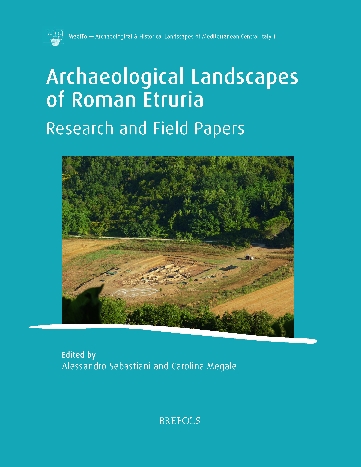
Archaeological Landscapes of Roman Etruria
show More to view fulltext, buy and share links for:Archaeological Landscapes of Roman Etruria show Less to hide fulltext, buy and share links for: Archaeological Landscapes of Roman EtruriaThis volume, the first in a new series dedicated to the archaeological and historical landscapes of central Mediterranean Italy, aims to offer a fresh and dynamic new approach to our understanding of central-southern maritime Tuscany during the Roman period. Drawing on research that was initially presented at the first International Mediterranean Tuscan Conference (MediTo) held in Paganico (Grosseto, Italy) in June 2018, and supported by invited papers from other experts in the field, this collection of essays offers the most up-to-date research into Roman and Late Antique landscapes within Tuscany and its broader Mediterranean context, as well as the political, economic, and social networks that developed in this area during the Classical Period. Ultimately, what emerges from this in-depth study of river valleys, urban centres, and coastal settlements is an understanding of a dynamic Roman territory of cities and villages, villas and sanctuaries, minor sites, and manufacturing districts in which the local population fought to establish and maintain connections with the wider Mediterranean.
-
-
-
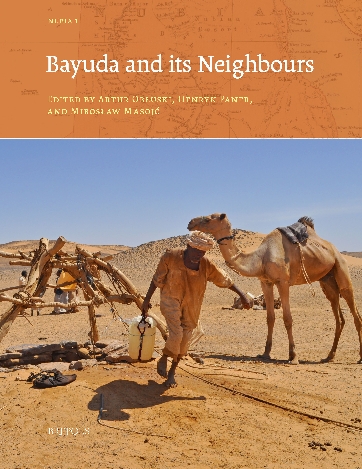
Bayuda and its Neighbours
show More to view fulltext, buy and share links for:Bayuda and its Neighbours show Less to hide fulltext, buy and share links for: Bayuda and its NeighboursThe Bayuda, although an arid desert located in modern-day Sudan, has nonetheless been inhabited, farmed, worshipped in, and fought over by humans from the Palaeolithic onwards. Yet despite the longevity of its human occupation, the region has only in recent years become the focus of more intensive scholarly research. This volume, the first in a series dedicated to exploring the archaeology and history of Northeast Africa, aims to build on this trend by drawing together the very latest archaeological research and data, and shedding light on how the Bayuda Desert and its environs were transformed into a cultural landscape. The contributions gathered here introduce, examine, and (re)assess a number of important issues, many of which are new in the archaeology of Nubia, as well as considering them against a broader comparative background. From climate change over the past millennia - and its far-reaching consequences in the present - through to an examination of the cultural influences of the Kingdom of Kerma, and from analysis of funeral rites through to interpretations of rock art, forgotten trade routes, and the commerce in cattle and slaves, this insightful volume offers a wealth of new information into the history of ancient Nubia.
-
-
-
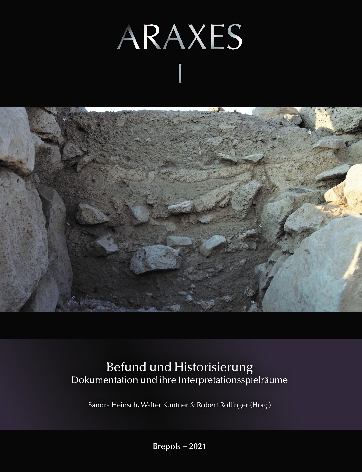
Befund und Historisierung
show More to view fulltext, buy and share links for:Befund und Historisierung show Less to hide fulltext, buy and share links for: Befund und HistorisierungArchaeological periodization schemes of material culture development in Northern Mesopotamia from 7th to 5th centuries bce traditionally refer to the sequence of dynasties. In particular, they highlight historical events related to distinguished members of the royal houses of the Sargonids, Urartians, Medes, Teispids, and Achaemenids. However, whereas the repercussions these Iron Age empires had on the history of the Near East are undeniable, the impact they had on the material culture and its development is not always equally tangible in the archaeological findings. The latter are not infrequently characterized by continuity rather than by incisive changes, as recent studies and re-evaluations of key sites in Syria, Iraq, Iran and Armenia show. This publication uses case studies to address problems that arises when the archaeological (relative concept) and historical (absolute concept) methodology use different intrinsic values of time to reconstruct history and to understand cultural material development.
-
-
-
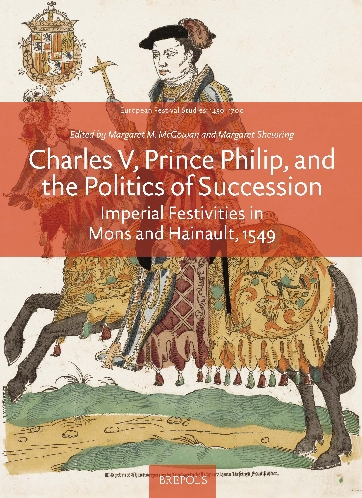
Charles V, Prince Philip, and the Politics of Succession
show More to view fulltext, buy and share links for:Charles V, Prince Philip, and the Politics of Succession show Less to hide fulltext, buy and share links for: Charles V, Prince Philip, and the Politics of SuccessionThis book is based on an international conference held in the capital of Hainault to celebrate the city of Mons as European Capital of Culture (2015). For the first time, through a range of interdisciplinary studies, the magnificent festivals created to honour Prince Philip of Spain as he journeyed across Europe to receive his sovereignty of the Low Countries are brought to life. The splendour of entries in the cities of Northern Italy (such as Genoa and Milan) was challenged by the civic allegories of triumph displayed throughout the Low Countries in Ghent, Antwerp, and Amsterdam. Outpacing all that magnificence were the entertainments prepared by Mary of Hungary at Binche: triumphal arches, martial feats of arms, balls, masquerades, and castle-stormings entertained Emperor Charles V and his son Prince Philip.The essays in this volume reconstitute the political and social context of these extraordinary celebrations and focus on the purpose and role of festival in the changing political strategies of Charles V. They are illustrated with a total of 36 b&w and 36 colour images.Contributors: Sydney Anglo, Francesca Bortoletti, Stijn Bussels, Tobias Capwell, José Eloy Hortal Muñoz, Félix Labrador Arroyo, Margaret M. McGowan, R. L. M. Morris, Jessie Park, Yves Pauwels, M. J. Rodríguez-Salgado, Margaret Shewring, Hugo Soly, Lisa Wiersma.
-
-
-
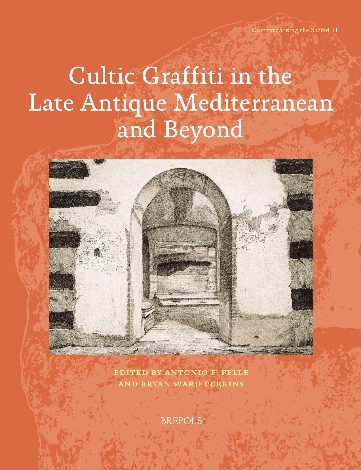
Cultic Graffiti in the Late Antique Mediterranean and Beyond
show More to view fulltext, buy and share links for:Cultic Graffiti in the Late Antique Mediterranean and Beyond show Less to hide fulltext, buy and share links for: Cultic Graffiti in the Late Antique Mediterranean and BeyondGraffiti, scratched or drawn on the walls of religious shrines, provide unique unmediated evidence of how ordinary men and women, many of them pilgrims, invoked and sought the help of God and the saints in Late Antiquity. The papers in this volume document and discuss cultic graffiti across the entire late antique Mediterranean, and into Nubia and Arabia. The principal focus is the Christian world, but there are also papers that look back to pre-Christian practice, and into the world of early Islam. Presenting evidence that is often unfamiliar, this is an important volume for anyone interested in the History and Archaeology of Late Antiquity. In examining cultic practice, we are almost always compelled to view the actions of devotees through texts written by the ecclesiastical elite, often with a clear hagiographical agenda in mind - cultic graffiti are evidence produced by the protagonists themsleves.
-
-
-
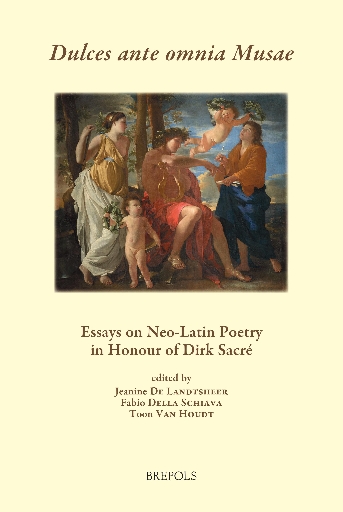
Dulces ante omnia Musae
show More to view fulltext, buy and share links for:Dulces ante omnia Musae show Less to hide fulltext, buy and share links for: Dulces ante omnia MusaeDulces ante omnia Musae. Essays on Neo-Latin Poetry in Honour of Dirk Sacré is the very first collection of articles ever to be published about the fascinating phenomenon of Neo-Latin verse composition from its very beginning in Italian Renaissance humanism until its modest but important revival in the late nineteenth and early twentieth centuries - and even beyond. The editors have attracted both young and promising scholars and internationally recognized authorities to write specific case studies which will shed light on the rich diversity of scholarly approaches currently prevailing in the field of Neo-Latin poetical studies, as well as highlight both continuities and discontinuities in the writing and publishing of Latin verses from the fifteenth until the twenty-first centuries.
This volume is dedicated to Dirk Sacré, professor emeritus of Neo-Latin at KU Leuven who, apart from writing numerous articles on Neo-Latin poets from Italy and the Low Countries in early modern times, has contributed more than anyone else in exploring the vast territory, until recently largely neglected and uncharted, of modern and late modern Latin verse compositions.
-
-
-
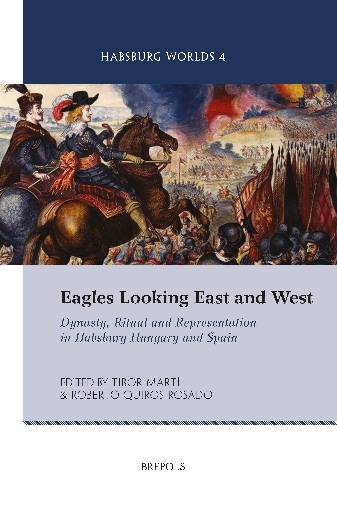
Eagles Looking East and West
show More to view fulltext, buy and share links for:Eagles Looking East and West show Less to hide fulltext, buy and share links for: Eagles Looking East and WestSymbolised by the ‘double-headed eagle’ looking East and West, the Habsburg dynasty constituted a universal power structure in the early modern era. The dynasty’s Spanish and Austrian branches created a code of shared identity, one which also encompassed their religious piety and their ability to pitch the Austriacum Imperium against multiple enemies worldwide.
The present volume investigates the construction of the dynasty’s political image in two spheres, the Kingdom of Hungary and the Spanish monarchy, between the sixteenth and eighteenth centuries. Fifteen Hungarian, Czech and Spanish specialists offer comparative perspectives on the Habsburg era during this convulsive period of European history, addressing topics including diplomatic links, dynastic ritual and representation, and the Order of the Golden Fleece. In covering a wide range of themes, their contributions aim towards a better understanding of the emergence of new political attitudes in the Western world prior to the Enlightenment.
Contributors to the volume include Cristina Bravo Lozano, Václav Bůžek, Nóra G. Etényi, Alfredo Floristán Imízcoz, Rubén González Cuerva, Borbála Gulyás, Fanni Hende, János Kalmár, Zsolt Kökényesi, Zoltán Korpás, Pavel Marek, Tibor Monostori, and Géza Pálffy.
-
-
-
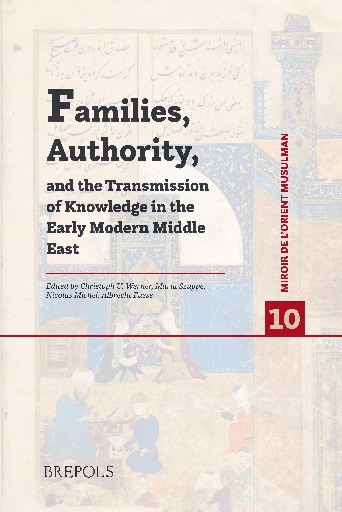
Families, Authority, and the Transmission of Knowledge in the Early Modern Middle East
show More to view fulltext, buy and share links for:Families, Authority, and the Transmission of Knowledge in the Early Modern Middle East show Less to hide fulltext, buy and share links for: Families, Authority, and the Transmission of Knowledge in the Early Modern Middle EastThis volume brings together innovative contributions on the history and nature of families in the early modern Middle East, covering Central Asia, Iran, Ottoman Turkey and the Arab World from the fifteenth to the seventeenth century and beyond. It argues the importance of connecting the key concept of family in its widest possible meaning, whether descent group, lineage, household or dynasty, with the notion of transmission of knowledge, authority, status and power, and develops this idea through a pluridisciplinary and cross-regional approach. Based on primary sources in Arabic, Persian, and Turkish as well as art and material culture, the individual articles detail processes and dynamics of transmission, thus initiating a comparative dialogue.
-
-
-
Glass, Lamps, and Jerash Bowls
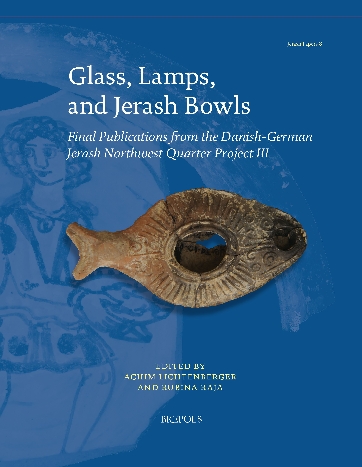
show More to view fulltext, buy and share links for:Glass, Lamps, and Jerash Bowls show Less to hide fulltext, buy and share links for: Glass, Lamps, and Jerash BowlsThe Decapolis city of Jerash has long attracted attention from travellers and scholars, due both to the longevity of the site and the remarkable finds uncovered during successive phases of excavation that have taken place from 1902 onwards. Between 2011 and 2016, a Danish-German team, led by the universities of Aarhus and Münster, focused their attention on the Northwest Quarter of Jerash - the highest point within the walled city - and this volume is the third in a series of books presenting the team’s final results.
The contributions gathered together in this volume provide an in-depth analysis of the glass finds, the lamps, and the iconography of the Jerash bowls discovered in the Northwest Quarter during the excavations. Together, these chapters provide both general overviews and more detailed insights into these important groups of material evidence, and also examine their stratigraphic contextualization and chronological spread across the centuries.
-
-
-
La "sacerdotalisation" dans les premiers écrits mystiques juifs et chrétiens
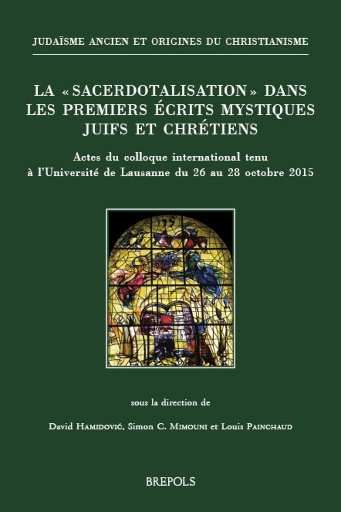
show More to view fulltext, buy and share links for:La "sacerdotalisation" dans les premiers écrits mystiques juifs et chrétiens show Less to hide fulltext, buy and share links for: La "sacerdotalisation" dans les premiers écrits mystiques juifs et chrétiensLes prêtres et les lévites restent influents plusieurs siècles après la chute du Temple de Jérusalem en 70 de l’ère chrétienne. Ils tentent même une ou plusieurs reconfigurations de leurs fonctions dans la société. En même temps, les Sages ou rabbins essaient de capter leurs prérogatives ancestrales. Un double mouvement de sacerdotalisation et de rabbinisation est alors perceptible dans les textes rabbiniques. Qu’en est-il des premiers textes mystiques juifs dits Hekhalot ? Une telle dialectique de rejet et d’intégration est-elle perceptible ? Par comparaison, d’autres mouvements appelés plus tard chrétiens, dont certains gnostiques et d’autres groupes dans le monde perse, ont eu la même tendance.
-
-
-
La source sans fin
show More to view fulltext, buy and share links for:La source sans fin show Less to hide fulltext, buy and share links for: La source sans fin« Il est impossible d’épuiser jamais le sens des Écritures : c’est une source qui n’a pas de fin. », écrit Jean Chrysostome (v. 350 - 407). Auteur du plus vaste corpus exégétique de l’Antiquité grecque, ce théologien semble intarissable lui aussi. Mais est-il seulement exégète, ou bien pasteur avant tout ? Qu’est-ce que ses œuvres révèlent des Écritures et de leur utilisation chez celui qui a influencé après lui tant de lecteurs, à Byzance et ailleurs ?
Neuf études sont ici réunies pour interroger le corpus chrysostomien et sa terminologie exégétique (Jean-Noël Guinot), sa position sur le rôle de la femme d’après la Genèse et Paul (Monique Alexandre), son utilisation parfois contrastée de la figure de Caïn (Pierre Molinié), sa condamnation de la trompette juive (Guilhem Girard), son regard sur des paraboles et passages de Luc (Laurence Brottier), son utilisation apologétique de l’épisode de Paul à Athènes (Marie-Ève Geiger), son texte biblique, qui s’avère loin d’être « invariablement byzantin » (Peter Montoro), son art du « tissage » scripturaire dans ses homélies (Jérôme Drouet), ou ses utilisations de l’écrit et des Écritures dans ses exégèses suivies (Guillaume Bady).
Ces études sur l’œuvre de Jean Chrysostome renouvellent en profondeur la connaissance de l’œuvre exégétique et homilétique de ce grand lecteur et interprète des Écritures.
-
-
-
Les mystères au ii e siècle de notre ère : un tournant
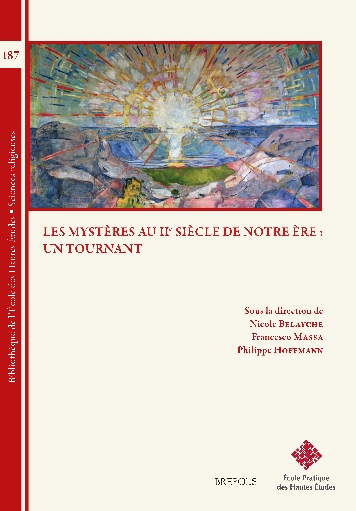
show More to view fulltext, buy and share links for:Les mystères au ii e siècle de notre ère : un tournant show Less to hide fulltext, buy and share links for: Les mystères au ii e siècle de notre ère : un tournantCet ouvrage enquête sur ce que nous proposons d’appeler une « mystérisation » des discours et des pratiques au IIe siècle de notre ère dans l’empire romain - c’est-à-dire une multiplication, diversification et intensification des références aux (cultes à) « mystères » dans des contextes variés mais cohérents, et dans les différents groupes religieux présents dans l’empire (païens, juifs et chrétiens). Ce « tournant » mystérique affecte non seulement des pratiques rituelles et les discours qui les entourent, mais, au-delà, de nombreux domaines du savoir qui, comme Platon en son temps, se mettent à mobiliser le vocabulaire et l’imagerie des mystères. L’enquête se déploie donc à la fois sur le terrain des rituels « mystériques » - dans des cultes qui se diffusent comme ceux d’Isis ou de Mater Magna, parallèlement à la continuation des mystères grecs (à Éleusis et Samothrace) -, et sur celui de la construction des savoirs de tous ordres qui s’élabore alors (médecine, philosophie, rhétorique, littérature), et où se banalise l’emploi d’un lexique mystérique. Elle réunit donc des collègues spécialistes de champs disciplinaires variés - historiens, historiens des religions, archéologues, philologues, et bien sûr philosophes -, et de systèmes religieux différents - polythéisme, judaïsme et christianisme.
-
-
-
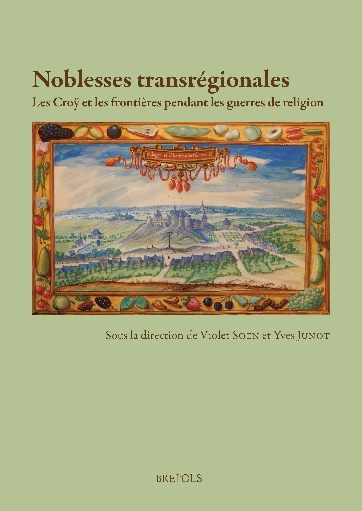
Noblesses transrégionales
show More to view fulltext, buy and share links for:Noblesses transrégionales show Less to hide fulltext, buy and share links for: Noblesses transrégionalesLe caractère pan-européen des guerres de religion suscite des questions sur l’incidence des frontières et le rôle des acteurs qui les franchissent ou les transgressent. Cet ouvrage retrace les parcours transrégionaux et confessionnels des Croÿ, une puissante maison nobiliaire établie de part et d’autre des frontières séparant la France et les Pays-Bas habsbourgeois, à travers la reconstitution des engagements politiques et religieux de ses membres (Porcien, Aarschot, Chimay, Havré, et leurs épouses ou mères Amboise, Lorraine, Clèves, Brimeu, Dommartin).
Ce volume montre comment ces noblesses transrégionales bâtissent leur influence à l’ombre des rivalités internationales entre rois de France et d’Espagne, empereurs et ducs de Lorraine, et du choix de la religion au temps des Réformes; comment elles assemblent stratégiquement leurs domaines, patronnent une clientèle locale et se font reconnaître comme souverains de micro-principautés; et comment elles mobilisent ce capital politique en rivalisant avec d’autres lignages catholiques (Guise, Clèves) ou protestants (Condé, Bouillon), en désobéissant à leur prince ou en négociant leur réconciliation avec lui.
Ont contribué à ce volume Anne Mieke Backer, Aurélien Behr, Olivia Carpi, Nette Claeys, Gustaaf Janssens, Alain Joblin, Odile Jurbert, Tomaso Pascucci, Sanne Maekelberg, Pieter Martens, Jonathan Spangler et Sylvia van Zanen.
-
-
-
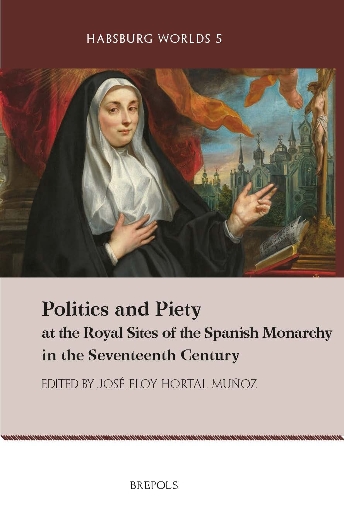
Politics and Piety at the Royal Sites of the Spanish Monarchy in the Seventeenth Century
show More to view fulltext, buy and share links for:Politics and Piety at the Royal Sites of the Spanish Monarchy in the Seventeenth Century show Less to hide fulltext, buy and share links for: Politics and Piety at the Royal Sites of the Spanish Monarchy in the Seventeenth CenturyInstitutions under royal control included not only the king’s royal residences and the royal chapels attached to them, but also magnificent convent-palaces and individual monasteries belonging to specific religious orders with close affiliations to the Spanish Crown. These Spanish Royal Sites, a diverse global network that helped to shape the Spanish Monarchy politically and socially in the seventeenth century, extended across the different kingdoms of the Iberian Peninsula and beyond to other territories in Europe, America and Asia under Spanish rule. The religious practices that occurred there were an essential aspect of studying the justification of power, the pre-eminence of (ecclesiastical and temporal) institutions and, in the case of the Spanish Monarchy, its relations with the Holy See.
This volume brings together scholars from various humanities disciplines, opening up novel avenues of research for studying the organization of royal institutions in the different kingdoms of the Habsburg Spanish Monarchy, especially in questions related to religion and royal piety. Particular attention is paid to the under-researched area of Royal Sites in Catalonia, Valencia, Portugal, Sardinia and the Viceroyalty of Peru.
-
-
-
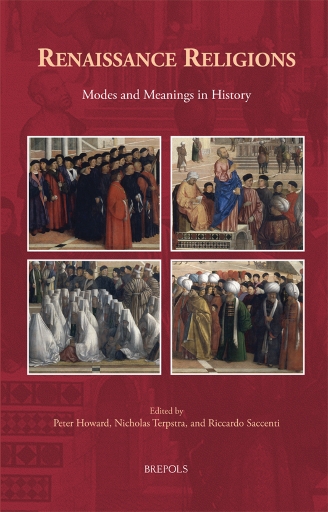
Renaissance Religions
show More to view fulltext, buy and share links for:Renaissance Religions show Less to hide fulltext, buy and share links for: Renaissance ReligionsSeveral decades of cultural and inter-disciplinary scholarship have yielded, and continue to yield, new insights into the diversity of religious experience in Europe from the fifteenth through the seventeenth centuries. Revisionist approaches to humanism and humanists have led to a re-evaluation of the framing of belief; the boundaries between Christianity, Judaism, and Islam are seen to be more fluid and porous; a keen interest in devotion and materiality has lent new voice to 'subaltern' elements in society; sermon studies has emerged as a distinct discipline and a preacher's omissions are now understood to be often more telling than what was said; under the influence of the 'spatial turn' art and architectural history is generating new understandings of how belief and devotion translated into material culture; the emphasis in defining early modern Catholic culture and identity has moved from emphasizing reactions to Protestantism towards exploring roots and forms in fifteenth century reform movements; globalization, mass migration and issues surrounding social inclusion have re-positioned our understanding of reform in the late medieval and early modern period. The essays in this volume reflect these historiographical and methodological developments and are organized according to four themes: Negotiating Boundaries, Modelling Spirituality, Sense and Emotion, and Space and Form. This organization underscores how analysis of religious life clarifies the questions that are at the core of Renaissance studies today.
-
-
-
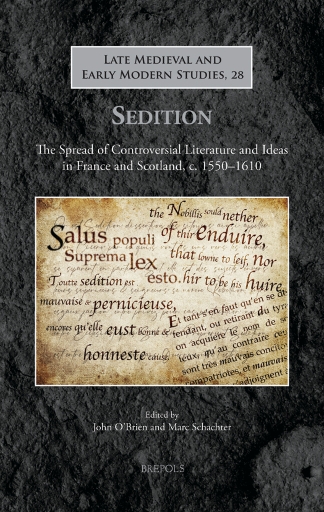
Sedition
show More to view fulltext, buy and share links for:Sedition show Less to hide fulltext, buy and share links for: SeditionThis interdisciplinary collection examines the notion of sedition in the period of the French Wars of Religion (1560-1600) and focuses not only on France itself, but also on Scotland during the reign of the French-born Mary Queen of Scots. Composed of eleven chapters written by an international team of experts, this volume concentrates on the political aspects of sedition rather than religious heresy, and covers writings and publications in a wide range of fields: politics, history, law, literature, and gender. A complementary feature of this collection is the spectrum of writings studied; they include edicts and treatises, pamphlets, broadsides, legal documents, dialogues, and satirical prose and poetry. Several chapters also address visual representations of sedition.
An Introduction and a Conclusion provide synthetic analyses of the material studied in the individual chapters. This is a collection which will appeal to readers with interests in the history of political ideas and thought, the comparative study of monarchical government, and concepts of tyranny and resistance, discord, rebellion, and revolt.
-
-
-
Segetis certa fides meae
show More to view fulltext, buy and share links for:Segetis certa fides meae show Less to hide fulltext, buy and share links for: Segetis certa fides meaeLa variété des contributions réunies dans ce volume reflète la diversité des centres d’intérêt de Gérard Freyburger, auquel des spécialistes de différents domaines des sciences de l’Antiquité ont tenu à rendre hommage. Prolongeant l’héritage de Robert Schilling, il a longtemps dirigé l’Institut de Latin de l’Université de Strasbourg et co-dirigé avec Laurent Pernot le Centre d’Analyse des Rhétoriques Religieuses de l’Antiquité (CARRA). Convaincu de l’importance d’une approche pluridisciplinaire des sciences de l’Antiquité, il a porté des projets collectifs et dirigé de nombreuses thèses portant sur la religion romaine, la philologie latine et la réception de la culture païenne dans l’Antiquité tardive et à la Renaissance.
Les contributions de ce volume sont regroupées en cinq thématiques qui illustrent ses principaux domaines de recherche. Il est ainsi question de religion romaine et de magie, de rhétorique et de philosophie, du modèle virgilien et de sa postérité, des relations entre auteurs païens et chrétiens, de perspectives comparatistes et d’Antiquité rémanente. Le recueil témoigne de la fécondité d’approches croisées et fait dialoguer l’histoire des religions, la philologie grecque et latine, l’histoire et l’archéologie ainsi que les méthodes comparatistes pour rendre hommage à celui qui s’est engagé, durant toute sa carrière, pour promouvoir les recherches interdisciplinaires sur le monde romain antique.
-
-
-
Authority Revisited: Towards Thomas More and Erasmus in 1516
show More to view fulltext, buy and share links for:Authority Revisited: Towards Thomas More and Erasmus in 1516 show Less to hide fulltext, buy and share links for: Authority Revisited: Towards Thomas More and Erasmus in 1516In the year 1516, two crucial texts for the cultural history of the West saw the light: Desiderius Erasmus’ Nouum Instrumentum and Thomas More’s Utopia. Both of these works dealt freely with authoritative sources of Western civilization and opened new pathways of thought on the eve of far-reaching religious and political changes.
This book volume deals with aspects of the content, reception and influence of Nouum Instrumentum and Utopia in the (Early) Modern Era, while also focusing upon the sources they used and critically adopted. The overall approach is that both texts have contributed dramatically to the rise of (early) modern Western thought and have influenced the next generations in their literary, philosophical and theological works. This volume, multidisciplinary in scope, brings together contributions from the fields of bible exegesis, theology, philosophy, philology and history.
-
-
-

Benedict XV: A Pope in the World of the 'Useless Slaughter' (1914-1918)
show More to view fulltext, buy and share links for:Benedict XV: A Pope in the World of the 'Useless Slaughter' (1914-1918) show Less to hide fulltext, buy and share links for: Benedict XV: A Pope in the World of the 'Useless Slaughter' (1914-1918)On August 1, 1917 - three years after the outbreak of World War 1 - pope Benedict XV signed his famous peace note, urging the governments of the belligerent Powers to seek a diplomatic solution to their disputes and stop the "useless slaughter". In order to commemorate the event and to define the place of this "forgotten pope" in twentieth-century history, on November 3-5, 2016, the Fondazione per le Scienze Religiose Giovanni XXIII (Fscire) hosted an international conference, entitled "Benedict XV in the world of the useless slaughter", in which more than a hundred historians from all over the world participated. The aim of the initiative, supported by the Historical and Scientific Committee for Italy’s National Anniversaries, is to shed light on the key issues of this pontificate, from Giacomo Della Chiesa’s education in the theological seminary in Genua to his heritage and memory all along the twentieth century. The volume resulting from this conference provides a comprehensive and systematic reference work about a key figure in Church history that has all too often been neglected.
-
-
-
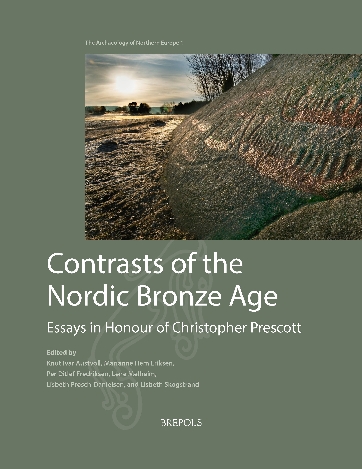
Contrasts of the Nordic Bronze Age
show More to view fulltext, buy and share links for:Contrasts of the Nordic Bronze Age show Less to hide fulltext, buy and share links for: Contrasts of the Nordic Bronze AgeThe Bronze Age in Northern Europe was a place of diversity and contrast, an era that saw movements and changes not just of peoples, but of cultures, beliefs, and socio-political systems, and that led to the forging of ontological ideas materialized in landscapes, bodies, and technologies. Drawing on a range of materials and places, the innovative contributions gathered here in this volume explore the disparate facets of Bronze Age society across the Nordic region through the key themes of time and trajectory, rituals and everyday life, and encounters and identities. The contributions explore how and why society evolved over time, from the changing nature of sea travel to new technologies in house building, and from advances in lithic production to evolving burial practices and beliefs in the afterlife. This edited collection honours the ground-breaking research of Professor Christopher Prescott, an outstanding figure in the study of the Bronze Age north, and it takes as its inspiration the diversity, interdisciplinarity, and vitality of his own research in order to make a major new contribution to the field, and to shed new light on a Bronze Age full of contrasts and connections.
-
-
-
Inequality in rural Europe
show More to view fulltext, buy and share links for:Inequality in rural Europe show Less to hide fulltext, buy and share links for: Inequality in rural EuropeStudies dealing with inequality in European societies have multiplied in recent years. It has now become clear that pressing questions about the historical trends showing both income and wealth inequality as well as the factors leading to an increase or drop of inequality over time, could be answered only by taking into account preindustrial times. Therefore, this book deals with inequality in the long-run, covering and comparing a very long time span, starting its investigations in the later middle ages and ending before the nineteenth century, the period that marks the beginning of most available studies.
Hitherto, urban distribution of income and wealth is much better known than rural inequality. This book intends to reduce this gap in knowledge, bringing rural inequality to the fore of research. Since at least until the nineteenth century the majority of people were country men, looking at the rural areas is crucial when trying to identify the underlying causes of inequality trends in the long run of history.
The book consists of nine original papers and deals with a variety of topics about inequality covering no less than eight different countries in Europe. The majority of the studies published in this book are the result of teamwork between European universities where a range of research centres are currently exploring different aspects of income and wealth inequality in preindustrial times.
-
-
-
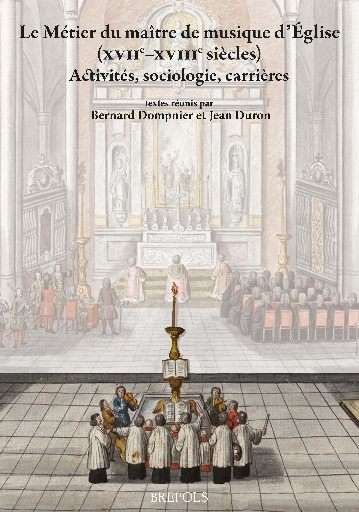
Le Métier du maître de musique d’Église (xvii e-xviii e siècles)
show More to view fulltext, buy and share links for:Le Métier du maître de musique d’Église (xvii e-xviii e siècles) show Less to hide fulltext, buy and share links for: Le Métier du maître de musique d’Église (xvii e-xviii e siècles)Loin d’un désert musical, la France de l’époque moderne est riche de musique dans ses villes grandes et moyennes. Les institutions ecclésiastiques, cathédrales, collégiales voire petites églises, la Chapelle royale aussi, financent chanteurs et instrumentistes, mais aussi une maîtrise, école destinée à former de futurs artistes musiciens sous la direction d’un maître de musique. C’est à ce personnage, à ses différentes fonctions, qu’est dédié ce livre. À la fois pédagogue, compositeur, chanteur et/ou instrumentiste, théoricien, il est chargé de tout ce qui concerne la bonne exécution de la musique durant les offices, conduisant le chœur d’enfants, les chantres du bas chœur, les instrumentistes (ceux de l’église, de la ville ou ceux de passage). Il participe à la rédaction des livres de plain chant, compose, copie messes et motets polyphoniques, rend des comptes au chapitre dont il dépend. Certains maîtres sont sollicités hors l‘institution pour des concerts de musique sacrée ou profane, parfois même au théâtre, plus souvent dans les établissements religieux d’alentour. La diversité des carrières étonne, certains maîtres demeurant leur vie durant dans une même institution comme Poitevin, d’autres optant comme Gantez pour de véritables périples, rarement au-delà des frontières toutefois ; d’autres, comme Campra, préfèrent au lutrin les lumières de la scène de l’opéra ; quelques-uns enfin cherchent à laisser une trace de leur œuvre en publiant messes et motets. Toutefois, la spécificité française d’un tel métier ne se comprend que par comparaison avec les réalités des pays voisins, tels l’Italie ou les Pays-Bas espagnols.
-
-
-
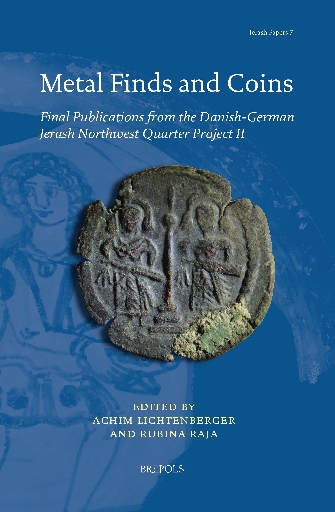
Metal Finds and Coins
show More to view fulltext, buy and share links for:Metal Finds and Coins show Less to hide fulltext, buy and share links for: Metal Finds and CoinsThe Decapolis city of Jerash has long attracted attention from both travellers and scholars, due both to the longevity of the site, and the remarkable finds uncovered during successive phases of excavation that have taken place from 1902 onwards. Between 2011 and 2016, a Danish-German team, led by the universities of Aarhus and Münster, focused their attention on the Northwest Quarter of Jerash - the highest point within the walled city - and this volume is the second in a series of books presenting the team’s final results.
This volume offers an in-depth analysis of the coins and metal remains found in Jerash during the excavations. The contributions gathered here cover the small metal finds from the Northwest Quarter, as well as examining Greek, Roman, Byzantine, and Islamic coins.
-
-
-
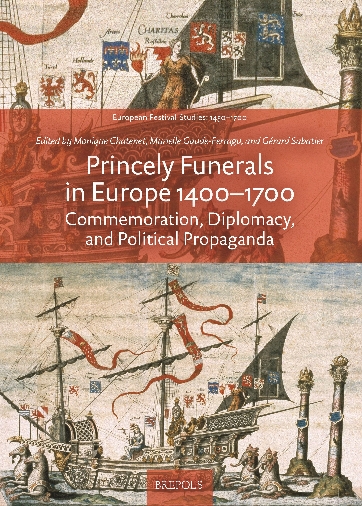
Princely Funerals in Europe 1400–1700
show More to view fulltext, buy and share links for:Princely Funerals in Europe 1400–1700 show Less to hide fulltext, buy and share links for: Princely Funerals in Europe 1400–1700Funerals were among the most extravagant princely ceremonies in Europe. At the end of the Middle Ages, they were grandiose affairs, carefully recorded, bringing together the emotions of both Court and People. The Renaissance heightened their effect, adding surprising elements borrowed from an Antiquity which was largely re-invented. The seventeenth century introduced ephemeral displays, elaborately constructed castrum doloris, dressed up with lavish facades and interior designs which transformed these sanctuaries into theatrical funeral pyres.
Historians, anthropologists, and political scientists have long been interested in this subject, as can be seen from Ralph Giesey's celebrated work Le Roi est mort. Art historians have been attracted to the surviving decorations of tombs and funerary chapels. Yet historians of spectacle and of its ephemera have, hitherto, somewhat neglected a topic which is - nonetheless - at the heart of their concerns: with their elaborate settings, their costumes and decors, princely funerals challenge theatre and opera.
It is within this context that experts from many disciplines attempt to trace the evolution of funeral ceremonies, which were much less static than is generally believed; to expose the gifts of the masters of these solemn occasions (and, indeed, of their predecessors, the heralds) who constantly devised subtle ways of capturing the attention of spectators and moving their emotions. These essays have tried to cover not only a wide time spectrum but also to reveal the variety and range of such ceremonies devised in diverse European Courts as well as unravelling the innovations which underlay fashions which had multiple international repercussions.
Featuring contributions by: Monique Chatenet, Murielle Gaude-Ferragu, Gérard Sabatier, Agostino Paracivini_Bagliani, Alain Marchandisse, Joël Burden, Mickaël Boytsov, Maria Nadia Covini, Eva Pibiri, Marie-Madeleine Fontaine, Giovanni Ricci, Gérard Sabatier, Maria Adelaida Allo Manero, Naïma Ghermani, Birgitte B. Johannsen.
-
-
-

Raison et quête de la sagesse
show More to view fulltext, buy and share links for:Raison et quête de la sagesse show Less to hide fulltext, buy and share links for: Raison et quête de la sagesseUne vingtaine d’amis, de collègues, d’anciens et actuels étudiants de Christian Jambet se sont réunis ici pour présenter leurs recherches sur les nombreux domaines de compétence de celui-ci : la philosophie en général et la philosophie islamique en particulier, la mystique musulmane, la littérature persane, les aspects historiques, intellectuels et spirituels des deux principales branches du shi’isme, l’imamisme duodécimain et l’ismaélisme. Ils rendent ainsi hommage à l’homme et à son œuvre considérable qui ont marqué, depuis plusieurs décennies, les études iraniennes et islamiques et d’une manière plus générale le paysage intellectuel français.
-
-
-

Religions et alimentation
show More to view fulltext, buy and share links for:Religions et alimentation show Less to hide fulltext, buy and share links for: Religions et alimentationS’alimenter est l’une des préoccupations essentielles des êtres vivants. Les êtres humains, cependant, ont très tôt donné au fait de se nourrir une signification qui dépasse l’exigence physiologique. La plupart des religions, ainsi, organisent le rapport au fait de manger, déterminent la valeur symbolique des différents aliments et définissent l’importance symbolique des différents moyens de préparer la nourriture. Elles définissent et régulent également la relation entre la nourriture et le divin.
Le présent ouvrage interroge, dans une perspective interdisciplinaire, la portée religieuse du rapport à la nourriture et décline la dimension sacrée des repas et de l’alimentation. Par des études de type diachronique et synchronique, il met en valeur des questions de fond à l'œuvre de l'Antiquité à nos jours et fait dialoguer les diverses méthodologies à l’œuvre dans l’étude du fait religieux (anthropologie, histoire, philosophie de la religion, sociologie, science des religions, théologie). Plusieurs contributions analysent les évolutions récentes en matière de rapport à l'alimentation et proposent des éclairages originaux sur le rapport au religieux hors des religions constituées.
-