


BOB2021MOME

Collection Contents
2 results
-
-
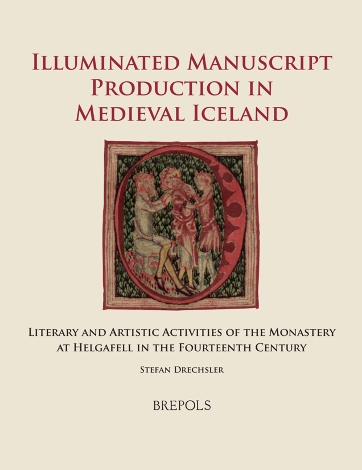
Illuminated Manuscript Production in Medieval Iceland
show More to view fulltext, buy and share links for:Illuminated Manuscript Production in Medieval Iceland show Less to hide fulltext, buy and share links for: Illuminated Manuscript Production in Medieval IcelandThis book examines a cultural revolution that took place in the Scandinavian artistic landscape during the medieval period. Within just one generation (c. 1340-1400), the Augustinian monastery of Helgafell became the most important centre of illuminated manuscript production in western Iceland. By conducting interdisciplinary research that combines methodologies and sources from the fields of Art History, Old Norse-Icelandic manuscript studies, codicology, and Scandinavian history, this book explores both the illuminated manuscripts produced at Helgafell and the cultural and historical setting of the manuscript production.
Equally, the book explores the broader European contexts of manuscript production at Helgafell, comparing the similar domestic artistic monuments and relevant historical evidence of Norwich and surrounding East Anglia in England, northern France, and the region between Bergen and Trondheim in western Norway. The book proposes that most of these workshops are related to ecclesiastical networks, as well as secular trade in the North Sea, which became an important economic factor to western Icelandic society in the fourteenth century. The book thereby contributes to a new and multidisciplinary area of research that studies not only one but several European cultures in relation to similar domestic artistic monuments and relevant historical evidence. It offers a detailed account of this cultural site in relation to its scribal and artistic connections with other ecclesiastical and secular scriptoria in the broader North Atlantic region.
-
-
-
Imperium et sacerdotium
show More to view fulltext, buy and share links for:Imperium et sacerdotium show Less to hide fulltext, buy and share links for: Imperium et sacerdotium«Manuel en Christ le Dieu fidèle basileus le porphyrogénète, empereur des romains, très pieux, vénérable à jamais, auguste.» Le règne de l’empereur Manuel Ier (1143-1180) est analysé à partir du principe de la pietas, terme à portée morale, canonique et juridique qui concerne la capacité du Basileus de légiférer de façon juste, au profit des intérêts de l’État. L’œuvre législative de Manuel Ier, que les juristes byzantins de l’époque considéraient comme une interprétation moderne de dispositions fondamentales du droit romain, eut comme objectif principal de renforcer l’image sacerdotale du Basileus qui avait été sécularisée durant la crise politique du xi e siècle. L’attachement de Manuel Ier aux lois civiles et à leur strict respect était lié à sa conception de la supériorité de l’État et du droit byzantin, expression de la volonté divine. L’insertion du droit canonique au droit public traduisait la nécessité de dépasser le dualisme étatique. L’intégration de l’Église dans ce programme valorisait ses responsabilités spirituelles vis-à-vis d’un Empereur qui concevait la gouvernance comme une responsabilité spirituelle. Besoins d’un État moderne et besoins spirituels de la société se conjuguent dans ce système harmonieux, spécifique à l’empire byzantin du xii e siècle.
-