


Brepols Online Books Medieval Miscellanea Collection 2022 - bob2022mime

Collection Contents
3 results
-
-
After Ovid
show More to view fulltext, buy and share links for:After Ovid show Less to hide fulltext, buy and share links for: After OvidThe 2000th anniversary of Ovid’s death, in 2017-2018, led to an upsurge in conferences and publications dedicated to the author’s work and afterlife. One of these is the present volume, resulting from the conference Dopo Ovidio. Aspetti della ricezione ovidiana fra letteratura e iconografia, which was held on 7-8 May 2019 at the Department of Human Sciences (DSU) of the University of L’Aquila, and which looked at various aspects of Ovid’s fortune, from a diachronic and interdisciplinary perspective. The contributions cover a period of about fourteen centuries, from late antiquity until the end of the eighteenth century, and range from late Latin to medieval literature, from humanistic production to modern English and Italian literature, and from linguistics to the figurative arts. All these studies contribute to a collective appraisal of the multifarious impact of Ovid’s works, and especially of the Metamorphoses, the latter’s treatment of myth having been a starting point for integrations, developments, (re)interpretations and representations, in isolation or included in an iconographic program.
-
-
-
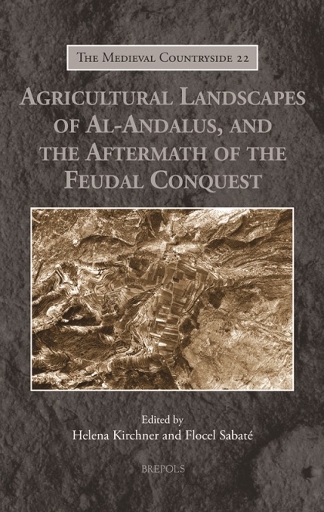
Agricultural Landscapes of Al-Andalus, and the Aftermath of the Feudal Conquest
show More to view fulltext, buy and share links for:Agricultural Landscapes of Al-Andalus, and the Aftermath of the Feudal Conquest show Less to hide fulltext, buy and share links for: Agricultural Landscapes of Al-Andalus, and the Aftermath of the Feudal ConquestThis volume presents recent archaeological research on the agriculture and society of al-Andalus during the Middle Ages, especially from the perspective of ‘hydraulic archaeology’ - an avenue of research developed by Spanish researchers which focuses on the analysis of irrigation systems created by Islamic colonists from the eighth century onwards. More recently, this research perspective has incorporated the analysis of other agricultural systems, such as dryland agriculture and pasturelands. All of these agricultural regimes are complementary in peasant-led subsistence agricultural systems. From a methodological perspective, this archaeological approach is highly innovative, and uses a wide range of techniques (aerial photography, cartographical analysis, field survey, archival research, and archaeological excavation) in order to outline the size and boundaries of cultivation and grazing areas, to define specific plots of land and the related road networks, and to identify other associated facilities, such as watermills.
In connection with these topics, several issues are discussed: the earmarking of rural or urban farming areas for irrigation, draining, or dryland agriculture; the process of construction and the subsequent evolution of these farming areas; the transformations undergone by these areas after the feudal conquest; and, finally, the identification of pasturelands and the analysis of the evidence concerning their management.
-
-
-
Alexander of Aphrodisias in the Middle Ages and the Renaissance
show More to view fulltext, buy and share links for:Alexander of Aphrodisias in the Middle Ages and the Renaissance show Less to hide fulltext, buy and share links for: Alexander of Aphrodisias in the Middle Ages and the RenaissanceThe greatest ancient interpreter of Aristotle, Alexander of Aphrodisias (fl. 200 AD) exerted a profound and enduring influence upon philosophy from Boethius until the modern era. Alexander’s interpretations laid the foundation for multiple philosophical views which were promoted as quintessentially Aristotelian by both Islamic and Latin thinkers throughout the Middle Ages. In the Renaissance, the University of Padua, a leading center of philosophical education and thought, established a scholarly tradition named “Alexandrinism” after him.
Paolo Accattino (1950-2015), a distinguished scholar of Alexander, made many noteworthy advancements to the field. With the aim of honoring Accattino’s memory, lifelong colleagues and associates P. Donini and L. Bertelli discuss his contributions. They are joined by a cohort of scholars (A. Bertolacci, M. Di Giovanni, J. Biard, A. Corbini, E. Rubino, L. Silvano, B. Bartocci, P.D. Omodeo, F. Iurlaro) who explore various key elements of Alexander’s legacy from Ibn Sīnā to Hugo de Groot. The volume presents new understandings concerning the reception of Alexander, offers new lines of inquiry, and opens potential avenues of research regarding his medieval and Renaissance afterlife.
-