


Brepols Online Books Medieval Miscellanea Collection 2022 - bob2022mime

Collection Contents
8 results
-
-
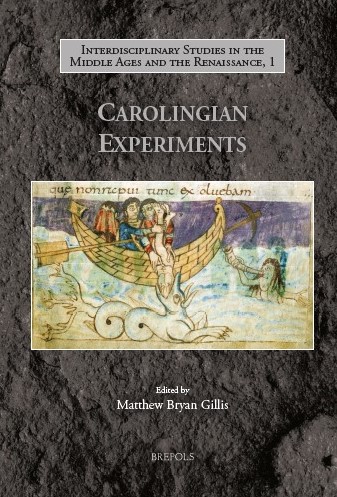
Carolingian Experiments
show More to view fulltext, buy and share links for:Carolingian Experiments show Less to hide fulltext, buy and share links for: Carolingian ExperimentsThis volume presents essays exploring how the Carolingians (ca. 700-ca. 900 CE) - a regime known especially for concerns over imperial power, order, and moral correction - fostered a remarkable era of experimentation in medieval Europe. The scholars featured here ask new questions and conduct their own methodological experiments to uncover some of the many ways that people innovated within the Carolingian world. To that end, numerous themes are covered in this volume: culture and society, family and politics, religion and spirituality, literature and historiography, law and hierarchy, epistemology and science. This array of scholarly experiments reveals some of the range and depth of Carolingian invention. Furthermore, the essays consider how Carolingian innovation can be found in places both more and less known today, employing novel approaches to unearth some unexpected, even uncanny phenomena. This volume consequently offers a defamiliarizing view of the Franks, unveiling them as a people whose seemingly straightforward imperialism and reform were effective precisely because they stimulated and nurtured potent, creative impulses. In fact, one might argue that the Carolingian world’s conservative, moralizing authorities - despite, or perhaps at times because of, their determination to instil correct thought and behaviour in their subjects - fostered many varieties of experimentation. Collectively, the authors of this volume seek to inspire new thinking about the Carolingians, while modelling alternative approaches and potential avenues for future research. Carolingian Experiments overall encourages readers to see that much remains unexplored, unknown and even unexpected about the Carolingians and their world.
-
-
-
Chronicle, Crusade, and the Latin East
show More to view fulltext, buy and share links for:Chronicle, Crusade, and the Latin East show Less to hide fulltext, buy and share links for: Chronicle, Crusade, and the Latin EastChronicle, Crusade, and the Latin East offers a collection of essays exploring three closely connected thematic areas: the narrative traditions surrounding the early crusading movement, the influence of these textual traditions on wider processes of medieval historical writing and storytelling, and the history of crusading and the Latin East.
In recent years, the field of crusade studies has witnessed a significant groundswell of scholarly work, with particular emphasis on the narrative construction of crusading deeds in text and song, of the important role played by memory and memorialisation in transmitting crusading tales and promoting participation, and the nature of life in the Latin states of the East. This volume not only engages with, and offer fresh insights into, these topics, but also serves as a monument to the career of Susan B. Edgington, who has done so much to increase modern understanding of crusade narratives and the crusading past, and who has made a significant impact on the careers of many scholars. The collection of essays gathered here by established and early career historians, Edgington’s friends and students, thus furthers the study of both crusading as narrative and crusading as a lived experience.
-
-
-
Communities, Environment and Regulation in the Premodern World
show More to view fulltext, buy and share links for:Communities, Environment and Regulation in the Premodern World show Less to hide fulltext, buy and share links for: Communities, Environment and Regulation in the Premodern WorldWho had a say in making decisions about the natural world, when, how and to what end? How were rights to natural resources established? How did communities handle environmental crises? And how did dealing with the environment have an impact on the power relations in communities? This volume explores communities’ relationship with the natural environment in customs and laws, ideas, practices and memories. Taking a transregional perspective, it considers how the availability of natural resources in diverse societies within and outside Europe impacted mobility and gender structures, the consolidation of territorial power and property rights. Communities, Environment and Regulation in the Premodern World marks Peter Hoppenbrouwers’s career, spanning over three decades, as a professor of medieval history at Leiden University.
-
-
-
Constructing Iberian Identities, 1000–1700
show More to view fulltext, buy and share links for:Constructing Iberian Identities, 1000–1700 show Less to hide fulltext, buy and share links for: Constructing Iberian Identities, 1000–1700Over the past several decades, scholars of medieval and early modern Iberia have transformed the study of the region into one of the most vibrant areas of research today. This volume brings together twelve essays from a diverse group of international historians who explore the formation of the multiple and overlapping identities, both individual and collective, that made up the Iberian peninsula during the eleventh through seventeenth centuries. Individually, the contributions in this volume engage with the notion of identity in varied ways, including the formation of collective identities at the level of the late medieval city, the use of writing and political discourse to construct or promote common political or socio-cultural identities, the role of encounters with states and cultures beyond the peninsula in identity formation, and the ongoing debates surrounding the peninsula’s characteristic ethno-religious pluralism.Collectively, these essays challenge the traditional dividing line between the medieval and early modern periods, providing a broader framework for approaching Iberia’s fragmented yet interconnected internal dynamics while simultaneously reflecting on the implications of Iberia’s positioning within the broader Mediterranean and Atlantic worlds.
-
-
-

Crossing Disciplinary Boundaries in Studies of the Viking Age
show More to view fulltext, buy and share links for:Crossing Disciplinary Boundaries in Studies of the Viking Age show Less to hide fulltext, buy and share links for: Crossing Disciplinary Boundaries in Studies of the Viking AgeWhat happens when scholars cross outside the perceived ‘boundaries’ of their discipline? What problems arise when a scholar trained in one field employs materials or methodologies from an adjacent subject area, engaging with new sources, research methodologies, and traditions, and how can such issues be resolved? Taking as its starting point the increasing shift towards interdisciplinarity seen within Viking-age studies, this collection of essays aims to explore the benefits and pitfalls that can arise from crossing disciplinary borders in this area, and to gain new knowledge about how to address issues that have occurred in previous examples of interdisciplinary combinations. The volume draws together contributions from authors in different disciplines, among them philology, history, archaeology, literary studies, folklore studies and history of religion, in order to hold a constructive and multi-perspective discussion on the benefits and issues arising from interdisciplinary research in studies of the Viking Age. Together, these chapters aim to bridge the gap that often exists between scholars from adjacent fields of research, and in doing so, to stimulate the trend in interdisciplinary approaches to research that can improve our understanding of the past.
-
-
-

Crusading and Ideas of the Holy Land in Medieval Britain
show More to view fulltext, buy and share links for:Crusading and Ideas of the Holy Land in Medieval Britain show Less to hide fulltext, buy and share links for: Crusading and Ideas of the Holy Land in Medieval BritainCrusading and western interaction with the Holy Land is often a contentious topic, not least because modern popular perception of medieval east-west contact is that it was defined by violence, conquest, and religious persecution. Building on recent scholarship, this collection of essays takes an interdisciplinary approach to the role of crusading and contact with the Holy Land in medieval Britain in order to investigate the myriad ways in which these contacts influenced artistic, literary, visual, and social culture in medieval Britain. By looking at new material and focusing on the domestic response to crusading and the Holy Land, the contributions gathered here offer new insights into the influence of these contacts on the medieval British world view, as well as their impact on topics such as ideals about masculinity and kingship, geographical perception, and aspirational codes of conduct for the medieval British elite.
-
-
-

The Cult of Saints in Nidaros Archbishopric
show More to view fulltext, buy and share links for:The Cult of Saints in Nidaros Archbishopric show Less to hide fulltext, buy and share links for: The Cult of Saints in Nidaros ArchbishopricScandinavia has often been considered as a peripheral part of the Christian world, with its archbishopric in Nidaros an isolated outpost of the Catholic Church. This volume, however, offers a reassessment of such preconceptions by exploring the way in which the Nidaros see celebrated the cult of saints and followed traditions that were both part of, and distinct from, elsewhere in Christian Europe. The contributions gathered here come from specialists across different disciplines, among them historians, philologists, art historians, and epigraphists, to offer a multifaceted insight into how texts and objects, sculpture, runes, and relics all drove the cult of saints in this northern corner of Europe. In doing so, the volume offers a nuanced understanding of the development of cults, the saints themselves, and their miracles, not only in the Norse world, but also more widely.
-
-
-
Civic Identity and Civic Participation in Late Antiquity and the Early Middle Ages
show More to view fulltext, buy and share links for:Civic Identity and Civic Participation in Late Antiquity and the Early Middle Ages show Less to hide fulltext, buy and share links for: Civic Identity and Civic Participation in Late Antiquity and the Early Middle AgesDuring the Ancient Greek and Roman eras, participation in political communities at the local level, and assertion of belonging to these communities, were among the fundamental principles and values on which societies would rely. For that reason, citizenship and democracy are generally considered as concepts typical of the political experience of Classical Antiquity. These concepts of citizenship and democracy are often seen as inconsistent with the political, social, and ideological context of the late and post-Roman world. As a result, scholarship has largely overlooked participation in local political communities when it comes to the period between the disintegration of the Classical model of local citizenship in the later Roman Empire and the emergence of ‘pre-communal’ entities in Northern Italy from the ninth century onwards.
By reassessing the period c. 300-1000 ce through the concepts of civic identity and civic participation, this volume will address both the impact of Classical heritage with regard to civic identities in the political experiences of the late and post-Roman world, and the rephrasing of new forms of social and political partnership according to ethnic or religious criteria in the early Middle Ages. Starting from the earlier imperial background, the fourteen chapters examine the ways in which people shared identity and gave shape to their communal life, as well as the role played by the people in local government in the later Roman Empire, the Germanic kingdoms, Byzantium, the early Islamic world, and the early medieval West. By focusing on the post-Classical, late antique, and early medieval periods, this volume intends to be an innovative contribution to the general history of citizenship and democracy.
-