


Brepols Online Books Medieval Miscellanea Collection 2022 - bob2022mime

Collection Contents
47 results
-
-
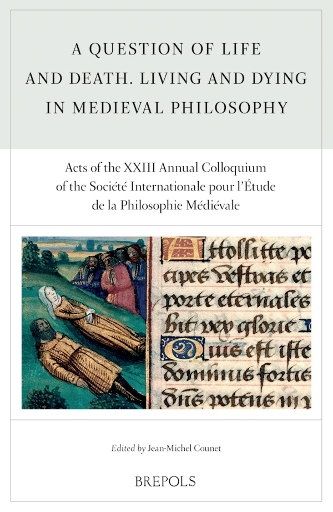
A Question of Life and Death. Living and Dying in Medieval Philosophy
show More to view fulltext, buy and share links for:A Question of Life and Death. Living and Dying in Medieval Philosophy show Less to hide fulltext, buy and share links for: A Question of Life and Death. Living and Dying in Medieval PhilosophyLiving and dying are essential concepts in Aristotelian natural philosophy and psychology. It is then no surprise that when the libri naturales were translated into Latin from the twelfth century onwards, this gave birth to an extensive interpretative tradition in the Latin West in which life and death as conceived by Aristotle were theorized and reflected upon, for example in the numerous commentaries of the De Anima but also of the Parva Naturalia. Yet the medieval inquiry into living and dying is not limited to natural philosophy nor the Aristotelian tradition but can also be found in ethics, metaphysics, theology, medicine and others domains. Many topics are addressed in the volume: radical moisture and the possibility of increasing lifespan, suicide, essence of life, contrast between life of the body and life of the soul, future life, and so on. The volume is also a hommage to Pieter De Leemans, an eminent specialist of the Latin translations of Aristotle’s books on natural philosophy, who was the intitiator of this scientific project.
-
-
-
After Ovid
show More to view fulltext, buy and share links for:After Ovid show Less to hide fulltext, buy and share links for: After OvidThe 2000th anniversary of Ovid’s death, in 2017-2018, led to an upsurge in conferences and publications dedicated to the author’s work and afterlife. One of these is the present volume, resulting from the conference Dopo Ovidio. Aspetti della ricezione ovidiana fra letteratura e iconografia, which was held on 7-8 May 2019 at the Department of Human Sciences (DSU) of the University of L’Aquila, and which looked at various aspects of Ovid’s fortune, from a diachronic and interdisciplinary perspective. The contributions cover a period of about fourteen centuries, from late antiquity until the end of the eighteenth century, and range from late Latin to medieval literature, from humanistic production to modern English and Italian literature, and from linguistics to the figurative arts. All these studies contribute to a collective appraisal of the multifarious impact of Ovid’s works, and especially of the Metamorphoses, the latter’s treatment of myth having been a starting point for integrations, developments, (re)interpretations and representations, in isolation or included in an iconographic program.
-
-
-
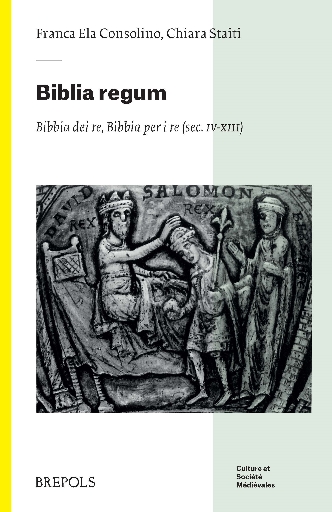
Biblia regum
show More to view fulltext, buy and share links for:Biblia regum show Less to hide fulltext, buy and share links for: Biblia regumThis volume collects contributions from the international conference Biblia regum. Bibbia dei re, Bibbia per i re (sec. iv-xiii) held at the University of L’Aquila, 16-17 April 2018. The collection sheds a new light on the relation between the Bible and royal authority in the late antique and medieval West. By focussing both on the use of biblical quotations and on distinct features of biblical manuscripts - such as dedications, comments, translations and illustrations - contributors investigate how the Bible functioned as a behavioural model to which rulers and their subjects should conform, as well as a text that supported royal power. Collectively, the contributions address significant aspects of the layered interconnection between royal power and the Holy Writ, and lead to a fruitful dialogue between different fields of research.
-
-
-
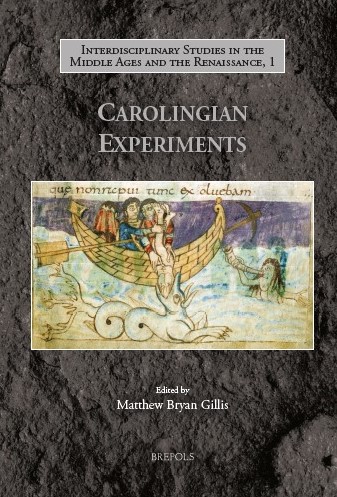
Carolingian Experiments
show More to view fulltext, buy and share links for:Carolingian Experiments show Less to hide fulltext, buy and share links for: Carolingian ExperimentsThis volume presents essays exploring how the Carolingians (ca. 700-ca. 900 CE) - a regime known especially for concerns over imperial power, order, and moral correction - fostered a remarkable era of experimentation in medieval Europe. The scholars featured here ask new questions and conduct their own methodological experiments to uncover some of the many ways that people innovated within the Carolingian world. To that end, numerous themes are covered in this volume: culture and society, family and politics, religion and spirituality, literature and historiography, law and hierarchy, epistemology and science. This array of scholarly experiments reveals some of the range and depth of Carolingian invention. Furthermore, the essays consider how Carolingian innovation can be found in places both more and less known today, employing novel approaches to unearth some unexpected, even uncanny phenomena. This volume consequently offers a defamiliarizing view of the Franks, unveiling them as a people whose seemingly straightforward imperialism and reform were effective precisely because they stimulated and nurtured potent, creative impulses. In fact, one might argue that the Carolingian world’s conservative, moralizing authorities - despite, or perhaps at times because of, their determination to instil correct thought and behaviour in their subjects - fostered many varieties of experimentation. Collectively, the authors of this volume seek to inspire new thinking about the Carolingians, while modelling alternative approaches and potential avenues for future research. Carolingian Experiments overall encourages readers to see that much remains unexplored, unknown and even unexpected about the Carolingians and their world.
-
-
-
Chronicle, Crusade, and the Latin East
show More to view fulltext, buy and share links for:Chronicle, Crusade, and the Latin East show Less to hide fulltext, buy and share links for: Chronicle, Crusade, and the Latin EastChronicle, Crusade, and the Latin East offers a collection of essays exploring three closely connected thematic areas: the narrative traditions surrounding the early crusading movement, the influence of these textual traditions on wider processes of medieval historical writing and storytelling, and the history of crusading and the Latin East.
In recent years, the field of crusade studies has witnessed a significant groundswell of scholarly work, with particular emphasis on the narrative construction of crusading deeds in text and song, of the important role played by memory and memorialisation in transmitting crusading tales and promoting participation, and the nature of life in the Latin states of the East. This volume not only engages with, and offer fresh insights into, these topics, but also serves as a monument to the career of Susan B. Edgington, who has done so much to increase modern understanding of crusade narratives and the crusading past, and who has made a significant impact on the careers of many scholars. The collection of essays gathered here by established and early career historians, Edgington’s friends and students, thus furthers the study of both crusading as narrative and crusading as a lived experience.
-
-
-
Communities, Environment and Regulation in the Premodern World
show More to view fulltext, buy and share links for:Communities, Environment and Regulation in the Premodern World show Less to hide fulltext, buy and share links for: Communities, Environment and Regulation in the Premodern WorldWho had a say in making decisions about the natural world, when, how and to what end? How were rights to natural resources established? How did communities handle environmental crises? And how did dealing with the environment have an impact on the power relations in communities? This volume explores communities’ relationship with the natural environment in customs and laws, ideas, practices and memories. Taking a transregional perspective, it considers how the availability of natural resources in diverse societies within and outside Europe impacted mobility and gender structures, the consolidation of territorial power and property rights. Communities, Environment and Regulation in the Premodern World marks Peter Hoppenbrouwers’s career, spanning over three decades, as a professor of medieval history at Leiden University.
-
-
-
Constructing Iberian Identities, 1000–1700
show More to view fulltext, buy and share links for:Constructing Iberian Identities, 1000–1700 show Less to hide fulltext, buy and share links for: Constructing Iberian Identities, 1000–1700Over the past several decades, scholars of medieval and early modern Iberia have transformed the study of the region into one of the most vibrant areas of research today. This volume brings together twelve essays from a diverse group of international historians who explore the formation of the multiple and overlapping identities, both individual and collective, that made up the Iberian peninsula during the eleventh through seventeenth centuries. Individually, the contributions in this volume engage with the notion of identity in varied ways, including the formation of collective identities at the level of the late medieval city, the use of writing and political discourse to construct or promote common political or socio-cultural identities, the role of encounters with states and cultures beyond the peninsula in identity formation, and the ongoing debates surrounding the peninsula’s characteristic ethno-religious pluralism.Collectively, these essays challenge the traditional dividing line between the medieval and early modern periods, providing a broader framework for approaching Iberia’s fragmented yet interconnected internal dynamics while simultaneously reflecting on the implications of Iberia’s positioning within the broader Mediterranean and Atlantic worlds.
-
-
-

Crossing Disciplinary Boundaries in Studies of the Viking Age
show More to view fulltext, buy and share links for:Crossing Disciplinary Boundaries in Studies of the Viking Age show Less to hide fulltext, buy and share links for: Crossing Disciplinary Boundaries in Studies of the Viking AgeWhat happens when scholars cross outside the perceived ‘boundaries’ of their discipline? What problems arise when a scholar trained in one field employs materials or methodologies from an adjacent subject area, engaging with new sources, research methodologies, and traditions, and how can such issues be resolved? Taking as its starting point the increasing shift towards interdisciplinarity seen within Viking-age studies, this collection of essays aims to explore the benefits and pitfalls that can arise from crossing disciplinary borders in this area, and to gain new knowledge about how to address issues that have occurred in previous examples of interdisciplinary combinations. The volume draws together contributions from authors in different disciplines, among them philology, history, archaeology, literary studies, folklore studies and history of religion, in order to hold a constructive and multi-perspective discussion on the benefits and issues arising from interdisciplinary research in studies of the Viking Age. Together, these chapters aim to bridge the gap that often exists between scholars from adjacent fields of research, and in doing so, to stimulate the trend in interdisciplinary approaches to research that can improve our understanding of the past.
-
-
-

Crusading and Ideas of the Holy Land in Medieval Britain
show More to view fulltext, buy and share links for:Crusading and Ideas of the Holy Land in Medieval Britain show Less to hide fulltext, buy and share links for: Crusading and Ideas of the Holy Land in Medieval BritainCrusading and western interaction with the Holy Land is often a contentious topic, not least because modern popular perception of medieval east-west contact is that it was defined by violence, conquest, and religious persecution. Building on recent scholarship, this collection of essays takes an interdisciplinary approach to the role of crusading and contact with the Holy Land in medieval Britain in order to investigate the myriad ways in which these contacts influenced artistic, literary, visual, and social culture in medieval Britain. By looking at new material and focusing on the domestic response to crusading and the Holy Land, the contributions gathered here offer new insights into the influence of these contacts on the medieval British world view, as well as their impact on topics such as ideals about masculinity and kingship, geographical perception, and aspirational codes of conduct for the medieval British elite.
-
-
-
Disciplined Dissent in Western Europe, 1200–1600
show More to view fulltext, buy and share links for:Disciplined Dissent in Western Europe, 1200–1600 show Less to hide fulltext, buy and share links for: Disciplined Dissent in Western Europe, 1200–1600This innovative collection explores the causes and effects of ‘disciplined dissent’ - forms of protest or political action positioned between the poles of submission and defiance. To identify the political influence of commoners, the emphasis is neither ‘top down’ nor ‘bottom up’ but on mutual influence and the interplay between rulers and ruled. Contributions concerning quite diverse polities show a careful opposition of non-elite people through an effort to respect the legislative system and to find common ground with the authorities. The aim was to emphasize aspects of the norms and institutions in favour of the benefit of the community, or to ensure adjustments of some aspects if found to be beneficial for the few and detrimental for many. The examination of non-violent pressure can help us to have a more exhaustive understanding of the protagonists, causes, and effects of socio-political changes in contexts of governmental development. The analysis includes cases of violent action that managed to secure royal approval. The premise of the book is that inequality, far from being accepted as normal and inevitable, was frequently questioned by less powerful people. When targeted by more or less evident forms of political marginalization, they laid claim to principles of justice and on this basis developed a critical comprehension of government, pursued a selective rejection of injustice, and gained recognition through negotiation.
-
-
-
Intercultural Encounters in Medieval Greece after 1204
show More to view fulltext, buy and share links for:Intercultural Encounters in Medieval Greece after 1204 show Less to hide fulltext, buy and share links for: Intercultural Encounters in Medieval Greece after 1204Based on the evidence of artistic production and material culture this collective volume aims at exploring cross-cultural relations and interaction between Greeks and Latins in late medieval Greece in the aftermath of the Fourth Crusade. Fourteen essays discuss mostly new and unpublished archaeological and artistic material, including architecture, sculpture, wall-paintings and icons, pottery and other small finds, but also the evidence of music and poetry. Through the surviving material of these artistic activities this volume explores the way Byzantines and Latins lived side by side on the Greek mainland and the Aegean islands from the thirteenth to the fifteenth centuries and traces the mechanisms that led to the emergence of the new, composite world of the Latin East. Issues of identity, patronage, papal policy, the missionary activities of the Latin religious orders and the reactions and responses of the Byzantines are also re-considered, offering fresh insights into and a better understanding of the various manifestations of the interrelationship between the two ethnicities, confessions and cultures.
-
-
-

Monastic Communities and Canonical Clergy in the Carolingian World (780–840)
show More to view fulltext, buy and share links for:Monastic Communities and Canonical Clergy in the Carolingian World (780–840) show Less to hide fulltext, buy and share links for: Monastic Communities and Canonical Clergy in the Carolingian World (780–840)In the years 816-819, a series of councils was held at the imperial palace in Aachen. The goal of the meetings was to settle a number of questions about ecclesiastical organization. These issues were hotly debated throughout the Christian Roman Empire of the fourth and fifth centuries, and then reinvigorated by the renewal of empire under Charlemagne and his son Louis the Pious. At the centre of the ensuing debate stood the distinction between monks and monastic communities on the one hand, and the so-called clerici canonici and their communities on the other. Many other reforms were proposed in its wake: the position of the episcopacy needed to be renegotiated, the role of the imperial court needed to be consolidated, and the place of every Christian within the renewed Carolingian Church needed to be redefined. What started out as a seemingly straightforward reorganisation of the religious communities that dotted the Frankish ecclesiastical landscape thus quickly turned into a broad movement that necessitated an almost complete categorization of the orders of the Church. The contributions to this volume each zoom in on various aspects of these negotiations: their prehistory, their implementation, and their influence. In doing so, previously held assumptions about the scope, the goals, and the impact of the ‘Carolingian Church Reforms’ will also be re-assessed.
-
-
-
Order into Action
show More to view fulltext, buy and share links for:Order into Action show Less to hide fulltext, buy and share links for: Order into ActionThe construction (and application) of models that order complex phenomena such as ‘the world’ is not a ‘neutral’ activity: theoretical models and ideas help us to perceive and categorize the information conveyed by experience and tradition alike; in turn, they also influence the behaviour and actions of individuals and groups.
Collecting a global series of case studies on premodern societies, this volume proposes new research into premodern models of world-order and their effects. With its focus on the period between c. 1300 and 1600, it seeks to open up fresh perspectives for premodern Global History and the analysis of phenomena of transcultural contact and exchange.
Focussing on religious, political, and geographical ideas and models, the contributions explore whether and how large-scale concepts influenced or even determined concrete actions. The examples include socio-religious concepts (Christianity, terra paganorum, dār al-harb), political concepts (empire) and geographical notions. A special section is dedicated to comparative insights into societies in Sub-Saharan Africa, Australia, and pre-Columbian America. Taken together, the contributions underline the importance and effects of historically shaped cultural traits in the long term.
-
-
-
Pierre Abélard, génie multiforme
show More to view fulltext, buy and share links for:Pierre Abélard, génie multiforme show Less to hide fulltext, buy and share links for: Pierre Abélard, génie multiformeÉtudiant terrible et maître illustre, amant légendaire et logicien virtuose, moine instable et abbé réformateur, poète de génie et philosophe précurseur, théologien prestigieux et deux fois condamné pour hérésie, auteur entre autres de commentaires sur Porphyre et sur la Bible, de traités sur la dialectique et sur la Trinité, de poèmes amoureux et liturgiques, et encore - dans le même dossier - d’une autobiographie controversée, d’une correspondance passionnée et d’une règle religieuse, Pierre Abélard n’est pas seulement une des figures les plus célèbres de tout le Moyen Âge, il en est aussi, comme homme, comme écrivain et comme penseur, une des plus riches, des plus complexes et des plus insaisissables. Aussi a-t-il semblé utile de rassembler autour de sa personne - il en aurait sûrement été ravi - quelques spécialistes parmi les meilleurs de l’histoire, de la logique, de l’éthique, de la théologie, du droit, de la littérature et de l’historiographie du Moyen Âge.
-
-
-

Qui nous délivrera du grand Alexandre le Grand
show More to view fulltext, buy and share links for:Qui nous délivrera du grand Alexandre le Grand show Less to hide fulltext, buy and share links for: Qui nous délivrera du grand Alexandre le GrandBien que la dérision s’inscrive aux marges du corpus littéraire et artistique sur Alexandre, il existe une veine comique qui rabaisse le souverain le plus prestigieux de l’Antiquité, avec une tonalité joyeuse ou bien plus grave et accusatrice. Si elle ne cesse d’évoluer au fil des siècles tant le rire, l’irrévérence et la satire sont ancrés dans l’historicité, elle s’affirme, dans ses différentes incarnations esthétiques, comme un discours parallèle, un discours d’à côté, qui devient parfois un véritable contre-discours. L’objet de ce volume est ainsi d’entamer une analyse diachronique - qui n’a encore jamais été menée - des modes de dérision à l’encontre d’Alexandre et de ce qu’il incarne, de leurs significations et de leurs motivations. Comique divertissant, célébration paradoxale d’une icône de la royauté, satire politique de la mégalomanie et de l’autoritarisme, ou parodie révélatrice d’un rejet de conventions esthétiques et de leurs instrumentalisations politiques et culturelles : les écritures visuelles et textuelles de la dérision à l’encontre du grand Alexandre le Grand engagent tous ces aspects depuis l’Antiquité.
-
-
-
Rewriting History in the Central Middle Ages, 900–1300
show More to view fulltext, buy and share links for:Rewriting History in the Central Middle Ages, 900–1300 show Less to hide fulltext, buy and share links for: Rewriting History in the Central Middle Ages, 900–1300In the Middle Ages, rewriting history was a distinct activity within the larger sphere of historical writing. Rewriting started with existing historical accounts, recasting them into new forms as new stories about the past. Changes in circumstances drove rewriting, encouraging historically literate writers and their patrons to examine their histories anew, to jettison what no longer made sense or was useful, and to supply new material to fill gaps or expand ideas. Writers rewrote not only for the present and future, but also for the past. They curated the past and reorganized its intellectual artifacts, thereby revealing new facets of old history to future eyes.
Rewriting was a defining characteristic of the central Middle Ages (900-1300), distinct both from earlier traditions of universal history and from later traditions of making continuations which left the narrative core intact. Reimagining the past by rewriting happened across genres, in the vernaculars as well as the universal languages of Latin and Greek, and across Europe, west and east. The chapters in this book explore the reasons and methods for rewriting, ranging across the Anglo-Norman realm, France and Flanders, Christian Iberia, Norman Italy and the Mediterranean, Byzantium, and Georgia and Armenia. Together, they show a set of rewriters who made themselves the authorities for their own age.
-
-
-
Royal Nunneries at the Center of Medieval Europe
show More to view fulltext, buy and share links for:Royal Nunneries at the Center of Medieval Europe show Less to hide fulltext, buy and share links for: Royal Nunneries at the Center of Medieval EuropeThe contributions of this special issue - proceedings of the conference on royal nunneries that took place in Prague in July 2020 - focus on the monasteries connected to the ruling houses, which were endowed with special privileges and enriched by royal and aristocratic donations, often serving as instrumenta regni. They are introduced as active cultural hubs, stages for royal and courtly promotion, and places of personal and dynastic self-representation. This includes female monasteries, the agency of female élites in medieval society and their role as patrons and addressees of works of art.
-
-
-
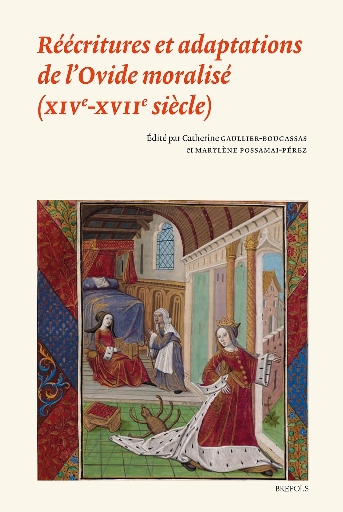
Réécritures et adaptations de l’Ovide moralisé (xiv e-xvii e siècle)
show More to view fulltext, buy and share links for:Réécritures et adaptations de l’Ovide moralisé (xiv e-xvii e siècle) show Less to hide fulltext, buy and share links for: Réécritures et adaptations de l’Ovide moralisé (xiv e-xvii e siècle)L’Ovide moralisé a joué un rôle significatif pour la connaissance des mythes antiques et la création de nouvelles œuvres littéraires qui se les approprient au moins jusque dans la première moitié du xvi e siècle, avant qu’il ne soit moqué et condamné. Dès son écriture au xiv e siècle, cette traduction en langue française des Métamorphoses d’Ovide accompagnée d’interprétations chrétiennes a rapidement connu le succès et une diffusion large auprès de publics divers qui la lisaient souvent, elle et ses gloses, plutôt que l’œuvre latine d’Ovide. De nombreux auteurs en français, en latin ou en anglais se sont inspirés de son texte pour créer leurs propres représentations littéraires de héros et héroïnes antiques, dans des œuvres poétiques, didactiques et historiographiques, ou pour élaborer leurs écritures de la moralisation. Les deux mises en prose de l’Ovide moralisé à la cour d’Anjou et à la cour de Bourgogne, les réécritures et remaniements qui sont ensuite imprimés, la traduction anglaise imprimée par William Caxton ont aussi contribué à prolonger l’influence qu’il a exercée. Cette dernière se lit aussi sans nul doute dans certaines des nouvelles traductions des Métamorphoses qui sont composées au xvi e siècle. Si cette influence a souvent été notée, si des emprunts de poètes du xiv e et du xv e siècles - Guillaume de Machaut, Jean Froissart, Eustache Deschamps, Christine de Pizan, Chaucer, Gower - ont été étudiés, la postérité de l’Ovide moralisé reste encore pour une large part à explorer. C’est l’objet de ce volume collectif, le premier qui soit consacré à la réception du texte du xive au xviie siècle.
-
-
-
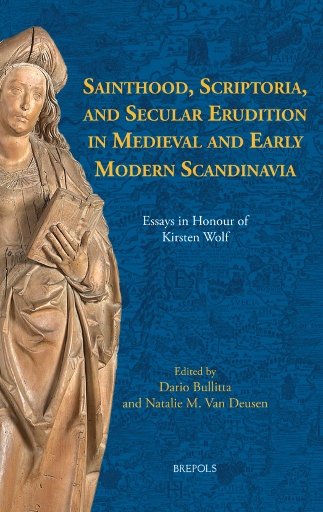
Sainthood, Scriptoria, and Secular Erudition in Medieval and Early Modern Scandinavia
show More to view fulltext, buy and share links for:Sainthood, Scriptoria, and Secular Erudition in Medieval and Early Modern Scandinavia show Less to hide fulltext, buy and share links for: Sainthood, Scriptoria, and Secular Erudition in Medieval and Early Modern ScandinaviaWhile medieval Iceland has long been celebrated and studied for its rich tradition of vernacular literature, in recent years attention has increasingly been paid to other areas of Old Norse-Icelandic scholarship, in particular the production of hagiographical and religious literature. At the same time, a similar renaissance has arisen in other fields, in particular Old Norse-Icelandic paleography, philology, and manuscript studies, thanks to the development of the so-called ‘new philology’, and its impact on our understanding of manuscripts. Central to these developments has been the scholarship of Kristen Wolf, one of the foremost authorities in the fields of Old Norse-Icelandic hagiography, biblical literature, paleography, codicology, textual criticism, and lexicography, who is the honorand of this volume.
Taking Prof. Wolf’s own research interests as its inspiration, this volume takes an unprecedented interdisciplinary approach to the theme of Sainthood, Scriptoria, and Secular Erudition in Medieval and Early Modern Scandinavia in order both to celebrate Wolf’s profound career, and to illustrate the many ways in which these seemingly different fields overlap and converse with each other in important and productive ways. From sculpture to sagas, and from skaldic verse to textual editions and the translation of hitherto unpublished works, the contributions gathered here offer new and important insights into our knowledge of medieval and early modern Scandinavian literature, history, and culture.
-
-
-

The Cult of Saints in Nidaros Archbishopric
show More to view fulltext, buy and share links for:The Cult of Saints in Nidaros Archbishopric show Less to hide fulltext, buy and share links for: The Cult of Saints in Nidaros ArchbishopricScandinavia has often been considered as a peripheral part of the Christian world, with its archbishopric in Nidaros an isolated outpost of the Catholic Church. This volume, however, offers a reassessment of such preconceptions by exploring the way in which the Nidaros see celebrated the cult of saints and followed traditions that were both part of, and distinct from, elsewhere in Christian Europe. The contributions gathered here come from specialists across different disciplines, among them historians, philologists, art historians, and epigraphists, to offer a multifaceted insight into how texts and objects, sculpture, runes, and relics all drove the cult of saints in this northern corner of Europe. In doing so, the volume offers a nuanced understanding of the development of cults, the saints themselves, and their miracles, not only in the Norse world, but also more widely.
-
-
-
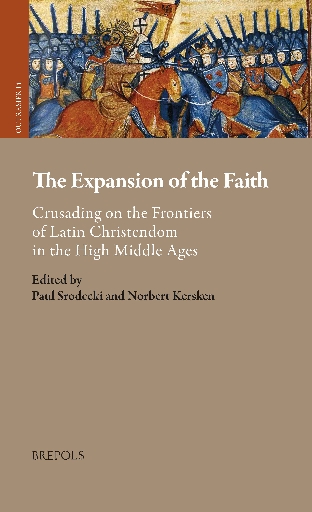
The Expansion of the Faith
show More to view fulltext, buy and share links for:The Expansion of the Faith show Less to hide fulltext, buy and share links for: The Expansion of the FaithThis volume offers a comparative approach to the crusade movement on the frontiers of Latin Christendom in the high Middle Ages, bringing a regional focus to research on these peripheral phenomena. It features several key questions: Which military campaigns were propagated as crusades on the peripheries of the Christian West? What efforts were made to gain recognition for them as crusades and what effects did these have? What value did the crusade movement have for societies at the fines christianitatis? What role did the cruciatae have in strengthening pan-Western sense of togetherness and solidarity, and what role did they have for creation of a crusader and frontier identity? The eighteen papers, ranging in scope from the southern and eastern Baltic regions to Iberia, Egypt and the Balkans, provide new insights into the ways in which crusade rhetoric was reflected in the culture and literature of countries involved in crusading beyond the Holy Land.
-
-
-
The Popularization of Philosophy in Medieval Islam, Judaism, and Christianity
show More to view fulltext, buy and share links for:The Popularization of Philosophy in Medieval Islam, Judaism, and Christianity show Less to hide fulltext, buy and share links for: The Popularization of Philosophy in Medieval Islam, Judaism, and ChristianityThis volume explores attempts at the popularization of philosophy and natural science in medieval Islam, Judaism, and Christianity. Medieval philosophers usually wrote their philosophical books for philosophers, so the desire to convey psychological, cosmological, metaphysical, or even physical teachings to the ‘vulgus’ may seem surprising. Yet philosophy was indeed taught to non-philosophers and via a variety of literary genres. Indeed, scholars have argued that philosophy most infl uenced medieval society through popular forms of transmission. Among the questions this volume addresses are the following: Which philosophers or theologians sought to direct philosophical writings to the many? For what purposes did they seek to popularize philosophy? Was the goal to teach philosophical truths? For whom exactly were these popularized texts written? How did they go about teaching philosophy to a wide audience? In what ways did popularized philosophy impact upon society? To what extent were the considerations and problems in the medieval popularization of philosophy the same or different in the various religious traditions of philosophy? How philosophical was the popularized philosophy?
In addressing these questions and others, this pioneering volume is the fi rst of its kind to bring together scholars of medieval Islamic, Jewish, and Christian thought to discuss the popularization of philosophy in these three religious traditions of philosophy.
-
-
-
The Rise of an Academic Elite : Deans, Masters, and Scribes at the University of Vienna before 1400
show More to view fulltext, buy and share links for:The Rise of an Academic Elite : Deans, Masters, and Scribes at the University of Vienna before 1400 show Less to hide fulltext, buy and share links for: The Rise of an Academic Elite : Deans, Masters, and Scribes at the University of Vienna before 1400Henry of Rheinfelden, a Dominican from Basel, spent the last decade of the fourteenth century at the University of Vienna studying theology. During this time he took notes on the academic activities of the first rectors of the university and deans of the Faculties of Arts and Theology. This volume explores Rheinfelden’s contribution to our understanding of the doctrinal, curricular, administrative, and prosopographical history of the early University of Vienna. Deciphering Rheinfelden’s surviving notebooks in the Universitätsbibliothek Basel sheds new light on the rise of an academic elite in Vienna. His manuscripts reveal a network of scholars sharing a passion for knowledge and supply a gallery of intellectual profiles, starting with the mentors of the group, Henry of Langenstein and Henry Totting of Oyta, and continuing with the lesser-known figures Stephen of Enzersdorf, Gerhard Vischpekch of Osnabrück, Paul (Fabri) of Geldern, Andreas of Langenstein, Rutger Dole of Roermond, Nicholas of Hönhartzkirchen, Nicholas of Dinkelsbühl, John Berwart of Villingen, John Stadel of Russbach, Peter de Treysa, Michael Suchenschatz of Hausleiten, Peter Schad of Walse, Thomas of Cleves, and Leonhard of Dorffen. The papers gathered in this volume highlight the intricate relationship between a commitment to administrative duty and an appetite for the creation of a doctrinal tradition via debating, forging arguments, defending and attacking positions, commenting on authorities, and adopting and adapting academic practices imported from Paris, since the majority of the authors in our gallery were educated in Paris and built their careers in Vienna. Through Rheinfelden’s notebooks, this volume provides access to unique and previously unknown texts that together offer a new image of the medieval University of Vienna.
-
-
-
Tolerance and Concepts of Otherness in Medieval Philosophy
show More to view fulltext, buy and share links for:Tolerance and Concepts of Otherness in Medieval Philosophy show Less to hide fulltext, buy and share links for: Tolerance and Concepts of Otherness in Medieval PhilosophyThe proceedings of the S.I.E.P.M. Colloquium at Maynooth published in this volume shed new light on the development of the perception of the other within the different philosophical, religious, and cultural traditions in the late Middle Ages as well as the early modern era in both Christian and Islamic thought. The contributions consider not only the theological background but also the philosophical presuppositions of the concepts which were used to develop various apologetic writings and theological treatises that dealt with questions of cultural and religious difference. The rich and diverse medieval and early modern tradition of engaging with the other and the arguments for or against toleration on topics that are equally diverse are discussed with reference to both the Western and Eastern Christian tradition, to the contributions of Islamic Thinkers on the topic, and to the flourishing tradition of a constructed interreligious dialogue such as that between Christians and Jews. Finally, this book includes a number of important investigations exploring the relationship between toleration and rights not only within Europe but also in the lands of the so-called new world and its indigenous peoples where arguments of exclusion were grounded intheories such as grace-based dominium.
-
-
-
Transforming space
show More to view fulltext, buy and share links for:Transforming space show Less to hide fulltext, buy and share links for: Transforming spaceTransforming Space deals with visible and invisible changes in premodern cities, their causes and the way in which they were perceived and received. The chapters in this book analyse the development and management of urban space, combining case studies and insights from a range of cities from all over Europe. Several contributions deal with the impact of major events on the urban tissue: geopolitics; disasters such as fires or wars; expropriation or redevelopment projects directed by urban governments; religious change such as the Dissolution in England, and the Reformation and Counter-Reformation on the continent. On closer scrutiny, however, some of these major events were only an accelerator of already ongoing processes of change. By shifting the perspective from the city as a whole, to neighbourhoods, urban blocks or even plots of land, other chapters reveal how functional change or real estate dynamics changed the urban landscape almost imperceptibly. This book is written from a comparative perspective that takes into account path-dependency. Pre-existing power relations, ideology and mentality, the resilience of property structures, the impact of building regulations, subsidies, or the effects of real estate markets are shown to have had different outcomes for different social groups and the evolution of neighbourhoods.
-
-
-
“Omnium Magistra Virtutum”
show More to view fulltext, buy and share links for:“Omnium Magistra Virtutum” show Less to hide fulltext, buy and share links for: “Omnium Magistra Virtutum”Danuta Shanzer is a scholar of international caliber, and this volume honors her career on the occasion of her sixtyfifth birthday (or thereabouts). Most of the contributors are current or former students, colleagues, collaborators and friends, from Oxford, Berkeley, Cornell, Illinois, the University of Vienna, and elsewhere. They have chosen topics appropriate in some way to the honoree’s scholarly interests. The volume’s center of gravity is in late antiquity and early medieval Gaul, but some contributions reach backwards to the Roman period or forward to the later Middle Ages. The contributions embrace a number of authors in whom Shanzer herself has been particularly interested (Augustine, Martianus Capella, Boethius, Avitus of Vienne, Gregory of Tours), but the range and variety of the volume is also representative of her approach to the field.
-
-
-
Agricultural Landscapes of Al-Andalus, and the Aftermath of the Feudal Conquest
show More to view fulltext, buy and share links for:Agricultural Landscapes of Al-Andalus, and the Aftermath of the Feudal Conquest show Less to hide fulltext, buy and share links for: Agricultural Landscapes of Al-Andalus, and the Aftermath of the Feudal ConquestThis volume presents recent archaeological research on the agriculture and society of al-Andalus during the Middle Ages, especially from the perspective of ‘hydraulic archaeology’ - an avenue of research developed by Spanish researchers which focuses on the analysis of irrigation systems created by Islamic colonists from the eighth century onwards. More recently, this research perspective has incorporated the analysis of other agricultural systems, such as dryland agriculture and pasturelands. All of these agricultural regimes are complementary in peasant-led subsistence agricultural systems. From a methodological perspective, this archaeological approach is highly innovative, and uses a wide range of techniques (aerial photography, cartographical analysis, field survey, archival research, and archaeological excavation) in order to outline the size and boundaries of cultivation and grazing areas, to define specific plots of land and the related road networks, and to identify other associated facilities, such as watermills.
In connection with these topics, several issues are discussed: the earmarking of rural or urban farming areas for irrigation, draining, or dryland agriculture; the process of construction and the subsequent evolution of these farming areas; the transformations undergone by these areas after the feudal conquest; and, finally, the identification of pasturelands and the analysis of the evidence concerning their management.
-
-
-
Alexander of Aphrodisias in the Middle Ages and the Renaissance
show More to view fulltext, buy and share links for:Alexander of Aphrodisias in the Middle Ages and the Renaissance show Less to hide fulltext, buy and share links for: Alexander of Aphrodisias in the Middle Ages and the RenaissanceThe greatest ancient interpreter of Aristotle, Alexander of Aphrodisias (fl. 200 AD) exerted a profound and enduring influence upon philosophy from Boethius until the modern era. Alexander’s interpretations laid the foundation for multiple philosophical views which were promoted as quintessentially Aristotelian by both Islamic and Latin thinkers throughout the Middle Ages. In the Renaissance, the University of Padua, a leading center of philosophical education and thought, established a scholarly tradition named “Alexandrinism” after him.
Paolo Accattino (1950-2015), a distinguished scholar of Alexander, made many noteworthy advancements to the field. With the aim of honoring Accattino’s memory, lifelong colleagues and associates P. Donini and L. Bertelli discuss his contributions. They are joined by a cohort of scholars (A. Bertolacci, M. Di Giovanni, J. Biard, A. Corbini, E. Rubino, L. Silvano, B. Bartocci, P.D. Omodeo, F. Iurlaro) who explore various key elements of Alexander’s legacy from Ibn Sīnā to Hugo de Groot. The volume presents new understandings concerning the reception of Alexander, offers new lines of inquiry, and opens potential avenues of research regarding his medieval and Renaissance afterlife.
-
-
-
Civic Identity and Civic Participation in Late Antiquity and the Early Middle Ages
show More to view fulltext, buy and share links for:Civic Identity and Civic Participation in Late Antiquity and the Early Middle Ages show Less to hide fulltext, buy and share links for: Civic Identity and Civic Participation in Late Antiquity and the Early Middle AgesDuring the Ancient Greek and Roman eras, participation in political communities at the local level, and assertion of belonging to these communities, were among the fundamental principles and values on which societies would rely. For that reason, citizenship and democracy are generally considered as concepts typical of the political experience of Classical Antiquity. These concepts of citizenship and democracy are often seen as inconsistent with the political, social, and ideological context of the late and post-Roman world. As a result, scholarship has largely overlooked participation in local political communities when it comes to the period between the disintegration of the Classical model of local citizenship in the later Roman Empire and the emergence of ‘pre-communal’ entities in Northern Italy from the ninth century onwards.
By reassessing the period c. 300-1000 ce through the concepts of civic identity and civic participation, this volume will address both the impact of Classical heritage with regard to civic identities in the political experiences of the late and post-Roman world, and the rephrasing of new forms of social and political partnership according to ethnic or religious criteria in the early Middle Ages. Starting from the earlier imperial background, the fourteen chapters examine the ways in which people shared identity and gave shape to their communal life, as well as the role played by the people in local government in the later Roman Empire, the Germanic kingdoms, Byzantium, the early Islamic world, and the early medieval West. By focusing on the post-Classical, late antique, and early medieval periods, this volume intends to be an innovative contribution to the general history of citizenship and democracy.
-
-
-
Editing and Analysing Numerical Tables
show More to view fulltext, buy and share links for:Editing and Analysing Numerical Tables show Less to hide fulltext, buy and share links for: Editing and Analysing Numerical TablesAstronomical tables are a significant yet understudied part of the scientific historical corpus. They circulated among many cultures, and were adopted and transformed by astronomical practitioners for a variety of purposes. The numerical data conveyed in these tables provides rich evidence for pre-modern scientific practices. In the last fifty years, new approaches to the analysis and critical editing of astronomical tables have flourished due to advances in computing power and associated modern mathematical tools. In more recent times, the rapid growth of digital humanities and modern data analysis promises exciting further developments in this area. The present collection of studies on astronomical tables captures this momentum. It is a result of long-term collaborative work on building a database of astronomical tables and other objects found in manuscripts, released under the name DISHAS (Digital Information System for the History of Astral Sciences). The fourteen contributions in this volume provide a broad coverage of astronomical traditions throughout Eurasia and North Africa, which, with very few exceptions, find their roots in the mathematical astronomy of Ptolemy. The contributions include critical editions of previously unexamined astronomical tables along with insightful mathematical analyses, as well as reflective methodological surveys that open up new perspectives for research on these fundamental sources for the history of mathematics and astronomy.
-
-
-
Gender and Status Competition in Pre-Modern Societies
show More to view fulltext, buy and share links for:Gender and Status Competition in Pre-Modern Societies show Less to hide fulltext, buy and share links for: Gender and Status Competition in Pre-Modern SocietiesThis innovative volume of cultural history offers a unique exploration of how gender and status competition have intersected across different periods and places. The contributions collected here focus on the role of women and the practice of masculinity in settings as varied as ancient Rome, China, Iran, and Arabia, medieval and early modern England, and early modern Italy, France, and Scandinavia, as well as exploring issues that affected people of all social rank, from raillery and pranks to shaming, male boasting about sexual conquests, court rituals, violence, and the use and display of wealth. Particular attention is paid to the performance of such issues, with chapters examining status and gender through cultural practices, especially specific (re)presentations of women. These include Roman priestesses, early Christian virgin martyrs, flirtation in seventh-century Arabia, and the attempt by an early modern French woman to take her place among the immortals. Together this wide-ranging and fascinating array of studies from renowned scholars offers new insights into how and why different cultures responded to the drive for status, and the complications of gender within that drive.
-
-
-
I libri di Bessarione
show More to view fulltext, buy and share links for:I libri di Bessarione show Less to hide fulltext, buy and share links for: I libri di BessarioneThirty years after the conclusion of the cataloguing of the manuscripts kept in the Marciana Library (Venice), due to the the progresses of palaeographic, codicological and intellectual studies on Byzantium and Italy in the fifteenth century, it is possible to reconsider Bessarion’s library, its formation, its history, its organization and also the activity of the Cardinal (and his collaborators) as a copyist and annotator of manuscripts.
-
-
-
La Formule au Moyen Âge IV
show More to view fulltext, buy and share links for:La Formule au Moyen Âge IV show Less to hide fulltext, buy and share links for: La Formule au Moyen Âge IVLe phénomène formulaire est foisonnant, protéiforme et omniprésent dans tous les aspects des pratiques culturelles médiévales. Poésie, actes épiscopaux, encyclopédies, récits de miracles, charmes, formulaires notariaux, chroniques : tous ces genres textuels emploient des formules à des degrés divers et sous des formes variées. Au-delà de cette diversité apparente se dessinent cependant des problématiques communes: désir de permanence, argumentation fondée sur un savoir partagé unissant une communauté d’utilisateurs (et excluant aisi ceux qui n’appartiendraient pas à ladite communauté), souplesse et adaptabilité bien réelles derrière la fixité apparente de la forme.
Ce quatrième ouvrage consacré à la formule médiévale rassemble des contributions en français, en anglais et en espagnol. À travers l’étude fine d’une multitude de documents de natures et d’origines géographiques très variées, ces articles analysent les formules à la fois dans leur fonctionnement textuel (et parfois graphique) et dans leur rôle social. La confrontation de disciplines différentes permet d’aborder le phénomène formulaire dans sa globalité, et ainsi de mieux distinguer ce qui n’est propre qu’à un type de formules ou de texte particulier et ce qui est au contraire essentiel au concept de formule.
-
-
-
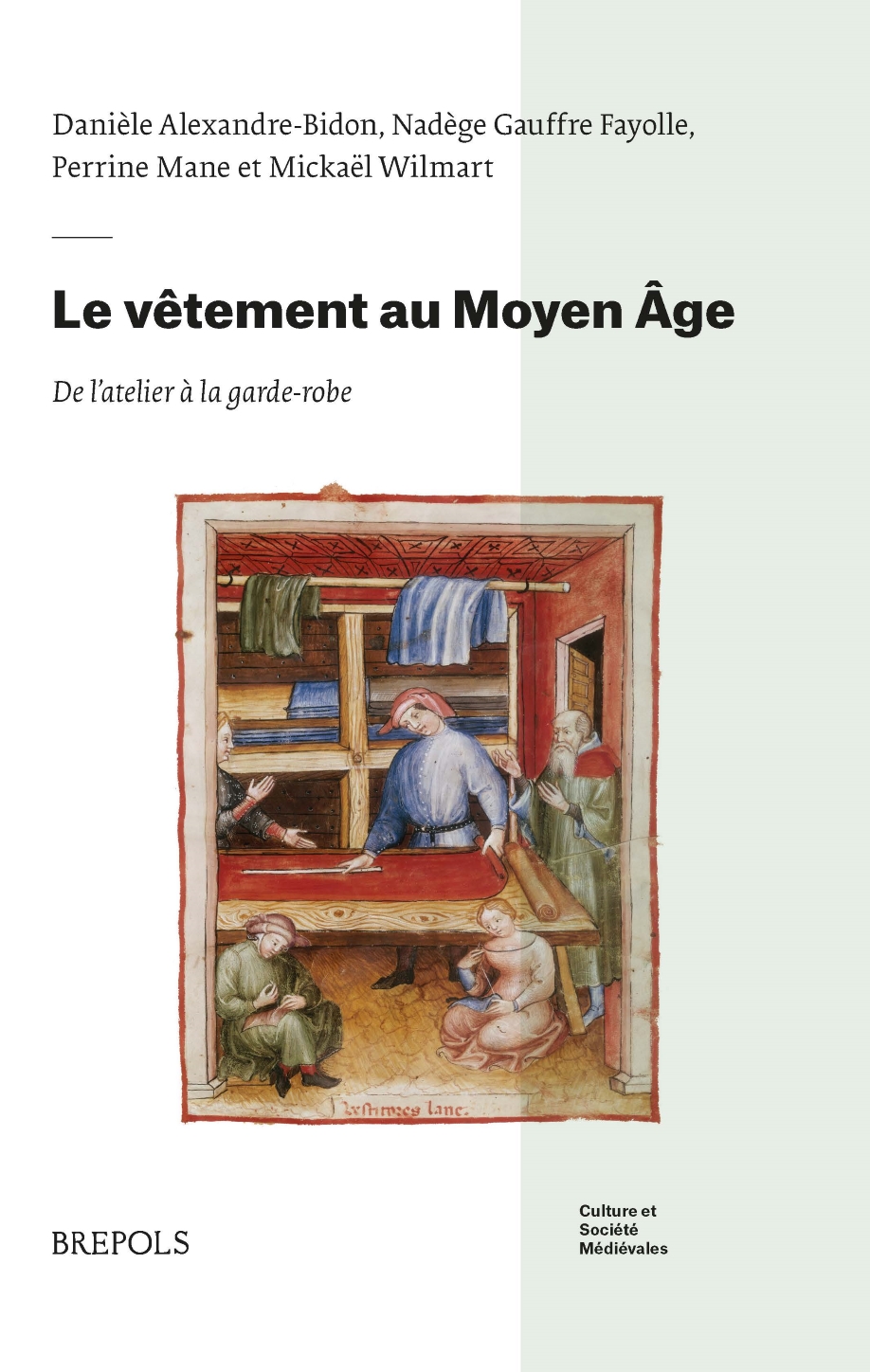
Le vêtement au Moyen Âge
show More to view fulltext, buy and share links for:Le vêtement au Moyen Âge show Less to hide fulltext, buy and share links for: Le vêtement au Moyen ÂgeL’histoire du vêtement touche un vaste ensemble d’aspects de la société et de l’économie médiévales, de la circulation des matières premières à l’organisation de la production, de la réglementation à la symbolique, des circulations médiévales à sa réappropriation contemporaine.
Par des approches inédites, l’ouvrage propose d’articuler ces différentes problématiques pour esquisser une histoire totale du vêtement médiéval à travers le croisement de questionnements et de sources écrites, iconographiques et archéologiques.
Il envisage d’abord une relecture de la place du textile dans l’économie médiévale, en insistant sur le maillage de foires et de marchés permettant la distribution des matières premières, en décrivant l’organisation de l’échoppe du drapier et la gestion de ses stocks, en interrogeant le rapport entre les qualités de produits et leur utilisation et en soulignant le rôle des circulations secondaires de vêtements.
La fabrication des habits est approchée à travers les commandes princières, exceptionnelles ou courantes. Les comptabilités permettent en effet de saisir la consommation des élites, mais aussi l’organisation de la production confiée à des artisans minutieusement sélectionnés pour leur savoir-faire.
Cette consommation ostentatoire, qui touche jusqu’aux animaux de compagnie, est toutefois dès le xiii e siècle l’objet de réglementations somptuaires qui nous renseignent tant sur une anthropologie du luxe que sur la gestion de la bienséance. La symbolique du vêtement vient également alimenter un imaginaire collectif allant des représentations médiévales des marginaux à la reconstitution contemporaine de tissus et de costumes permettant la création d’une esthétique médiévalisante au xix e siècle et l’essor du médiévalisme au xx e siècle.
-
-
-
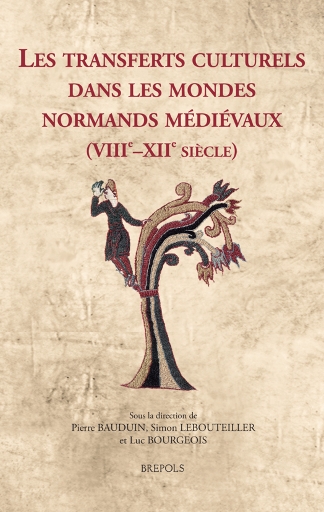
Les transferts culturels dans les mondes normands médiévaux (viii e–xii e siècle)
show More to view fulltext, buy and share links for:Les transferts culturels dans les mondes normands médiévaux (viii e–xii e siècle) show Less to hide fulltext, buy and share links for: Les transferts culturels dans les mondes normands médiévaux (viii e–xii e siècle)Les objets des transferts culturels sont innombrables et leur étude est particulièrement importante pour comprendre les mondes normands médiévaux et leurs multiples interfaces avec le monde scandinave, les îles Britanniques, l’Europe orientale et la Méditerranée. Cet ouvrage s’intéresse aux processus de transmission et de réception, d’adaptation, d’adoption ou de rejet, en montrant comment ces dynamiques font évoluer les cultures entre le VIIIe et le XIIe siècle. Différents types d’objets sont ainsi abordés, qu’ils soient matériels (broderie ; accessoires du costume ; artefacts en fer ; monnaies ; manuscrits ; monuments funéraires ; sculptures…) ou immatériels (savoir-faire, modèles littéraires, langue, pratiques religieuses et funéraires, idéologie du pouvoir, serment…), dont quelques-uns sont des ‘monuments’ emblématiques des mondes normands (la Tapisserie de Bayeux ; les mosaïques du sol de la cathédrale d’Otrante). Une attention particulière a été attachée à la mise en contexte de ces objets permettant d’en saisir la réinterprétation dans des environnements socio-culturels différents. L’ouvrage permet également de questionner le rôle et l’implication des acteurs des transferts culturels (élites aristocratiques, hommes d’Église, marchands, artisans, lettrés, copistes …) du fait de leur statut ou leur fonction, mais aussi selon leur aptitude à promouvoir un transfert. Il met en lumière des liens et des réseaux jusque-là mal connus, la circulation des modèles qui intéresse une multitude d’objets et de productions, et il contribue ainsi à explorer des situations de contact entre des populations différentes et la construction de leurs interactions.
-
-
-

L’épaisseur du temps
show More to view fulltext, buy and share links for:L’épaisseur du temps show Less to hide fulltext, buy and share links for: L’épaisseur du tempsMembre de l’Institut de France (Académie des Inscriptions et Belles-Lettres) et ancien directeur de l’Institut de Recherche et d’Histoire des Textes (CNRS), Jacques Dalarun est un des médiévistes français les plus renommés en France et à l’étranger. Ses recherches allient histoire sociale et culturelle, codicologie, philologie et historiographie, en particulier dans le domaine de la sainteté au Moyen Âge, de Robert d’Arbrissel à François et Claire d’Assise, en passant par de nombreux autres saints et saintes, d’Italie notamment.
Sa production nombreuse présente trois caractéristiques principales. D’abord, ses recherches se fondent presque toujours sur la découverte et l’édition critique de sources médiévales inconnues: fin de la Vie de Robert d’Arbrissel, statuts originaux de Fontevraud, Vies abrégées de Bernard de Tiron et d’Hugues de Cluny, miracles de Bérard évêque des Marses, de Micheline de Pesaro, de Giovanni Gueruli de Rimini, plusieurs vies liturgiques de François d’Assise, divers poèmes et traités des Clarisses de Foligno, et surtout, en 2014, la Vie de notre bienheureux père François par Thomas de Celano, la deuxième plus ancienne biographie du saint d’Assise. Ensuite, elles aiment prendre la forme de vastes entreprises collectives, dans lesquelles Jacques Dalarun manifeste un rare talent pour faire travailler en bonne harmonie les personnalités les plus diverses, dans les disciplines les plus complémentaires, de la codicologie à l’historiographie la plus récente en passant par la critique textuelle, la critique historique, la traduction. Enfin, elles s’accompagnent toujours d’une exigence de réflexion sur les procédures et les méthodes de l’historien médiéviste.
C’est dans cet esprit qu’a été conçu le présent volume: les auteurs sont des savants, principalement de France, d’Italie et des Etats-Unis, qui ont travaillé avec Jacques Dalarun et qui souhaitent apporter, dans les champs d’étude qu’ils ont labourés avec lui, une réflexion originale sur les méthodes dans la recherche, principalement en histoire religieuse et culturelle du Moyen Âge.
-
-
-
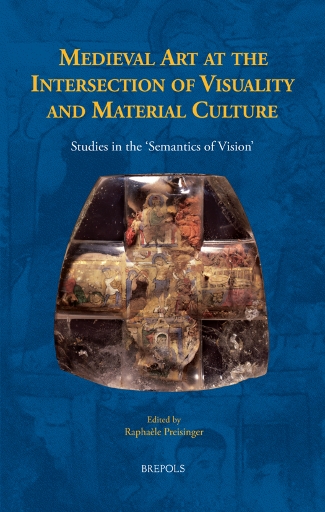
Medieval Art at the Intersection of Visuality and Material Culture
show More to view fulltext, buy and share links for:Medieval Art at the Intersection of Visuality and Material Culture show Less to hide fulltext, buy and share links for: Medieval Art at the Intersection of Visuality and Material CultureOver the last two decades the historiography of medieval art has been defined by two seemingly contradictory trends: a focus on questions of visuality, and more recently an emphasis on materiality. The latter, which has encouraged multi-sensorial approaches to medieval art, has come to be perceived as a counterpoint to the study of visuality as defined in ocularcentric terms.
Bringing together specialists from different areas of art history, this book grapples with this dialectic and poses new avenues for reconciling these two opposing tendencies. The essays in this volume demonstrate the necessity of returning to questions of visuality, taking into account the insights gained from the ‘material turn’. They highlight conceptions of vision that attribute a haptic quality to the act of seeing and draw on bodily perception to shed new light on visuality in the Middle Ages.
-
-
-

Memory and Recollection in the Aristotelian Tradition
show More to view fulltext, buy and share links for:Memory and Recollection in the Aristotelian Tradition show Less to hide fulltext, buy and share links for: Memory and Recollection in the Aristotelian TraditionAristotle’s De memoria et reminiscentia (‘On Memory and Recollection’) is the oldest surviving systematic study of the nature of human memory. Forming part of Aristotle’s other minor writings on psychology that were intended as a supplement to his De anima (‘On the Soul’) and known under the collective title Parva naturalia, Aristotle’s De memoria et reminiscentia gave rise to a vast number of commentaries in the Middle Ages. The present volume offers new knowledge on the ancient and medieval understanding of Aristotle’s theories on memory and recollection across the linguistic borders and philosophical traditions in the Byzantine Greek, Latin, and Arabic reception.
-
-
-
Omnium expetendorum prima est sapientia
show More to view fulltext, buy and share links for:Omnium expetendorum prima est sapientia show Less to hide fulltext, buy and share links for: Omnium expetendorum prima est sapientiaFounded at the beginning of the twelfth century on the outskirts of Paris, the Parisian school of Saint-Victor soon became an intellectual centre on a European scale: through the international recruitment of its masters; through the wide handwritten dissemination of their works, in particular those of Hugh and Richard; and finally through the extent of its doctrinal contribution to a common European culture, on a large number of points: the importance of acquiring a "general culture"; the need for a rigorous historical approach to biblical texts, open to rabbinic exegesis; a contagious interest in the writings and thought of the pseudo-Dionysius Areopagita; a major contribution to the constitution of a theological discipline; an effort to reconcile fervour in spiritual life and psychological finesse in the analysis of contemplation and its stages. In short, a curiosity for all fields of knowledge and, at the same time, an effort to unify them into a universal and unified wisdom.
The Book gathers new studies on original sources concerning Hugh of St. Victor, as the intellectual founder or the Victorine school; several of his Victorine brothers and disciples: Richard, Achard, Andrew, Godfrey, Absalon, up to late and little known Victorine masters as Pierre Leduc and Henri le Boulangier, at the time of the Great Schism (with critical edition of inedited texts); their influences on twelfth century texts as Ysagoge in theologiam or Speculum Ecclesiae, on Franciscan authors including Antony of Padua, Bonaventure, Rudolf of Biberach, and Duns Scotus, on romance literature of troubadours, on Carmelite authors of the sixteenth centruy and - a still uncharted territory - on Polish culture from Middle Ages to contemporary times.
-
-
-
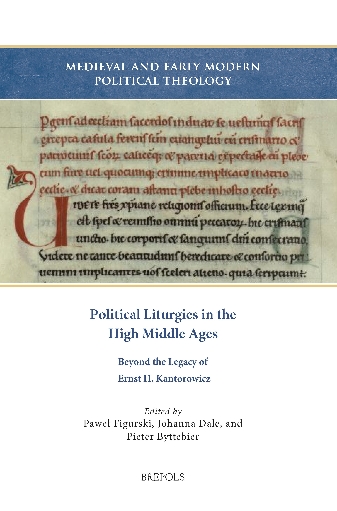
Political Liturgies in the High Middle Ages
show More to view fulltext, buy and share links for:Political Liturgies in the High Middle Ages show Less to hide fulltext, buy and share links for: Political Liturgies in the High Middle AgesAlthough as long ago as the 1940s Ernst H. Kantorowicz exhorted medievalists to make greater use of liturgical sources, historians largely continued to ignore the “magic thicket of prayers, benedictions, and ecclesiastical rites” that comprise the liturgy. Instead they left liturgical sources to specialists interested in the development of individual rites through time. This volume, inspired by Kantorowicz’s insights, builds on the work of a new generation of scholars, who see liturgical sources as integral to understanding medieval politics and society. The individual essays focus on different polities and regions of medieval Christian Europe, but all concentrate on the high Middle Ages, a period in which the importance of liturgy to political cultures has traditionally been seen as being in decline. Together the essays demonstrate how a careful reading of liturgical sources can shed new light on political cultures and practices, how liturgical rituals shaped politics, and how political realities influenced liturgical ceremonial. They demonstrate the interrelationship between liturgical scholarship and political theory, and challenge the paradigm of the desacralization of kingship and politics in this period.
-
-
-

Religious Practices and Everyday Life in the Long Fifteenth Century (1350–1570)
show More to view fulltext, buy and share links for:Religious Practices and Everyday Life in the Long Fifteenth Century (1350–1570) show Less to hide fulltext, buy and share links for: Religious Practices and Everyday Life in the Long Fifteenth Century (1350–1570)The essays in this book bring to light and analyse the continuities and shifts in daily religious practices across Europe - from Portugal to Hungary and from Italy to the British Isles - in the transition from the Middle Ages to the early modern period. While some of these changes, such as the increasing use of rosaries and the resort to Ars Moriendi, were the consequence of the rise of a more personal and interiorized faith, other changes had different causes. These included the spreading of the Reformation over Europe, the expulsion or compulsory conversion of the Jews in the Iberian Peninsula, and the conquest of large portions of eastern Christianity by the Turks - all of which forced people, who suddenly found that they had become religious minorities, to adopt new ways of living and new strategies for expressing their religiosity.
By recovering and analysing the cultural dynamics and connections between religious power, knowledge, culture, and practices, this collection reconsiders and enriches our understanding of one of the most critical phases of Europe’s cultural history. At the same time, it challenges existing narratives of the development of (early) modern identities that still, all too often, dominate the self-understanding of contemporary European society.
-
-
-
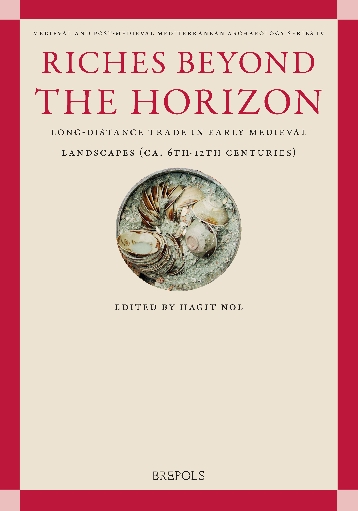
Riches Beyond the Horizon
show More to view fulltext, buy and share links for:Riches Beyond the Horizon show Less to hide fulltext, buy and share links for: Riches Beyond the HorizonThis book offers new and innovative perspectives on long-distance trade between Europe, the Mediterranean area, the Middle East, Africa, India and China during the Early Medieval period. The archaeological data and historical insights presented in this volume are without exception of great interest, often exciting, and more than once astonishing. The goods which travelled between the continents in the timespan under discussion (ca. 6th to 12th centuries) include pottery in all shapes and forms, textiles, coins, metal, lava millstones, glass, marble columns, rock-crystal beads, and also plants used for incense. The scope of the contributions includes the wide-ranging economic contacts of a Viking community, the changing patterns of long-distance trade in the Byzantine Empire, the spread of Chinese pottery to Africa, the Near East and Europe, the information on maritime routes provided by shipwrecks in the Java Sea, the reconstruction of an incense trade network, and the production and distribution of textiles as well as stone objects in the Middle East and beyond. The varied approaches in this volume underline that the movement of objects in Early Medieval times over vast distances not only reflect mechanisms of exchange, but also imply social networks and the transfer of ideas. Thus, Riches Beyond the Horizon sheds compelling light on a world which was much more complex and much more interconnected than has often been assumed.
-
-
-

Scribes and the Presentation of Texts (from Antiquity to c. 1550)
show More to view fulltext, buy and share links for:Scribes and the Presentation of Texts (from Antiquity to c. 1550) show Less to hide fulltext, buy and share links for: Scribes and the Presentation of Texts (from Antiquity to c. 1550)Scribes played complex, often overlooked roles in the production of hand-written texts across Antiquity, the Middle Ages, and the Renaissance. Some scribes simply copied the exemplar; other scribes participated with authors and decorators in establishing the miseen- page and overall appearance of a text. Many decisions needed to be made regarding the selection of text script; the style of rubrication, display scripts, and initials; the placement and execution of potentially elaborate illuminated images. What was the role of the scribe in contributing to the decision-making process or in determining the final format and material appearance of a document, scroll or codex?
This volume explores many of the choices that a single scribe or groups of scribes would need to make when writing and presenting a text, whether in a monastic, cathedral or lay setting. The articles in the volume range from case studies of a single artifact to the analysis of multiple copies and versions of a particular text.
The authors include eminent specialists in the field of manuscript studies as well as midand early career scholars.
-
-
-
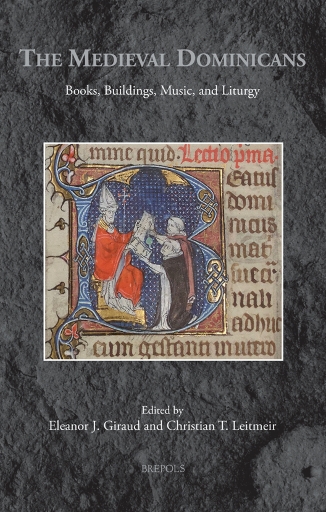
The Medieval Dominicans
show More to view fulltext, buy and share links for:The Medieval Dominicans show Less to hide fulltext, buy and share links for: The Medieval DominicansThe Order of Preachers has famously bred some of the leading intellectual lights of the Middle Ages. While Dominican achievements in theology, philosophy, languages, law, and sciences have attracted much scholarly interest, their significant engagement with liturgy, the visual arts, and music remains relatively unexplored. These aspects and their manifold interconnections form the focal point of this interdisciplinary volume.
The different chapters examine how early Dominicans positioned themselves and interacted with their local communities, where they drew their influences from, and what impact the new Order had on various aspects of medieval life. The contributors to this volume address issues as diverse as the making and illustrating of books, services for a king, the disposition of liturgical space, the creation of new liturgies, and a Dominican-made music treatise. In doing so, they seek to shed light on the actions and interactions of medieval Dominicans in the first centuries of the Order’s existence.
-
-
-

Tributes to Paul Binski
show More to view fulltext, buy and share links for:Tributes to Paul Binski show Less to hide fulltext, buy and share links for: Tributes to Paul BinskiThis volume is published in honour of Paul Binski, whose scholarship and teaching have done so much to illuminate the material and intellectual worlds of Gothic art and architecture. Remarkable for its material scope and philosophical depth, Paul’s work has had a powerful influence on the current state of the field: this is reflected here in thirty-four essays on buildings, works of art and ideas in a wide range of historical and geographical contexts, from Iberia to Scandinavia and Italy to Ireland. Consistently fresh in their scholarship, these essays combine to make an important contribution to medieval art history. In doing so they reflect the admiration and affection which Paul inspires in his students and colleagues. With contributions by: Gabriel Byng, Meredith Cohen, Emily Guerry, James Hillson, Ethan Matt Kavaler, Tom Nickson, Zoë Opačić, Claudia Bolgia, Jean-Marie Guillouët, Justin E. A. Kroesen, Julian Luxford, Robert Mills, John Munns, Matthew M. Reeve, Laura Slater, Beth Williamson, Jessica Berenbeim, Spike Bucklow, Marcia Kupfer, Jean-Pascal Pouzet, Miri Rubin, Kathryn M. Rudy, Rocío Sánchez Ameijeiras, Lucy Wrapson, Patrick Zutshi, Mary Carruthers, Jill Caskey, Lucy Donkin, Kate Heard, Robert Maniura, Alexander Marr, M. A. Michael, Conrad Rudolph, Betsy Sears.
-
-
-
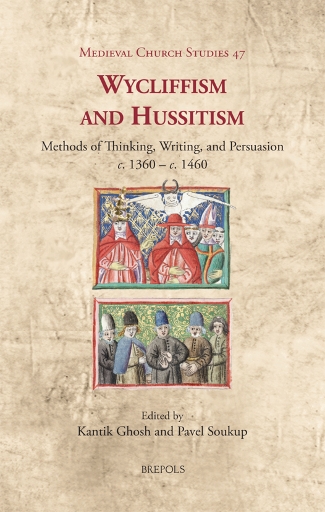
Wycliffism and Hussitism
show More to view fulltext, buy and share links for:Wycliffism and Hussitism show Less to hide fulltext, buy and share links for: Wycliffism and HussitismJohn Wyclif (d. 1384), famous Oxford philosopher-theologian and controversialist, was posthumously condemned as a heretic at the Council of Constance in 1415. Wyclif’s influence was pan-European and had a particular impact on Prague, where Jan Hus, from Charles University, was his avowed disciple and the leader of a dissident reformist movement. Hus, condemned to the stake at Constance, gathered around him a prolific circle of disciples who changed the landscape of late medieval religion and literature in Bohemia, just as Wyclif’s own followers had done in England.
Both thinkers, and the movements associated with them, played a crucial role in the transformation of later medieval European thought, in particular through a radically enlarged role of textual production in the vernaculars (especially Middle English and Old Czech), as well as in Latin, in the philosophical, theological, and ecclesiological realms.
This interdisciplinary volume of essays brings together cutting-edge research from scholars working in these and contiguous fields and asks fundamental questions about the methods that informed Wycliffite and Hussite writings and those by their interlocutors and opponents. Viewing these debates through a methodological lens enables a reassessment of the impact that they had, and the responses they elicited, across a range of European cultures, from England in the west via France and Austria to Bohemia in the east.
-
-
-
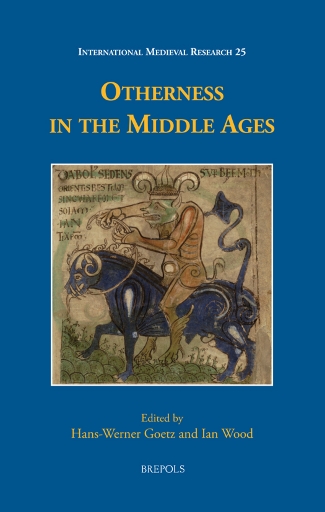
‘Otherness’ in the Middle Ages
show More to view fulltext, buy and share links for:‘Otherness’ in the Middle Ages show Less to hide fulltext, buy and share links for: ‘Otherness’ in the Middle AgesAlthough ‘Otherness’ is an extremely common phenomenon in every society, related research is still at its beginnings. ‘Otherness’ in the Middle Ages is a versatile and complex theme that covers a great number of different aspects, facets, and approaches: from non-human monsters and cultural strangers from remote places up to foreigners from another country or another town; it can refer to ethnic, cultural, political, social, sexual, or religious ‘Otherness’, inside or outside one’s own community. In any case, however, ‘Otherness’ is a subjective phenomenon depending on personal views and ascriptions, an issue of ‘imagination’ and experience rather than ‘reality’. There is neither one single model of alterity nor is ‘Otherness’ a stable phenomenon, but it changes over time and according to the cultural context. All this calls for methodological reflection and needs thorough investigation.
The methodological introduction and the 18 contributions of this volume demonstrate the great diversity of the theme and its different manifestations and perspectives. They tackle the problem from distinct angles and disciplines (history, art history, archaeology, literary history, and philology) in a wide chronological and thematic frame, using different methodological approaches, dealing with different areas (from Northern and Southern Europe to Byzantium and India), perspectives (including law, social order, the past, a sea), and diverse kinds of sources. They examine all kinds of ‘Otherness’ mentioned above, highlight demarcation and rejection, aversion or acceptance, assimilation and integration, thus relativizing a strict dichotomy between ‘the Self’ and ‘the Other’ or between inside and outside. This volume is so far the most comprehensive attempt to tackle the huge problem of ‘Otherness’ in the Middle Ages.
-