


Brepols Online Books Medieval Miscellanea Collection 2022 - bob2022mime

Collection Contents
41 - 47 of 47 results
-
-

Religious Practices and Everyday Life in the Long Fifteenth Century (1350–1570)
show More to view fulltext, buy and share links for:Religious Practices and Everyday Life in the Long Fifteenth Century (1350–1570) show Less to hide fulltext, buy and share links for: Religious Practices and Everyday Life in the Long Fifteenth Century (1350–1570)The essays in this book bring to light and analyse the continuities and shifts in daily religious practices across Europe - from Portugal to Hungary and from Italy to the British Isles - in the transition from the Middle Ages to the early modern period. While some of these changes, such as the increasing use of rosaries and the resort to Ars Moriendi, were the consequence of the rise of a more personal and interiorized faith, other changes had different causes. These included the spreading of the Reformation over Europe, the expulsion or compulsory conversion of the Jews in the Iberian Peninsula, and the conquest of large portions of eastern Christianity by the Turks - all of which forced people, who suddenly found that they had become religious minorities, to adopt new ways of living and new strategies for expressing their religiosity.
By recovering and analysing the cultural dynamics and connections between religious power, knowledge, culture, and practices, this collection reconsiders and enriches our understanding of one of the most critical phases of Europe’s cultural history. At the same time, it challenges existing narratives of the development of (early) modern identities that still, all too often, dominate the self-understanding of contemporary European society.
-
-
-
Riches Beyond the Horizon
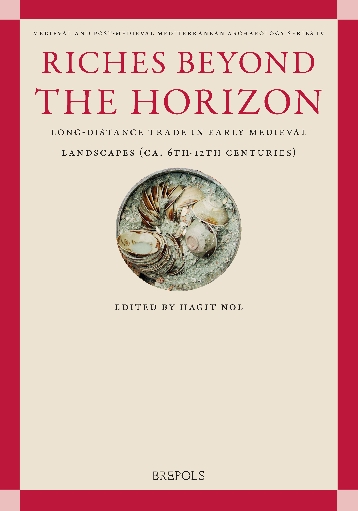
show More to view fulltext, buy and share links for:Riches Beyond the Horizon show Less to hide fulltext, buy and share links for: Riches Beyond the HorizonThis book offers new and innovative perspectives on long-distance trade between Europe, the Mediterranean area, the Middle East, Africa, India and China during the Early Medieval period. The archaeological data and historical insights presented in this volume are without exception of great interest, often exciting, and more than once astonishing. The goods which travelled between the continents in the timespan under discussion (ca. 6th to 12th centuries) include pottery in all shapes and forms, textiles, coins, metal, lava millstones, glass, marble columns, rock-crystal beads, and also plants used for incense. The scope of the contributions includes the wide-ranging economic contacts of a Viking community, the changing patterns of long-distance trade in the Byzantine Empire, the spread of Chinese pottery to Africa, the Near East and Europe, the information on maritime routes provided by shipwrecks in the Java Sea, the reconstruction of an incense trade network, and the production and distribution of textiles as well as stone objects in the Middle East and beyond. The varied approaches in this volume underline that the movement of objects in Early Medieval times over vast distances not only reflect mechanisms of exchange, but also imply social networks and the transfer of ideas. Thus, Riches Beyond the Horizon sheds compelling light on a world which was much more complex and much more interconnected than has often been assumed.
-
-
-

Scribes and the Presentation of Texts (from Antiquity to c. 1550)
show More to view fulltext, buy and share links for:Scribes and the Presentation of Texts (from Antiquity to c. 1550) show Less to hide fulltext, buy and share links for: Scribes and the Presentation of Texts (from Antiquity to c. 1550)Scribes played complex, often overlooked roles in the production of hand-written texts across Antiquity, the Middle Ages, and the Renaissance. Some scribes simply copied the exemplar; other scribes participated with authors and decorators in establishing the miseen- page and overall appearance of a text. Many decisions needed to be made regarding the selection of text script; the style of rubrication, display scripts, and initials; the placement and execution of potentially elaborate illuminated images. What was the role of the scribe in contributing to the decision-making process or in determining the final format and material appearance of a document, scroll or codex?
This volume explores many of the choices that a single scribe or groups of scribes would need to make when writing and presenting a text, whether in a monastic, cathedral or lay setting. The articles in the volume range from case studies of a single artifact to the analysis of multiple copies and versions of a particular text.
The authors include eminent specialists in the field of manuscript studies as well as midand early career scholars.
-
-
-
The Medieval Dominicans
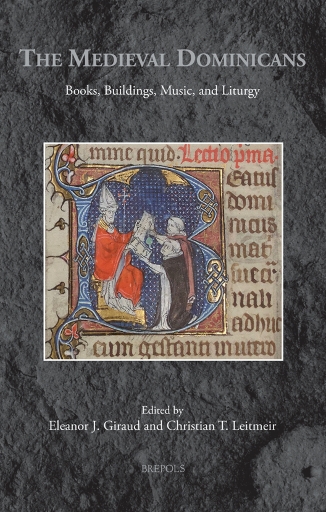
show More to view fulltext, buy and share links for:The Medieval Dominicans show Less to hide fulltext, buy and share links for: The Medieval DominicansThe Order of Preachers has famously bred some of the leading intellectual lights of the Middle Ages. While Dominican achievements in theology, philosophy, languages, law, and sciences have attracted much scholarly interest, their significant engagement with liturgy, the visual arts, and music remains relatively unexplored. These aspects and their manifold interconnections form the focal point of this interdisciplinary volume.
The different chapters examine how early Dominicans positioned themselves and interacted with their local communities, where they drew their influences from, and what impact the new Order had on various aspects of medieval life. The contributors to this volume address issues as diverse as the making and illustrating of books, services for a king, the disposition of liturgical space, the creation of new liturgies, and a Dominican-made music treatise. In doing so, they seek to shed light on the actions and interactions of medieval Dominicans in the first centuries of the Order’s existence.
-
-
-

Tributes to Paul Binski
show More to view fulltext, buy and share links for:Tributes to Paul Binski show Less to hide fulltext, buy and share links for: Tributes to Paul BinskiThis volume is published in honour of Paul Binski, whose scholarship and teaching have done so much to illuminate the material and intellectual worlds of Gothic art and architecture. Remarkable for its material scope and philosophical depth, Paul’s work has had a powerful influence on the current state of the field: this is reflected here in thirty-four essays on buildings, works of art and ideas in a wide range of historical and geographical contexts, from Iberia to Scandinavia and Italy to Ireland. Consistently fresh in their scholarship, these essays combine to make an important contribution to medieval art history. In doing so they reflect the admiration and affection which Paul inspires in his students and colleagues. With contributions by: Gabriel Byng, Meredith Cohen, Emily Guerry, James Hillson, Ethan Matt Kavaler, Tom Nickson, Zoë Opačić, Claudia Bolgia, Jean-Marie Guillouët, Justin E. A. Kroesen, Julian Luxford, Robert Mills, John Munns, Matthew M. Reeve, Laura Slater, Beth Williamson, Jessica Berenbeim, Spike Bucklow, Marcia Kupfer, Jean-Pascal Pouzet, Miri Rubin, Kathryn M. Rudy, Rocío Sánchez Ameijeiras, Lucy Wrapson, Patrick Zutshi, Mary Carruthers, Jill Caskey, Lucy Donkin, Kate Heard, Robert Maniura, Alexander Marr, M. A. Michael, Conrad Rudolph, Betsy Sears.
-
-
-
Wycliffism and Hussitism
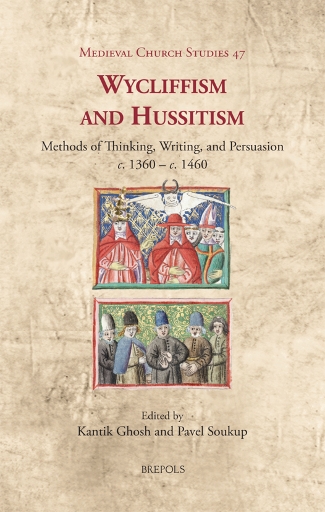
show More to view fulltext, buy and share links for:Wycliffism and Hussitism show Less to hide fulltext, buy and share links for: Wycliffism and HussitismJohn Wyclif (d. 1384), famous Oxford philosopher-theologian and controversialist, was posthumously condemned as a heretic at the Council of Constance in 1415. Wyclif’s influence was pan-European and had a particular impact on Prague, where Jan Hus, from Charles University, was his avowed disciple and the leader of a dissident reformist movement. Hus, condemned to the stake at Constance, gathered around him a prolific circle of disciples who changed the landscape of late medieval religion and literature in Bohemia, just as Wyclif’s own followers had done in England.
Both thinkers, and the movements associated with them, played a crucial role in the transformation of later medieval European thought, in particular through a radically enlarged role of textual production in the vernaculars (especially Middle English and Old Czech), as well as in Latin, in the philosophical, theological, and ecclesiological realms.
This interdisciplinary volume of essays brings together cutting-edge research from scholars working in these and contiguous fields and asks fundamental questions about the methods that informed Wycliffite and Hussite writings and those by their interlocutors and opponents. Viewing these debates through a methodological lens enables a reassessment of the impact that they had, and the responses they elicited, across a range of European cultures, from England in the west via France and Austria to Bohemia in the east.
-
-
-
‘Otherness’ in the Middle Ages
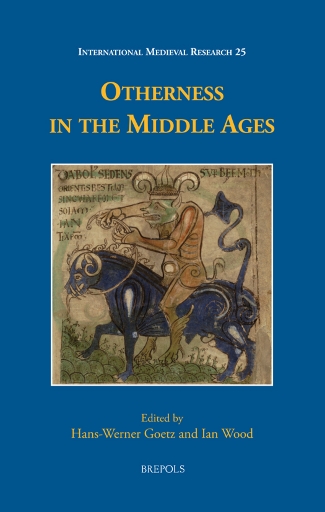
show More to view fulltext, buy and share links for:‘Otherness’ in the Middle Ages show Less to hide fulltext, buy and share links for: ‘Otherness’ in the Middle AgesAlthough ‘Otherness’ is an extremely common phenomenon in every society, related research is still at its beginnings. ‘Otherness’ in the Middle Ages is a versatile and complex theme that covers a great number of different aspects, facets, and approaches: from non-human monsters and cultural strangers from remote places up to foreigners from another country or another town; it can refer to ethnic, cultural, political, social, sexual, or religious ‘Otherness’, inside or outside one’s own community. In any case, however, ‘Otherness’ is a subjective phenomenon depending on personal views and ascriptions, an issue of ‘imagination’ and experience rather than ‘reality’. There is neither one single model of alterity nor is ‘Otherness’ a stable phenomenon, but it changes over time and according to the cultural context. All this calls for methodological reflection and needs thorough investigation.
The methodological introduction and the 18 contributions of this volume demonstrate the great diversity of the theme and its different manifestations and perspectives. They tackle the problem from distinct angles and disciplines (history, art history, archaeology, literary history, and philology) in a wide chronological and thematic frame, using different methodological approaches, dealing with different areas (from Northern and Southern Europe to Byzantium and India), perspectives (including law, social order, the past, a sea), and diverse kinds of sources. They examine all kinds of ‘Otherness’ mentioned above, highlight demarcation and rejection, aversion or acceptance, assimilation and integration, thus relativizing a strict dichotomy between ‘the Self’ and ‘the Other’ or between inside and outside. This volume is so far the most comprehensive attempt to tackle the huge problem of ‘Otherness’ in the Middle Ages.
-