


BOB2022MIOT

Collection Contents
1 - 20 of 34 results
-
-
Architectural Elements, Wall Paintings, and Mosaics
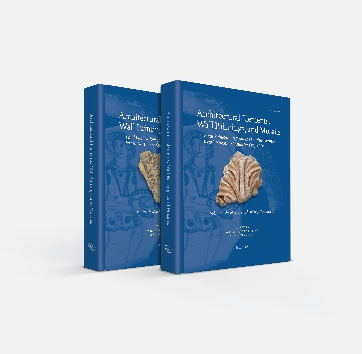
show More to view fulltext, buy and share links for:Architectural Elements, Wall Paintings, and Mosaics show Less to hide fulltext, buy and share links for: Architectural Elements, Wall Paintings, and MosaicsThe Decapolis city of Jerash has long attracted attention from travellers and scholars, due both to the longevity of the site and the remarkable finds uncovered during successive phases of excavation that have taken place from 1902 onwards. Between 2011 and 2016, a Danish-German team, led by the universities of Aarhus and Münster, focused their attention on the Northwest Quarter of Jerash - the highest point within the walled city - and this is the fourth in a series of books presenting the team’s final results.
This two-part set offers a comprehensive presentation of Jerash’s rich building heritage from the Late Hellenistic period up to the city’s destruction in the mid-eighth century ad through a discussion of architectural elements, together with analysis of the mosaics, wall paintings, and building ceramics excavated from the Northwest Quarter. As well as providing a general overview of the city’s changing patterns of habitation, the contributions gathered here also include close case- studies and object biographies that shed new light on the intense use, reuse, and recycling of materials that testify to evolving urban practices and optimization of resources across the Roman, Byzantine, and Islamic periods.
-
-
-
Cartesius edoctus
show More to view fulltext, buy and share links for:Cartesius edoctus show Less to hide fulltext, buy and share links for: Cartesius edoctusLes études qui composent ce recueil ont été prononcées le 6 octobre 2017 au Monastero degli Olivetani de Lecce, en hommage à Giulia Belgioioso, au moment où la fondatrice du Centro Dipartimentale di studi su Descartes ‘Ettore Lojacono’ quittait à la fois son enseignement et la direction du centre qu’elle avait créé.
Le titre qui les réunit - Cartesius edoctus - suffit à dire l’essentiel pour un savant professeur qui a toujours su laisser la première place à celui qui a fait l’objet principal de ses recherches et de ses leçons : mais si elle a inlassablement enseigné Descartes et le cartésianisme, Giulia Belgioioso a aussi fait du Salente un « nouveau royaume » cartésien en y développant ses propres études, en y organisant des rencontres internationales et en établissant, pour parler comme Fénelon, « toutes les plus utiles maximes de gouvernement » pour les recherches des nombreux jeunes chercheurs qu’elle a formés et des équipes qui ont travaillé à l’oeuvre commun, en particulier à l’édition magistrale de Tutte le lettere et des Opere et Opere postume. La fondation du Centro, en 1998, très vite devenu l’alter ego du Centre d’études cartésiennes de la Sorbonne, a fourni le complément institutionnel des avancées méthodologiques évoquées plus haut.
Ce recueil d’articles est un hommage : loin cependant d’être purement formel, il entend se concentrer strictement sur les axes principaux de l’activité de recherche de Giulia Belgioioso. Ce faisant, il révèle en réalité un monde entier : on s’aperçoit en effet immédiatement, ne fût-ce qu’en feuilletant le volume, que les études qui y figurent envisagent les aspects les plus importants à la fois de la philosophie de Descartes et de l’histoire du cartésianisme, comprenant également des documents inédits. La démarche conduit donc de la deuxième Méditation (Igor Agostini) à Paolo Mattia Doria (Jean-Robert Armogathe) ; de la mathesis universalis (Frédéric de Buzon) à Christine de Suède (Carlo Borghero) ; des questions de méthode et de la visée apologétique (Vincent Carraud) à L’Homme (Dan Garber) ; du mythe du solipsisme (Denis Kambouchner) à saint Augustin et Montaigne (Jean-Luc Marion) ; d’un échantillon sur philosophie et médecine dans le XVIIe siècle français (Fabio Sulpizio) aux débats sur l’eucharistie à Port-Royal (Martine Pécharman) et à la condamnation d’un lockien italien (Marta Fattori). Une série de témoignages de collègues, élèves et amis complète l’ouvrage.
-
-
-
Faith in a Beam of Light
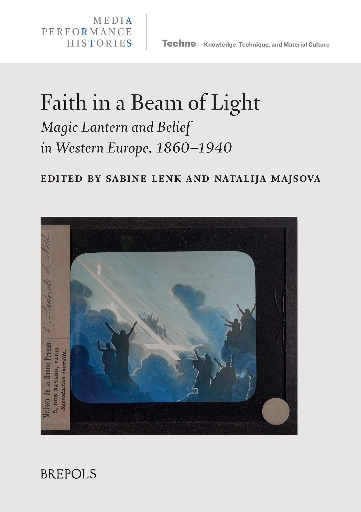
show More to view fulltext, buy and share links for:Faith in a Beam of Light show Less to hide fulltext, buy and share links for: Faith in a Beam of LightAn early visual mass medium, the magic lantern was omnipresent in most Western societies between 1880 and 1930. The Christian Church, especially the Catholics, spiritual associations such as the Freemasons, political interest groups and teaching institutions all made use of lectures enriched by projected images to disseminate information, convictions and doctrines. Moreover, the lantern often featured as a concealed aid in stage spectacles. Nineteen authors analyse the effects of "the beam of light in the dark" in the context of religion, faith and belief. Attention is paid to the wide spectrum of locations where projections took place, as well as to the lantern's impressive versatility. The lavishly illustrated chapters collected in this volume range from analyses of religious propaganda to fundraising lectures for missionary work in China, from the fight against alcoholism to the secularisation of society, and from the lantern's application in spiritualist sessions to its use in science and teaching.
-
-
-

Language Commonality and Literary Communities in Early Modern England
show More to view fulltext, buy and share links for:Language Commonality and Literary Communities in Early Modern England show Less to hide fulltext, buy and share links for: Language Commonality and Literary Communities in Early Modern EnglandIn the early modern period, the humanist practice of translation of sacred as well as secular texts created new readerships in the vernacular for authoritative texts, religious or classical. As the circulation of languages within Europe reshuffled hierarchies between classical languages and vernacular tongues, transmission via translation was not only vertical, but also horizontal, and the contacts between European languages enabled the expansion of local lexicons from sources other than Latin or Greek.
This volume focuses on the role of translation and lexical borrowing in the expansion of specific English lexicons (erudite, technical, or artisanal) as evidenced in printed texts from the early modern period. It considers how language shapes identity in social, religious, philosophical, artistic, and literary contexts, and is in turn shaped by claims of social, religious, philosophical, artistic, and literary identity.
-
-
-
Late Chalcolithic Northern Mesopotamia in Context
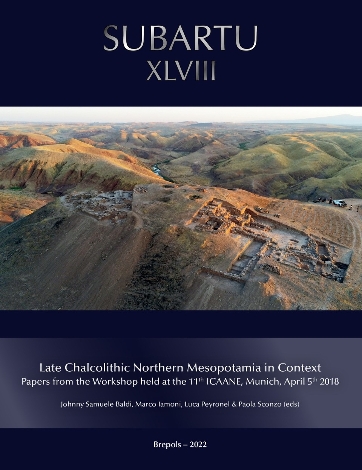
show More to view fulltext, buy and share links for:Late Chalcolithic Northern Mesopotamia in Context show Less to hide fulltext, buy and share links for: Late Chalcolithic Northern Mesopotamia in ContextMany of the debates that have until recently driven research into Mesopotamia’s proto-urban phase (5th- 4th millennia bce) have now been reassessed thanks to new fieldwork in Iraqi Kurdistan and new data into the relationships between the north and south of the Alluvium from hitherto poorly-documented regions. These debates were re-examined in the light of this new material during a workshop held at the ICAANE in 2018 in Munich, leading to unprecedented perspectives on the patterns of early urbanization, social mobility, and the organization of Late Chalcolithic communities. Drawing on research first presented at ICAANE, and building on the most recent data from surveys and excavations, this volume engages with one key question from different angles: namely, how can we reconcile detailed analysis of the multifaceted local variations of proto-urbanism with the supra-regional, intricate, and more widespread nature of this same phenomenon across Mesopotamia?
-
-
-
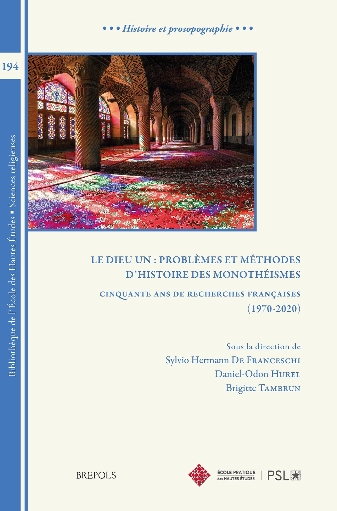
Le Dieu un : problèmes et méthodes d’histoire des monothéismes
show More to view fulltext, buy and share links for:Le Dieu un : problèmes et méthodes d’histoire des monothéismes show Less to hide fulltext, buy and share links for: Le Dieu un : problèmes et méthodes d’histoire des monothéismesFondé au début de l’été 1969 et labellisé laboratoire associé du CNRS à partir du 1er janvier 1970, le Centre d’études des religions du Livre (CERL), dont est issu l’actuel Laboratoire d’études sur les monothéismes (LEM, UMR 8584), a été créé au tournant crucial des années 1960 et 1970, quand, sous l’impulsion du CNRS, le modèle du laboratoire, exporté depuis le champ des sciences exactes, se généralise pour favoriser l’essor d’investigations collectives également en sciences humaines et sociales.
Dans le vaste mouvement de restructuration de la recherche en cours dans la France d’après Mai 68, les sciences religieuses devaient prendre la place qu’elles méritaient. Les objectifs du CERL se sont alors définis essentiellement selon deux mots d’ordre : procéder à une étude comparative des trois monothéismes classiques (judaïsme, christianisme et islam) ; allier aussi rigoureusement que possible sciences des religions et histoire de la philosophie.
La mémoire collective du CERL a voulu retenir qu’il avait été conjointement fondé par Paul Vignaux (1904-1987), Georges Vajda (1908-1981) et Henry Corbin (1903-1978) - triade savante qui représentait les trois grandes religions du Livre. Henry Corbin a pourtant été l’unique architecte d’un projet dont Paul Vignaux a assuré la réalisation institutionnelle. Le présent ouvrage revient sur un demi-siècle de recherches françaises consacrées à l’étude non confessante des monothéismes.
-
-
-

Le doute dans l’Europe moderne
show More to view fulltext, buy and share links for:Le doute dans l’Europe moderne show Less to hide fulltext, buy and share links for: Le doute dans l’Europe moderneL’époque moderne, depuis l’Humanisme et la Renaissance jusqu’aux Lumières, fut propice au doute et largement travaillée par celui-ci. La découverte de nouvelles techniques, l’exploration de nouveaux espaces, le développement de nouvelles disciplines, la formulation de nouvelles doctrines religieuses et politiques, la circulation accélérée et élargie des productions écrites par la voie de l’imprimerie ont favorisé, notamment dans les villes, la pluralité et la confrontation des idées et des opinions et l’émergence du doute dans tous les domaines. L’ambition de ce volume est de contribuer à une histoire culturelle du doute, qui reste largement à construire à partir de l’exploration de ses divers aspects. Là où le scepticisme, qui renvoie d’abord à un système, une position ou un argument philosophique, oriente l’enquête vers l’histoire intellectuelle, le doute, qui désigne un état de l’esprit ou une attitude mentale, s’applique à tous les modes de la connaissance, théoriques et pragmatiques, et invite à élargir son étude à l’histoire des émotions, des mentalités, des comportements et des pratiques. S’agissant de l’époque moderne, il a paru particulièrement opérant de privilégier le fil directeur du rapport à la religion, considérée aussi bien comme croyance que doctrine et église. En effet, loin de refermer l’enquête sur l’histoire confessionnelle, ce rapport ouvre sur les différents champs culturels, du droit aux sciences et à la littérature, et contribue à révéler les enjeux anthropologiques de la question.
Les développements du doute au début de l’époque moderne semblent bien avoir introduit des attitudes que l’on retrouve dans le monde contemporain : le relativisme culturel ; la suspicion envers une information souvent surabondante et/ou peu fiable ; un élément personnel dans l’adhésion aux croyances religieuses ; la prédominance dans l’espace public de l’opinion sur le savoir. Une raison qui rend d’autant plus nécessaire la construction d’une histoire culturelle du doute à l’époque moderne.
-
-
-
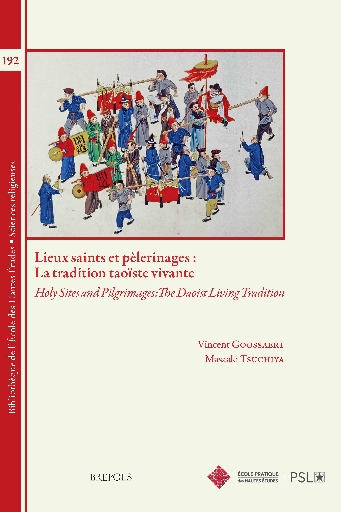
Lieux saints et pèlerinages : la tradition taoïste vivante
show More to view fulltext, buy and share links for:Lieux saints et pèlerinages : la tradition taoïste vivante show Less to hide fulltext, buy and share links for: Lieux saints et pèlerinages : la tradition taoïste vivanteThe Chinese territory is densely meshed with holy sites (mountains, caves, springs...) where the gods manifest themselves and where pilgrims come to meet them. The present volume, the result of a Franco-Japanese conference held in Paris in 2017, includes fifteen chapters in French and English, exploring the conceptions and practices at these holy sites; they build the analysis around the Daoist notion of “grotto-heavens and blessed lands” (dongtian fudi) and its long historical continuity for two millennia while addressing hybridizations with Buddhist and folk practices, and comparing with Japanese holy sites. These case studies cover both the ascetic practices of religious virtuosos and the popular associations whose members dance for the gods on the mountains.
-
-
-
Making Politics in the European Countryside
show More to view fulltext, buy and share links for:Making Politics in the European Countryside show Less to hide fulltext, buy and share links for: Making Politics in the European CountrysideThis book offers a fresh look at the so-called ‘politicisation’ of the European countryside, from the late eighteenth century to the 1930s, in the context of waning monarchies, rising and staggering parliamentary nation states, and fascist and communist dictatorships. The concept ‘politicisation’, however, is misleading. The book argues that Europe’s rural societies were far from immobile spaces, set in routines, that had to be politised from outside and against the grain.
The thirteen articles in the volume demonstrate that, instead of politicisation from scratch, political thinking and acting of country dwellers - from Scandinavia to Spain, from Moravia to France - evolved in a constant, dialectical relationship with their urban, regional and national surroundings: they reacted to wars, revolutions and shifting borders, their political loyalties changed, so did their political agendas, their repertoires of collective action and their role in the establishment, successes and failures of political parties, separate agrarian parties included.
-
-
-
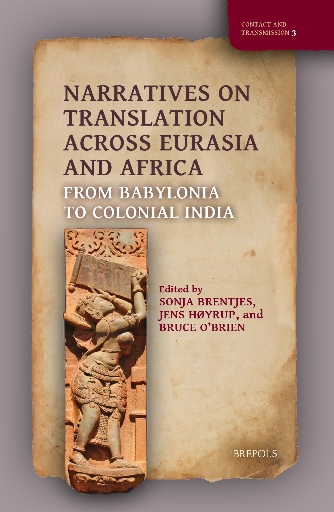
Narratives on Translation across Eurasia and Africa
show More to view fulltext, buy and share links for:Narratives on Translation across Eurasia and Africa show Less to hide fulltext, buy and share links for: Narratives on Translation across Eurasia and AfricaWhat has driven acts of translation in the past, and what were the conditions that shaped the results? In this volume, scholars from across the humanities interrogate narratives on the process of translation: by historical translators ranging from ancient Babylonia to early modern Japan and the British Empire, and by academics from the nineteenth to the twentieth centuries who interpreted these translators’ practices.
In Part 1 the volume authors reflect on the history of the approaches to the phenomenon of translation in their specific fields of competence in order to learn what shaped the academic questions asked, what theoretical and practical tools were deployed, which arguments were privileged, and why certain kinds of evidence (but not others) were thought to be the basis for understanding the function and purpose of all translation performed in a given culture. Part II explores how translators and authors from antiquity to modern times described their own motivations and the circumstances in which they chose to translate. In both parts, the contributors disentangle histories of translation from the specialized intellectual fields (such as science, religion, law, or literature) with which they have been bound in order to make the case that we understand translation best when we take into account all cultural practices and translation activities cutting synchronically and diachronically through the entire societal fabric.
-
-
-
New Avenues in Biblical Exegesis in Light of the Septuagint
show More to view fulltext, buy and share links for:New Avenues in Biblical Exegesis in Light of the Septuagint show Less to hide fulltext, buy and share links for: New Avenues in Biblical Exegesis in Light of the SeptuagintThe detailed study of the Septuagint opens new avenues of interpretation of the biblical text and enables new advancements in exegetical studies. The Greek version can be studied through several different approaches and the application of exegetical methods, old and new, contributes to a better understanding of numerous literary, historical and theological aspects of the Bible. The present volume collects the contributions written by renowned scholars who address the issue of the role and impact of Septuagint studies on biblical exegesis and theology. The papers range from more methodological discussions to exegetical studies applying various approaches to the Septuagint text. The wide variety of methods applied reveals numerous aspects of the Septuagint and the biblical text in general, such as their composition, history, textual transmission, literary scope and shape, theology. The diversity of methods and analyses of the Septuagint represented in this book have, nevertheless, a common denominator: Biblical exegesis would benefit greatly from a deeper knowledge of the Septuagint.
-
-
-

Passeurs de culture
show More to view fulltext, buy and share links for:Passeurs de culture show Less to hide fulltext, buy and share links for: Passeurs de cultureIf the word « culture » comes from the Latin word cultura, the concept itself, which means general knowledge acquired through schools, books and cultural institutions, is related, in the Roman world of the first centuries ad to Greek paideia. As for paideia, which was then restricted to social elite, it covered literary education formulated and conveyed by sophists and grammarians in the time of the Roman Empire, as well as other forms of Greek culture like music, philosophy and sports.
This book focuses on cultural mediators, first of all professors, who are examined from various points of view: social and cultural status, teaching practices or ambivalent representations. Nevertheless, transmission of knowledge exceeds the environment of school; it is performed through literary and intellectual productions, within specialized disciplines, and through reinterpretations which convey a singular world view.
The present collection of essays displays the circulation of culture between the Greek and Roman worlds, throughout an Empire whose epicentre is paideia.
-
-
-

Sympozjum Egejskie
show More to view fulltext, buy and share links for:Sympozjum Egejskie show Less to hide fulltext, buy and share links for: Sympozjum EgejskieSympozjum Egejskie. Papers in Aegean Archaeology is a peer-reviewed series that has been designed to full the role of a platform for presenting and introducing a wide range of new research approaches and themes within the broad area of Aegean Archaeology. This is primarily achieved through showcasing the work of newcomers to the discipline, in other words those scholars who are currently at the beginning of their research career in the field of Aegean Archaeology, as well as scholars working outside the traditional university structure such as independent scholars, professional field archaeologists, museum curators and conservators. It is our hope that this series will serve as a concise guide to the most recent research undertaken by early career scholars and the diverse and inspiring new trends in the archaeology of the Prehistoric Aegean, as well as shining a light on the future direction of the discipline.
-
-
-
The Historical and Cultural Memory of the Babylonian World
show More to view fulltext, buy and share links for:The Historical and Cultural Memory of the Babylonian World show Less to hide fulltext, buy and share links for: The Historical and Cultural Memory of the Babylonian WorldIn the study of the ancient world, Babylon can be considered as the most impressive representation, historically, archaeologically, and in literature, of urbanism in the Near East. This first example of an urban centre and its cultural heritage - both tangible and intangible - provides a focal point for discussions of historical and cultural memory in the region. The eleven contributions gathered here draw together multidisciplinary research into Babylonian culture, exploring the epistemic foundations, contacts, resilience, and cultural transmission of the city and its milieu from ancient times up until the modern day. Through this approach, this volume is able to support conversations concerning the historical and cultural memory of Babylon and promote a dialogue that cuts across, and unites, both cultures and academic disciplines.
-
-
-

Trans-mission. Création et hybridation dans le domaine d’oc
show More to view fulltext, buy and share links for:Trans-mission. Création et hybridation dans le domaine d’oc show Less to hide fulltext, buy and share links for: Trans-mission. Création et hybridation dans le domaine d’ocCe volume est le fruit des échanges et de la collaboration entre de jeunes chercheurs de tous horizons qui consacrent leurs études à la langue, la littérature et la culture occitanes dans une optique diachronique et multidisciplinaire. Le récueil comprend 22 travaux conçus dans le cadre de projets étudiants de master, de thèses doctorales en cours ou récemment achevées, ainsi que d’études post-doctorales. Les contributions sont menées avec une approche scientifique rigoureuse et innovatrice et une méthode visant à l’interdisciplinarité. Elles portent sur des sujets nombreux et fort variés : des analyses géolinguistiques et sociolinguistiques, réalisées dans une perspective diachronique ou synchronique, sur les parlers occitans et sur des variétés intimement liés à ceux-ci, comme le catalano-valencien et les dialectes du nord-ouest de l’Italie ; les politiques et la sauvegarde de la langue occitane ; des relectures critiques de textes médiévaux ou modernes ; des études sur l’évolution de la culture occitane en France et en Europe. Afin d’organiser les travaux dans cet ouvrage collectif, ils ont été répartis en trois blocs, en fonction de la période concernée : Moyen Âge ; Réception du Moyen Âge et études savantes ; Époques moderne et contemporaine. Le but principal du recueil est d’offrir une vue d’ensemble sur les travaux les plus récents qui s’inscrivent ou touchent au domaine occitan et d’attirer l’attention sur les nouvelles tendances d’une recherce qui a enfin franchi les confins, chronologiques et thématiques, traditionnellement imposés par les sujets et les secteurs disciplinaires. En même temps, la publication veut mettre l’accent sur la vitalité, la richesse et la fertilité des études en langue d’oc, qui continuent à se développer et à se diffuser au niveau international, malgré les difficultés du monde de la recherche à l’heure actuelle.
-
-
-
Venice, Schiavoni and the Dissemination of Early Modern Music: A Companion to Ivan Lukačić
show More to view fulltext, buy and share links for:Venice, Schiavoni and the Dissemination of Early Modern Music: A Companion to Ivan Lukačić show Less to hide fulltext, buy and share links for: Venice, Schiavoni and the Dissemination of Early Modern Music: A Companion to Ivan LukačićIvan Lukačić (born around 1585, died in 1648), composer, Conventual Franciscan, long-time “maestro di cappella” of the cathedral in Split, is a typical “hero” of local historiography. As early as 1935, the Croatian-American musicologist Dragan Plamenac (real name Karl Siebenschein) prepared a selection from the only known collection of Lukačić’s compositions, the Sacrae cantiones (Venice, 1620). In the same year, Plamenac introduced Croatian Renaissance and Baroque music to the local audience for the first time at a concert held at the Croatian Music Institute. In the aftermath of Plamenac’s emigration to the USA in 1939, it took several decades for new archival, stylistic, interdisciplinary, and international research in Croatian musicology to take place. Despite the availability of earlier material as well as contemporary musical publications of Lukačić’s work (J. Andreis, Zagreb, 1970; E. Stipčević, Padua, 1986), it is not an exaggeration to say that Lukačić still remains unknown internationally. For many years, a number of studies of Lukačić and the music of his contemporaries from the “other, eastern coast of the Adriatic” published almost exclusively in Croatian and thus the international professional public had very limited access to them. This collection of studies dedicated to Lukačić and to the musical and cultural contacts between the two Adriatic coasts is the first volume to be published in both English and Italian. The echoes of the contacts between Italy and Croatia reached the Royal Palace in Portugal, shops selling printed music in Denmark and church archives in Slovenia and Poland. The aim of this book is to follow the traces of that cultural dissemination.
-
-
-
Vergilius orator
show More to view fulltext, buy and share links for:Vergilius orator show Less to hide fulltext, buy and share links for: Vergilius oratorEn devenant le principal support pédagogique des grammatici, l’œuvre de Virgile a joué un rôle central dans la formation intellectuelle de la jeunesse lors de l’Antiquité romaine tardive, y compris dans la formation rhétorique : les discours - principalement ceux de l’Énéide - ont fourni aux commentateurs du grand poète l’occasion d’expliquer des notions rhétoriques et d’analyser des exemples précis de situations oratoires. Les contributions du présent volume explorent les différentes facettes de cet art virgilien de la parole, tel qu’il a été compris par les professionnels de la littérature et de l’éducation de l’Antiquité tardive.
-
-
-
ut pictura poeta
show More to view fulltext, buy and share links for:ut pictura poeta show Less to hide fulltext, buy and share links for: ut pictura poetaThe leitmotif of this volume is the concept of “author images”, which is used in modern literary studies to describe processes of production and reading of literary works and is here applied for the first time to the study of ancient works. As a means of analysing ancient literature, it captures the aspect of personification, which is characteristic of ancient author concepts, and at the same time points to the fact that there is a difference between “image” and “author” and that it is only an image and not the author himself that can be seen and grasped by readers.
This makes the “author image” particularly suitable for examining the intersections of material, rhetorical and mental representations of literary authorship that form the subject of this volume. Using selected examples from Latin and Greek literature, the contributors explore the fields of cultural experience that nourish authorial images. They discuss the manifold possibilities of visualising and representing a person’s quality of being an author in general or being an author of specific works, be it physically through artworks or pictures, metaphorically through evoked authorial figures, through thematised representations of authors in a text, or through the combination of authorial images and texts.
These issues are addressed in four overlapping sections, each focusing on different areas of the metaphor’s application, namely material images in the form of artworks, knowledge about persons, textual images as authorial strategies and images in reception.
-
-
-
À la recherche de la continuité iranienne : de la tradition zoroastrienne à la mystique islamique
show More to view fulltext, buy and share links for:À la recherche de la continuité iranienne : de la tradition zoroastrienne à la mystique islamique show Less to hide fulltext, buy and share links for: À la recherche de la continuité iranienne : de la tradition zoroastrienne à la mystique islamiqueLes travaux de l’iranisant slovéno-polonais Marijan Molé (1924-1963) ont exercé sur les sciences religieuses une profonde influence qui se laisse observer jusqu’à nos jours. En à peine quinze ans (1948-1963), il a su donner une impulsion sans précédent aux études iraniennes, grâce à l’étude minutieuse des corpus allant de l’Avesta et de la littérature moyen-perse zoroastrienne aux traités de mystique islamique, en passant par les épopées persanes et les gestes mythiques. Trop tôt interrompu, le vaste projet qu’il avait mis en œuvre dès ses années d’étude à Cracovie et qu’il poursuivit à Paris et à Téhéran avait pour axe principal la mise au jour d’un système unitaire qui sous-tendrait l’évolution d’une doctrine religieuse sur la longue durée, une « continuité iranienne ».
La découverte récente de son Nachlass (IRHT et BULAC, Paris) nous fournit l’occasion de faire un état des lieux de son héritage et de tenter de mettre en lumière l’originalité de sa démarche et son apport à l’histoire des idées et au débat intellectuel sur les religions de l’Iran, en dégageant à la fois les acquis et les impasses, les innovations et les prolongements.
Le présent volume rassemble les contributions sur le zoroastrisme et la mystique islamique, présentées à la journée d’étude internationale intitulée « Entre le mazdéisme et l’islam », dédiée à l’œuvre de Marijan Molé, qui s’est tenue le 24 juin 2016 à Paris.
-
-
-
Au-delà de l’épithalame
show More to view fulltext, buy and share links for:Au-delà de l’épithalame show Less to hide fulltext, buy and share links for: Au-delà de l’épithalameComment les Romains parlaient-ils du mariage ? Cette question a été posée à vingt et un spécialistes de littérature latine archaïque, classique, post-classique et tardive dans le but de comparer la rhétorique discursive des Romains à propos d’une institution qui occupe une place de choix dans la société. Ce volume collectif offre des analyses du motif du mariage tel qu’il est traité dans les textes littéraires et juridiques, au prisme de genres variés (comédie, déclamation, élégie, épigramme, genre épistolaire, épopée, historiographie, poésie épidictique, satire, tragédie, textes patristiques, traités philosophiques), mais au-delà de l’épithalame, c’est-à-dire en dehors ou à la frontière de ces discours de circonstance très étudiés depuis vingt ans, tout en tenant compte de leur apport rhétorique, poétique et idéologique. Si le mariage est avant tout pour les Romains un moyen de perpétuer par cette alliance une lignée et d’accroître le corps civique, sa représentation est plurielle. Elle se montre en constante interaction avec le projet littéraire propre à chaque auteur, le genre qui la véhicule, les modèles suivis ou encore le contexte socio-politique, religieux et juridique de l’époque de production du texte. De ces études variées émerge une vision d’ensemble diachronique sur les permanences et évolutions de la pensée et du discours romains à propos de la notion de couple, des relations entre époux, du rôle de la femme, de la place des enfants, de la part de l’eros conjugal et des sentiments dans le mariage.
-