


BOB2022MIOT

Collection Contents
3 results
-
-
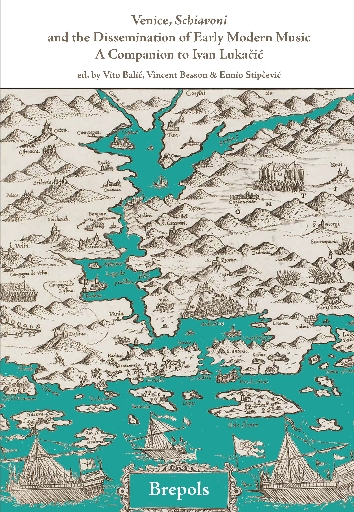
Venice, Schiavoni and the Dissemination of Early Modern Music: A Companion to Ivan Lukačić
show More to view fulltext, buy and share links for:Venice, Schiavoni and the Dissemination of Early Modern Music: A Companion to Ivan Lukačić show Less to hide fulltext, buy and share links for: Venice, Schiavoni and the Dissemination of Early Modern Music: A Companion to Ivan LukačićIvan Lukačić (born around 1585, died in 1648), composer, Conventual Franciscan, long-time “maestro di cappella” of the cathedral in Split, is a typical “hero” of local historiography. As early as 1935, the Croatian-American musicologist Dragan Plamenac (real name Karl Siebenschein) prepared a selection from the only known collection of Lukačić’s compositions, the Sacrae cantiones (Venice, 1620). In the same year, Plamenac introduced Croatian Renaissance and Baroque music to the local audience for the first time at a concert held at the Croatian Music Institute. In the aftermath of Plamenac’s emigration to the USA in 1939, it took several decades for new archival, stylistic, interdisciplinary, and international research in Croatian musicology to take place. Despite the availability of earlier material as well as contemporary musical publications of Lukačić’s work (J. Andreis, Zagreb, 1970; E. Stipčević, Padua, 1986), it is not an exaggeration to say that Lukačić still remains unknown internationally. For many years, a number of studies of Lukačić and the music of his contemporaries from the “other, eastern coast of the Adriatic” published almost exclusively in Croatian and thus the international professional public had very limited access to them. This collection of studies dedicated to Lukačić and to the musical and cultural contacts between the two Adriatic coasts is the first volume to be published in both English and Italian. The echoes of the contacts between Italy and Croatia reached the Royal Palace in Portugal, shops selling printed music in Denmark and church archives in Slovenia and Poland. The aim of this book is to follow the traces of that cultural dissemination.
-
-
-
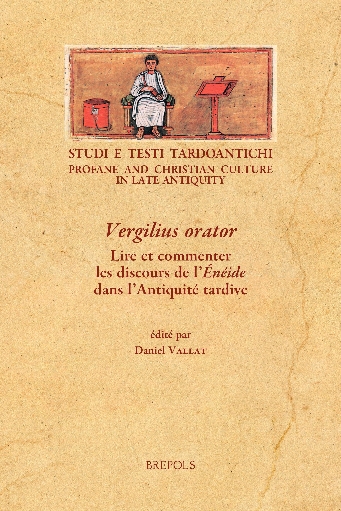
Vergilius orator
show More to view fulltext, buy and share links for:Vergilius orator show Less to hide fulltext, buy and share links for: Vergilius oratorEn devenant le principal support pédagogique des grammatici, l’œuvre de Virgile a joué un rôle central dans la formation intellectuelle de la jeunesse lors de l’Antiquité romaine tardive, y compris dans la formation rhétorique : les discours - principalement ceux de l’Énéide - ont fourni aux commentateurs du grand poète l’occasion d’expliquer des notions rhétoriques et d’analyser des exemples précis de situations oratoires. Les contributions du présent volume explorent les différentes facettes de cet art virgilien de la parole, tel qu’il a été compris par les professionnels de la littérature et de l’éducation de l’Antiquité tardive.
-
-
-
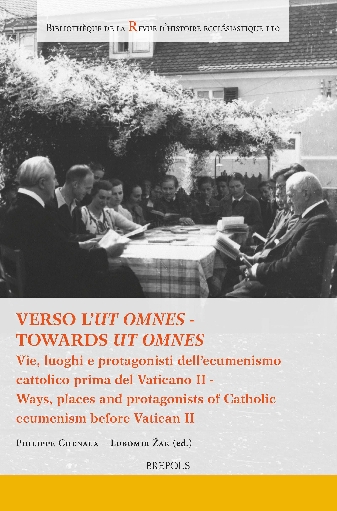
Verso l' Ut Omnes - Towards Ut Omnes
show More to view fulltext, buy and share links for:Verso l' Ut Omnes - Towards Ut Omnes show Less to hide fulltext, buy and share links for: Verso l' Ut Omnes - Towards Ut OmnesThe studies collected in this volume highlight the rising of an ecumenical consciousness within the Catholic Church in the early twentieth century. The Catholic paths, suggested in view of the hoped-for Christian unity before the Second Vatican Council, were different but complementary: the path of prayer and liturgy, that of theological refl ection, that of fraternal witness and that of martyrdom. The text offers valuable contributions on all these paths, written by specialists in the history of ecumenism.
-