


BOB2022MOME

Collection Contents
6 results
-
-
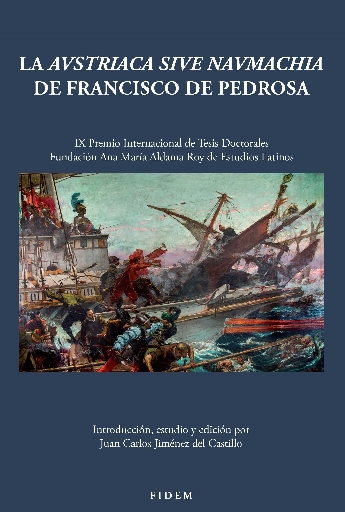
La Austriaca siue Naumachia de Francisco de Pedrosa
show More to view fulltext, buy and share links for:La Austriaca siue Naumachia de Francisco de Pedrosa show Less to hide fulltext, buy and share links for: La Austriaca siue Naumachia de Francisco de PedrosaLa insólita victoria de la Santa Liga sobre la flota turca en la batalla de Lepanto (1571) inspiró la puesta en marcha de la maquinaria propagandística imperial, destinada a ensalzar el reinado de Felipe II y las virtudes de Juan de Austria como general de la armada cristiana. Esto ofrecía un marco idóneo para el desarrollo de toda clase de poesía encomiástica, donde el género épico había ocupado un lugar destacado desde antiguo. El vigoroso aliento poético de Lepanto llegó a Santiago de Guatemala, donde el poeta y gramático madrileño Francisco de Pedrosa compuso una epopeya titulada Austriaca siue Naumachia, que ha permanecido inédita hasta nuestros días.
Este volumen consta de dos partes. La parte I contiene el estudio introductorio de la obra, donde se ofrecen, en primer lugar, los datos biográficos de Pedrosa. Seguidamente se examinan las características y los diversos procedimientos compositivos de la Austriaca, donde lo clásico y lo moderno, la épica y la historia, lo pagano y lo cristiano confluyen en un juego incesante. También se abordan algunas cuestiones problemáticas como la datación de algunos de los paratextos del manuscrito y los indicios que apuntan al estado in fieri de la versión que se ha conservado de esta epopeya. La parte II consta de la edición crítica del poema y de estos escritos que lo acompañan: dos versiones -una en latín y otra en castellano- de una carta prologal, los poemas laudatorios y una carta de fray Martín de la Cueva dirigida a Pedrosa.
-
-
-
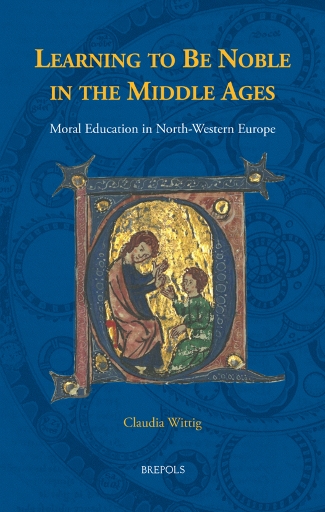
Learning to Be Noble in the Middle Ages
show More to view fulltext, buy and share links for:Learning to Be Noble in the Middle Ages show Less to hide fulltext, buy and share links for: Learning to Be Noble in the Middle AgesThis book explores for the first time the moral education of the Western European nobility in the high Middle Ages. The medieval nobility created and utilized values and ideals such as chivalry and courtliness to legitimize their exalted position in society, and these values were largely the same across Europe. Noble codes of conduct communicated these ideals in everyday interactions and symbolic acts at court that formed the basis of European courtly society. This book asks how noble men and women were taught about morality and good conduct and how the values of their society were disseminated. While a major part of moral education took place in person, this period also produced a growing corpus of writing on the subject, in both Latin and the vernacular languages, addressing audiences that encompassed the lay elites from kings to the knightly class, men as well as women. Participation in this teaching became a distinguishing feature of the nobility, who actively promoted their moral superiority through their self-fashioning as they evolved into a social class. This book brings together analyses of several major European didactic texts and miscellanies, examining the way nobles learned about norms and values. Investigating the didactic writings of the Middle Ages helps us to better understand the role of moral education in the formation of class, gender, and social identities, and its long-term contribution to a shared European aristocratic culture.
-
-
-

Loanwords and Native Words in Old and Middle Icelandic
show More to view fulltext, buy and share links for:Loanwords and Native Words in Old and Middle Icelandic show Less to hide fulltext, buy and share links for: Loanwords and Native Words in Old and Middle IcelandicAnyone familiar with the Modern Icelandic language will know that the country’s policy is to avoid borrowing lexemes from other languages, and instead to draw on their own vocabulary. This often results in the formation of a word pair, consisting of a loanword and its respective native equivalent, as the process of borrowing systematically eludes the tight tangles of language policy. But how did this phenomenon develop in the Middle Ages, before a purist ideology was formed?
This volume offers a unique analysis of a previously unexplored area of Old Norse linguistics by investigating the way in which loanwords and native synonyms interacted in the Middle Ages. Through a linguistic-philological investigation of texts from all medieval Icelandic prose genres, the book maps out the strategies by which the variation and interplay between loanwords and native words were manifested in medieval Iceland and suggests that it is possible to identify the same dynamics in other languages with a comparable literary tradition. In doing so, new light is shed on language development and usage in the Middle Ages, and the gap between case-study and general linguistic theory is bridged over.
-
-
-
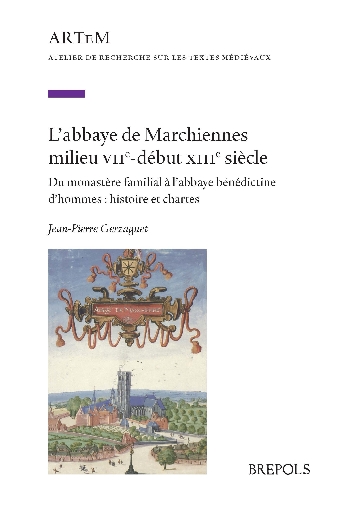
L’abbaye de Marchiennes milieu vii e – début xiii e
show More to view fulltext, buy and share links for:L’abbaye de Marchiennes milieu vii e – début xiii e show Less to hide fulltext, buy and share links for: L’abbaye de Marchiennes milieu vii e – début xiii eL’abbaye de Marchiennes, l’un des quatre monastères bénédictins installés sur les bords de la Scarpe, aux confins de la Flandre et du Hainaut, est à l’origine un monastère familial avec une double communauté d’hommes et de femmes, fondé vers 630/640 par saint Amand et confié à Rictrude, veuve de l’aristocrate franc Adalbald. À partir de 1024/25, après l’expulsion des moniales, Marchiennes sort véritablement de l’obscurité. Essor et évolution peuvent être reconstitués grâce à une production écrite substantielle et variée (récits narratifs et hagiographiques, nécrologe, coutumier, bibliothèque, chartes et cartulaires) à laquelle se joint un souci précoce de conservation.
La présente édition de 124 chartes (72% d’originaux), quatre annexes et le recours à d’autres sources servent d’appui à une introduction historique. Celle-ci permet de présenter les temps obscurs puis la vitalité de la communauté : affermissement du temporel (donations, récupérations, confirmations laïques et ecclésiastiques), développement d’un vaste réseau social (comtes de Flandre, de Hainaut, aristocratie, évêques d’Arras, Cambrai, Thérouanne, Tournai), rayonnement intellectuel et spirituel (réseau de confraternités, scriptorium actif). Au-delà des donations, des contestations et des confirmations précieuses pour l’histoire rurale et sociale, quelques chartes livrent de discrètes mais suggestives informations sur la vie de la communauté.
Ce dynamisme n’est pas isolé et prend toute sa dimension en le reliant à celui des autres monastères bénédictins voisins, la toute puissante Anchin, la vénérable Saint-Amand et, dans une mesure moindre, Hasnon. L’abbaye de Marchiennes participe pleinement à la forte emprise monastique de la vallée de la Scarpe, véritable boulevard des moines.
-
-
-
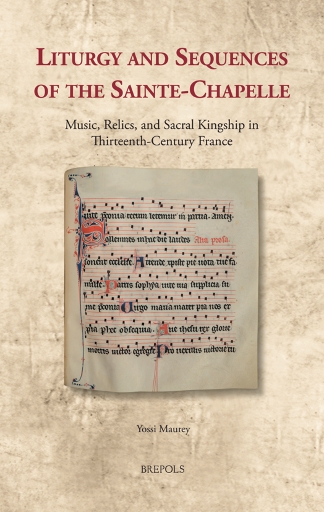
Liturgy and Sequences of the Sainte-Chapelle
show More to view fulltext, buy and share links for:Liturgy and Sequences of the Sainte-Chapelle show Less to hide fulltext, buy and share links for: Liturgy and Sequences of the Sainte-ChapelleThe book revolves around some of the most important relics of Christendom - chief among them the Crown of Thorns - and the ways in which they became, effectively, personal objects of devotion, notwithstanding their ostensibly universal appeal. It was France that laid claim to the Passion and other relics in the middle of the thirteenth century in a campaign that involved the construction of a new magnificent chapel - the Sainte-Chapelle - designed specifically to display the relics, and the composition of new liturgies to celebrate and focus attention on them. As inert objects, relics could not accomplish much without being ‘activated’ one way or the other, whether in prose, poetry, paintings, statues, or in music. It is these modes of activation that endowed the substance of relics with identity and meaning that made them so powerful and effective. The liturgies studied in this book were some of the most critical mechanisms of activation; they enabled the power of the Sainte-Chapelle relics, articulated the nature of that power, and proclaimed it far and wide. Nowhere is this more evident than in the sequences memorializing these relics, which were chiefly cultivated and championed at the Sainte-Chapelle. This book examines these sequences, and the ways in which they give prominence to the underlying agenda of the French monarchy by promoting and naturalizing the notion of sacral kingship, rooted in biblical kingship.
-
-
-

L’abbaye de Lisle-en-Barrois
show More to view fulltext, buy and share links for:L’abbaye de Lisle-en-Barrois show Less to hide fulltext, buy and share links for: L’abbaye de Lisle-en-BarroisSi l’histoire des grandes abbayes cisterciennes est bien connue, il n’en va pas de même pour des abbayes de moindre dimension, comme celles qui se sont implantées dans le diocèse de Verdun : Lachalade, Châtillon-en-Woëvre et Lisle (par la suite transférée du Verdunois au Barrois). Mais tel était le cas de bien d’autres monastères cisterciens que l’histoire des grandes abbayes de l’ordre (Cîteaux, Morimond, Clairvaux, Trois-Fontaines etc.) a souvent éclipsé. L’étude de ces petites abbayes permet ainsi d’apporter une contribution à l’histoire locale, révélant des chartes jusqu’alors inédites, complétant ipso facto des corpus d’actes épiscopaux, comtaux etc., permettant aussi de mieux appréhender des lignages locaux et de nombreux aspects de la vie régionale.
Arrière-petite-fille de Morimond, abbaye modeste, au sud de la forêt d’Argonne, aux confins de la Champagne et de la Lorraine, en même temps que des diocèses de Verdun, Toul et Châlons, Lisle-en-Barrois s’est développée dans une relative tranquillité. Bien insérée dans son environnement immédiat, elle n’avait comme possessions lointaines que des maisons à Verdun et Metz, pour à la fois y écouler ses productions et servir d’étape sur la route du sel.
Au terme d’un patient travail, cet ouvrage vient éclairer l’histoire originelle de l’abbaye et livre un recueil de chartes inédites, couvrant les abbatiats jusque 1226, concourant ainsi à la connaissance générale du Moyen Âge et à celle des cisterciens en Lorraine.
-