


BOB2022MOME

Collection Contents
1 - 20 of 26 results
-
-
Couples et conjugalité au haut Moyen Âge (vi e-xii e siècles)
show More to view fulltext, buy and share links for:Couples et conjugalité au haut Moyen Âge (vi e-xii e siècles) show Less to hide fulltext, buy and share links for: Couples et conjugalité au haut Moyen Âge (vi e-xii e siècles)Qu'est-ce qu'un couple dans le royaume des Francs du haut Moyen Âge ? Quelles en sont les différentes formes ? À quelle réalité sociale correspond-il ? Sur quelles bases s'organisent les relations entre les conjoints ? Comment le discours et les pratiques évoluent-elles entre le VIe et le XIIe siècle ? Pour y répondre, il a fallu croiser des sources de nature diversifiée (narratives, diplomatiques, législatives, morales, administratives, poétiques, épistolaires, iconographiques et archéologiques), analysées à la lumière des questionnements sociologiques, psychologiques, anthropologiques et philosophiques actuels. Il en ressort, même si la conjugalité constitue la norme dans tous les milieux sociaux, une grande diversité de situations et de parcours. Tous les couples n'étaient pas mariés, monogames, formant une communauté de résidence, d'affection et de solidarité hiérarchisée, comme pourrait le laisser supposer la documentation écrite, monopole d'une élite, le plus souvent ecclésiastique, qui tend à présenter comme des normes ce qui n'est qu'un idéal souhaité. Quatre chapitres le montrent en analysant successivement, la diversité des formes de conjugalité, les paramètres qui influent sur le couple et lui permettent ou non de se construire et de durer, sans jamais nier son identité, les éléments qui participent à la construction de la communauté conjugale et l’identifie comme telle, ainsi que la nature et les formes de relations entre les conjoints.
-
-
-
Dominicans and Franciscans in Medieval Rome
show More to view fulltext, buy and share links for:Dominicans and Franciscans in Medieval Rome show Less to hide fulltext, buy and share links for: Dominicans and Franciscans in Medieval RomeWhen Saint Dominic (c. 1174-1221) came to Rome to seek papal approval of the Order of Preachers, he founded two houses on the periphery of the city - a nunnery at S. Sisto, in structures rebuilt by Pope Innocent III, and a priory next to the early Christian basilica of S. Sabina. The Dominicans modified and enlarged the existing buildings, according to their needs. Saint Francis of Assisi (c. 1182-1226) also came to consult the Pope, but he did not make any foundations in Rome. In 1229, Pope Gregory IX ordered the Benedictine monks of SS. Cosma e Damiano in Mica Aurea to cede to the Franciscans their hospice of S. Biagio in Trastevere, where Saint Francis had stayed. The friars built the church and friary of S. Francesco a Ripa there. Later, Gregory IX took over the Benedictine monastery itself, where he established the Franciscan nunnery of S. Cosimato in 1234. Moving into the more densely inhabited parts of the city, the Friars Minor built a new friary and church at S. Maria in Aracoeli on the Capitoline Hill from c. 1248-1252 onwards. The Dominicans, in 1266, acquired a convent near the Pantheon, where they constructed the Gothic church of S. Maria sopra Minerva. In 1285, the Colonna family established a Franciscan nunnery at S. Silvestro in Capite. In the context of the origin and evolution of the two Mendicant Orders, this book traces the history of these thirteenth-century Dominican and Franciscan foundations, focussing on their location in Rome, the history of each site, their architecture, and the medieval works of art connected with them. Popes and cardinals, members of important families, and Franciscan Tertiaries contributed generously to their construction and decoration. The book ends with Saint Catherine of Siena, who lived near S. Maria sopra Minerva, where she was buried.
-
-
-
Former la masculinité
show More to view fulltext, buy and share links for:Former la masculinité show Less to hide fulltext, buy and share links for: Former la masculinité« On ne naît pas homme, on le devient ». La formule de Simone de Beauvoir détournée par les historiennes et les historiens des masculinités peut également s’appliquer à la période médiévale à travers l’éducation. Au sein du discours clérical du xiii e siècle, la masculinité laïque, loin d’être innée, est en effet envisagée comme un apprentissage autant pour les garçons et les adolescents que pour les adultes - pères de famille et maris. Cette identité de genre constitue un statut qui s’acquiert au prix de nombreux efforts sur soi-même, par un long processus de transformation intérieure. Élaboré dans les commentaires bibliques, un idéal de masculinité incarné par Adam se dessine également et exerce une grande influence sur le comportement masculin prescrit dans les textes pédagogiques. Le discours normatif ainsi produit participe de la différenciation des sexes. Il constitue un moyen privilégié de forger l’identité sexuée et un terreau fertile d’exploration historique.
Dans une perspective d’histoire culturelle et sociale, cet ouvrage s’intéresse à la manière dont la masculinité est construite au sein d’un corpus de sources du xiii e siècle principalement composé par des frères mendiants. Il interroge un domaine de recherche au développement récent, en plein essor depuis les années 1990-2000, qui reste toutefois encore peu exploité pour la période médiévale, en particulier dans le milieu francophone. Ayant rendu les hommes visibles en tant qu’êtres sexués, l’étude des masculinités s’avère pourtant complémentaire de l’histoire des femmes et indispensable pour appréhender les sociétés médiévales dans le dialogue entre les genres qui y prend place.
-
-
-
Gautier de Châtillon. Alexandréide
show More to view fulltext, buy and share links for:Gautier de Châtillon. Alexandréide show Less to hide fulltext, buy and share links for: Gautier de Châtillon. AlexandréideGautier de Châtillon (ca. 1135-1200) passe en général pour le meilleur poète latin du moyen âge. À côté d'une œuvre lyrique riche et variée (Hymnes religieuses, chansons d'amour, pièces satiriques), il a composé vers 1180 à la demande de l'archevêque de Reims Guillaume aux Blanches Mains une épopée de style virgilen qui retrace la carrière fulgurante d'Alexandre le Grand, un héros très populaire au xii e siècle. Ce poème en 10 livres de près de 5500 vers, l'Alexandréide, a connu en son temps un succès formidable (plus de 200 manuscrits). On entreprend de traduire pour la première fois en français moderne ce monument de la culture médiévale, et d'en évaluer, dans une introduction détaillée, les enjeux historiques, littéraires et moraux.
-
-
-
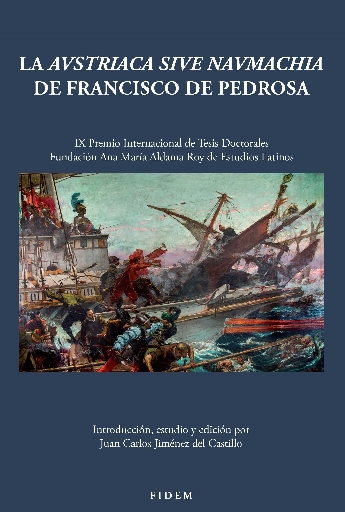
La Austriaca siue Naumachia de Francisco de Pedrosa
show More to view fulltext, buy and share links for:La Austriaca siue Naumachia de Francisco de Pedrosa show Less to hide fulltext, buy and share links for: La Austriaca siue Naumachia de Francisco de PedrosaLa insólita victoria de la Santa Liga sobre la flota turca en la batalla de Lepanto (1571) inspiró la puesta en marcha de la maquinaria propagandística imperial, destinada a ensalzar el reinado de Felipe II y las virtudes de Juan de Austria como general de la armada cristiana. Esto ofrecía un marco idóneo para el desarrollo de toda clase de poesía encomiástica, donde el género épico había ocupado un lugar destacado desde antiguo. El vigoroso aliento poético de Lepanto llegó a Santiago de Guatemala, donde el poeta y gramático madrileño Francisco de Pedrosa compuso una epopeya titulada Austriaca siue Naumachia, que ha permanecido inédita hasta nuestros días.
Este volumen consta de dos partes. La parte I contiene el estudio introductorio de la obra, donde se ofrecen, en primer lugar, los datos biográficos de Pedrosa. Seguidamente se examinan las características y los diversos procedimientos compositivos de la Austriaca, donde lo clásico y lo moderno, la épica y la historia, lo pagano y lo cristiano confluyen en un juego incesante. También se abordan algunas cuestiones problemáticas como la datación de algunos de los paratextos del manuscrito y los indicios que apuntan al estado in fieri de la versión que se ha conservado de esta epopeya. La parte II consta de la edición crítica del poema y de estos escritos que lo acompañan: dos versiones -una en latín y otra en castellano- de una carta prologal, los poemas laudatorios y una carta de fray Martín de la Cueva dirigida a Pedrosa.
-
-
-
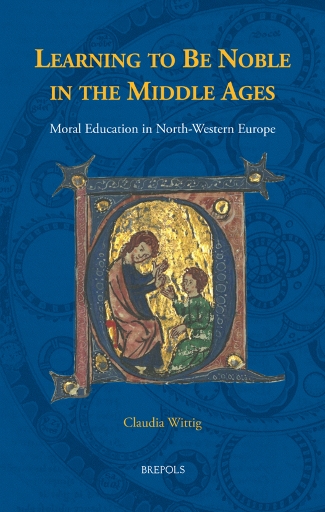
Learning to Be Noble in the Middle Ages
show More to view fulltext, buy and share links for:Learning to Be Noble in the Middle Ages show Less to hide fulltext, buy and share links for: Learning to Be Noble in the Middle AgesThis book explores for the first time the moral education of the Western European nobility in the high Middle Ages. The medieval nobility created and utilized values and ideals such as chivalry and courtliness to legitimize their exalted position in society, and these values were largely the same across Europe. Noble codes of conduct communicated these ideals in everyday interactions and symbolic acts at court that formed the basis of European courtly society. This book asks how noble men and women were taught about morality and good conduct and how the values of their society were disseminated. While a major part of moral education took place in person, this period also produced a growing corpus of writing on the subject, in both Latin and the vernacular languages, addressing audiences that encompassed the lay elites from kings to the knightly class, men as well as women. Participation in this teaching became a distinguishing feature of the nobility, who actively promoted their moral superiority through their self-fashioning as they evolved into a social class. This book brings together analyses of several major European didactic texts and miscellanies, examining the way nobles learned about norms and values. Investigating the didactic writings of the Middle Ages helps us to better understand the role of moral education in the formation of class, gender, and social identities, and its long-term contribution to a shared European aristocratic culture.
-
-
-

Loanwords and Native Words in Old and Middle Icelandic
show More to view fulltext, buy and share links for:Loanwords and Native Words in Old and Middle Icelandic show Less to hide fulltext, buy and share links for: Loanwords and Native Words in Old and Middle IcelandicAnyone familiar with the Modern Icelandic language will know that the country’s policy is to avoid borrowing lexemes from other languages, and instead to draw on their own vocabulary. This often results in the formation of a word pair, consisting of a loanword and its respective native equivalent, as the process of borrowing systematically eludes the tight tangles of language policy. But how did this phenomenon develop in the Middle Ages, before a purist ideology was formed?
This volume offers a unique analysis of a previously unexplored area of Old Norse linguistics by investigating the way in which loanwords and native synonyms interacted in the Middle Ages. Through a linguistic-philological investigation of texts from all medieval Icelandic prose genres, the book maps out the strategies by which the variation and interplay between loanwords and native words were manifested in medieval Iceland and suggests that it is possible to identify the same dynamics in other languages with a comparable literary tradition. In doing so, new light is shed on language development and usage in the Middle Ages, and the gap between case-study and general linguistic theory is bridged over.
-
-
-
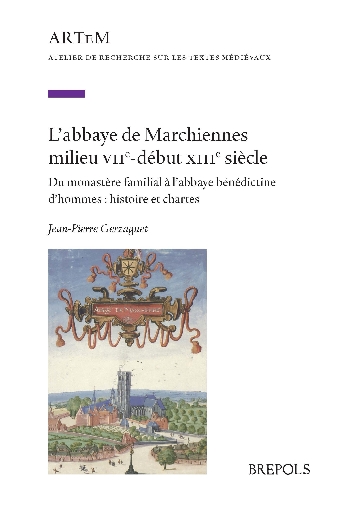
L’abbaye de Marchiennes milieu vii e – début xiii e
show More to view fulltext, buy and share links for:L’abbaye de Marchiennes milieu vii e – début xiii e show Less to hide fulltext, buy and share links for: L’abbaye de Marchiennes milieu vii e – début xiii eL’abbaye de Marchiennes, l’un des quatre monastères bénédictins installés sur les bords de la Scarpe, aux confins de la Flandre et du Hainaut, est à l’origine un monastère familial avec une double communauté d’hommes et de femmes, fondé vers 630/640 par saint Amand et confié à Rictrude, veuve de l’aristocrate franc Adalbald. À partir de 1024/25, après l’expulsion des moniales, Marchiennes sort véritablement de l’obscurité. Essor et évolution peuvent être reconstitués grâce à une production écrite substantielle et variée (récits narratifs et hagiographiques, nécrologe, coutumier, bibliothèque, chartes et cartulaires) à laquelle se joint un souci précoce de conservation.
La présente édition de 124 chartes (72% d’originaux), quatre annexes et le recours à d’autres sources servent d’appui à une introduction historique. Celle-ci permet de présenter les temps obscurs puis la vitalité de la communauté : affermissement du temporel (donations, récupérations, confirmations laïques et ecclésiastiques), développement d’un vaste réseau social (comtes de Flandre, de Hainaut, aristocratie, évêques d’Arras, Cambrai, Thérouanne, Tournai), rayonnement intellectuel et spirituel (réseau de confraternités, scriptorium actif). Au-delà des donations, des contestations et des confirmations précieuses pour l’histoire rurale et sociale, quelques chartes livrent de discrètes mais suggestives informations sur la vie de la communauté.
Ce dynamisme n’est pas isolé et prend toute sa dimension en le reliant à celui des autres monastères bénédictins voisins, la toute puissante Anchin, la vénérable Saint-Amand et, dans une mesure moindre, Hasnon. L’abbaye de Marchiennes participe pleinement à la forte emprise monastique de la vallée de la Scarpe, véritable boulevard des moines.
-
-
-
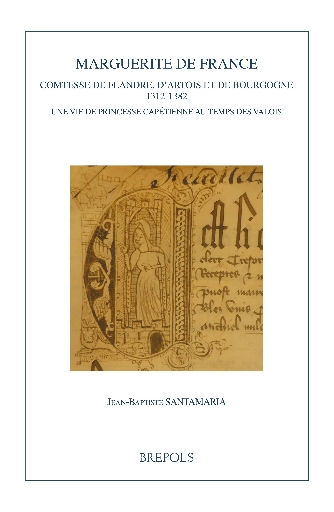
Marguerite de France, comtesse de Flandre, d’Artois et de Bourgogne (1312-1382)
show More to view fulltext, buy and share links for:Marguerite de France, comtesse de Flandre, d’Artois et de Bourgogne (1312-1382) show Less to hide fulltext, buy and share links for: Marguerite de France, comtesse de Flandre, d’Artois et de Bourgogne (1312-1382)Fille du roi Philippe V et de Jeanne de Bourgogne, Marguerite de France (1312-1382) est une figure majeure et pourtant méconnue du XIVe siècle. Après une éducation soignée marquée par l’influence de Mahaut ainsi que par les raffinements et les crises qui caractérisent la cour des derniers Capétiens, elle est mariée au futur comte de Flandre Louis de Nevers en 1320. Investie de la délicate mission de réconcilier les lions et les lys, elle affronte des débuts calamiteux sur le plan personnel et politique avant que son installation en Flandre et la naissance de l’héritier Louis de Male ne lui confèrent une certaine influence. Si les révoltes flamandes puis le veuvage la conduisent à un retrait apparent, elle maintient la Flandre dans l’alliance française en imposant à son fils une série de mariages. Héritant en 1361 des comtés d’Artois et de Bourgogne, elle devient une figure essentielle du jeu politique, redressant une situation d’abord périlleuse et rassemblant autour d’elle un nouveau parti bourguignon. Cette vie de princesse est marquée par une intense circulation s’appuyant sur un vaste réseau de résidences, et s’accompagne des raffinements d’un mode de vie princier qui éclaire sur une culture matérielle mêlant usages français, septentrionaux et bourguignons. Du mécénat aux pratiques dévotionnelles s’élabore l’identité complexe d’une fille de roi de France marquée par Mahaut d’Artois, jouant des images traditionnelles d’un pouvoir féminin pacificateur tout en recourant à la force. À ce titre, elle peut être considérée comme une marraine de l’État bourguignon.
-
-
-
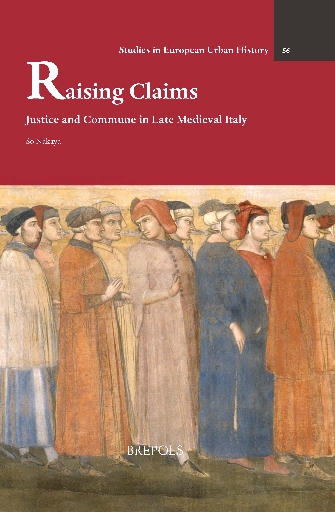
Raising Claims
show More to view fulltext, buy and share links for:Raising Claims show Less to hide fulltext, buy and share links for: Raising ClaimsCeccholo, making a claim against Nello for the payment of unpaid land rent. Jacopo, Giovanni and Turi, appealing for an exemption from tax. The long queue of claimants that formed in front of the communal palace was an everyday scene in fourteenth century Lucca. What is remarkable is the enormous ubiquity of such claims. In this Tuscan city of only twenty thousand people, an average of ten thousand claims were filed at the civil court each year. Why did local residents submit claims to the commune in such numbers? And what effect did this daily accumulation have on the development of the commune?
In the fourteenth century, Italian communes, the established public authorities that governed the populace, underwent a shift toward becoming oligarchic regimes. The communes’ character as a form of government in which power was held ‘in common’ by ‘the public’ seemed be on the verge of disappearing. At this time, political leaders and judicial magistrates began to rely on their own discretion when rendering their decisions, a practice that was recognized as legitimate even when such decisions deviated from positive law. By the beginning of the fifteenth century, this shift in the underlying logic of the legitimacy of rulings became entrenched in the jural and political character of the commune, portending the advent of the modern era. Based on the archival records from law courts and councils, this book elucidates the process of the emergence and shaping of a new form of justice and the transformation of the commune by focusing on everyday practices that unfolded in the spheres of civil and criminal justice by inhabitants who raised claims and the governors who heard them.
-
-
-
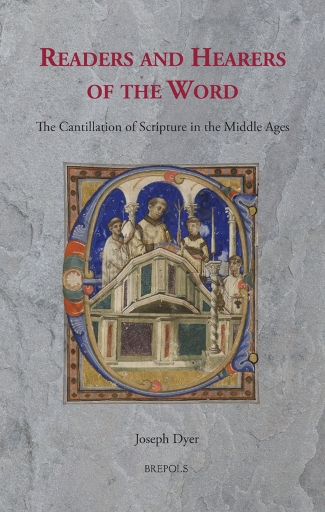
Readers and Hearers of the Word
show More to view fulltext, buy and share links for:Readers and Hearers of the Word show Less to hide fulltext, buy and share links for: Readers and Hearers of the WordReaders and Hearers is a broad, multi-disciplinary treatment of the chanting of the Scriptures (epistle and gospel) at Mass in the Middle Ages. This form of chanting followed a procedure that continued to be used in the western Latin liturgy until the mid-twentieth century and in the traditional Latin Mass today. The readings were not simply spoken, but chanted to formulae that stood halfway between heightened speech and song (cantillation). Specific clerics (lectors, subdeacons, deacons), distinctively vested, were commissioned to chant the Scriptures, employing a ritual that came to be surrounded by an elaborate ceremonial. For the gospel this involved acolytes, processional movement, and the employment of ecclesiastical ‘furniture’ (pulpit, ambo, and choir screen).
While the laity attending Mass could generally see all of the ritual actions, what did they understand of the Latin text they were hearing? In areas where Latin was spoken in Antiquity the ability to comprehend Latin passively as it morphed into the Romance vernaculars survived longer than generally assumed. Naturally, in Germanic lands, christianized in the early Middle Ages, that capability never existed. Several manuals were created to guide layfolk to engage in devotions suitable to the various parts of the Mass. How all of these elements - ceremony and devotional aids - united ‘readers’ with ‘hearers’ at Mass is the theme of the present volume, which also covers Martin Luther’s guidelines for the chanting of the Scriptures in German.
-
-
-
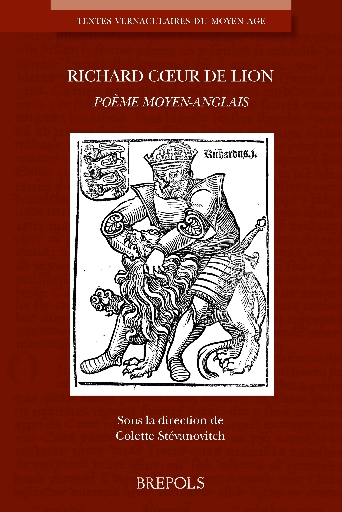
Richard Cœur de Lion
show More to view fulltext, buy and share links for:Richard Cœur de Lion show Less to hide fulltext, buy and share links for: Richard Cœur de LionCe poème moyen-anglais relate les exploits du roi Richard Coeur de Lion lors de la troisième croisade. Il occupe une place à part dans le corpus des romans moyen-anglais du fait que son héros est un roi anglais et que les événements racontés sont historiques. Cependant, au fil des réécritures, la vérité historique est progressivement déformée et le roi Richard devient un héros de roman. Sous sa forme définitive ce texte se singularise par la présence d’éléments macabres et en particulier de scènes de cannibalisme. Très célèbre de son temps, encore édité au xvi e siècle, le poème est redécouvert au xix e siècle et notamment exploité par Walter Scott.
Ce volume présente, à côté du texte moyen-anglais dans l’édition de Larkin (2015), la première traduction française du poème. Les notes et l’introduction attachent une importance toute particulière à l’étude des sources et à l’élaboration du texte version après version.
-
-
-
Spiritual Formation and Mystical Symbolism
show More to view fulltext, buy and share links for:Spiritual Formation and Mystical Symbolism show Less to hide fulltext, buy and share links for: Spiritual Formation and Mystical SymbolismBiblical interpretation, writings on the contemplative/mystical life and a continuing deep reflection on the nature and meaning of symbols come together in powerful ways in Victorine writers, particularly Hugh and Richard, as well as the lesser-known writer Thomas Gallus (Thomas of Vercelli), a Victorine canon who became the abbot of a house of regular canons in Vercelli, Italy. This volume contains: (1) Hugh’s On the Ark of Noah and A Short Treatise on the Form of the Ark, treatises that unfold Hugh’s teaching on stages and fruition of the mystical quest in relation to a complex drawing that incorporates a figure of Christ seated in majesty, embracing a map of the world on which is superimposed a diagram of Noah’s Ark, representing the 12 stages of the contemplative quest; (2) Richard’s On the Ark of Moses, a work that uses the symbolic (allegorical and tropological) interpretation of the Ark of the Covenant and the figures of the Cherubim that accompany the Ark in the Jerusalem Temple to convey Richard’s vivid and compelling teaching on the varieties of contemplative experience as he understood them in twelfth-century Paris; and (3) Thomas Gallus’ Commentary on the Song of Songs, which offers a window into a formative period of transition in the western Christian spiritual tradition, with Gallus’s commentary on the Song of Songs giving voice to a more “affective” (versus “speculative”) understanding of the mystical quest and experience, drawing upon and extending earlier Victorine explorations of the interrelationship of love and knowing in the experience of contemplation. For those interested in the dynamics of the spiritual quest and symbolic understanding in the twelfth and early thirteenth centuries, as well as insights that can inform the modern quest for knowledge and love of God, these are essential works for any library.
-
-
-
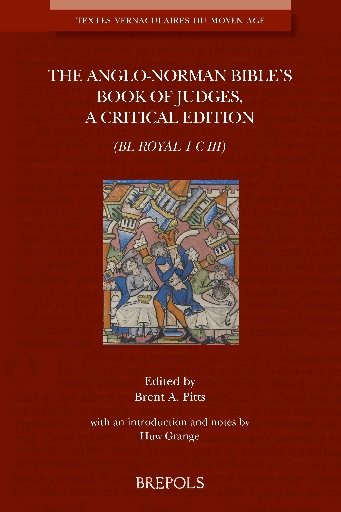
The Anglo-Norman Bible’s Book of Judges
show More to view fulltext, buy and share links for:The Anglo-Norman Bible’s Book of Judges show Less to hide fulltext, buy and share links for: The Anglo-Norman Bible’s Book of JudgesA silver-tongued assassin, a motherly prophetess, a consecrated strongman unable to resist the charms of foreign women: the Anglo-Norman Bible’s Book of Judges features a roll-call of unlikely heroes. At the book’s core is a cycle of saviour stories. Twelve times the Israelites embrace foreign gods, succumb to neighbouring enemies, repent and are delivered by a ‘judge’. As Israel itself descends into ever-greater religious, moral and political decay, the narrative pattern also unravels. The book ends bleakly, with stories of rape, murder and civil war. The stage is set for a king.
Gideon-a doubting Thomas who repeatedly ‘tests’ God-and Samson-lion-killer and lover of Delilah-were firm medieval favourites. Their tales and those of other flawed judges inspired heroic deeds on the battlefield and provided lessons on how to behave (and indeed how not to behave). With its remarkable heroines, moreover-from cut-throat Jael, who wields a tent-peg to devastating effect, to Jephthah’s dignified daughter, sacrificed because of her father’s rash vow-this is a book that prompted much reflection in the Middle Ages on the place of women in society.
The Anglo-Norman Bible’s Book of Judges survives in two fourteenth-century manuscripts: British Library Royal MS 1 C III (L), noted for its multilingual glosses, and the richly illustrated Paris, Bibliothèque nationale de France, fonds français 1 (P). The critical text, based on L, has been prepared by Pitts. An introduction and notes by Grange aim to elucidate and interpret the Anglo-Norman Bible’s Book of Judges for the modern reader.
-
-
-
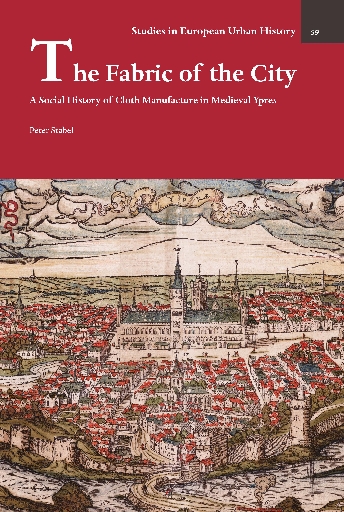
The Fabric of the City
show More to view fulltext, buy and share links for:The Fabric of the City show Less to hide fulltext, buy and share links for: The Fabric of the CityTextile industries were one of the driving forces of the urbanisation process in medieval Northwest Europe, and nowhere was their impact so profound as in Flanders, where almost all larger and smaller cities were involved in manufacturing woollens from the 12th to the 16th century. Ypres, the third city in the county, was perhaps the most important concentration of industrial labour and capital in this period. In their heyday in the 13th and 14th centuries Ypres woollens were exported all over Europe and Ypres entrepreneurs and textile workers were able to adapt in very flexible ways to changes in demand. This book investigates not only what the impact of cloth manufacture was on urban society, it also tries to unravel the social mechanisms of industrial development in late medieval cities. It focuses on social inequalities and on the often difficult relationship between the various stakeholders in the urban cloth industry: merchants, entrepreneurs, guild masters and skilled and unskilled workers. Through the analysis work practices, wage levels, investment strategies, gender issues and political aspirations, it unravels how urban industries in the pre-industrial era shaped social relations in the city, how they moulded the urban fabric.
-
-
-
The Manuscripts of Leo the Great’s Letters
show More to view fulltext, buy and share links for:The Manuscripts of Leo the Great’s Letters show Less to hide fulltext, buy and share links for: The Manuscripts of Leo the Great’s LettersThis book explores the transmission of the letters of Leo the Great (pope, 440-461). After setting out the contours of Leo’s papacy and the factors contributing to the sending and subsequent transmission of his letters to posterity, it deals in detail with around sixty collections of Leo’s letters and over 300 manuscripts ranging in date from the sixth up to the sixteenth century. Each period of the Middle Ages is introduced as the context for collecting and copying the letters, and the relationships between the letter collections themselves are traced. The result is a survey of the impact of Leo the Great upon Latin Christendom, an impact that was felt in theology and canon law, especially from the age of the Emperor Justinian to the Council of Ferrara-Florence, and moving through the major monasteries of Europe from Corbie to Clairvaux. At every cultural Renaissance, Leo was a presence, being copied, rearranged, interpreted, and eventually printed. This book is a testament to the legacy of one of the midfifth century’s most influential figures.
-
-
-
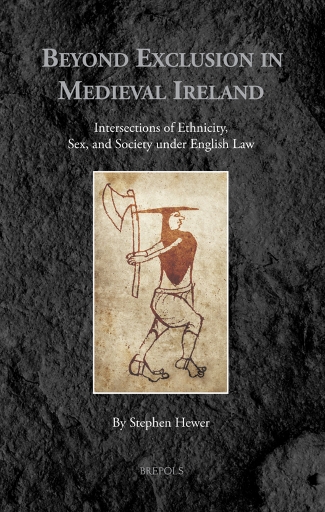
Beyond Exclusion in Medieval Ireland
show More to view fulltext, buy and share links for:Beyond Exclusion in Medieval Ireland show Less to hide fulltext, buy and share links for: Beyond Exclusion in Medieval IrelandThe notion that, upon the advent of the English in 1167, all Gaelic peoples in Ireland were immediately and ipso facto denied access to the English royal courts has become so widely accepted in popular culture that it is often treated as fact. In this ground-breaking monograph, however, the narrative of absolute ethnic discrimination in thirteenth- and early fourteenth-century English Ireland is for the first time tackled head-on through a thorough re-examination of the Irish plea rolls. Through a forensic study of these records, the author demonstrates not only that there was a great deal of variation in how members of various ethnic groups and women who came before the English royal courts in Ireland were treated, but also that there was a large - and hitherto scarcely noticed - population of Gaels with regular and unimpeded access to English law, and that the intersections between gender/sex and ethnicity have too often been deeply misunderstood or disregarded. A close comparison between the treatment of Gaelic women and men and that of the English of Ireland, together with an in-depth examination of other ethnicities from around the Irish Sea, provide a new understanding of English Ireland in which it is clear that there was not a simple dichotomy between the English and the unfree, but rather that people lived an altogether more complex and nuanced existence.
-
-
-
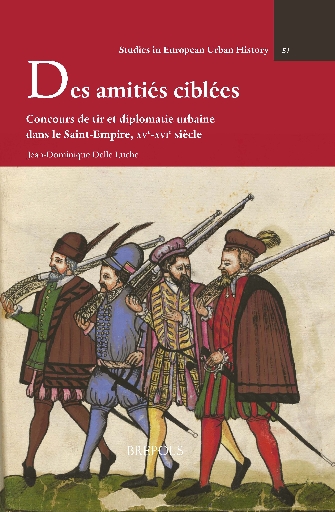
Des amitiés ciblées
show More to view fulltext, buy and share links for:Des amitiés ciblées show Less to hide fulltext, buy and share links for: Des amitiés cibléesPlus d’un millier de concours de tir sont organisés aux xv e et xvi e siècles dans le sud du Saint-Empire. Comme pour les Jeux olympiques modernes, villes libres et résidences des princes rivalisent lors de compétitions d’arbalète et d’arquebuse. À travers des performances sportives, des rituels symboliques, des stratégies de communication, la constitution de délégations aux couleurs de chaque ville, ainsi que des descriptions poétiques, c’est la hiérarchie des villes allemandes et suisses ainsi que leur influence dans les réseaux régionaux ou confessionnels qui sont réaffirmées. Cet ouvrage contribue à la fois à l’histoire des villes de l’espace germanophone et à l’histoire des sports avant la modernité.
-
-
-
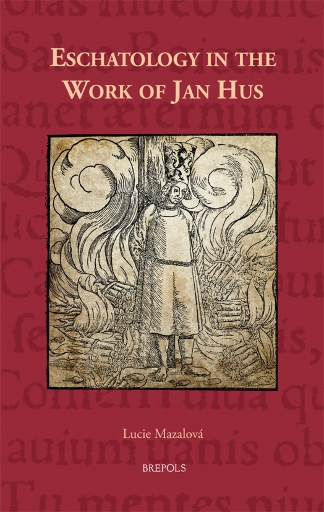
Eschatology in the Work of Jan Hus
show More to view fulltext, buy and share links for:Eschatology in the Work of Jan Hus show Less to hide fulltext, buy and share links for: Eschatology in the Work of Jan HusThis study provides a systematic and comprehensive overview of Hus’s ideas on the last things as they are presented in both his work and life. It examines the content and language of his works, particularly his Latin sermons and correspondence, from a literary-historical perspective. It explores general eschatology (Antichrist, purgatory, heaven and hell), as well as its intertwining with the Last Things that Jan Hus experienced personally in his struggle against Antichrist. Thus, the reader will learn not only about Hus’s official ideas, but also about his intimate thoughts contained in correspondence written during his exile and even as he was in prison awaiting death.
The book also presents Hus’s eschatology in the broader context of Church reform. It clarifies how Hus’s eschatology developed from its beginnings up to his death, and takes into account the writings of other thinkers whose ideas are connected to Hus’s eschatology, such as John Wycliffe, Milíč of Kroměříž, Matěj of Janov, and Nicholas of Dresden. The book also features an introductory prolegomena on Hus’s life and work and early reform eschatology, which describes not only relevant Czech influences on Hus’s eschatology (e.g. university theology, social-political factors, the Czech preaching tradition), but also European influences (e.g. Peter Lombard, heterodox doctrines).
-
-
-
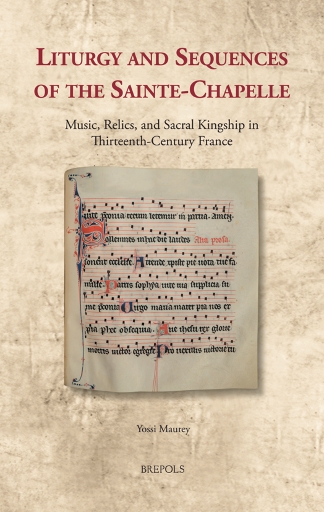
Liturgy and Sequences of the Sainte-Chapelle
show More to view fulltext, buy and share links for:Liturgy and Sequences of the Sainte-Chapelle show Less to hide fulltext, buy and share links for: Liturgy and Sequences of the Sainte-ChapelleThe book revolves around some of the most important relics of Christendom - chief among them the Crown of Thorns - and the ways in which they became, effectively, personal objects of devotion, notwithstanding their ostensibly universal appeal. It was France that laid claim to the Passion and other relics in the middle of the thirteenth century in a campaign that involved the construction of a new magnificent chapel - the Sainte-Chapelle - designed specifically to display the relics, and the composition of new liturgies to celebrate and focus attention on them. As inert objects, relics could not accomplish much without being ‘activated’ one way or the other, whether in prose, poetry, paintings, statues, or in music. It is these modes of activation that endowed the substance of relics with identity and meaning that made them so powerful and effective. The liturgies studied in this book were some of the most critical mechanisms of activation; they enabled the power of the Sainte-Chapelle relics, articulated the nature of that power, and proclaimed it far and wide. Nowhere is this more evident than in the sequences memorializing these relics, which were chiefly cultivated and championed at the Sainte-Chapelle. This book examines these sequences, and the ways in which they give prominence to the underlying agenda of the French monarchy by promoting and naturalizing the notion of sacral kingship, rooted in biblical kingship.
-