


Brepols Online Books Medieval Miscellanea Collection 2023 - bob2023mime

Collection Contents
4 results
-
-
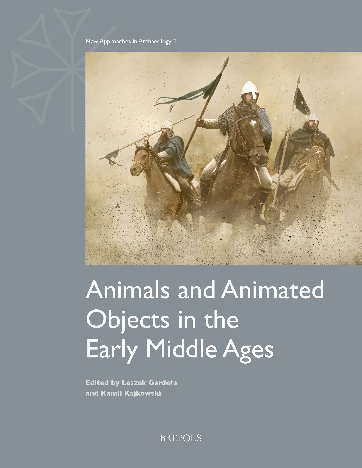
Animals and Animated Objects in the Early Middle Ages
show More to view fulltext, buy and share links for:Animals and Animated Objects in the Early Middle Ages show Less to hide fulltext, buy and share links for: Animals and Animated Objects in the Early Middle AgesSince time immemorial, animals have played crucial roles in people’s lives. In Continental and Northern Europe, especially in the Migration Period and the Early Middle Ages, animals were both feared and revered. Varying and often ambivalent perceptions of fauna were expressed through everyday practices, religious beliefs, and the zoomorphic ornamentation of a wide plethora of objects that ranged from jewellery, weapons, and equestrian equipment to wagons and ships. This timely volume critically investigates the multivalence of animals in medieval archaeology, literature, and art in order to present human attitudes to creatures such as bears, horses, dogs, and birds in a novel and interdisciplinary way.
The chapters gathered together here explore the prominence of animals, animal parts, and their various visual representations in domestic spaces and the wider public arena, on the battlefield, and in an array of ritual practices, but also examine the importance of zoomorphic art for emerging elites at a time of social and political tensions across Scandinavia and the oft-overlooked Western Slavic and Baltic societies. This innovative book draws together scholars from across Europe in order to pave the way for a nuanced international and interdisciplinary dialogue that has the capacity to substantially increase our perception of human and animal worlds of the Early Middle Ages.
-
-
-
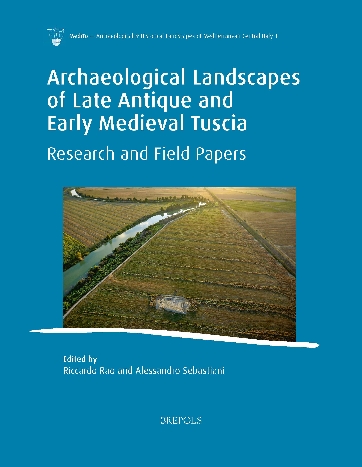
Archaeological Landscapes of Late Antique and Early Medieval Tuscia
show More to view fulltext, buy and share links for:Archaeological Landscapes of Late Antique and Early Medieval Tuscia show Less to hide fulltext, buy and share links for: Archaeological Landscapes of Late Antique and Early Medieval TusciaThis volume, the third in the series MediTo, investigates the changing landscapes of Tuscany during Late Antiquity and the Early Middle Ages. Through a selection of thematic case studies, presented initially during the second International workshop held in Paganico (Grosseto, Italy) in June 2019 and here further developed, the volume explores the concepts of settlement, economic, and societal changes in both Tuscany and its broader Mediterranean context over the course of several centuries. Together, the contributions gathered here showcase how cities and rural settlements, when studied in their archaeological and historical context, shed light on a dynamic landscape in which natural resources played a crucial role in defining the success or later abandonment of sites.
-
-
-
The Art of Publication from the Ninth to the Sixteenth Century
show More to view fulltext, buy and share links for:The Art of Publication from the Ninth to the Sixteenth Century show Less to hide fulltext, buy and share links for: The Art of Publication from the Ninth to the Sixteenth CenturyWritten transmission relies on the fact of ‘publication,’ the step between the authorial process and reception. But what does ‘publishing’ mean in the context of a manuscript culture, in which books were copied slowly and singly by hand? This is a fundamental question. If one fails to appreciate the act of publication, one’s understanding of any authorial work and its reception from any period will remain defective. The case studies in this volume ask what it meant for medieval and renaissance authors and their associates to publish. The contexts under scrutiny range from England to Italy, from hagiography to literary criticism, and from Carolingian monasteries to renaissance libraries. Medieval publishing remains undiscovered territory in the main. This volume constitutes a first effort towards a long-term narrative, from the ninth to the sixteenth century.
-
-
-
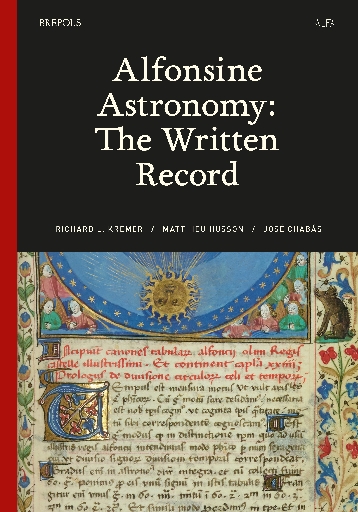
Alfonsine Astronomy
show More to view fulltext, buy and share links for:Alfonsine Astronomy show Less to hide fulltext, buy and share links for: Alfonsine AstronomyCompiled between 1262 and 1272 in Toledo under the patronage of Alfonso X, the Castilian Alfonsine Tables were recast in Paris in the 1320s, resulting in what we now call the Parisian Alfonsine Tables. These materials circulated widely and fostered astronomical activities throughout Europe. This resulted in a significant number of new works, of which there are a few hundred, extant in more than 600 manuscript codices and dozens of printed editions. These manuscripts and imprints, broadly contemporary to the works they witness, comprise the written record of Alfonsine astronomy and provide the focus of this volume.
A first series of essays examines individual manuscripts containing Alfonsine works. The authors seek to reconstruct, from the manuscript evidence, the cultural, astronomical and mathematical worlds in which the manuscripts were initially copied, compiled, used and collected. A second series of essays turns from the particular codex to the individual work or author. These contributions ask how particular works have been transmitted in surviving manuscript witnesses and how broader manuscript cultures shaped the diffusion, over two centuries, of Alfonsine astronomy across Europe. A final essay reflects on the challenges and opportunities offered by digital humanities approaches in such collective studies of a large manuscript corpus.
-