


Brepols Online Books Medieval Miscellanea Collection 2023 - bob2023mime

Collection Contents
6 results
-
-
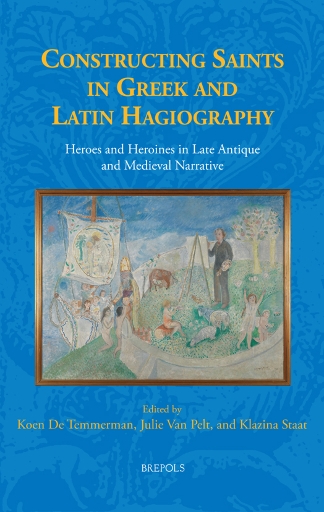
Constructing Saints in Greek and Latin Hagiography
show More to view fulltext, buy and share links for:Constructing Saints in Greek and Latin Hagiography show Less to hide fulltext, buy and share links for: Constructing Saints in Greek and Latin HagiographyThis book explores representations of saints in a variety of Latin and Greek late antique hagiographical narratives, such as saints’ Lives, martyr acts, miracle collections, and edifying tales. The book examines techniques through which the saints featured in such texts are depicted as heroes and heroines, i.e., as extraordinary characters exhibiting both exemplary behaviour and a set of specific qualities that distinguish them from others. The book inscribes itself in a growing body of relatively recent scholarship that approaches hagiographical accounts not just as historical sources but also as narrative constructions. As such, it contributes to the development of a scholarly rationale which increasingly values imaginative and fictional aspects of hagiography in their own right, with the aim of answering broader questions about narrative creativity and ideology. For instance, individual chapters examine how hagiographical accounts mobilize and capitalize on earlier literary and rhetorical traditions or narrative models. These questions are specifically addressed to explore the narrative construction of characters. The chapters thereby encourage us to acknowledge that many hagiographers were more skilful than is often accepted.
-
-
-

Crafting Knowledge in the Early Medieval Book
show More to view fulltext, buy and share links for:Crafting Knowledge in the Early Medieval Book show Less to hide fulltext, buy and share links for: Crafting Knowledge in the Early Medieval BookThis volume explores how knowledge was made in the early medieval book in the Latin West through two interrelated practices: collecting and concealing. The contributions present case studies across cultures and subject areas, including exegesis, glossography, history, lexicography, literature, poetry, vernacular and Latin learning. Collectio underpinned scholarly productions from miscellanies to vademecums. It was at the heart of major enterprises such as the creation of commentaries, encyclopaedic compendia, glosses, glossaries, glossae collectae, and word lists. As a scholarly practice, collectio accords with the construction of inventories of inherited materials, the ruminative imperative of early medieval exegesis, and a kind of reading that required concentration. Concealment likewise played a key role in early medieval book culture. Obscuration was in line with well-known interpretative practices aimed at rendering knowledge less than immediate. This volume explores the practices of obscuring that predate the twelfth-century predilection, long recognised by historians, for reading that penetrates beneath the “covering” (integumentum, involucrum) to reveal the hidden truth. Cumulatively, the papers spotlight the currency of two crucial practices in early medieval book culture and demonstrate that early medieval authors, artists, compilers, commentators, and scribes were conspicuous collectors and concealers of knowledge.
-
-
-

The Cent Nouvelles nouvelles (Burgundy-Luxembourg-France, 1458 - c. 1550)
show More to view fulltext, buy and share links for:The Cent Nouvelles nouvelles (Burgundy-Luxembourg-France, 1458 - c. 1550) show Less to hide fulltext, buy and share links for: The Cent Nouvelles nouvelles (Burgundy-Luxembourg-France, 1458 - c. 1550)A collaborative investigation of one of the best-known works of late medieval European literature, the Franco-Burgundian collection of short stories known as the Cent Nouvelles nouvelles. Modelled loosely on Boccaccio’s Decameron and incorporating elements from Old French fabliaux as well as Poggio Bracciolini’s Liber Facetiarum, the anonymous collection attributes its morally challenging and frequently humorous tales to named narrators including Philip the Good, Duke of Burgundy and Louis of Luxembourg, Count of Saint Pol.
The contribution of this new volume of essays is threefold: - empirical, in that it brings entirely new interdisciplinary insights into the study of the genesis and reception of the work; - methodological, in that it integrates study of the text within a 360-degree evaluation of the work’s manuscript and early printed context; and - conceptual, in that it seeks to understand the social dimensions of textual production and consumption.
These approaches unite ten principal contributions by specialists in the fields of art history, book history, court history and linguistics from France, the Netherlands, the USA and the UK.
-
-
-

Celts, Gaels, and Britons
show More to view fulltext, buy and share links for:Celts, Gaels, and Britons show Less to hide fulltext, buy and share links for: Celts, Gaels, and BritonsCelts, Gaels, and Britons offers a miscellany of essays exploring three closely connected areas within the fields of Celtic Studies in order to shed new light on the ancient and medieval Celtic languages and their literatures. Taking as its inspiration the scholarship of Professor Patrick Sims-Williams, to whom this volume is dedicated, the papers gathered together here explore the Continental Celtic languages, texts from the Irish Sea world, and the literature and linguistics of the British languages, among them Welsh and Cornish. With essays from eighteen leading scholars in the field, this in-depth volume serves not only as a monument to the rich and varied career of Sims-Williams, but also offers a wealth of commentary and information to present significant primary research and reconsiderations of existing scholarship.
-
-
-
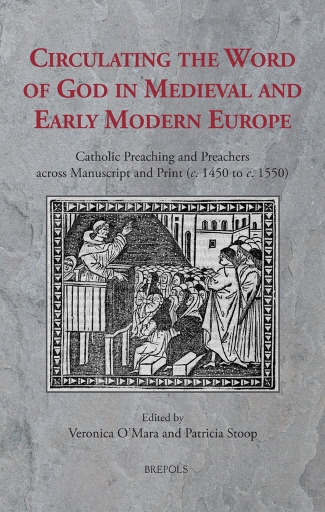
Circulating the Word of God in Medieval and Early Modern Europe
show More to view fulltext, buy and share links for:Circulating the Word of God in Medieval and Early Modern Europe show Less to hide fulltext, buy and share links for: Circulating the Word of God in Medieval and Early Modern EuropeThis volume concentrates on how the sermon, a pivotal element in mass communication, aimed to shape the people of Europe. Rather than setting up the usual binary divides, it highlights the linguistic complications, the textual inter-relationships, the confessional cross-currents, and the variations between public and private sermon dissemination operating at different rates and with variable results throughout Europe. Effectively the emphasis here is on how Catholic preachers and Catholic preaching carried on in the period between the handwritten and the printed sermon, a time when not only the mode of production was changing but when the very purpose and meaning of preaching itself would soon alter in a western Christian world that was becoming no longer completely Catholic. By examining case-studies chosen from countries with contrasting manuscript and printing traditions (Denmark, England, Finland, France, Germany, Italy, the Low Countries, Romania, Spain, and Sweden), we aim to examine some of the main historical, literary, and theological factors in the development of the sermon in Latin and the vernaculars, which is itself in the process of changing formats, and sometimes languages, at a time of religious ferment from the advent of print to the death of Martin Luther. These essays, which are effectively in dialogue with each other, are divided into geographical/linguistic sections organized along broadly chronological lines. They circulate from the peripheries of Europe to the centre, moving from areas where evidence is now scarce to situations of thriving production.
-
-
-
Crusading, Society, and Politics in the Eastern Mediterranean in the Age of King Peter I of Cyprus
show More to view fulltext, buy and share links for:Crusading, Society, and Politics in the Eastern Mediterranean in the Age of King Peter I of Cyprus show Less to hide fulltext, buy and share links for: Crusading, Society, and Politics in the Eastern Mediterranean in the Age of King Peter I of CyprusThe King of Cyprus, Peter I of Lusignan (1359-1369), was one of the most fascinating figures in the history of the Latin East and the later crusades. He was involved in European power politics, his crusading activities brought him into conflict with the Turkish beyliks of Anatolia and the Mamluk sultanate of Egypt, and his rule was closely linked with broader developments in the Eastern Mediterranean, such as the decay of Byzantium, the East-West schism, and the beginning of the Ottoman expansion in the Balkans. His adventurous life constitutes a captivating case study of court life, feudal and chivalric ethos, and political culture in the fourteenth century. This volume investigates developments in the Eastern Mediterranean before and during the reign of Peter I from a comparative perspective. It consists of five parts, which treat the political, diplomatic, and ecological context of the crusading movement in the time between the fall of Acre (1291) and the sack of Alexandria (1365), Peter I’s crusading policy and the Alexandrian crusade, Cypriot society and court life in the time of Peter I, the situation in Muslim-Turkish Anatolia, the second target of King Peter’s crusading policy, and, finally, Byzantium, its encounter with the Turks, the schism of the Churches, and theological trends in the time of the Hesychast Controversy.
-