


Brepols Online Books Medieval Miscellanea Collection 2023 - bob2023mime

Collection Contents
2 results
-
-
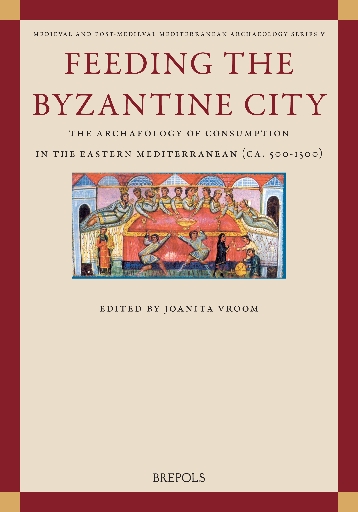
Feeding the Byzantine City
show More to view fulltext, buy and share links for:Feeding the Byzantine City show Less to hide fulltext, buy and share links for: Feeding the Byzantine CityThis book offers new and innovative perspectives on the archaeology of consumption in Byzantine cities and their hinterlands. Case-studies range from towns in eastern Macedonia, north-western and central Greece, and Crete to urban centres in Serbia, Bulgaria and western Turkey. The archaeological data and historical insights presented in this volume are always of great interest, often exciting, and more than once outright astonishing. The commodities discussed in the volume are dated between the 6th and the 16th century CE and include pottery (e.g., glazed table wares, amphorae, cooking pots, storage jars), textile fragments, metal objects, bronze and golden jewellery, marble carved slabs and columns.
Feeding the Byzantine City sheds compelling light on a world which was much more complex and interconnected than has often been assumed, which makes it essential reading for scholars and a larger audience alike.
-
-
-
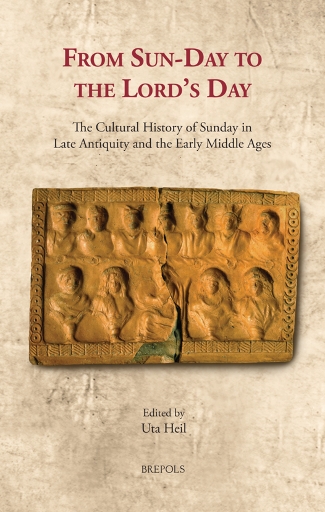
From Sun-Day to the Lord’s Day
show More to view fulltext, buy and share links for:From Sun-Day to the Lord’s Day show Less to hide fulltext, buy and share links for: From Sun-Day to the Lord’s DayEver since the Christianization of the planetary week in Late Antiquity, the notion of Sunday as a day of rest, as well as the rhythm of a seven-day week, has been a constant. Yet the cultural history of Sunday in Late Antiquity and the Early Middle Ages is complex. Detailed research reveals a greater diversity than appears at first glance. For example, Sunday did not simply replace the Sabbath, nor was the Jewish Sabbath commandment directly adopted. Furthermore, the Sunday laws of Emperor Constantine officially gave the inhabitants of the Roman Empire a day of rest free of work, but the effect and reception of the laws is hard to grasp, even among Christian authors. Moreover, Sunday was by no means a central theme in the history of late antique Christianity, so that the scattered references must be interpreted.
This edited collection, based on a conference in Vienna in 2019, investigates the relevance of Sunday and the weekly rhythm in Late Antiquity and the Early Middle Ages in the everyday life of people, in monasticism, in synods, in further imperial and ecclesiastical laws, and in disciplinary and liturgical developments. It also covers controversies with the Jewish Sabbath as well as reflections on the aspect of rest, freedom, and of charity. While exploring different views and regional differences, the contributions show the growing importance of the Lord’s Day, especially since the sixth century, as part of the Christianization of society and the sacralization of the calendar.
-