


Brepols Online Books Medieval Miscellanea Collection 2023 - bob2023mime

Collection Contents
2 results
-
-
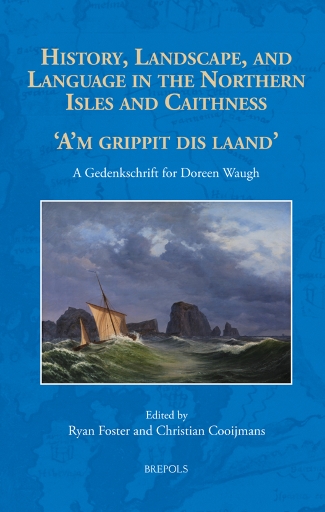
History, Landscape, and Language in the Northern Isles and Caithness
show More to view fulltext, buy and share links for:History, Landscape, and Language in the Northern Isles and Caithness show Less to hide fulltext, buy and share links for: History, Landscape, and Language in the Northern Isles and CaithnessDoreen Waugh was a native Shetlander and a well-renowned scholar of Old Norse and Gaelic place-names in Northern Scotland and the Northern Isles. Not only did Waugh’s research significantly advance scholarly understanding of the ‘Viking’ settlement of the North Atlantic, her generosity with both her time and knowledge inspired and motivated a wide range of scholars from a variety of disciplines, from archaeology and history to historical geography, linguistics, and place-name studies.
Based on - and written in tribute to - Waugh’s work, this interdisciplinary volume draws together essays covering Northern Scotland, the Northern Isles, and beyond, both during and after the early medieval period. The contributions gathered here draw on Waugh’s wider-ranging research interests to offer a range of novel insights into the many communities, cultures, and customs that have characterized and connected the Northern Isles and their North Atlantic neighbours.
-
-
-
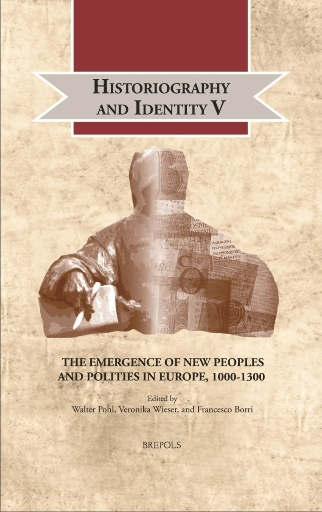
Historiography and Identity V
show More to view fulltext, buy and share links for:Historiography and Identity V show Less to hide fulltext, buy and share links for: Historiography and Identity VIn many countries in Northern and Eastern Europe, the period after 1000 saw the emergence of new Christian kingdoms. This process was soon reflected in works of historiography that traced the foundation and development of the new polities. Many of these texts had a lasting impact on the formation of political, ethnic, and religious identities of these states and peoples.
This volume deals with some of these earliest histories narrating the past of the new polities that had emerged after 1000 in Northern, East Central, and Eastern Europe, as well as in the Adriatic regions. They have often been understood as ‘national histories’, but a closer look brings out the differences in their aims and construction. One question addressed here is to what extent these historians built on models of identification developed in earlier historiography. The volume provides an overview of several fundamental texts in which identities in the new Christian kingdoms were negotiated, and of recent research on these texts.
-