


Brepols Online Books Medieval Miscellanea Collection 2023 - bob2023mime

Collection Contents
8 results
-
-

Marsilius of Padua
show More to view fulltext, buy and share links for:Marsilius of Padua show Less to hide fulltext, buy and share links for: Marsilius of PaduaMarsilius of Padua (c. 1275–c. 1342) was one of the most influential and controversial political thinkers of the Middle Ages. He is best known for his seminal text Defensor Pacis (1324) in which he attacks the papal theory of plenitude of power and defends an idea of political community based on the strict separation of political and religious authority. Marsilius’ work lies at the crossroads of different disciplines, ranging from political philosophy to civil and canon law, to medicine. Indeed, he presents an original synthesis of several contemporary themes and traditions such as Aristotelianism, Augustinianism, the debate on Franciscan property, the communal tradition of the Italian city-states, ecclesiology, medicine, and astrology.
This edited volume analyses the life and thought of Marsilius of Padua in his own context and beyond. Gathering many of the leading experts in Marsilian studies across different national and linguistic traditions working today, this volume has two main goals. First, it aims to bring together experts who come from distinct fields in order to investigate the many branches of knowledge present in Defensor Pacis without losing sight of Marsilius as a comprehensive theorist. Second, the volume aims to shed new light on one of the most neglected aspects in Marsilian studies: the Marsilian influence, i.e., his impact in the early modern period during the Renaissance, the Reformation and the Counter-Reformation, up to twentieth century.
-
-
-
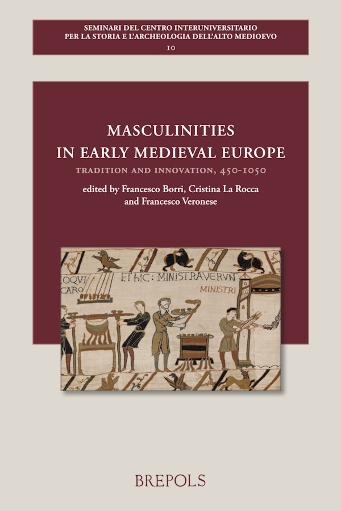
Masculinities in Early Medieval Europe
show More to view fulltext, buy and share links for:Masculinities in Early Medieval Europe show Less to hide fulltext, buy and share links for: Masculinities in Early Medieval EuropeThis volume brings together a collection of essays that delve into the shifts in ideas, roles, and practices of masculinities and male attitudes during the transition from late Antiquity to the early Middle Ages. This period was marked by significant changes, including the collapse of Roman political authority in the West, the fragmentation of imperial universalism in polities, and the rise of Christianity, which all challenged the gender roles inherited from Antiquity.
Within this historical context, the book explores the evolution of men’s privileges, responsibilities, and burdens through eleven case studies focusing on different categories of men and manly behaviour. The volume brings to life husbands and fathers, kings and workers, clerics and warriors from both the East and the West, as revealed through contemporary textual and material sources and preserved in the physical remains of male bodies and actions. In doing so, this volume will bring to the fore new perspectives on masculinities and gender history.
-
-
-
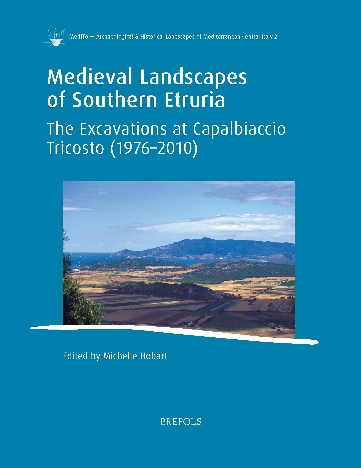
Medieval Landscapes of Southern Etruria
show More to view fulltext, buy and share links for:Medieval Landscapes of Southern Etruria show Less to hide fulltext, buy and share links for: Medieval Landscapes of Southern EtruriaThe fortified hilltop town of Capalbiaccio is a lost Etruscan settlement, a site that developed out of prehistory to become an important colony and grain provider for the Roman Empire, before being sacrificed to medieval intrigue and conquest by the Republic of Siena. The site, together with the castle of Tricosto, was first excavated forty-five years ago, but the results were never published. Then, in recent years, archaeologist Michelle Hobart was invited to explore the area with a new team and employ the latest techniques of remote sensing to explore the landscape and fortifications. The results of both explorations are presented here for the first time in this volume, which combines the invasive and non-invasive approaches of two generations of archaeologists to reveal what attracted settlers to this site, from the inhabitants of the late Bronze Age through to the most important families of medieval Tuscany. This book employs the best of the latest geophysical techniques and time-tested approaches to ground the history of Capalbiaccio, and to narrate how the fate of this small village was inextricably linked to regional and national networks, as control of the territory and the settlement’s reason for being evolved over time.
-
-
-
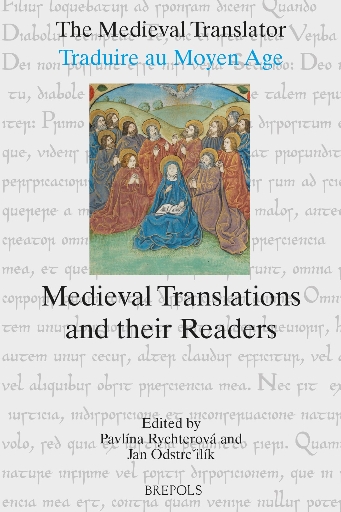
Medieval Translations and their Readers
show More to view fulltext, buy and share links for:Medieval Translations and their Readers show Less to hide fulltext, buy and share links for: Medieval Translations and their ReadersThe papers gathered in this volume focus on ‘Medieval Translations and their Readership’, the special strand of the 11th Cardiff Conference on the Theory and Practice of Translation in the Middle Ages. The volume discusses the role of the reader in the process of translation, communities of readers and their active participation in translators’ choices, and the translation as a result of a dialogue between author, text and its reader.
Translations of works of theology and religious education, the focus of most of the contributions to this volume, constitute excellent material for research into medieval lay audiences. Vernacular religious educational texts from the thirteenth to the sixteenth century show a great deal of conformity. Individual authors resorted to similar strategies and techniques to meet any translation challenges, to fulfil educational aims, or to relate to their readers and to accommodate their expectations. Simultaneously, the readers played a crucial role as they shaped the production of texts in many ways.
Research into Middle English pastoral and devotional literature and the conditions of its production still dominates scholarly work in the field. Religious texts in vernaculars other than Middle English have so far received little attention. This volume tries to tackle this lacuna by offering a careful comparative analysis of relevant vernacular texts across Europe, including Slavonic works, using historiographical, philological, and linguistic methods as well as literary scholarly approaches.
The sixteen chapters are organized in three sections. The first one, ‘Authors and Readers’, brings together articles examining the idea of a model reader as expressed in translations of biblical texts and texts of religious instruction. The contributions in the second section, on the ‘Dissimination of Knowledge’, focus on how translators addressed readers, how people read, and how they used the manuscripts and printed books made for them. The target audience or model reader of the first section is here put into perspective with the help of discussions of reading practices. The last section, ‘Religious Education in Transition’, comprises contributions which focus on textual material from the period when printed books gradually changed, the relationship between languages, texts, authors, and readers.
-
-
-
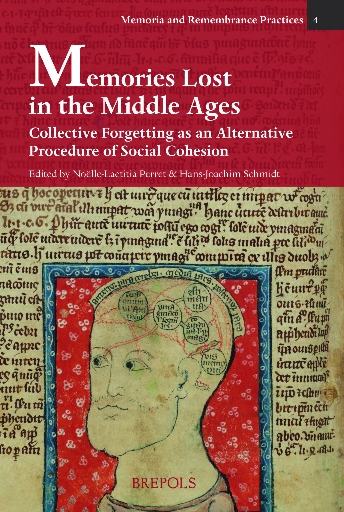
Memories Lost in the Middle Ages: Collective Forgetting as an Alternative Procedure of Social Cohesion/L’oubli collectif au Moyen Âge: Un autre processus constitutif de la cohésion sociale
show More to view fulltext, buy and share links for:Memories Lost in the Middle Ages: Collective Forgetting as an Alternative Procedure of Social Cohesion/L’oubli collectif au Moyen Âge: Un autre processus constitutif de la cohésion sociale show Less to hide fulltext, buy and share links for: Memories Lost in the Middle Ages: Collective Forgetting as an Alternative Procedure of Social Cohesion/L’oubli collectif au Moyen Âge: Un autre processus constitutif de la cohésion socialeThe aim of this book is to examine the social, political and cultural consequences of ‘collective forgetting’ in the Middle Ages. Since the seminal work of Maurice Halbwachs, historical research has focused on ‘collective memory’ as the basis of social cohesion. Jan Assmann has introduced the slightly different concept of ‘cultural memory’, which he sees as a constitutive condition of political organisations and their stabilisation. Drawing on this Assmannian concept, this book examines this other process of ‘collective forgetting’.
Cet ouvrage ambitionne d’examiner les conséquences sociales, politiques et culturelles de « l’oubli collectif » au Moyen Âge. Depuis les études fondatrices de Maurice Halbwachs, la recherche historique s’est intéressée à la « mémoire collective » en tant que fondement de la cohésion sociale. Jan Assmann a introduit le concept légèrement différent de « mémoire culturelle », condition constitutive selon lui des organisations politiques et de leur stabilisation. Tout en s’appuyant sur ce concept assmannien, cet ouvrage propose d’étudier cet autre processus que constitue « l’oubli collectif ».
-
-
-
Monastères, convergences, échanges et confrontations dans l’Ouest de l’Europe au Moyen Âge
show More to view fulltext, buy and share links for:Monastères, convergences, échanges et confrontations dans l’Ouest de l’Europe au Moyen Âge show Less to hide fulltext, buy and share links for: Monastères, convergences, échanges et confrontations dans l’Ouest de l’Europe au Moyen ÂgeL’orientation vers les convergences, échanges et confrontations dans l’histoire monastique du grand Ouest européen au Moyen Âge permet de porter un regard nouveau sur la dynamique de divers établissements en observant les relations qui s’y sont développées tant au sein des communautés, qu’avec la société environnante. Les influences externes subies par les monastères et les conflits internes qui s’y jouent, les échanges dus aux pèlerinages, aux rouleaux des morts et aux confraternités sont au nombre des thèmes explorés.
-
-
-

Multi-disciplinary Approaches to Medieval Brittany, 450–1200
show More to view fulltext, buy and share links for:Multi-disciplinary Approaches to Medieval Brittany, 450–1200 show Less to hide fulltext, buy and share links for: Multi-disciplinary Approaches to Medieval Brittany, 450–1200While it is well-established that Brittany and the Insular world were closely linked during the medieval period, the precise nature of these connections continues to spark debate. Was there a significant migration in the fifth century, or were the connections more multi-faceted and enduring than medieval accounts suggest? And how might we triangulate the Atlantic connections with other influences on medieval Brittany, including those from the Carolingian world?
Drawing together research that was first presented at the conference ‘Brittany and the Atlantic Archipelago: Contact, Myth and History 450-1200’, held in Cambridge in December 2017, this volume seeks to present new and ground-breaking research into both Brittany and its broader European context during the medieval period. The chapters gathered here range across various disciplines, including textual history, archaeology, hagiography, onomastics, and the study of liturgical evidence, offering new insights into our understanding of medieval Brittany, as well as drawing out particular connections (and disconnections) between Brittany and its neighbours.
-
-
-
Manuscripts, Music, Machaut: Essays in Honor of Lawrence Earp
show More to view fulltext, buy and share links for:Manuscripts, Music, Machaut: Essays in Honor of Lawrence Earp show Less to hide fulltext, buy and share links for: Manuscripts, Music, Machaut: Essays in Honor of Lawrence EarpThis multidisciplinary volume celebrates the scholarship and career of Lawrence Earp, whose work has profoundly shaped the fields of Machaut studies, musicology, codicology, and fourteenth-century studies in general. For over four decades, Earp’s meticulous scholarship and generosity in collaboration have been a constant inspiration for medieval scholars, students, and colleagues alike. The twenty-six innovative essays herein gratefully acknowledge his influence and showcase a variety of fresh approaches. Recognizing both the breadth and depth of Earp’s work, the sections of this book are devoted to bibliography, historiography, literature, art history, and several musicological topics. Many of the chapters focus on the oeuvre of Guillaume de Machaut, but readers will also find explorations on Hildegard of Bingen, Philippe de Vitry, child performers in medieval theater, notation, genre, motets from the late thirteenth to the early fifteenth centuries, and polyphony in Italy and England. Made possible by Earp’s foundational and guiding work, this amply illustrated volume invites future interdisciplinary research.
-