


Brepols Online Books Medieval Miscellanea Collection 2023 - bob2023mime

Collection Contents
3 results
-
-

Per cognitionem visualem. The Visualization of Cognitive and Natural Processes in the Middle Ages
show More to view fulltext, buy and share links for:Per cognitionem visualem. The Visualization of Cognitive and Natural Processes in the Middle Ages show Less to hide fulltext, buy and share links for: Per cognitionem visualem. The Visualization of Cognitive and Natural Processes in the Middle AgesVisual representations were deeply involved in medieval traditions related to the dissemination and teaching of philosophy and science. Consequently, they were not only examples of theological or philosophical interpretation, but rather brought together manifold intellectual activities, illuminating various perceptual, cognitive, and spiritual concerns. Visual tools, which appear frequently in medieval manuscripts, have often been considered as “illustrative material” intended to facilitate the comprehension and interpretation of texts. These “visual aids” offer something more than a straightforward correspondence between a conceptual interpretation and its figurative depiction. They are, in fact, key to understanding the methods of acquiring and shaping knowledge through visual frameworks with didactical, disputational or heuristic purposes. The aim of this volume is to deepen our understanding of medieval visual tools that represented and demonstrated philosophical and scientific knowledge and, to an extent, the accumulation of empirical information.
-
-
-
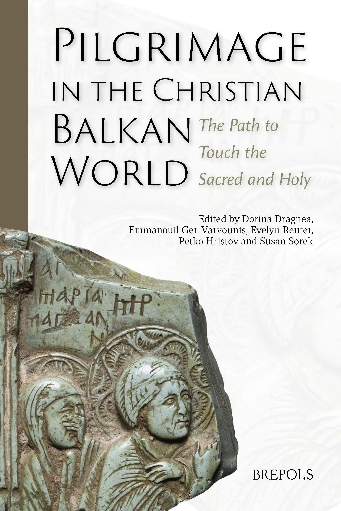
Pilgrimage in the Christian Balkan World
show More to view fulltext, buy and share links for:Pilgrimage in the Christian Balkan World show Less to hide fulltext, buy and share links for: Pilgrimage in the Christian Balkan WorldThe purpose of this volume is to explore, re-interpret and re-contextualise the various natures of practices performed by the Orthodox and Catholic pilgrims in Balkan countries in their devotional ʽpath to touch the sacred and holyʼ through the prism of pilgrimage contents, and their articulating, using, and handling strategies. Inter- and transdisciplinary perspectives constitute a strong point for exploring the essence of this collective practice of worship, which is theoretically and critically interpreted, and chronologically and diachronically analysed. Therefore, the various visions of the authors, formed on the basis of qualitative and critical analysis of primary (ethnographic and folkloric data from field interviews, archive documents, samples, etc.) and secondary sources, come to fill a gap in research on pilgrimage in southeast Europe, and especially on pilgrimage practices in Eastern Orthodoxy. Particularly, the ritual practices, sacred places in contemporary Balkan societies, religious folklore, divine intervention stories, miracle-working icons, relics and reliquaries as part of the structure of pilgrimage are discussed.
The authors explore the context in which the Christian shrines in the Balkans are spaces where the ethnic and denominational patterns in pilgrimage are revealed openly on multiple levels; they delve into how the correlative effects between politics and religion are manifested. In this volume, which is the result of a project initiated by the Balkan History Association, the authors focus on theoretical analysis, stressing the historical and contemporary behaviour performed by the Christian pilgrims, and highlighting the fact that the motivations for going to the sacred places can vary, from seeking and obtaining Divine help to leisure, religious/faith tourism, etc.
-
-
-
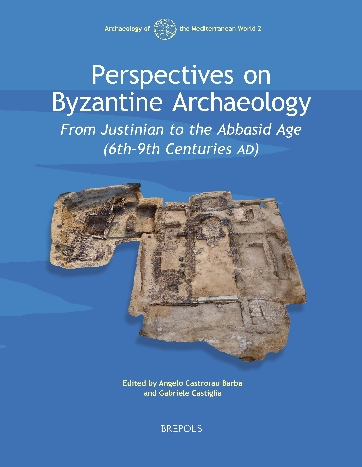
Perspectives on Byzantine Archaeology
show More to view fulltext, buy and share links for:Perspectives on Byzantine Archaeology show Less to hide fulltext, buy and share links for: Perspectives on Byzantine ArchaeologyFrom the rule of Justinian (AD 527-AD 565) up to the Islamic conquests in the Byzantine Empire, the lands of the Mediterranean basin underwent significant change from the sixth to the ninth centuries AD. Urban and rural areas were transformed, landscapes altered, and material cultures saw a fundamental shift. But such changes were by no means uniform across the region. From Jordan, Greece, and the Danube, to the Italian peninsula, Sicily, Spain, and the Horn of Africa, the contributions gathered together in this volume explore new advances and perspectives from the field of ‘Byzantine’ archaeology over the longue durée in order to shed new light on this period.
What was the impact of the reconquest of Justinian? What was the impact of Byzantium in archaeological record? What are the archaeological indicators of urban and rural transformations from the sixth to the ninth centuries? Did architecture represent a marker of socio-economic and cultural change within the Byzantine world? By engaging with such key questions, and by drawing on new data from surveys, excavations, material culture, and historical sources, this volume offers new insights into archaeological perspectives on the broader Byzantine world.
-