


Brepols Online Books Medieval Miscellanea Collection 2023 - bob2023mime

Collection Contents
2 results
-
-
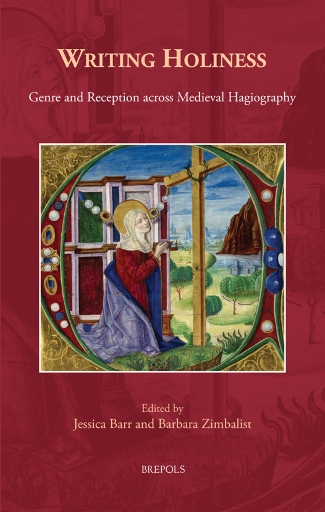
Writing Holiness
show More to view fulltext, buy and share links for:Writing Holiness show Less to hide fulltext, buy and share links for: Writing HolinessWriting Holiness contributes to exciting new critical conversations in the study of medieval hagiography in Western Christianity. Recent years have seen innovative approaches to the literatures of sanctity through emergent theoretical discourses, such as disability studies and trans theory. At the same time, traditional methodologies such as manuscript studies and reception history continue to generate new perspectives on the production, circulation, and reception of the sacred textual canon.
Through ten unique contributions that draw from both new and established theories and methodologies, this volume charts the development, movement, and reception of Christian hagiographic texts in localities ranging from the Iberian Peninsula to the Scandinavian Archipelago from the early to the late Middle Ages. Each chapter traces hagiographic development over generic, temporal, cultural, and linguistic boundaries, and considers the broader contours of the sacred imaginary that come into view as a result of such critically intersectional inquiry.
-
-
-
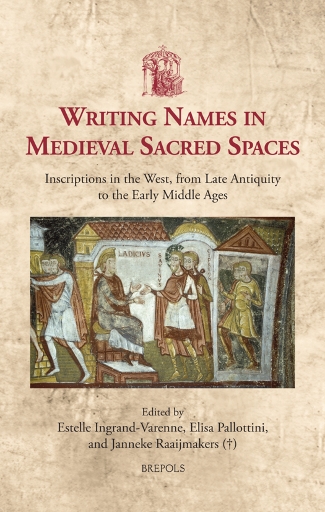
Writing Names in Medieval Sacred Spaces
show More to view fulltext, buy and share links for:Writing Names in Medieval Sacred Spaces show Less to hide fulltext, buy and share links for: Writing Names in Medieval Sacred SpacesThis volume proposes a framework for reflection on practices of writing personal names in medieval sacred spaces, uniting historians, art historians, and specialists in written culture (both epigraphers and palaeographers). It traces the forms and functions of names that can be found within the space of early medieval churches and cemeteries, focusing mainly, but not solely, on inscriptions. By examining names written in various kinds of media, from liturgical books to graffiti and more formal inscriptions, the contributors investigate the intentions and effects of the act of writing one’s own name or having one’s name written down. Their interest resides less in the name itself than the interactions it had with its spatial, iconographic, linguistic, ritual, and cultural context, and what this indicates about medieval graphical practices. What is a name from a graphic point of view? What are the specificities of the epigraphic manifestations of names? By whom were names written, and for whom were they intended (if they were even meant to be accessed)? Addressing these and other questions, this volume shows the importance of inscriptions as historical sources and the contribution they give to the study of medieval societies at the intersection of history, anthropology, archaeology, linguistics, and semiology.
-