


Brepols Online Books Medieval Miscellanea Collection 2023 - bob2023mime

Collection Contents
1 - 20 of 55 results
-
-
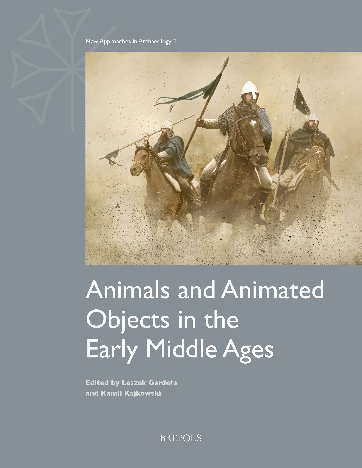
Animals and Animated Objects in the Early Middle Ages
show More to view fulltext, buy and share links for:Animals and Animated Objects in the Early Middle Ages show Less to hide fulltext, buy and share links for: Animals and Animated Objects in the Early Middle AgesSince time immemorial, animals have played crucial roles in people’s lives. In Continental and Northern Europe, especially in the Migration Period and the Early Middle Ages, animals were both feared and revered. Varying and often ambivalent perceptions of fauna were expressed through everyday practices, religious beliefs, and the zoomorphic ornamentation of a wide plethora of objects that ranged from jewellery, weapons, and equestrian equipment to wagons and ships. This timely volume critically investigates the multivalence of animals in medieval archaeology, literature, and art in order to present human attitudes to creatures such as bears, horses, dogs, and birds in a novel and interdisciplinary way.
The chapters gathered together here explore the prominence of animals, animal parts, and their various visual representations in domestic spaces and the wider public arena, on the battlefield, and in an array of ritual practices, but also examine the importance of zoomorphic art for emerging elites at a time of social and political tensions across Scandinavia and the oft-overlooked Western Slavic and Baltic societies. This innovative book draws together scholars from across Europe in order to pave the way for a nuanced international and interdisciplinary dialogue that has the capacity to substantially increase our perception of human and animal worlds of the Early Middle Ages.
-
-
-
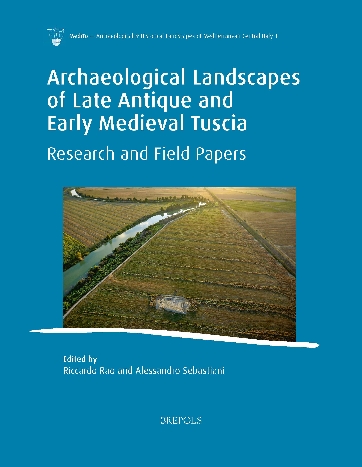
Archaeological Landscapes of Late Antique and Early Medieval Tuscia
show More to view fulltext, buy and share links for:Archaeological Landscapes of Late Antique and Early Medieval Tuscia show Less to hide fulltext, buy and share links for: Archaeological Landscapes of Late Antique and Early Medieval TusciaThis volume, the third in the series MediTo, investigates the changing landscapes of Tuscany during Late Antiquity and the Early Middle Ages. Through a selection of thematic case studies, presented initially during the second International workshop held in Paganico (Grosseto, Italy) in June 2019 and here further developed, the volume explores the concepts of settlement, economic, and societal changes in both Tuscany and its broader Mediterranean context over the course of several centuries. Together, the contributions gathered here showcase how cities and rural settlements, when studied in their archaeological and historical context, shed light on a dynamic landscape in which natural resources played a crucial role in defining the success or later abandonment of sites.
-
-
-
Constructing Saints in Greek and Latin Hagiography
show More to view fulltext, buy and share links for:Constructing Saints in Greek and Latin Hagiography show Less to hide fulltext, buy and share links for: Constructing Saints in Greek and Latin HagiographyThis book explores representations of saints in a variety of Latin and Greek late antique hagiographical narratives, such as saints’ Lives, martyr acts, miracle collections, and edifying tales. The book examines techniques through which the saints featured in such texts are depicted as heroes and heroines, i.e., as extraordinary characters exhibiting both exemplary behaviour and a set of specific qualities that distinguish them from others. The book inscribes itself in a growing body of relatively recent scholarship that approaches hagiographical accounts not just as historical sources but also as narrative constructions. As such, it contributes to the development of a scholarly rationale which increasingly values imaginative and fictional aspects of hagiography in their own right, with the aim of answering broader questions about narrative creativity and ideology. For instance, individual chapters examine how hagiographical accounts mobilize and capitalize on earlier literary and rhetorical traditions or narrative models. These questions are specifically addressed to explore the narrative construction of characters. The chapters thereby encourage us to acknowledge that many hagiographers were more skilful than is often accepted.
-
-
-

Crafting Knowledge in the Early Medieval Book
show More to view fulltext, buy and share links for:Crafting Knowledge in the Early Medieval Book show Less to hide fulltext, buy and share links for: Crafting Knowledge in the Early Medieval BookThis volume explores how knowledge was made in the early medieval book in the Latin West through two interrelated practices: collecting and concealing. The contributions present case studies across cultures and subject areas, including exegesis, glossography, history, lexicography, literature, poetry, vernacular and Latin learning. Collectio underpinned scholarly productions from miscellanies to vademecums. It was at the heart of major enterprises such as the creation of commentaries, encyclopaedic compendia, glosses, glossaries, glossae collectae, and word lists. As a scholarly practice, collectio accords with the construction of inventories of inherited materials, the ruminative imperative of early medieval exegesis, and a kind of reading that required concentration. Concealment likewise played a key role in early medieval book culture. Obscuration was in line with well-known interpretative practices aimed at rendering knowledge less than immediate. This volume explores the practices of obscuring that predate the twelfth-century predilection, long recognised by historians, for reading that penetrates beneath the “covering” (integumentum, involucrum) to reveal the hidden truth. Cumulatively, the papers spotlight the currency of two crucial practices in early medieval book culture and demonstrate that early medieval authors, artists, compilers, commentators, and scribes were conspicuous collectors and concealers of knowledge.
-
-
-
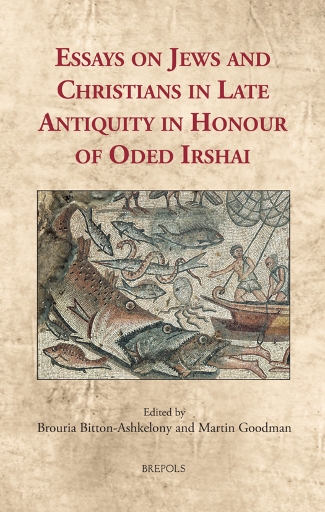
Essays on Jews and Christians in Late Antiquity in Honour of Oded Irshai
show More to view fulltext, buy and share links for:Essays on Jews and Christians in Late Antiquity in Honour of Oded Irshai show Less to hide fulltext, buy and share links for: Essays on Jews and Christians in Late Antiquity in Honour of Oded IrshaiLeading scholars in the study of Late Antiquity discuss the religious landscape of the eastern Roman Empire, with expert discussion of the theological, political, and social issues which confronted Jews and Christians in late Roman Palestine and surrounding regions. Individual chapters analyse in depth the rabbinic, patristic, and archaeological evidence to produce a sophisticated account of religious lives in provincial societies in which rabbinic Judaism took root within a Roman world increasingly dominated from the early fourth century CE by competing Christian power structures, particularly within Palestine. Detailed studies investigate, among other topics, rabbinic speculation about the origins and nature of the Roman state; the implications of the sharing of urban space by different religious traditions and the sharing of religious iconography; competition both within Judaism and Christianity and between Jews and Christians in light of the political pressures exerted by the Christian Roman state; and both similarities and differences in speculation by Jews and Christians about the nature of the expected end of days.
-
-
-
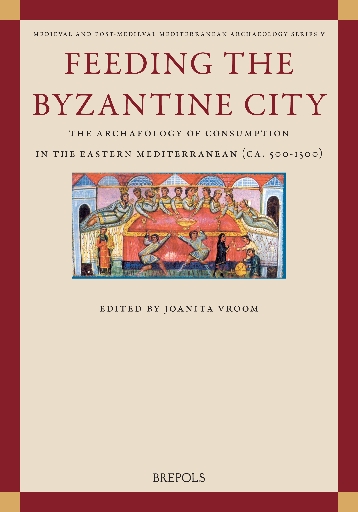
Feeding the Byzantine City
show More to view fulltext, buy and share links for:Feeding the Byzantine City show Less to hide fulltext, buy and share links for: Feeding the Byzantine CityThis book offers new and innovative perspectives on the archaeology of consumption in Byzantine cities and their hinterlands. Case-studies range from towns in eastern Macedonia, north-western and central Greece, and Crete to urban centres in Serbia, Bulgaria and western Turkey. The archaeological data and historical insights presented in this volume are always of great interest, often exciting, and more than once outright astonishing. The commodities discussed in the volume are dated between the 6th and the 16th century CE and include pottery (e.g., glazed table wares, amphorae, cooking pots, storage jars), textile fragments, metal objects, bronze and golden jewellery, marble carved slabs and columns.
Feeding the Byzantine City sheds compelling light on a world which was much more complex and interconnected than has often been assumed, which makes it essential reading for scholars and a larger audience alike.
-
-
-
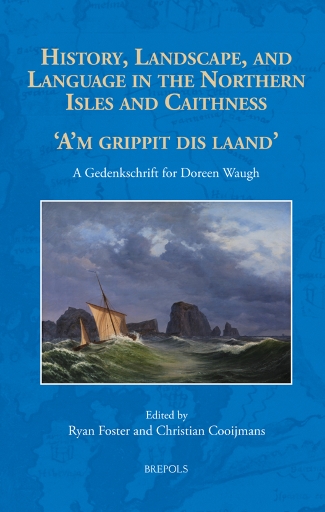
History, Landscape, and Language in the Northern Isles and Caithness
show More to view fulltext, buy and share links for:History, Landscape, and Language in the Northern Isles and Caithness show Less to hide fulltext, buy and share links for: History, Landscape, and Language in the Northern Isles and CaithnessDoreen Waugh was a native Shetlander and a well-renowned scholar of Old Norse and Gaelic place-names in Northern Scotland and the Northern Isles. Not only did Waugh’s research significantly advance scholarly understanding of the ‘Viking’ settlement of the North Atlantic, her generosity with both her time and knowledge inspired and motivated a wide range of scholars from a variety of disciplines, from archaeology and history to historical geography, linguistics, and place-name studies.
Based on - and written in tribute to - Waugh’s work, this interdisciplinary volume draws together essays covering Northern Scotland, the Northern Isles, and beyond, both during and after the early medieval period. The contributions gathered here draw on Waugh’s wider-ranging research interests to offer a range of novel insights into the many communities, cultures, and customs that have characterized and connected the Northern Isles and their North Atlantic neighbours.
-
-
-
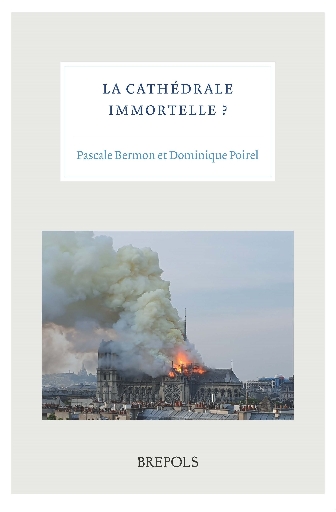
La cathédrale immortelle ?
show More to view fulltext, buy and share links for:La cathédrale immortelle ? show Less to hide fulltext, buy and share links for: La cathédrale immortelle ?Que brûle une ancienne cathédrale, et soudain l’église redevient maison commune. Pour mieux comprendre ceci, qui s’est singulièrement manifesté lors de l’incendie de Notre-Dame de Paris en avril dernier, l’Institut d’Études Médiévales souhaite croiser les regards de diverses spécialités sur l’église cathédrale, telle qu’elle nous vient des temps médiévaux. Quel est son mystère ? Comment comprendre son indéniable puissance de signification et d’attachement ? D’où lui vient cette aptitude à rassembler un peuple, fût-il au comble de la désunion, et à susciter l’émotion par-delà toutes les frontières ? Quels sont les enjeux techniques, liturgiques, théologiques, spirituels, artistiques, juridiques et politiques qui s’enchevêtrent quand la cathédrale a souffert et qu’il faut la rénover, la restaurer, voire la reconstruire ? À quoi tient l’identité profonde d’un bâtiment, qui n’a cessé de changer au cours des âges ? Quelle restauration respecte sa nature, quelle autre au contraire la défigure ? Comment les cathédrales meurent-elles, ou restent-elles vivantes ? Sur toutes ces questions actuelles, on a pensé que les médiévistes pouvaient apporter l’éclairage de leurs divers savoirs, qu’ils soient historiens de l’architecture, de la liturgie, de la théologie, de l’Église ou du fait religieux.
-
-
-
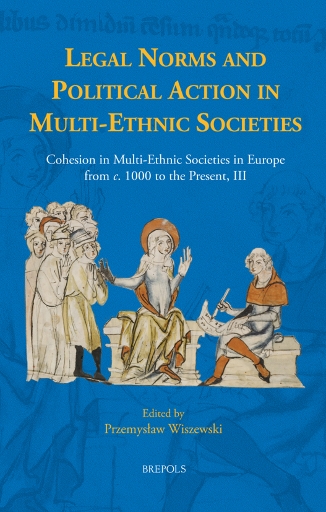
Legal Norms and Political Action in Multi-Ethnic Societies
show More to view fulltext, buy and share links for:Legal Norms and Political Action in Multi-Ethnic Societies show Less to hide fulltext, buy and share links for: Legal Norms and Political Action in Multi-Ethnic SocietiesThe three-volume project Cohesion in Multi-Ethnic Societies in Europe from c.1000 to the Present explores and seeks to find solutions to a crucial problem facing contemporary Europe: in what circumstances can different ethnic groups co-operate for the common good? They apparently did so in the past, combining to form political societies, medieval and early modern duchies, kingdoms, and empires. But did they maintain their ethnic traditions in this process? Did they pass on elements of their cultural memory when they were not in a dominant position in a given polity?
The first volume in the project explored ethnic cohesion as evidenced by narratives about the past, while volume two analysed communal events and activities. This third volume focuses on how relations between ethnic groups were influenced by political activities and related legal norms. Both cooperation and conflict between ethnic communities find their expression in political activities, although they usually have a significant cultural and economic background as well. This book examines the causes of political cooperation between ethnic groups, despite the risk of conflict, and the methods of stabilizing this cooperation through the enactment of law.
-
-
-
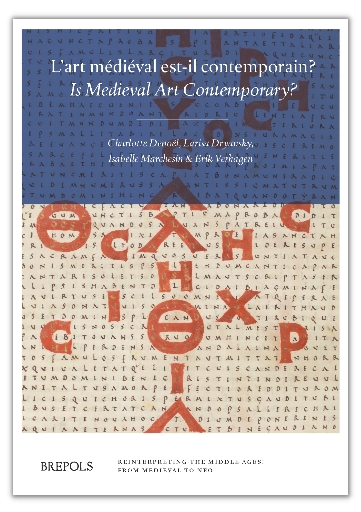
L’art médiéval est-il contemporain ? Is Medieval Art Contemporary?
show More to view fulltext, buy and share links for:L’art médiéval est-il contemporain ? Is Medieval Art Contemporary? show Less to hide fulltext, buy and share links for: L’art médiéval est-il contemporain ? Is Medieval Art Contemporary?This publication brings together essays by scholars of both medieval and contemporary art, offering a cross-disciplinary approach of both periods. It investigates how contemporary artists and contemporary art historians perceive medieval art, and, reciprocally, how medieval art historians envisage the echoes of medieval artforms and esthetics in contemporary art. The volume follows on from the symposium organized in conjunction with the exhibition "Make it New: Carte Blanche à Jan Dibbets" that was held at the Bibliothèque Nationale de France (Paris) in 2019, and which presented side by side Hrabanus Maurus’s De Laudibus Sanctae Crucis (In Praise of the Holy Cross), a masterpiece of Carolingian art, with works by artists associated with conceptual art, mininimal art, and land art.
How and why has medieval art, and particularly early medieval art, inspired contemporary artists since the 1950s? What has medieval art contributed to contemporary art? How has medieval art’s treatment of figures, color, space, geometry, and rhythm provided inspiration for contemporary artists’ experiments with form? In what way does contemporary artists’ engagement with the topics of formatting, writing, semiosis, mimesis, and ornamentation draw inspiration from medieval models? To what extent and in what sense are the notions of authorship and performativity relevant for understanding conceptions of artmaking in both periods? Rather than focusing on medievalism and citational practices, or on the theory of images—both approaches having already produced an important body of comparative readings of medieval and contemporary art—the essays in this volume address the question of medieval art’s contemporaneity thematically, through three trans-chronological topics: authorship, semiosis and mathematics, and performance. Engaging the artists’ works as well as their writings, these studies conflate conceptual and esthetic perspectives.
-
-
-

Marsilius of Padua
show More to view fulltext, buy and share links for:Marsilius of Padua show Less to hide fulltext, buy and share links for: Marsilius of PaduaMarsilius of Padua (c. 1275–c. 1342) was one of the most influential and controversial political thinkers of the Middle Ages. He is best known for his seminal text Defensor Pacis (1324) in which he attacks the papal theory of plenitude of power and defends an idea of political community based on the strict separation of political and religious authority. Marsilius’ work lies at the crossroads of different disciplines, ranging from political philosophy to civil and canon law, to medicine. Indeed, he presents an original synthesis of several contemporary themes and traditions such as Aristotelianism, Augustinianism, the debate on Franciscan property, the communal tradition of the Italian city-states, ecclesiology, medicine, and astrology.
This edited volume analyses the life and thought of Marsilius of Padua in his own context and beyond. Gathering many of the leading experts in Marsilian studies across different national and linguistic traditions working today, this volume has two main goals. First, it aims to bring together experts who come from distinct fields in order to investigate the many branches of knowledge present in Defensor Pacis without losing sight of Marsilius as a comprehensive theorist. Second, the volume aims to shed new light on one of the most neglected aspects in Marsilian studies: the Marsilian influence, i.e., his impact in the early modern period during the Renaissance, the Reformation and the Counter-Reformation, up to twentieth century.
-
-
-
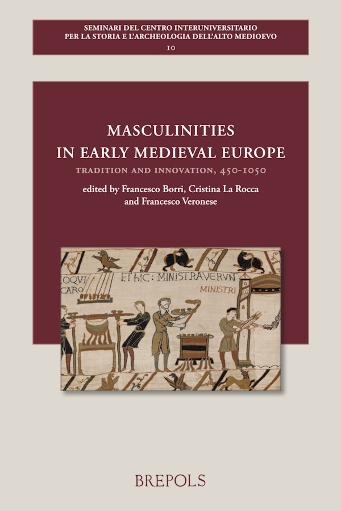
Masculinities in Early Medieval Europe
show More to view fulltext, buy and share links for:Masculinities in Early Medieval Europe show Less to hide fulltext, buy and share links for: Masculinities in Early Medieval EuropeThis volume brings together a collection of essays that delve into the shifts in ideas, roles, and practices of masculinities and male attitudes during the transition from late Antiquity to the early Middle Ages. This period was marked by significant changes, including the collapse of Roman political authority in the West, the fragmentation of imperial universalism in polities, and the rise of Christianity, which all challenged the gender roles inherited from Antiquity.
Within this historical context, the book explores the evolution of men’s privileges, responsibilities, and burdens through eleven case studies focusing on different categories of men and manly behaviour. The volume brings to life husbands and fathers, kings and workers, clerics and warriors from both the East and the West, as revealed through contemporary textual and material sources and preserved in the physical remains of male bodies and actions. In doing so, this volume will bring to the fore new perspectives on masculinities and gender history.
-
-
-
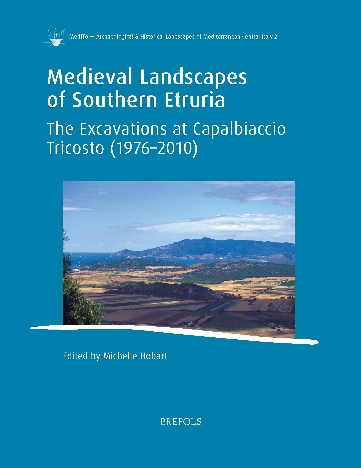
Medieval Landscapes of Southern Etruria
show More to view fulltext, buy and share links for:Medieval Landscapes of Southern Etruria show Less to hide fulltext, buy and share links for: Medieval Landscapes of Southern EtruriaThe fortified hilltop town of Capalbiaccio is a lost Etruscan settlement, a site that developed out of prehistory to become an important colony and grain provider for the Roman Empire, before being sacrificed to medieval intrigue and conquest by the Republic of Siena. The site, together with the castle of Tricosto, was first excavated forty-five years ago, but the results were never published. Then, in recent years, archaeologist Michelle Hobart was invited to explore the area with a new team and employ the latest techniques of remote sensing to explore the landscape and fortifications. The results of both explorations are presented here for the first time in this volume, which combines the invasive and non-invasive approaches of two generations of archaeologists to reveal what attracted settlers to this site, from the inhabitants of the late Bronze Age through to the most important families of medieval Tuscany. This book employs the best of the latest geophysical techniques and time-tested approaches to ground the history of Capalbiaccio, and to narrate how the fate of this small village was inextricably linked to regional and national networks, as control of the territory and the settlement’s reason for being evolved over time.
-
-
-
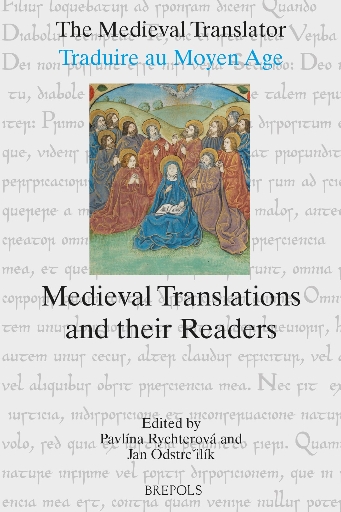
Medieval Translations and their Readers
show More to view fulltext, buy and share links for:Medieval Translations and their Readers show Less to hide fulltext, buy and share links for: Medieval Translations and their ReadersThe papers gathered in this volume focus on ‘Medieval Translations and their Readership’, the special strand of the 11th Cardiff Conference on the Theory and Practice of Translation in the Middle Ages. The volume discusses the role of the reader in the process of translation, communities of readers and their active participation in translators’ choices, and the translation as a result of a dialogue between author, text and its reader.
Translations of works of theology and religious education, the focus of most of the contributions to this volume, constitute excellent material for research into medieval lay audiences. Vernacular religious educational texts from the thirteenth to the sixteenth century show a great deal of conformity. Individual authors resorted to similar strategies and techniques to meet any translation challenges, to fulfil educational aims, or to relate to their readers and to accommodate their expectations. Simultaneously, the readers played a crucial role as they shaped the production of texts in many ways.
Research into Middle English pastoral and devotional literature and the conditions of its production still dominates scholarly work in the field. Religious texts in vernaculars other than Middle English have so far received little attention. This volume tries to tackle this lacuna by offering a careful comparative analysis of relevant vernacular texts across Europe, including Slavonic works, using historiographical, philological, and linguistic methods as well as literary scholarly approaches.
The sixteen chapters are organized in three sections. The first one, ‘Authors and Readers’, brings together articles examining the idea of a model reader as expressed in translations of biblical texts and texts of religious instruction. The contributions in the second section, on the ‘Dissimination of Knowledge’, focus on how translators addressed readers, how people read, and how they used the manuscripts and printed books made for them. The target audience or model reader of the first section is here put into perspective with the help of discussions of reading practices. The last section, ‘Religious Education in Transition’, comprises contributions which focus on textual material from the period when printed books gradually changed, the relationship between languages, texts, authors, and readers.
-
-
-
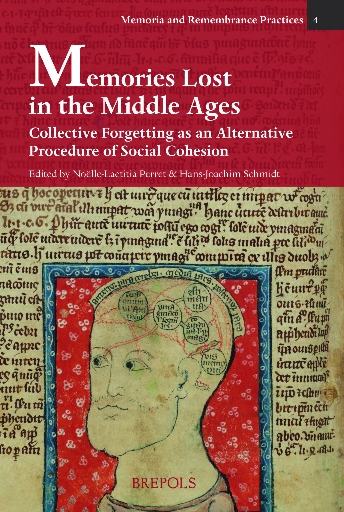
Memories Lost in the Middle Ages: Collective Forgetting as an Alternative Procedure of Social Cohesion/L’oubli collectif au Moyen Âge: Un autre processus constitutif de la cohésion sociale
show More to view fulltext, buy and share links for:Memories Lost in the Middle Ages: Collective Forgetting as an Alternative Procedure of Social Cohesion/L’oubli collectif au Moyen Âge: Un autre processus constitutif de la cohésion sociale show Less to hide fulltext, buy and share links for: Memories Lost in the Middle Ages: Collective Forgetting as an Alternative Procedure of Social Cohesion/L’oubli collectif au Moyen Âge: Un autre processus constitutif de la cohésion socialeThe aim of this book is to examine the social, political and cultural consequences of ‘collective forgetting’ in the Middle Ages. Since the seminal work of Maurice Halbwachs, historical research has focused on ‘collective memory’ as the basis of social cohesion. Jan Assmann has introduced the slightly different concept of ‘cultural memory’, which he sees as a constitutive condition of political organisations and their stabilisation. Drawing on this Assmannian concept, this book examines this other process of ‘collective forgetting’.
Cet ouvrage ambitionne d’examiner les conséquences sociales, politiques et culturelles de « l’oubli collectif » au Moyen Âge. Depuis les études fondatrices de Maurice Halbwachs, la recherche historique s’est intéressée à la « mémoire collective » en tant que fondement de la cohésion sociale. Jan Assmann a introduit le concept légèrement différent de « mémoire culturelle », condition constitutive selon lui des organisations politiques et de leur stabilisation. Tout en s’appuyant sur ce concept assmannien, cet ouvrage propose d’étudier cet autre processus que constitue « l’oubli collectif ».
-
-
-
Monastères, convergences, échanges et confrontations dans l’Ouest de l’Europe au Moyen Âge
show More to view fulltext, buy and share links for:Monastères, convergences, échanges et confrontations dans l’Ouest de l’Europe au Moyen Âge show Less to hide fulltext, buy and share links for: Monastères, convergences, échanges et confrontations dans l’Ouest de l’Europe au Moyen ÂgeL’orientation vers les convergences, échanges et confrontations dans l’histoire monastique du grand Ouest européen au Moyen Âge permet de porter un regard nouveau sur la dynamique de divers établissements en observant les relations qui s’y sont développées tant au sein des communautés, qu’avec la société environnante. Les influences externes subies par les monastères et les conflits internes qui s’y jouent, les échanges dus aux pèlerinages, aux rouleaux des morts et aux confraternités sont au nombre des thèmes explorés.
-
-
-

Multi-disciplinary Approaches to Medieval Brittany, 450–1200
show More to view fulltext, buy and share links for:Multi-disciplinary Approaches to Medieval Brittany, 450–1200 show Less to hide fulltext, buy and share links for: Multi-disciplinary Approaches to Medieval Brittany, 450–1200While it is well-established that Brittany and the Insular world were closely linked during the medieval period, the precise nature of these connections continues to spark debate. Was there a significant migration in the fifth century, or were the connections more multi-faceted and enduring than medieval accounts suggest? And how might we triangulate the Atlantic connections with other influences on medieval Brittany, including those from the Carolingian world?
Drawing together research that was first presented at the conference ‘Brittany and the Atlantic Archipelago: Contact, Myth and History 450-1200’, held in Cambridge in December 2017, this volume seeks to present new and ground-breaking research into both Brittany and its broader European context during the medieval period. The chapters gathered here range across various disciplines, including textual history, archaeology, hagiography, onomastics, and the study of liturgical evidence, offering new insights into our understanding of medieval Brittany, as well as drawing out particular connections (and disconnections) between Brittany and its neighbours.
-
-
-
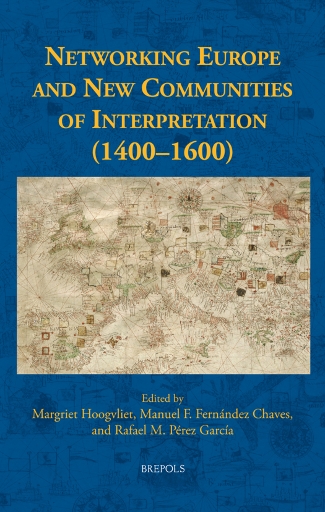
Networking Europe and New Communities of Interpretation (1400–1600)
show More to view fulltext, buy and share links for:Networking Europe and New Communities of Interpretation (1400–1600) show Less to hide fulltext, buy and share links for: Networking Europe and New Communities of Interpretation (1400–1600)Long-distance ties connecting Europeans from all geographical corners of the continent during the fifteenth and sixteenth century facilitated the sharing of religious texts, books, iconography, ideas, and practices. The contributions to this book aim to reconstruct these European networks of knowledge exchange by exploring how religious ideas and strategies of transformation ‘travelled’ and were shared in European and transatlantic cultural spaces. In order to come to a better understanding of Europe-wide processes of religious culture and religious change, the chapters focus on the agency of the laity in ‘new communities of interpretation’, instead of intellectual elites, the aristocracy, and religious institutions. These new communities of interpretation were often formed by an urban laity active in politics, finance, and commerce. The agency of religious literatures in the European vernaculars in processes of religious purification, reform, and innovation during the long fifteenth century is still largely underestimated. ‘Networking Europe’ aims to step away from studying ‘national’ textual production and consumption by approaching these topics instead from a European and interconnected perspective. The contributions to this book explore late medieval and early modern networks connecting people and transporting texts following three main axes of investigation: ‘European Connections’, ‘Exiles, Diasporas, and Migrants’, and ‘Mobility and Dissemination’.
-
-
-
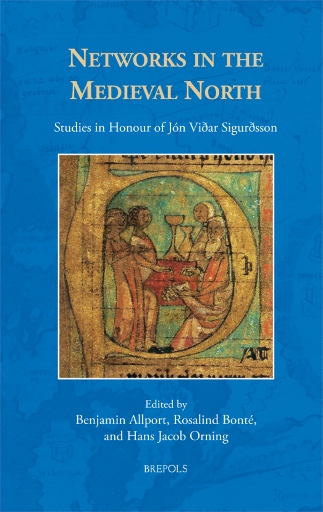
Networks in the Medieval North
show More to view fulltext, buy and share links for:Networks in the Medieval North show Less to hide fulltext, buy and share links for: Networks in the Medieval NorthBy the late thirteenth century, Norgesveldet - the Norwegian realm - stretched far beyond its core in western Scandinavia. At its height in 1264, Norgesveldet connected Norse speakers in tributary territories ranging from the Irish Sea to Orkney and across the Atlantic to the Faroes, Iceland, and Greenland. But what held this disparate realm together? What were the dynamics of power between the men and women of the governing and elite classes of Norgesveldet? And what roles did different bodies play at different levels of society in creating and maintaining these networks - from kings and bishops to scribes and scholars, traders, and law-makers?
This volume aims to expand on and further recent important research into connections between Norway and the wider Norse North Atlantic from the eleventh century, during which the Norwegian kingdom began to emerge, through to the fourteenth-century decline of Norgesveldet with the creation of the Kalmar Union. Each chapter addresses a different facet of the Norgesveldet networks, building a complex picture of both their function and their evolving nature. Taking as its inspiration the research and career of its honorand, Jón Viðar Sigurðsson, the volume explores medieval Norway and its wider connections using three key frameworks - sociopolitical networks, legal and material networks, and literary networks - with the aim of shedding new light on the people and processes of this North Atlantic polity.
-
-
-
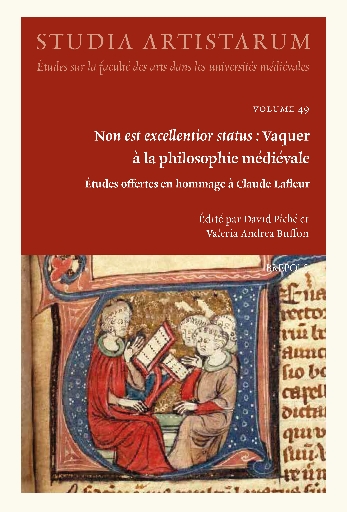
Non est excellentior status : Vaquer à la philosophie médiévale
show More to view fulltext, buy and share links for:Non est excellentior status : Vaquer à la philosophie médiévale show Less to hide fulltext, buy and share links for: Non est excellentior status : Vaquer à la philosophie médiévaleCe volume regroupe les contributions de vingt-deux chercheur.es universitaires, collègues et ami.es de Claude Lafleur, qui ont voulu lui rendre hommage à l’occasion de son départ à la retraite en tant que professeur titulaire à la Faculté de philosophie de l’Université Laval. La diversité des aires géographiques et la pluralité des strates générationnelles auxquelles appartiennent les chercheur.es qui ont contribué à ce livre témoignent éloquemment de l’envergure de la « sphère d’influence » des productions intellectuelles de Claude Lafleur.
Les textes réunis relèvent des principaux champs de recherche que leur ami et mentor a patiemment labourés au cours de sa carrière académique : histoire des corpus et des manuscrits; transmission des textes philosophiques et de leurs notions fondamentales, de l’Antiquité au Moyen Âge; éditions critiques de textes issus des Facultés des arts et de théologie de l’Université de Paris aux xiiie-xive siècles; enseignement de la philosophie au xiiie siècle à la lumière des textes didascaliques; histoire des pratiques discursives dans les Facultés des arts médiévales; étude de concepts clés de la pensée de Thomas d’Aquin; discussion médiévale sur les universaux; philosophie de l’histoire des médiévistes contemporains.
Ce recueil d’études souhaite ainsi se faire le reflet de certains des intérêts heuristiques, des orientations méthodologiques et des thématiques historico-philosophiques que Claude Lafleur a poursuivis, explorées et étudiées dans ses propres écrits, ayant toujours été convaincu « qu’il n’y a pas de statut plus excellent que de vaquer à la philosophie ».
-